Blue Horizon Real Estate works to be part of the solution to the affordable housing shortage
Marissa Harrington, founder of Blue Horizon Real Estate, advocates for breaking down communication silos among Kalamazoo’s housing stakeholders to address systemic barriers to affordable homeownership.

Kalamazoo needs to have difficult conversations and break down the walls of information silos in the housing sector, Realtor Marissa Harrington says.
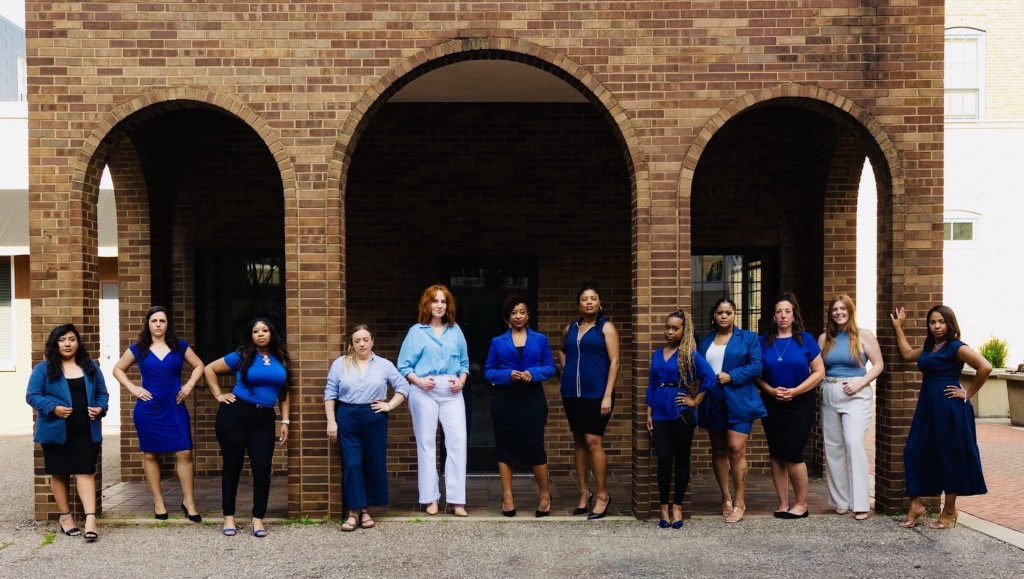
Harrington is the lead broker at Blue Horizon Real Estate, a “client-centered and community-focused” agency, as stated on its website.
Blue Horizon had its official launch on July 1. Harrington and her agents work to get people who’d never thought they’d be homeowners into a home. It’s also intended to be a business that goes beyond selling houses to be part of the discussions and actions being taken to address what is happening with affordable housing locally.
Breaking through barriers is part of her work. Back in the spring, Harrington hosted a talk on the housing crisis at the Northside Association for Community Development, for an audience of realtors, bankers, and interested parties. They addressed systemic issues that help keep generations of families from homeownership.
She said then, and still believes, that a big problem in Kalamazoo is the lack of communication between the nonprofit, governmental, and for-profit players in housing.
‘This is the silos conversation’
Harrington grew up housing-insecure with her mother, a disabled veteran, in Los Angeles.
She left for Michigan to become a theater student at Western Michigan University. Harrington helped found the Face Off Theatre Company, married, became a mother, and in 2015 became a licensed realtor.
She worked with Kalamazoo Neighborhood Housing Services early on, helping housing-insecure people become homeowners. She was driven to do so because living in her own home was just a dream back in L.A. Harrington wanted to help people make the dream real.
As a Kalamazoo realtor, “I saw very early in my career that the housing inventory and what is considered affordable (here) was not livable, number one. And number two, because of wages being so low in Kalamazoo, affordability is a really difficult conversation to have,” she says.
Difficult, because, “you have so many people who are employed and have regular income coming in, and can regularly pay rent, and deserve to also buy a house. But the inventory that they’re trying to buy is not safe or livable.”
KNHS has done commendable work rehabbing old houses and building new ones, she points out.
KNHS and others have been funded by Kalamazoo County’s “Homes for All” housing millage. The county reports it has spent $26 million on many projects that are increasing housing stock, supporting housing-insecure people, and subsidizing affordable housing. The millage has supported at least approximately 1,400 new housing units and more than 800 currently occupied, under construction, or have broken ground, the County reported in 2025. More than 100 owner-occupied homes have received critical repairs addressing health and safety concerns.
Beyond the millage, Kalamazoo also has many philanthropists pitching in, such as the person or persons who gave an anonymous $23.3 million donation that’s gone into the County’s “Keys to Kalamazoo” efforts.
Has Kalamazoo’s housing situation gotten better, as the many players have been working on it? Harrington says, frankly, “No, it’s gotten worse.”
Having seen the issue from the perspective of both the nonprofit world and as a realtor, Harrington comes to the conclusion, “We are not being able to properly utilize the resources that are being allocated.”
She adds, “It’s a blessing to live in a city like Kalamazoo, where it’s so philanthropic.” But “it’s a shame that this idea of throwing money at it was thought to be the end-all, be-all.”

Money and resources are needed, Harrington says. But what’s missing is communication between “the three sectors”: nonprofit, for-profit, and public.
There must be “a way to really fix” the housing crisis. “But (the three sectors) have to work together. So this is the silos conversation….”
We need communication and cooperation among all the players. But instead, “You have nonprofits trying to solve it on their own, with not a lot of input from government and real estate. You have government trying to handle it in their way without input from the real estate industry and some input from nonprofits.”
“You only know what you know, right? We know if you need legal help, you get an attorney. You don’t try to get a nurse.”
Intentional conversations needed
There are some in the community saying, “let’s just provide housing and throw money at it,” Harrington says. “I’m not saying that that’s a problem. But I am saying that real estate professionals are not a part of that conversation. And so we’re missing things, and the solution.”
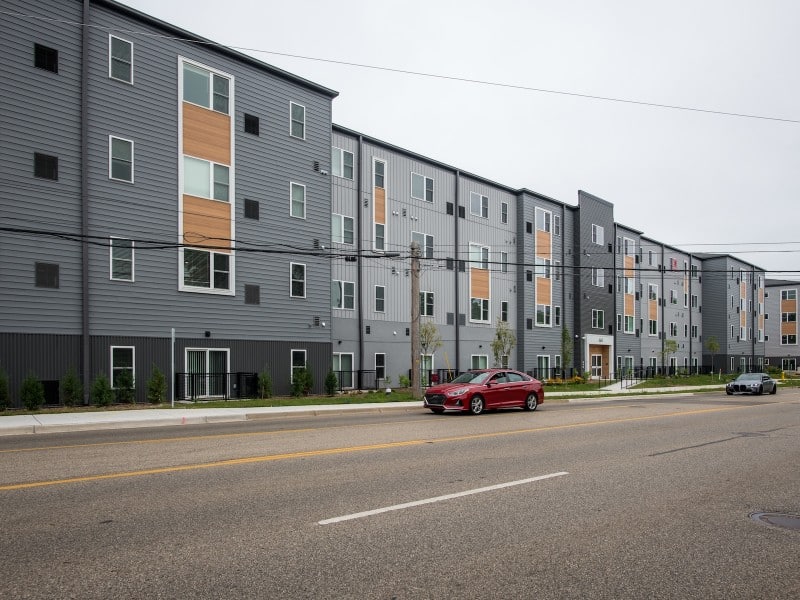
We asked her: Were players siloed during the planning for the new River’s Edge apartment complex on the eastern Northside Neighborhood?
The units are meant to be affordable for families making at or below 60% of the Area Median Income.
That AMI is the median income of all of Kalamazoo County. If one figured the AMI of the Northside, that number would be lower.
Gwendolyn Hooker of HOPE (Helping Other People Exceed thru Navigation) told Second Wave that River’s Edge is affordable, but “for who? If you make $25 an hour, it’s affordable. But when you look at the numbers of the Northside, and the average person making $27,000 to $33,000 a year, it’s not affordable for the people that live in this neighborhood,” Hooker says. “It’s affordable for a different demographic of people.”
As we tell her this, Harrington makes affirmative sounds of “Mmm-hmm. Mmm-hmm,” and asks, “What does it solve?”
Are there any other examples where the players in housing could have considered other details while planning projects? “I think there are a lot. It’s everything that’s being built right now,” Harrington says
She understands that building new construction “costs money.” The new homes will have to bring in money from renters or buyers, with any affordability created through subsidies.
Also needing consideration is an important detail Harrington is sure to share with her clients — a house may be made more affordable, but there are also all the other costs of homeownership landing on a new homeowner.
“You cannot put someone in the house who’s already at 80% AMI, and then their property taxes are probably going to go up, because housing values go up. And also, there are the costs of utilities that we can’t control, and insurance.”
“So we’re not having these conversations in real time, as decisions are being made, to even give a scope of what’s going on in the housing market — so that decisions are intentional and really helping people, honestly. I don’t think that you can separate the real estate industry from these conversations.
‘Leverage to change your life’
Blue Horizon is a business, not a nonprofit. “So, yes, we sell real estate. That is what we do. We are a real estate brokerage,” Harrington says. “But it’s looking through the lens of more responsibility.”
Blue Horizon focuses on first-time homebuyers, people who never thought they could own a home. “We’re on the front lines of advocacy in regard to housing,” she says.
For the week of Sept. 28, Blue Horizon has had two closings, nine pending homes and five listings. Before Blue Horizon, Harrington had led a team that sold “about 20 houses a year.” Many were to first-time homebuyers.
“And I guess I can brag that there’s probably, at this point, hundreds of those stories.”
Stories she’s heard of renters who’ve come from a long line of people who’ve always rented, who’ve never had the privilege of generational wealth because “great-great-grandfather made this great decision” to buy land.
Many people, “myself included,” never knew they could “purchase real estate, hold on to real estate, then sell it, or start a business, or leverage it to get property.”
“Privilege,” she adds, “is not a bad thing. It’s not a bad word. My kids have privilege, gosh darn it!” She’s working hard to make sure “my kids will have an inheritance.”
Owning land and a home gives one, she says, “leverage to change your life. And it’s not taught. It’s not taught to the people that need to know it. So things stay the same. And then now you have a housing crisis.”
What does that crisis look like? In Kalamazoo County, the W.E. Upjohn Institute has identified a need for almost 8,000 housing units by 2030, costing around $2 billion to build. Part of the identified need is the anticipated impact of the Ford Motor Company’s BlueOval plant going up in Marshall. The W.E. Upjohn Institute says the county needs all types and price points, but those making $50,000 or less in Kalamazoo County are more significantly overburdened. They are paying more than 30 percent of their gross take-home income on rent or mortgage payments plus utilities and taxes. And for those for whom housing is out of reach, the most recent Point in Time count for which figures are available showed 791 unhoused individuals across Kalamazoo County — a 19% increase from 2024 — which included 709 people in temporary or transitional shelter and 82 unsheltered individuals.
Harrington works with people who might not have a reason to be trusting. The process of buying a house is intimidating, especially for someone who feels they’re in a system not meant for them.
“People come to us very intentionally because they know what our mission is,” Harrington says. “After they have been turned away everywhere else.”
“We,” she says, meaning the real estate and financing worlds in general, “have proven not to be a safe space. There has been this documented discrimination. There’s documented trauma,” coming from rejection, redlining, efforts to steer racial or ethnic groups into certain neighborhoods.
“You have to understand what the industry represents for many, many people,” she says.
‘We can do better’
Harrington wants Blue Horizon to do much more than just sell houses. “We’re sitting on boards where we can be a part of these conversations. Our mission is just to take this work, and through real estate sales and education and advocacy, see how we can erase a lot of the barriers that redlining and steering and all the things that have been created throughout the entire existence of this country.”
She adds, “You know, I’m not saying that I’m trying to change the world, and I’m not trying to change the country. But here where we live, we can do better.”
Harrington loves Kalamazoo, she says, and her career made her realize “even more deeply how much promise and potential there is in this community for people to be able to live in the most equitable way possible. It’s possible here, I think, even more so than it is in a lot of other communities.
“I have transferred that heart and that passion and that mission to my agents…. Just how can we do more? Is it possible for us to be able to do more?”
Author

Related Articles
Community Land Trusts in Portage and elsewhere help residents become homeowners affordably
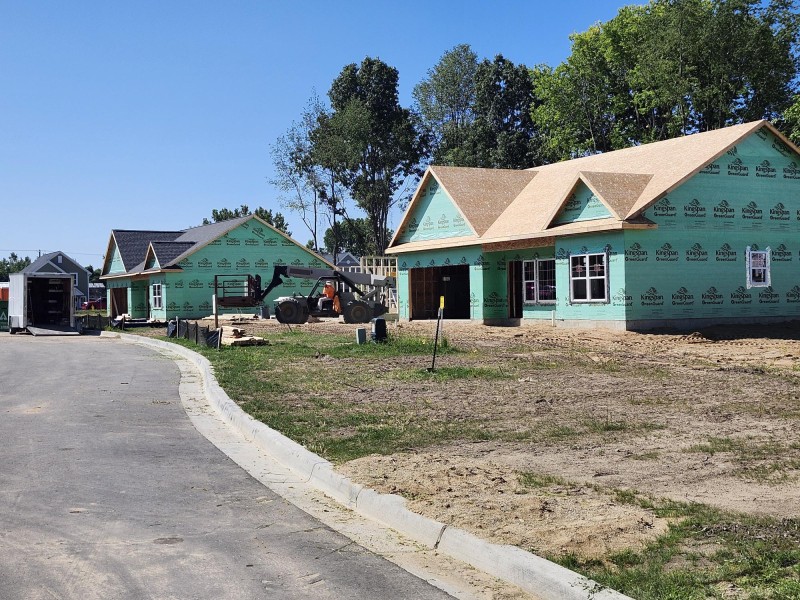
As the statewide housing crisis continues, communities of all sizes are looking at how to increase affordable housing options for current and future residents. In Kalamazoo County, the Portage Community Land Trust is helping residents become homeowners affordably with their new workforce housing development, Stanwood Crossings.

$10.6 million expansion of Northside housing project will add 38 more apartments
A ceremonial groundbreaking took place recently on North Pitcher Street for the expansion of the Zone 32 residential and commercial complex.
River’s Edge Apartments expected to help relieve demand for housing
This is one of the largest projects to date that Kalamazoo County has contributed to.