Here is the right tool, and this is how you use it. How Community Homeworks empowers Kalamazoo residents
Through free educational workshops and a growing Tool Library, the Kalamazoo nonprofit makes regular home maintenance accessible.
For many homeowners, the smallest maintenance problem can become an expense they can’t afford. A leaking faucet, broken appliance, or overgrown yard might seem manageable at first, but without the right tools or knowledge, even small or everyday home projects can grow into huge obstacles. In Kalamazoo County, Community Homeworks is working to change that.
Founded in 2009, the nonprofit has worked hard for more than 15 years to help residents maintain and stay in their homes. Community Homeworks offers its Critical Home Repair Program to address serious health and safety concerns in the home, free home maintenance education, and a pay-what-you-can Tool Library.
Working together, these programs equip homeowners and renters with the knowledge and resources needed to tackle projects themselves. This often saves local Kalamazoo residents hundreds of dollars while preventing small problems from becoming expensive projects.
In Kalamazoo County’s housing ecosystem, the impact of maintaining a home in an affordable way becomes especially clear. According to Community Homeworks, nearly 9,800 homeowners in Kalamazoo County are considered “housing cost-burdened”, meaning they spend more than 30% of their income on housing maintenance/costs.
The organization’s data also indicates that 38% of Kalamazoo County households fall below the United Way’s ALICE threshold, representing households that struggle to afford basic necessities despite earning income.
Houses in Kalamazoo also continue to age. Approximately 59% of Kalamazoo homes were built before 1980, which tends to mean they require more frequent attention and maintenance. According to Community Homeworks’ most recent data, the average age of homes receiving the organization’s repair services is more than 91 years old. Those seeking services receive help with projects from plumbing and electrical to insulation and structural improvements.
It is no secret that many Americans are struggling to cover their everyday expenses. For homeowners, having to purchase specialized equipment or hire professionals to make necessary repairs can add an even greater financial burden. When these repairs are essential to keeping a home safe and livable, many folks are faced with difficult choices: put off the repairs and continue living in potentially unsafe conditions, or risk losing their homes altogether.
Community Homeworks addresses the challenges Kalamazoo residents face through a combination of direct repairs, home repair and maintenance workshops, and shared resources. In 2025 alone, Community Homeworks completed a record 241 household repair projects, investing more than $919,000 in local homes.
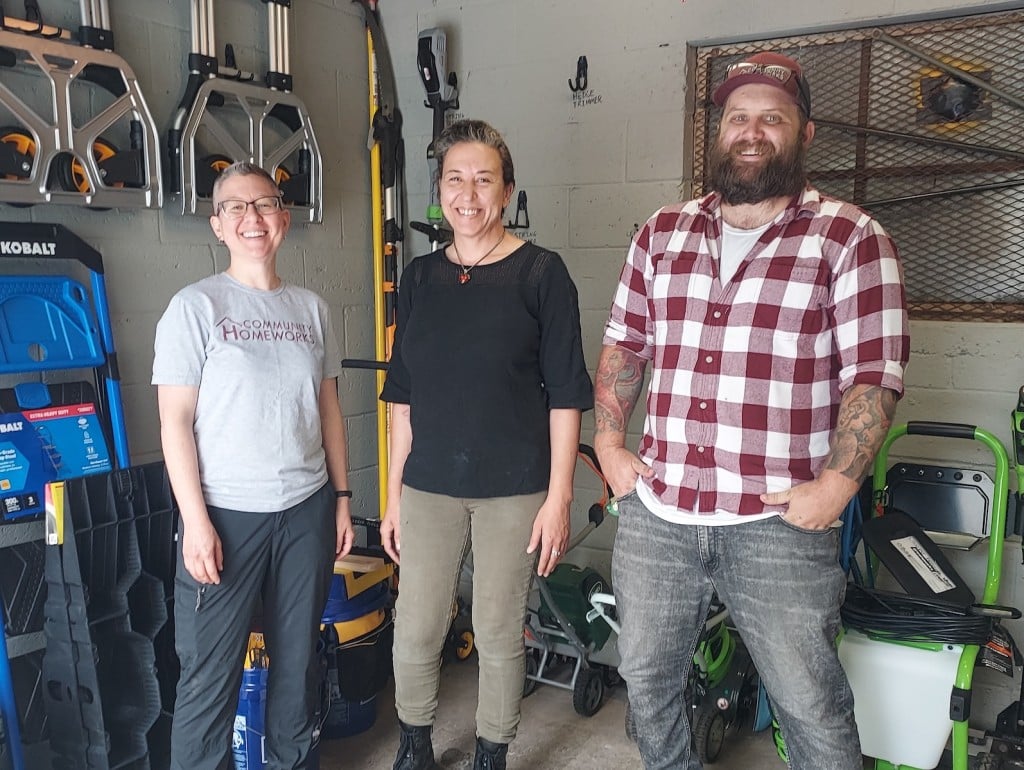
Community Homeworks has worked hard to deepen its impact in Kalamazoo and to thoughtfully expand its services. At the center of this intentional work is the Tool Library, which officially opened to the public in June 2025.
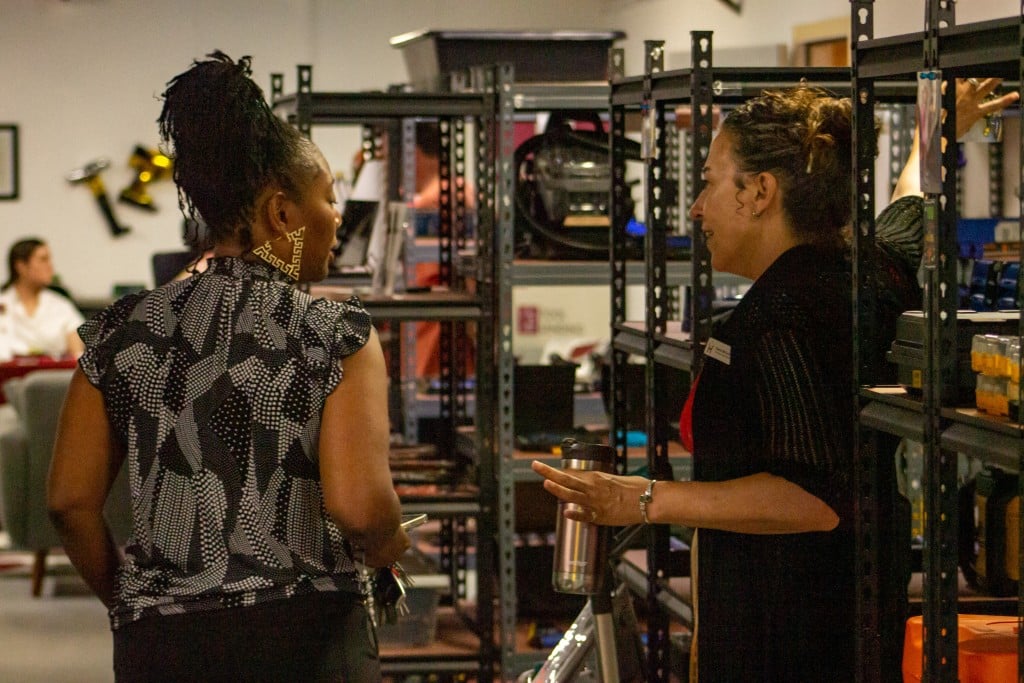
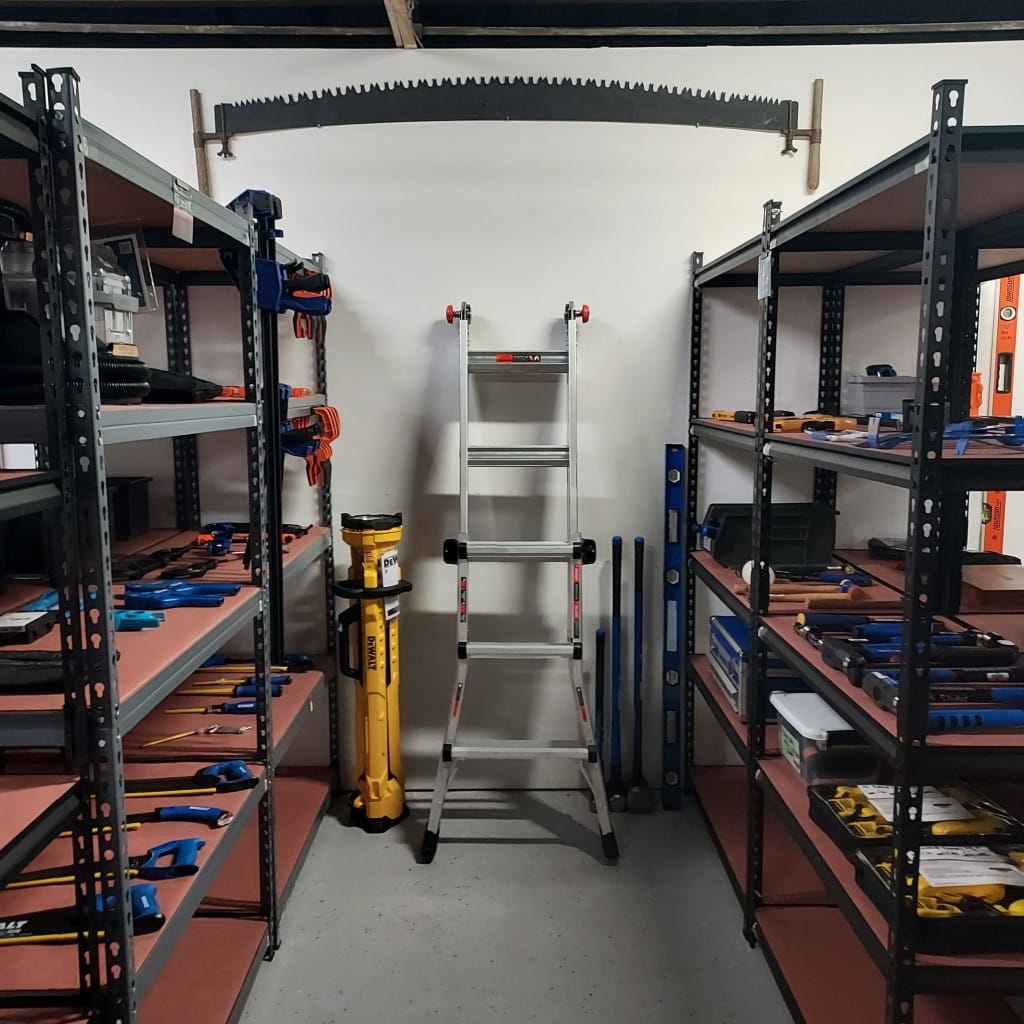
Much like a traditional library, members borrow items they need and then return them. Instead of books, the Tool Library has everything from drills and saws to lawnmowers, carpet cleaners, and specialized equipment.
According to Tool Library Program Manager Rachel McCartney, who joined Community Homeworks in May 2024, the collection has grown to nearly 1,100 tools and serves over 275 members.
“It’s like a book library but with tools,” McCartney explains
Membership is available to any Kalamazoo County resident aged 18 or older, regardless of income or experience level. The annual membership for the Tool Library operates on a pay-what-you-can model, with a suggested contribution of $35. Residents can pay nothing if necessary.
Most tools can be borrowed for seven days, with renewals available depending on demand. The library also maintains a no-fines, no-fees policy, emphasizing communication and shared responsibility over financial penalties.
Yard equipment, including lawnmowers, string trimmers, and leaf blowers, is especially popular, says McCartney. Other high-demand items include carpet cleaners, pressure washers, and power tools. The library even lends live animal traps.

For McCartney, however, the program is about more than equipment. Staff members regularly demonstrate tools, explain safety procedures, and help borrowers identify what they need for particular projects. The items available for rental at the Community Homeworks Tool Library come with safety cards, manuals, and demonstrations to help borrowers use equipment responsibly.
The dual impact of instruction and equipment lending creates a unique pathway: residents can learn a skill, borrow the necessary tools, and apply their knowledge at home over and over again.
McCartney recalls one member who worked with Kalamazoo County’s refugee community and needed to repair his vehicle. An automotive repair shop had quoted him approximately $2,000 for the work.
After visiting the Tool Library, he found the specialized torque wrench he needed, purchased the necessary replacement part online, and completed the repair for approximately $40.The savings allowed him to get back on the road and continue his community work.
In another instance, two brothers began borrowing tools while helping maintain their parents’ separate homes during periods of illness. Moving between the two properties, the brothers tackled projects from interior framing to gardening and other improvements that made their parents’ living environments more comfortable.
The parents have since passed away, and the brothers each own one of the houses. The brothers continue to patronize Community Homeworks educational workshops and are both members of the Tool Library. Their membership allowed them to maintain their parents’ homes and subsequently inherit the homes. Inherited land is one of the most effective roads to generational wealth, and the brothers’ story is one example of how free access to resources and education can change the trajectory of a person’s physical and mental stability.
In 2025, Community Homeworks coordinated 34 in-person educational workshops. The program continues to evolve through its Home Confidence Workshop Series, which includes Homeowner Essentials; Her Home, Her Power; Roots & Renewal; Home for Life; and workshops geared toward youth and family.
Community Homeworks also brings educational programming into neighborhoods to reduce transportation barriers. In 2026, the organization partnered with the Douglass Community Association and Portage District Library to reach more participants.
While affordable housing conversations often focus on purchasing homes or developing new properties, maintaining existing homes is equally essential. Community Homeworks’ Critical Repair Program addresses dangerous conditions including failing furnaces, plumbing problems, electrical hazards, and deteriorating structures like roofing, porches, or stairs.
“We’ve had a record number of apps going out into the community and being returned” so far in 2026 for the Critical Repair Program, says Community Homeworks Deputy Director Kaylen Humes. Because of word of mouth, outreach, and community partnerships, demand for Community Homeworks’ services is higher than ever. In May of this year, a month that is typically much slower for the organization, it received more applications for assistance than in any other single month in its history.
As for where they are headed, McCartney and Humes hope the Tool Library can eventually be housed in a larger space for repair cafés, community tool sales, and larger equipment. Improved transportation options for tool pickup and delivery could also make the program more accessible. For now, the goal remains straightforward: make practical resources available to everyone who needs them.
When asked what she wishes more Kalamazoo residents knew about the Tool Library, McCartney says, “Literally anyone can join.”
Humes similarly emphasized the organization’s commitment to helping residents find solutions, even when Community Homeworks cannot directly provide every service. “We can’t serve everyone, but we want to make sure we aren’t just leaving people high and dry,” says Humes.
By combining shared equipment, accessible education, and direct repair assistance, Community Homeworks is demonstrating that stronger neighborhoods begin with helping residents care for the places they already call home. “This model does work,” says Humes.
As we ended the interview, when asked if there was anything else she wanted our readers to understand about Community Homeworks, Humes says, “I would want them to know that we are here to serve and help in whatever capacity we can. If you have questions or are needing assistance in whatever capacity and you think we could help, give us a call. We never want to be a phone call where all you hear is no… We would love to answer questions and help. We understand it can feel intimidating, and we are working hard to make this not the case when you approach us.”
Residents interested in participating can visit communityhomeworks.org to explore educational workshops, browse the Tool Library catalog, or apply for membership. Workshops are generally held at the Shaun & Emily Wright Education Center, located at 812 Bryant Street in Kalamazoo.
Author

Related Articles
Serenity House closes, but pilot helps five families find permanent homes
Kalamazoo Housing Advocates’ Serenity House helped five families secure permanent housing before closing due to unresolved safety issues and an unresponsive property owner, prompting plans for a new transitional housing program.

Community asked to unite to seek innovative solutions to challenges that lead to homelessness
More than 300 community members aturned out as Kalamazoo Community Foundation leadership challenged the community to unite to address the complex issues behind homelessness.
Blue Horizon Real Estate works to be part of the solution to the affordable housing shortage
Marissa Harrington, founder of Blue Horizon Real Estate, advocates for breaking down communication silos among Kalamazoo’s housing stakeholders to address systemic barriers to affordable homeownership.