
Battle Creek taps experts to create a recipe for success as a food entrepreneur
Battle Creek Food Reimagined focuses on food companies ready to accelerate their growth by helping them remove barriers to regional or national distribution of their products.
Editor’s Note: This story is part of Momentum: The people and companies shaping what’s next, a weekly series that explores new ventures, founder support, and the resources powering entrepreneurship and small businesses across seven counties in Southwest Michigan. This project is sponsored by Southwest Michigan First and produced in partnership with the Southwest Michigan Journalism Collaborative coverage of equitable community development.

The right ingredients combined with a measured approach are yielding unlimited servings of growth opportunities in Battle Creek for would-be food and beverage entrepreneurs through Battle Creek Food Reimagined (BCFR).
Created in 2021, BCFR focuses on food companies ready to accelerate their growth by helping them remove barriers to regional or national distribution of their products.
Funds from the W.K. Kellogg Foundation and the Michigan Economic Development Corp. (MEDC) seeded Battle Creek Food Reimagined. Partners now include JPG Resources, Michigan State University, Grand Valley State University, the Michigan Small Business Development Center, Sprout, and Western Michigan University. Each of the partners provides a unique set of services to the initiative, according to Gabriela Perez Hernandez, Director of BCFR, which is part of Battle Creek Unlimited (BCU).

“We support businesses through accelerator programs, incubator space, mentorship, and funding,” Perez-Hernandez says.
That support became broader on May 5 when BCFR officially opened Launch 269, a coworking office space that occupies the second floor of the Battle Creek Innovation Hub (BCIH) at 50 W. Jackson Street. BCIH is owned by BCU, which has offices there, in addition to its headquarters at 4950 W. Dickman Road. Grand Valley State University (GVSU) also occupies space in the building, which has enabled the school to quadruple its existing footprint in Battle Creek.
Occupancy of BCHI’s second floor provides BC Food Reimagined with a brick-and-mortar location to work from. Besides their offices, the space includes meeting rooms and private office space for food entrepreneurs and others to work from.
On the ground floor is a retail space and commercial kitchen managed by BCFR that is designed for startup food businesses and other smaller food enterprises, including food trucks. This dedicated space is the latest addition to a food ecosystem with many partners and collaborators.
Among the successes borne of this ecosystem is DelectAble Sweets and Treats, says Perez Hernandez, Director of BCFR and a former Kellogg Co. executive. Located on the ground floor of the Innovation Hub, the gourmet bagel and cafe-style bakery offers a variety of cream cheese flavors, smoothies, and other sweet and savory options.

Perez Hernandez says DelectAble’s owner, Felicia Jaramillo, is a “great” example of what’s possible through working with BCFR and other food entrepreneurs in the community. Jaramillio’s customers have the option of adding broccoli microgreens to their orders. The microgreens are grown by Nicole Hart, of Battle Creek, who started her own business, New Eden Microgreens, in 2023.
Jaramillo graduated from Kellogg Community College in 2023 with an Associate Degree in Business Management. During her last semester, for a project she developed a business idea called DelectAble Treats and Sweets. After graduation, she began testing her food products at the local farmers market in May 2024.
Two months later, Jaramillo won a Golden Spoon award at the annual Food Prize event at Kellogg Arena. That raised her visibility and facilitated a connection with BCFR. She worked with Dana Edwards at Sprout BC, a local incubation kitchen, to learn the steps she needed to get her business off the ground. Edwards connected her with the SBDC to receive free business coaching.
Sprout’s incubator kitchen is “our pipeline for early-stage food production,” Perez Hernandez says.
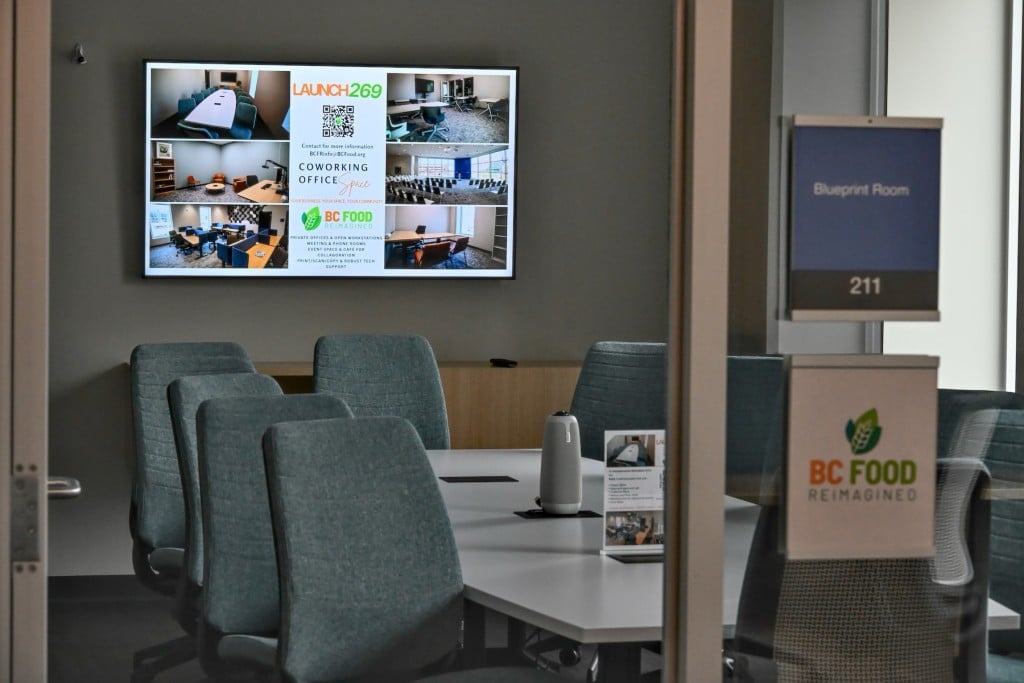

Rooms and areas available in the co-working space managed by BC Food Reimagined
at the GVSU’’s Innovation Hub.

Jaramillo received training through the eight-week Recipe for Success program developed by the Michigan Small Business Development Corp. (SBDC). The training took place through BCFR and was facilitated by staff with the SBDC.
Jaramillo’s location at the Innovation Hub provides space and a commercial kitchen, which gives her the opportunity to grow the business and eventually relocate in two years, giving another business startup the same opportunities to grow.
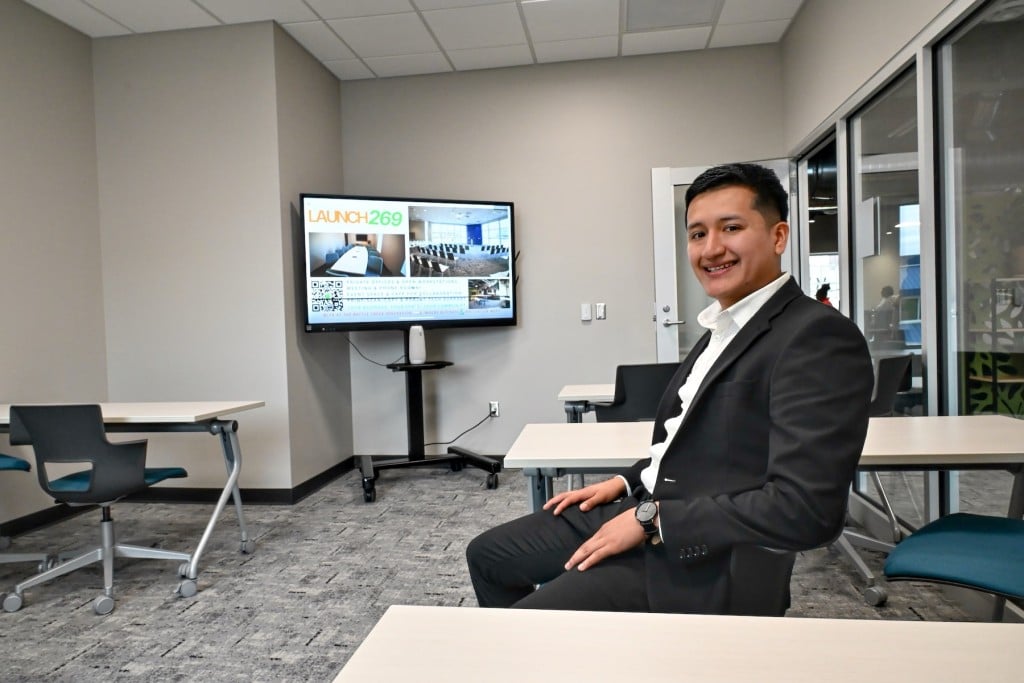
“This lowers the barrier of entry and gives her own space to grow the business and move into her own brick-and-mortar location,” Perez Hernandez says.
In addition to Recipe for Success, those seeking to grow their food or beverage businesses, like Jaramillo, also have the opportunity to participate in a six-month training called Founder Cohorts offered by JPG Resources. The training, developed by Jeff Grogg, Founder and Managing Director of JPG, features industry experts, former employees, and retirees from food-based businesses, including the Kellogg Co. In January, the American Egg Board launched a Founders Cohort in partnership with JPG.
Perez Hernandez says she thinks that the cohort training is “one of the best in the United States and takes these food and beverage brands from regional to the next step.”
Depending on an entrepreneur’s appetite for large-scale growth, these next steps can include marketing and branding, sales channels, public relations and consumer relations, research and development and packaging, supply chain, fundraising, quality assurance and Consumer Packaged Goods (CPG) Legal fundamentals.
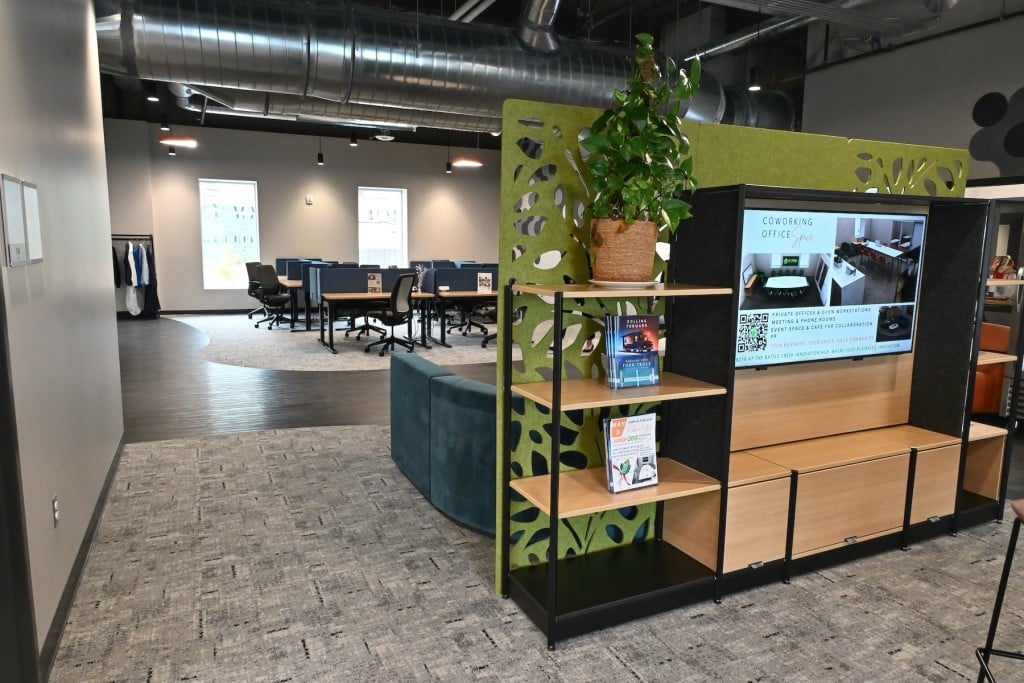
A constantly evolving food ecosystem
Revenue generated by space rentals at Launch 269 will fund programs offered through BCFR, such as the Accelerator Kitchen located at the BCIH.
“People don’t have to be in the food or beverage business to rent space there. Launch 269 will offer opportunities to connect entrepreneurs with service providers,” Perez Hernandez says.
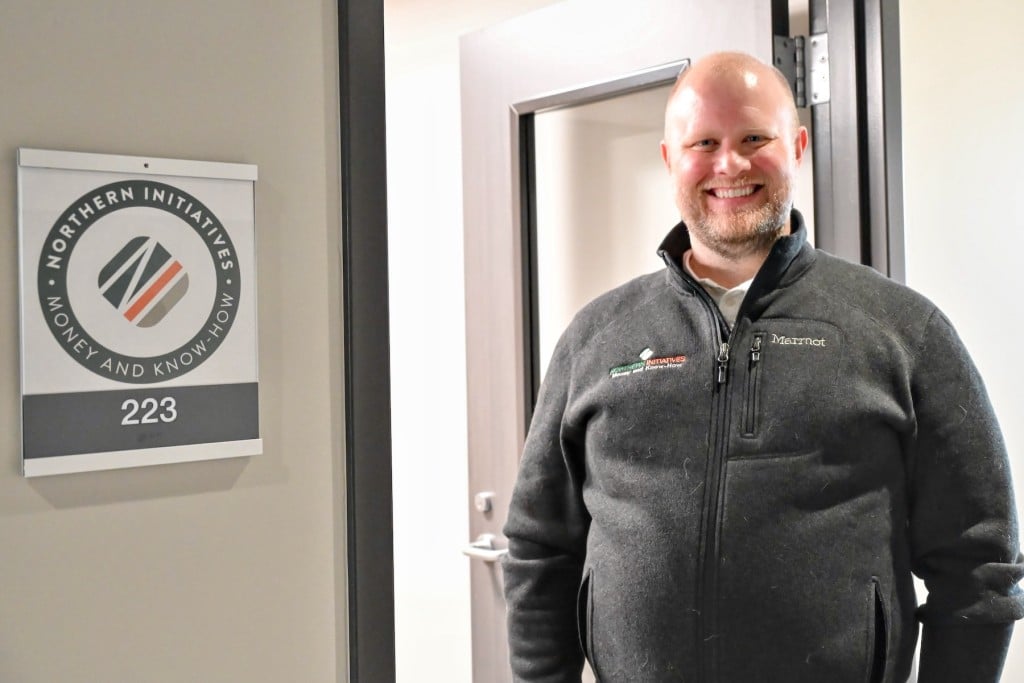
BCFR’s Accelerator Kitchen in the Innovation Hub, which Jaramillo uses, is the next step for entrepreneurs who have worked in Sprout’s Incubator Kitchen. This “next step” enables them to sell their products on site after being approved to do that.
Among the trends that BCFR is looking into is food as medicine. “Functional food that is better for you,” she says. “An area of focus for us is sustainable growing practices, and we have connected with a couple of local farmers on this. Michigan is an agricultural state with a lot of diversity.”
Battle Creek Food Reimagined’s mission and presence continue to grow, as evidenced by clients coming to Battle Creek from throughout the state to access expertise through local companies and organizations that are part of the program’s ecosystem.
“We are very well-positioned to grow and attract more companies,” Perez Hernandez says. “We want Battle Creek to be a hub where food businesses can come to take their products to the next level.”
Related Articles

Gene the Pumpkin Man’s legacy lives on at Evans Acres
After 67 years of growing pumpkins and creating fall memories, the late Gene “Pumpkin Man” Rhodes’ family legacy continues as Evans Acres Family Farm opens with plans to offer year-round family experiences.

‘We go where they are’: Lucinda Stinson’s vision for a more connected Rotary
Lucinda Stinson, the new president of the Rotary Club of Kalamazoo, aims to broaden the organization’s community outreach, increase its diversity and engage members more directly with people and neighborhoods in need.

Strong Leader Series offers practical leadership training for Southwest Michigan
The Strong Leader Series offers Southwest Michigan professionals a three-part, hands-on opportunity to strengthen communication, strategic thinking and team-building skills while learning to lead more effectively.