Battle Creek woman turns healing journey into New Eden Microgreens
After overcoming a life-threatening illness, Battle Creek entrepreneur Nicole Hart launched New Eden Microgreens with support from local business organizations, bringing fresh, health-focused products to stores and restaurants across Southwest Michigan.
Editor’s Note: This story is part of Momentum: The people and companies shaping what’s next, a weekly series that explores new ventures, founder support, and the resources powering entrepreneurship and small businesses across seven counties in Southwest Michigan. This project is sponsored by Southwest Michigan First.
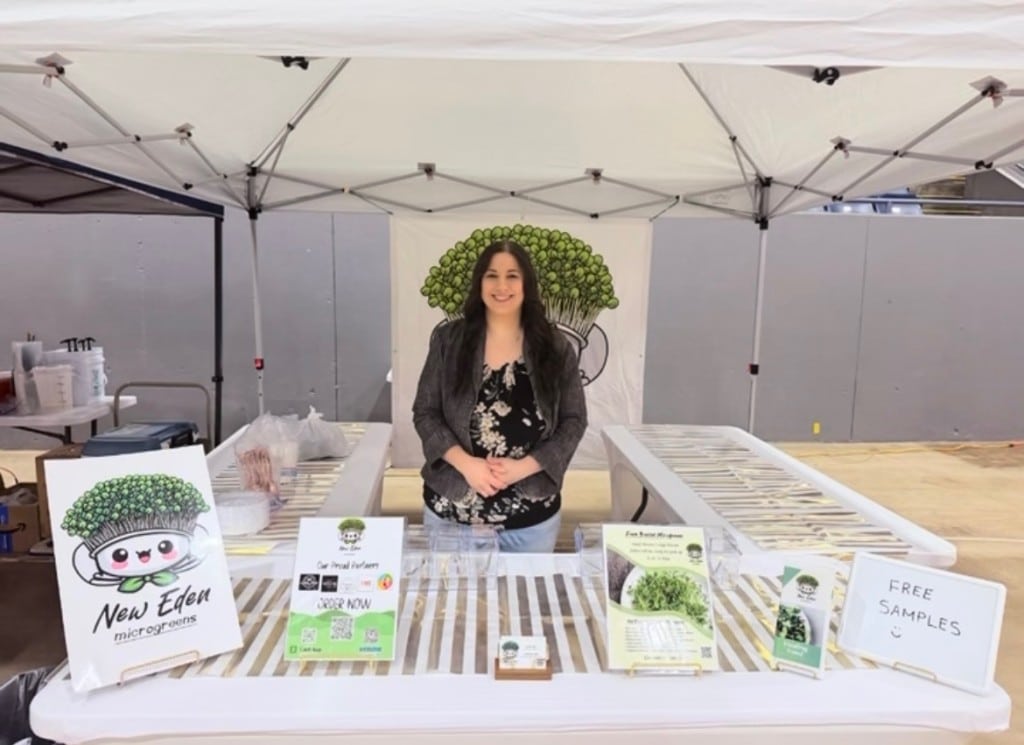
BATTLE CREEK, MI — Nicole Hart never planned to launch a microgreens business. But after a life-threatening health battle pushed her to search for alternatives beyond traditional treatment, the 35-year-old Battle Creek resident found healing — and eventually a new purpose — in broccoli microgreens.
In 2023, Hart founded New Eden Microgreens after discovering the potential anti-inflammatory benefits of broccoli microgreens while battling Helicobacter pylori, a difficult-to-diagnose bacterium that attacks the stomach lining.
At age 30, she began having symptoms of Helicobacter Pylori, a bacterium that attacks the stomach lining, causing peptic ulcers and gastritis. Yet it would take two years for medical professionals to diagnose and establish a treatment protocol that involved heavy-duty medications and procedures.
For those two years in the midst of numerous hospital stays and treatments, she worked as a hairstylist, even while struggling daily with her health, she says.
In 2022, an endocrinologist diagnosed the H. pylori, which Hart says. She began a 14-day course of treatment that included the highest doses of antibiotics and acid blockers. The doctors said she needed to fast from the treatment for 14 days to take another test to see if the infection was gone, so she didn’t get false results. During fasting off the treatment, Nicole got progressively sicker and weaker. She took the test again and was still positive for the bacteria.
The doctors gave her another regimen of the treatment for 14 days. This cycle continued, 14 days on treatment, 14 days off for 4 rounds. At the end of the quadruple therapy antibiotic and acid blockers treatment, Hart was left terminally ill. The bacteria had spread, which caused the inflammation. Her communication between her esophagus and her stomach had completely shut down, and her throat was swelling shut from rapid inflammation.
Things were so bleak, she went to the bank, barely capable of functioning, to get her Will notarized and then called a family member to tell them she was dying and she needed help getting to the hospital.
When Hart arrived at the hospital, she could barely explain that even water had become impossible to swallow. Doctors admitted her immediately for malnutrition. As her involuntary fast continued, the constriction in her throat slowly began to ease. Later, she learned that the caffeine, dairy, gluten, and sugar in her diet had been fueling inflammation, feeding the H. pylori bacteria, and accelerating their aggressive spread through her body.
Once she began eating and drinking again, Hart realized her body could no longer tolerate processed foods. Slowly and carefully, she reintroduced foods one at a time, learning which whole foods helped her heal and which ones triggered inflammation.
“It was the whole foods that I was able to eat,” Hart says. “The bacteria dies if you don’t feed it inflammatory foods.”
On the ride home from the hospital, a family member warned Hart that if her next test still showed H. pylori, doctors would likely prescribe another round of powerful antibiotics and acid blockers — treatment they feared her body could no longer survive. Exhausted and overwhelmed, Hart says she didn’t know where else to turn.
The family member found promising information about broccoli microgreens and their potential anti-inflammatory properties. Within days, he transformed part of Hart’s basement into a growing space, producing 12 trays of broccoli microgreens in just 10 days.
“I started shoveling them by handfuls into my mouth,” Hart says.
Five days later, she was productively back to work as a hairstylist, “like bouncing off the walls back to work. I was eating whole foods and microgreens. That was my turning point. I felt perfectly healthy and lost 60 pounds. This was huge for me. I feel like my body is healing day by day.”
Growing a business and a following
A person of deep faith, Hart says, she was out watering her garden when she had an insight.
“God told me, ‘I gave you the tools to heal, and now it’s time to share those with others,” she says. “I had been growing the microgreens for myself and some people at church.”
Acting on God’s message to her, she talked to her friend, who suggested that she sell the microgreens. This nudge led Hart to Sprout, where she met Dana Edwards, Kitchen Director and Specialist, who provided guidance and resources.
Edwards also connected Hart with experts from the Kalamazoo office of the Michigan Small Business Development Center (SBDC), the Michigan State University Product Center, and Northern Initiatives.
Hart worked with her ex-husband, Bryce, to create her logo design and website, along with other various aspects that became the brand, New Eden Microgreens.
Without this level of support and expertise, she says she wouldn’t have gotten her business off the ground. “I know because I was working from 2021 to 2023 doing direct sales of the microgreens and hardly doing anything with it,” she says.
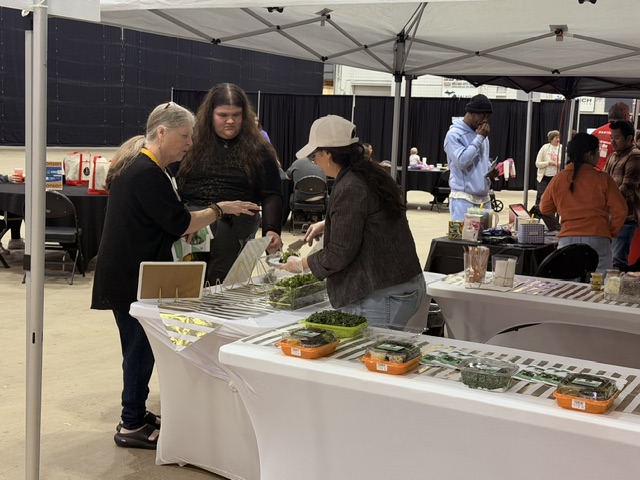
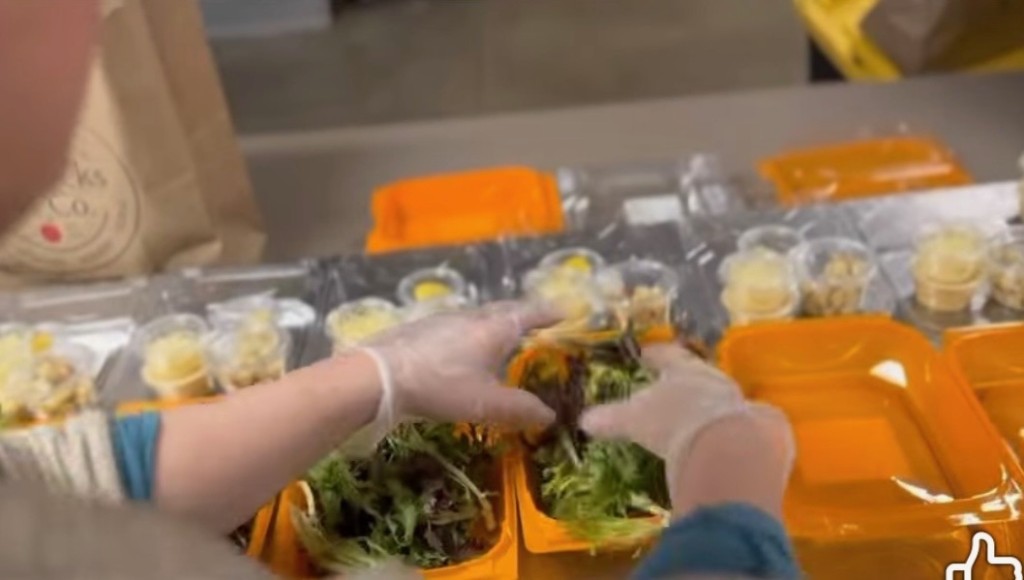
Through Sprout, she was able to get a grant from BC Food Reimagined, which covers the cost to rent space in the Incubator Kitchen where she prepares salads using her microgreens. The salads are being sold locally at Horrocks & Company, Uproot Market and Eatery, Eaton Meat in Charlotte, and the Capital City Meijer Market and Horrocks Farm Market in Lansing.
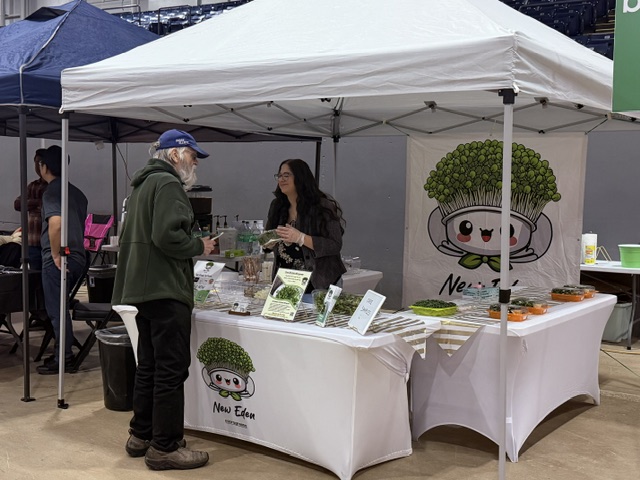
“They all have different specialty areas to help my business. All of a sudden, I had a system and knew the direction I had to go,” Hart says.
New Eden has recently partnered with DelectAble Treats & Sweets, which offers Microgreens as an add-on to anything on their menu.
The microgreens are also being used in specialty items and as a base for Poke Bowls at Tiny Branch Sushi and Boba, and all original New Eden Microgreens salad recipes are offered on Tiny Branch Sushi and Boba’s website, made fresh in-house.
“This collaboration is really exciting for both of our businesses because we are creating access together to fast food and delivery that is healthy,” Hart says.
Hart met the owner of Tiny Branch during the Food Prize 2026, held annually in Battle Creek. She was the first-place winner in this pitch competition and is using the $10,000 prize to move into a manufacturing space, which will increase microgreen growth capacity.
“This is one of the quickest and healthiest crops on the planet. It goes from seed to harvest in 10 days,” Hart says. “I’m at 75 trays per week and can move the capacity up pretty quickly.”
In addition to her salads, containers of her microgreens are being sold at area grocery stores and through direct sales.
A recovery sparked a business
At age 22, Hart began with “grapefruit-size abscesses” growing on her ovaries.
“All they could do was remove them as they came,” Hart says. “I had five or six surgeries within a couple of months to remove them. Every time they would take one out, they grew back quicker.”
After the last surgery, she was experiencing “excruciating” pain in her legs and hips. Her doctor at the time put it down to the trauma she’d been through and the scar tissue left by those growths and surgeries. He prescribed pain medications, and she sought further relief in a hot tub at her home.
While immersed in the water, an abscess ruptured, and a family member heard her screaming for her mother, who lived in Florida.
He got her to the hospital, where she went into multiple organ failure.
“I was clinically dead,” she says. “ They did emergency surgery. The infection was absolutely everywhere. I lost all of my female parts that day and also had my appendix removed. They used antibiotics to treat the infection in my other organs.”
The good news, the doctor told her, was that “you’re alive and it’s a miracle you’re still here. The bad news is that when I opened you up, the infection was everywhere, and I wasn’t able to see. I had no choice but to start cutting and pulling the infection out of your body. He explained that he had to cut through her intestines, and the more infection he pulled out of her body, the quicker she was coming back to life.
“You’re going to have lasting effects,” the doctor told her, “scar tissue development and chronic issues going forward, but at least you are here.”
Within seven months, she went from 115 pounds to 215 pounds, a bitter pill for a self-described physically active person.
She was able to work her job as a hairstylist, but had excruciating pain.
“I suffered silently for 10 years plus. If you saw me and didn’t know me from before, there was nothing wrong from the outside; I just looked like I struggled with obesity. I was grateful my life was preserved, but I really struggled, and that caused mental health issues.”
She never could have imagined before that the microgreens would heal her from the bacteria, but would also help her body recover from the trauma her body experienced before.
The chronic pain is gone, and she knows she’s in a better space because she’s losing weight and feeling better physically and emotionally.
“I wake up, and I’m excited to get in my garden. It makes me happy to know many people are eating my salads and feeling better. There’s a lot of purpose in this for me.”
Author

Related Articles

Gene the Pumpkin Man’s legacy lives on at Evans Acres
After 67 years of growing pumpkins and creating fall memories, the late Gene “Pumpkin Man” Rhodes’ family legacy continues as Evans Acres Family Farm opens with plans to offer year-round family experiences.
‘We go where they are’: Lucinda Stinson’s vision for a more connected Rotary
Lucinda Stinson, the new president of the Rotary Club of Kalamazoo, aims to broaden the organization’s community outreach, increase its diversity and engage members more directly with people and neighborhoods in need.
Strong Leader Series offers practical leadership training for Southwest Michigan
The Strong Leader Series offers Southwest Michigan professionals a three-part, hands-on opportunity to strengthen communication, strategic thinking and team-building skills while learning to lead more effectively.