Short-term pain, long-term gain: Kalamazoo begins biggest Downtown street transformation in 60 Years
Construction is underway on Kalamazoo’s long-planned Streets for All project, with city leaders and downtown businesses acknowledging years of disruption while promoting the $100 million overhaul will create a safer, more accessible, and more vibrant downtown.
Editor’s Note: This series explores the ongoing transformation of downtown Kalamazoo. From a new arena rising and streets transforming to fresh businesses opening and festivals drawing crowds, these changes are redefining how we experience the heart of downtown. This project is sponsored by the City of Kalamazoo. All photos were taken by Mark Wedel.
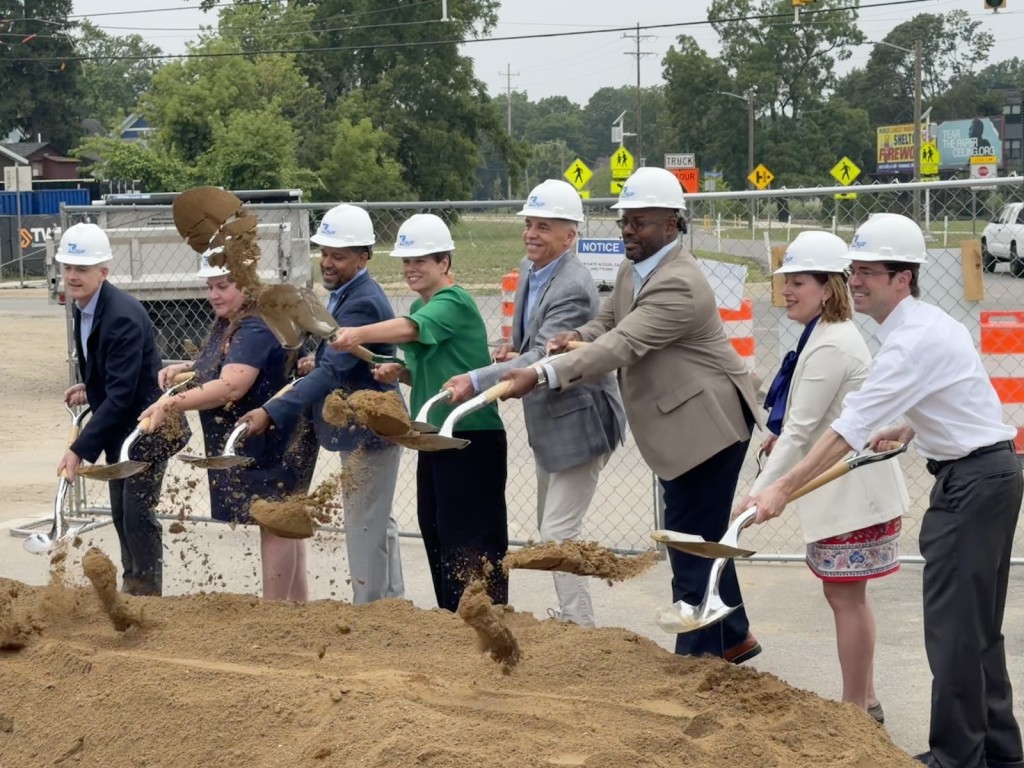
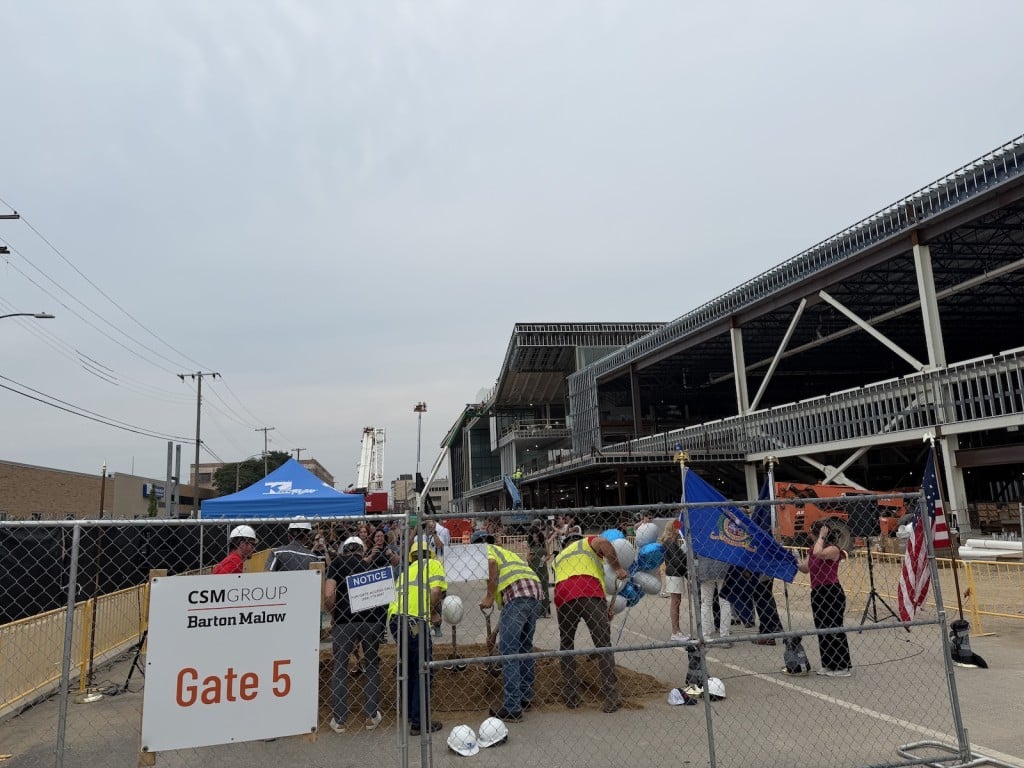
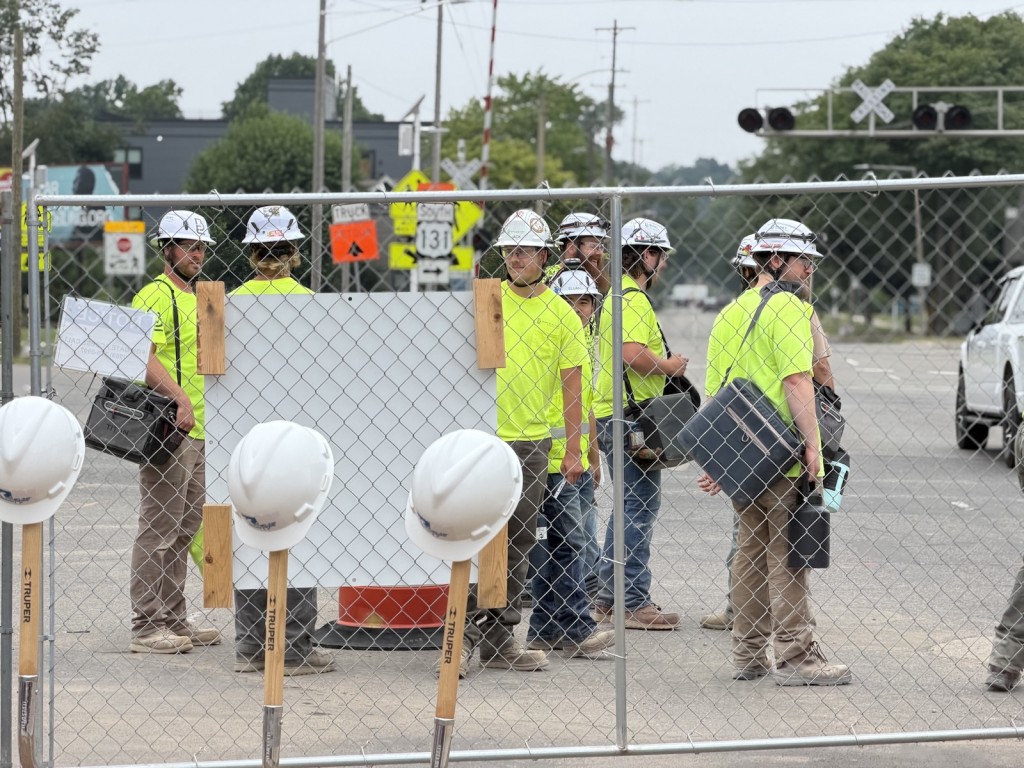
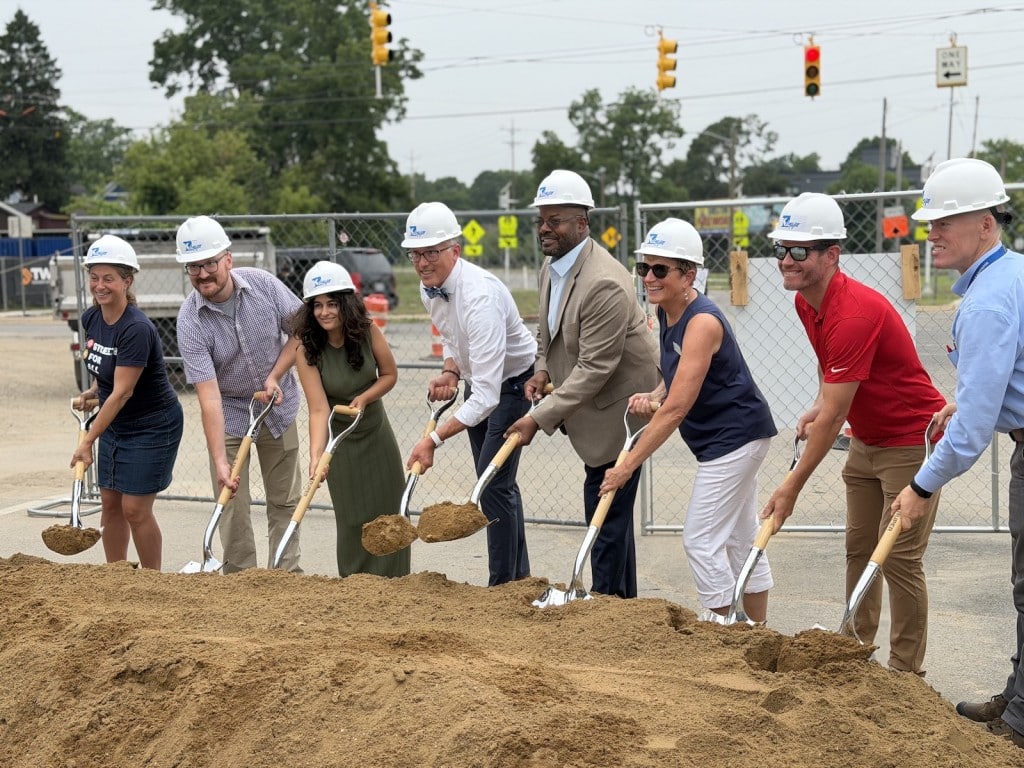
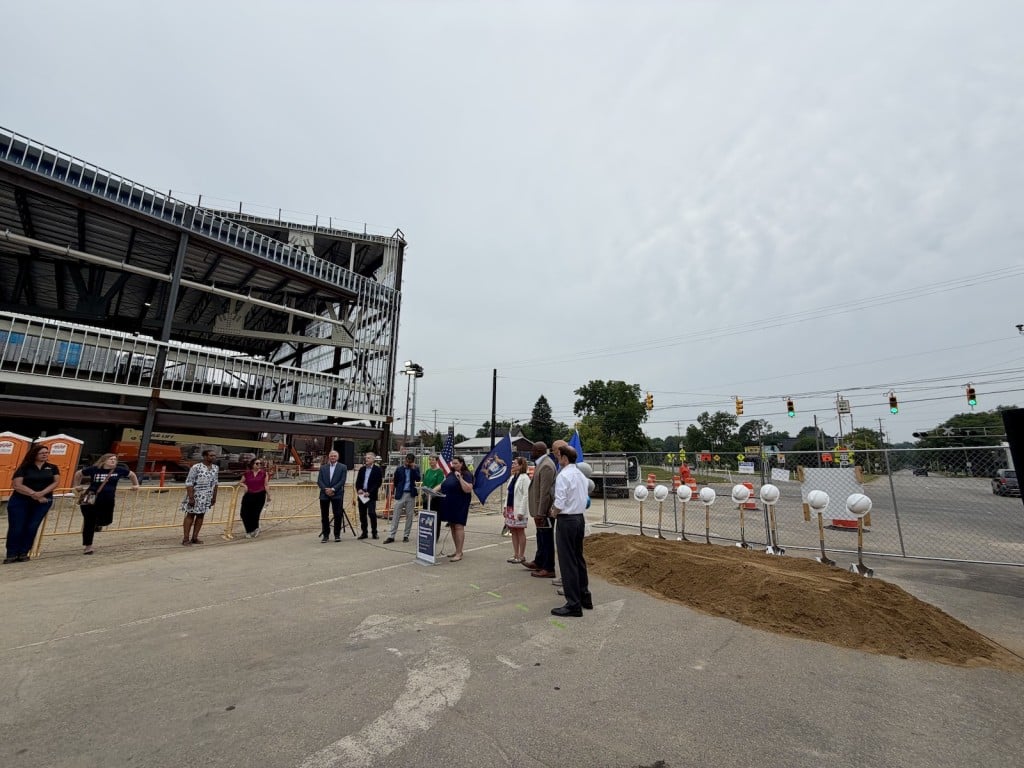
KALAMAZOO, MI — On Monday, July 20, backed by the noisy sounds of Event Center construction and passing Kalamazoo Avenue traffic, the City held its official groundbreaking for a transformation.
The conversion of Kalamazoo Avenue, Michigan Avenue and other streets to two-way, along with massive changes to the surrounding infrastructure, will be the biggest project since MDOT converted City streets to one-way in the mid-1960s.
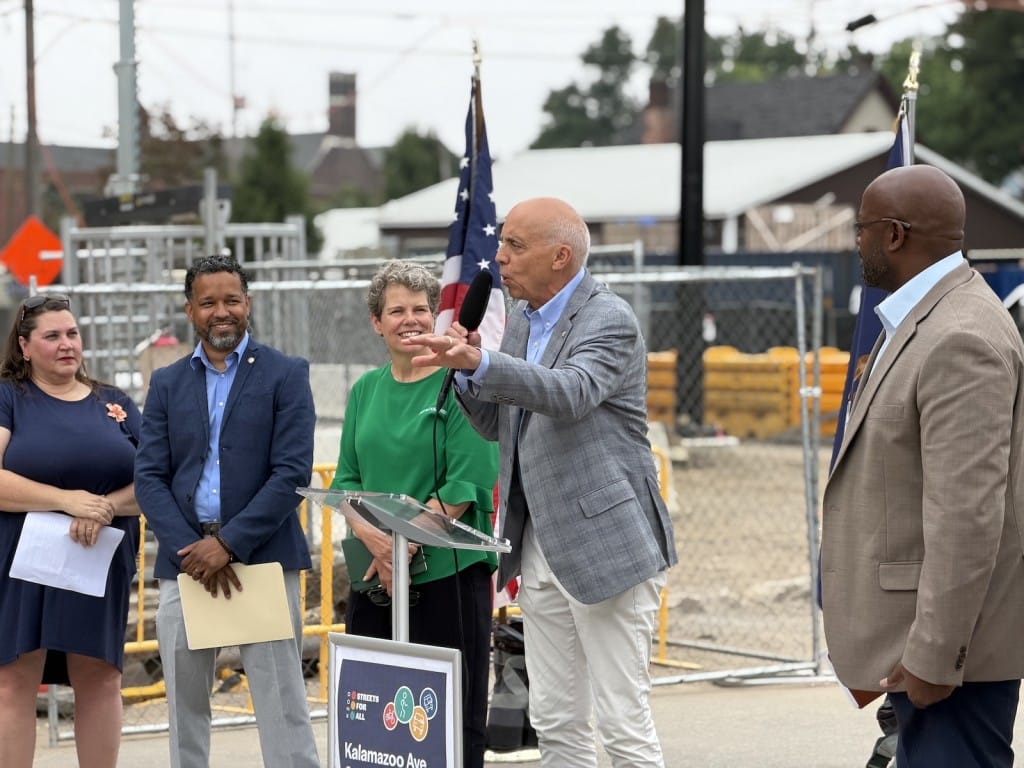
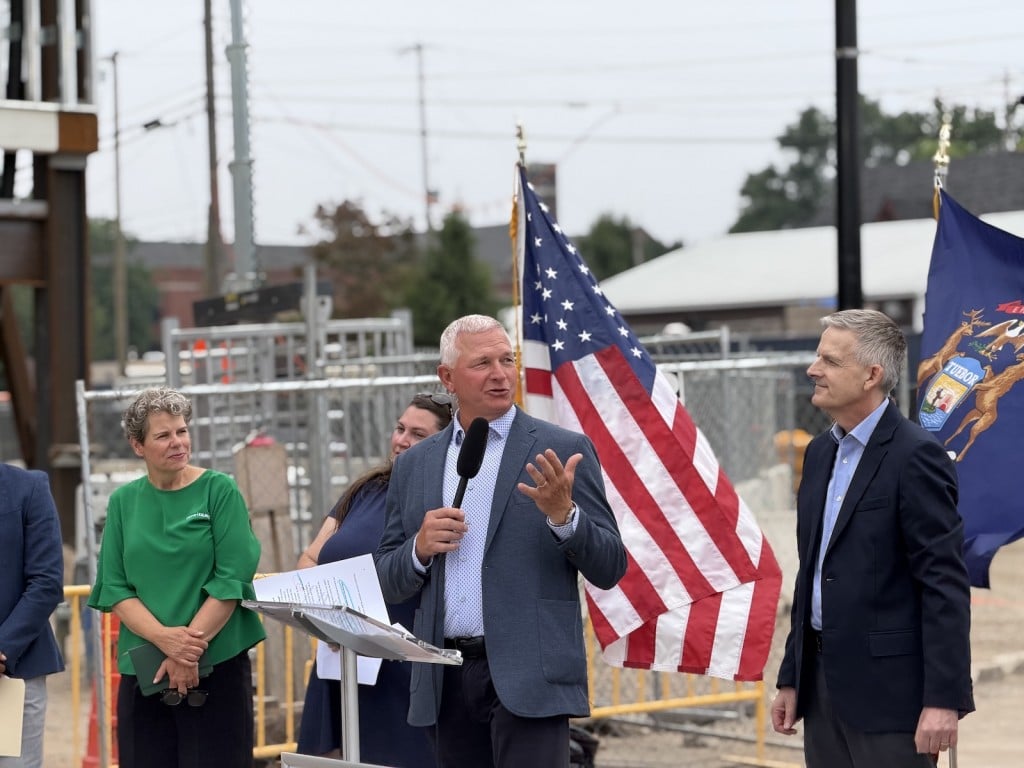
Kalamazoo Forward Ventures Managing Partner Eric Cunningham, who advocated for the Streets for All project in 2015 as a Kalamazoo City Commissioner, got some enthusiasm out of the gathered elected officials, media, and business representatives.
“If you’re excited to be here, let me hear you say, ‘Oh yeah!'”
“Oh yeah!” people reply.
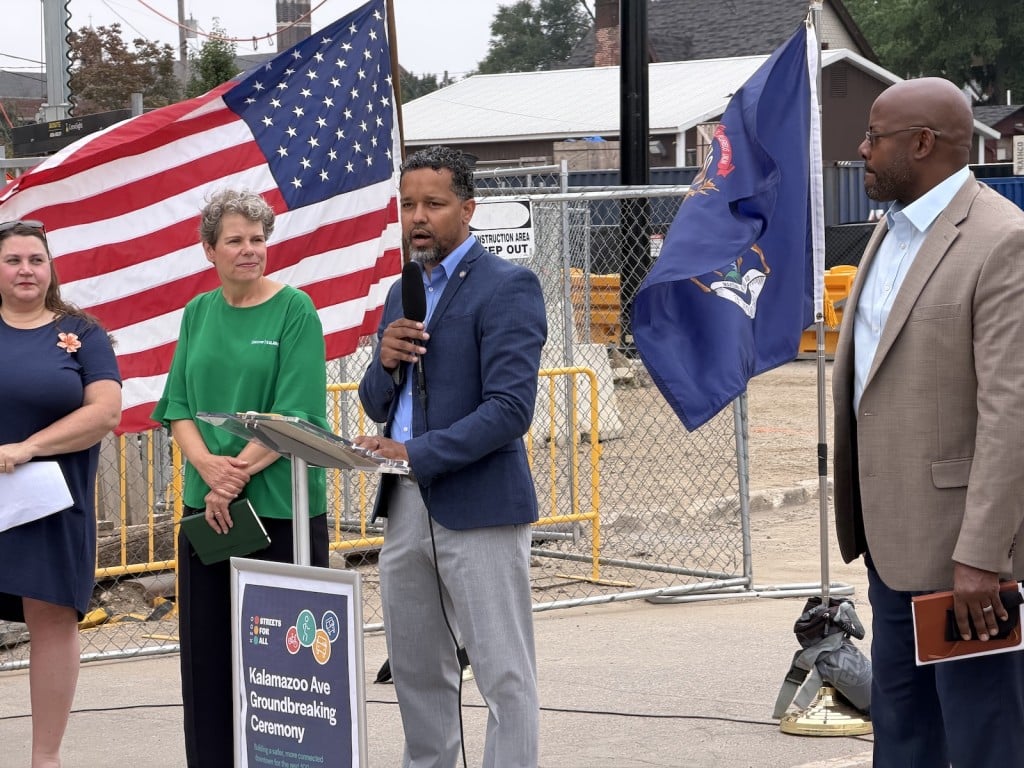
Cunningham says he’s excited for the change. “I’m especially excited for something simple. The opportunity to drive through our Downtown from an entirely different perspective. Sometimes changing the direction of a street changes the way we see our city and the possibilities ahead.”
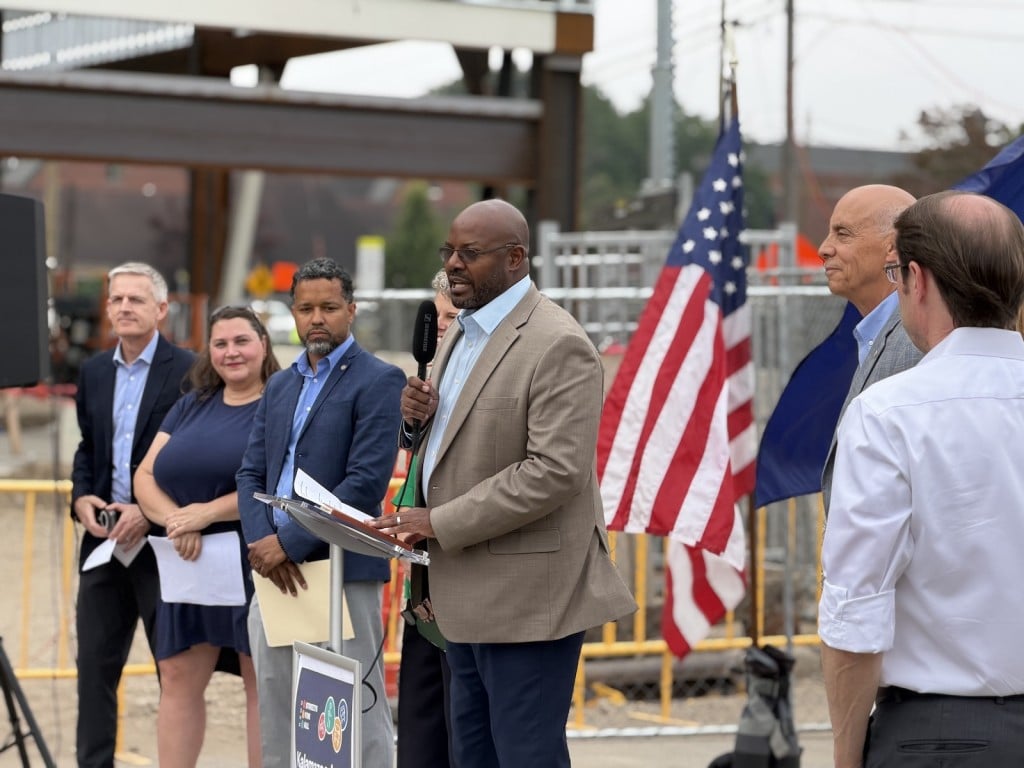
The work on Kalamazoo Avenue “represents a more than $21 million investment in areas of our downtown that will contribute to safety, and the ability for our businesses to have travelers come and go,” Kalamazoo City Manager Malcom Hankins says during opening comments. “Our bicyclists, our pedestrians, our drivers will all benefit from this project. We will have a safer and more accessible downtown.”
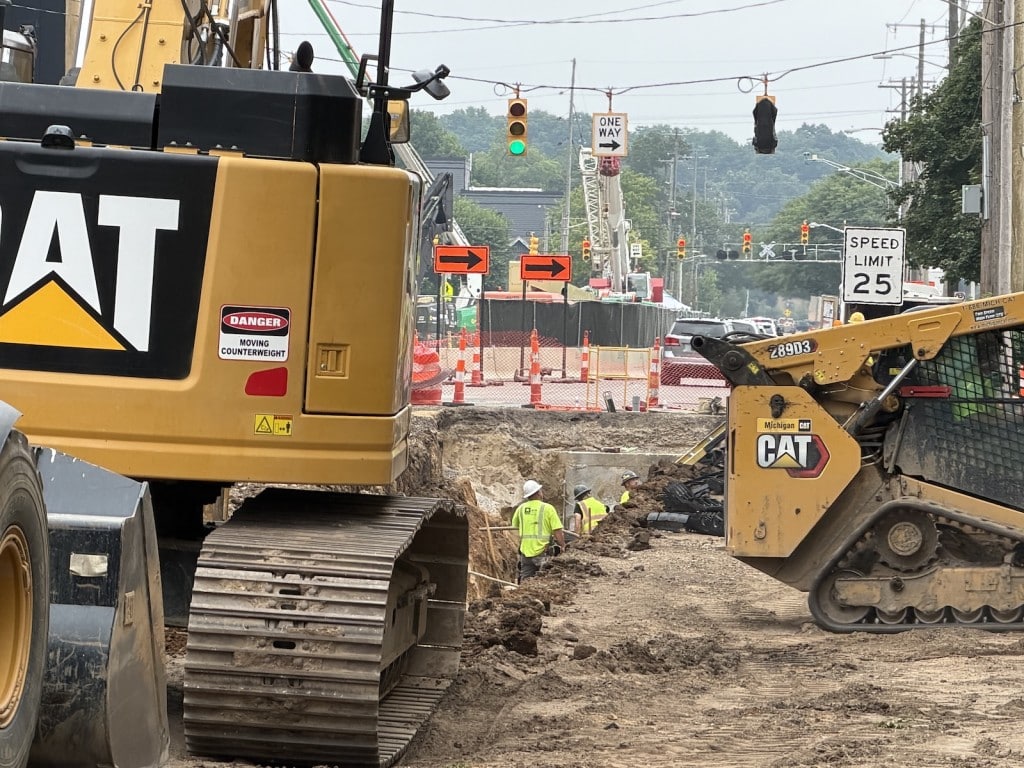
The $21 million project is, specifically, for the conversion of Kalamazoo Avenue. That is part of the $100 million going into the Kalamazoo Streets For All project.
The conversions also include remaking intersections with modernized signals, moving of wires underground and modernizing utilities; creating new sidewalks and bike infrastructure; and installing new street lighting and landscaping.
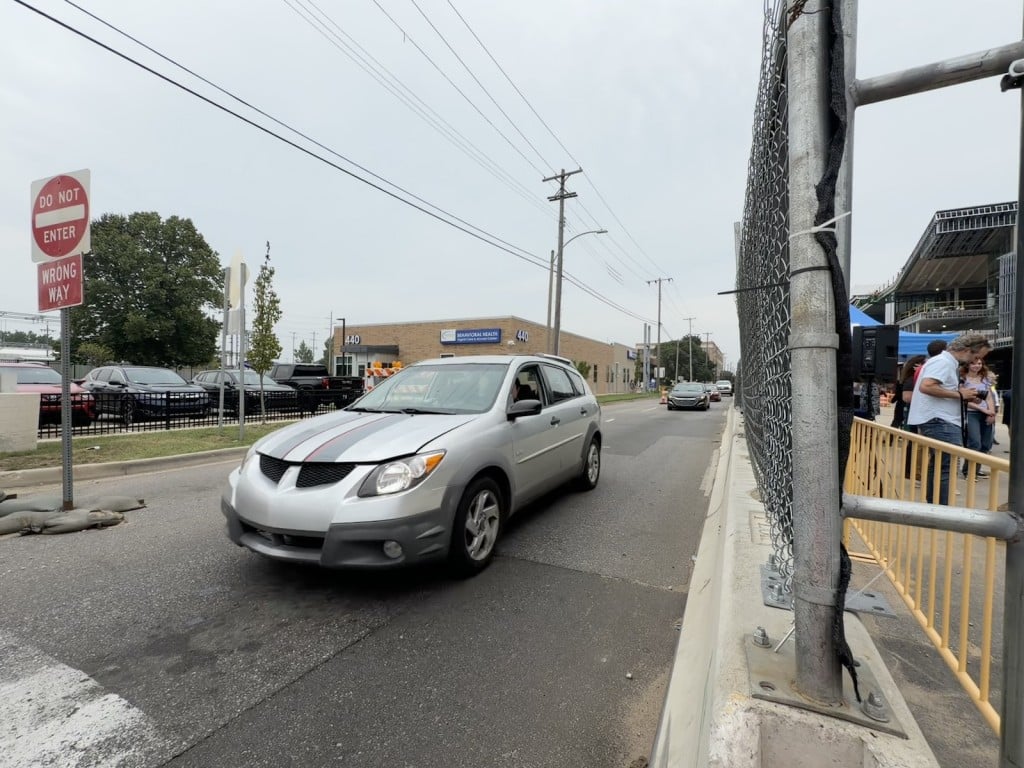
The entire project is expected to be finished in 2030.
(See Second Wave’s detailed outline of the Streets For All project.)
66 years ago: Pedestrian-friendly Downtown Mall launched
Mayor David Anderson highlighted the history of changes to the City, back to the mid-century shifts of commerce to the suburbs, and the changes in Downtown traffic patterns.
Anderson remembers being a child going Downtown to shop at the big department stores and see movies with his parents. “And then things changed.”
Businesses started leaving Downtown. Plans to make all of Downtown pedestrian-centered led to the pedestrianized Kalamazoo Mall being built in 1959, 66 years ago.
The Mall was an effort to keep shoppers and businesses in the City. But over the next six years, motor traffic intensified, thanks to changes in Kalamazoo’s main streets.
One-way, multi-lane streets didn’t stop businesses from leaving. Anderson points out that the 196’s changes to the streets prioritized speed, and the conversions to one-way hurt businesses. “Businesses at that time talked about how hard it was for their business when that happened,” he says.
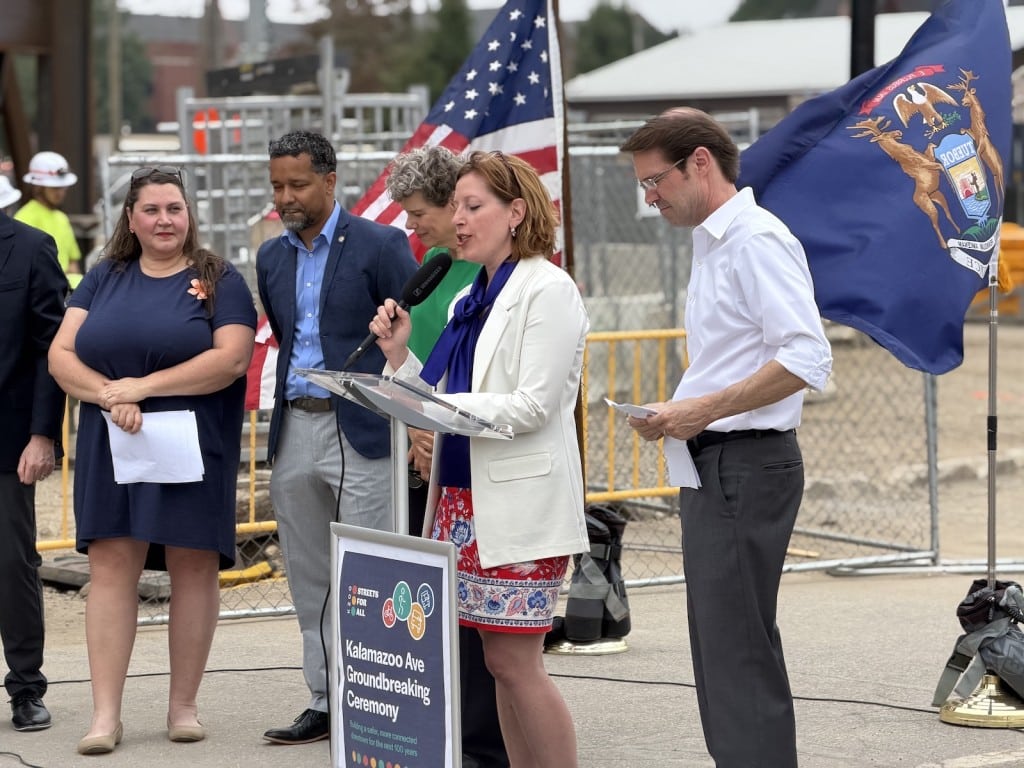
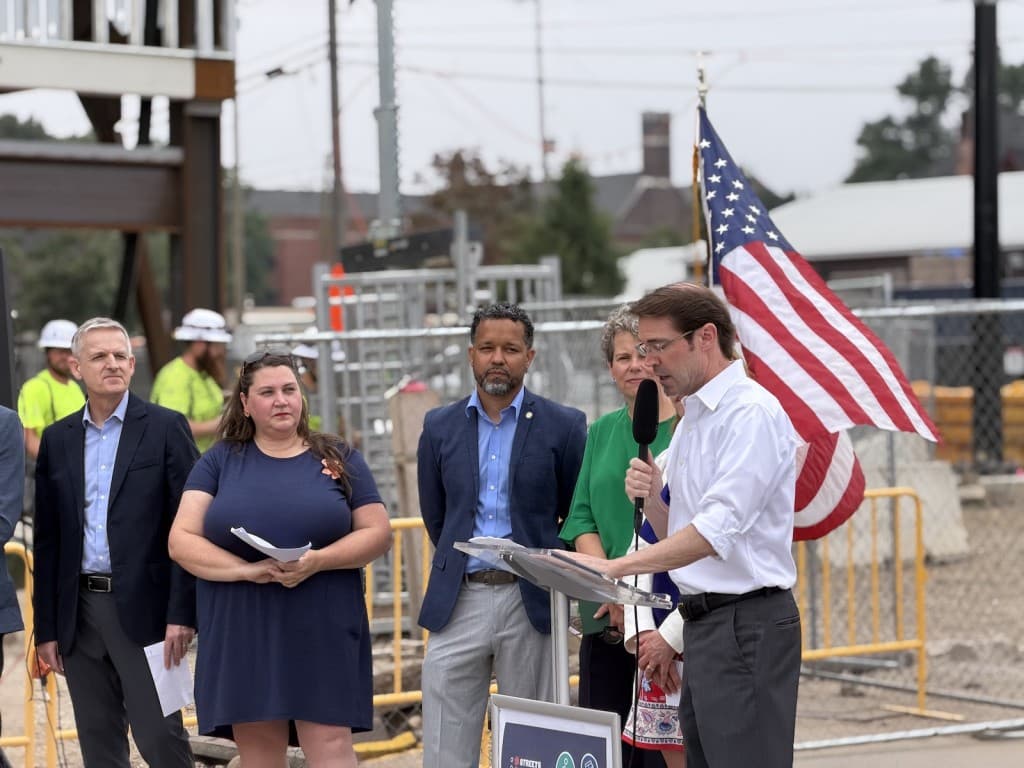
“So here we are now, trying to respond to the times, trying to make sure that we still are an active place for connection, for commerce, for a place where we can be together,” Anderson says. “It’s not going to be easy, but there’s going to be a great story on the other side, that maybe someone else can talk about 66 years from now.
Short-term pain, long-term gain
There is going to be some disruption during the construction, most of the speakers acknowledged
Though not all painted the work in a negative light. “I heard a lot of comments today about construction being painful, about hearing a lot of noise in the background. But remember, to many of us, that’s music to our ears,” Todd McDonald, CSM Group Project Executive for the Kalamazoo Event Center, says.
The $515 million arena is expected to bring in more business and people to Downtown. Jane Ghosh, Discover Kalamazoo President and CEO, announced that hopefully, if bids are successful, Western Michigan University men’s Bronco hockey team will be playing NCAA Division 1 regionals in the arena. Regionals with the WMU women’s gymnastics team, and other events could also be at the Downtown arena.
“Just the regional gymnastics alone, if we’re able to host that, that would have a $5 million economic impact on our community,” Ghosh says. “It’s going to be short-term pain, but the long-term gain is absolutely going to be worth it.”
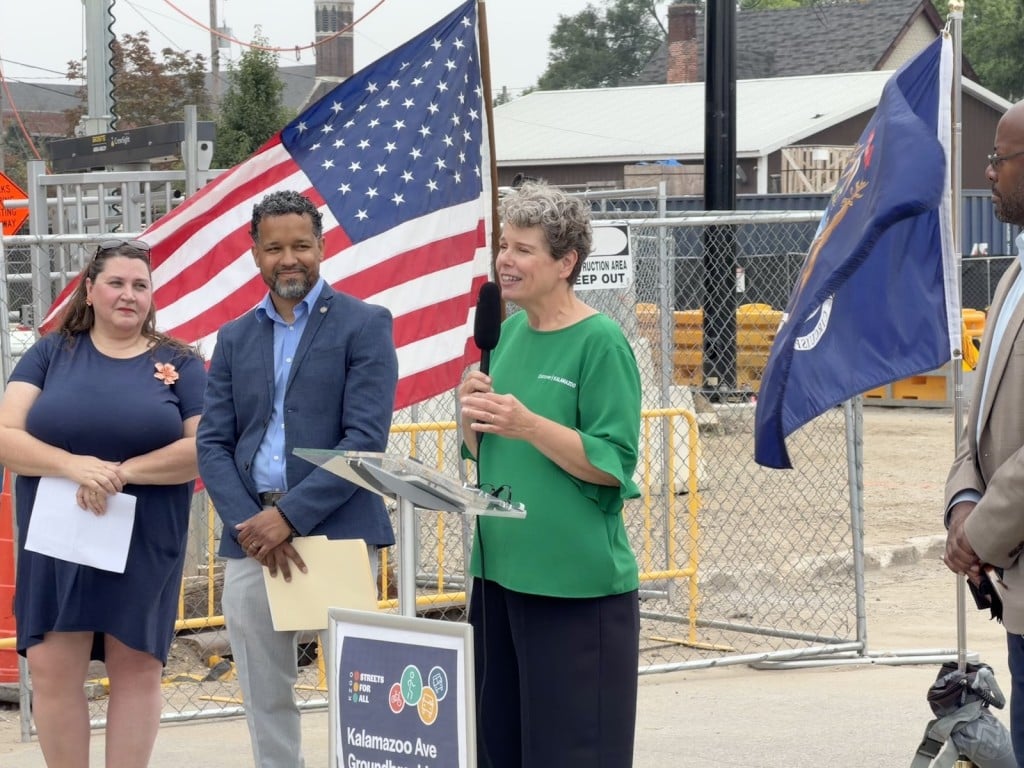
Ghosh also says that the change will make it easier for visitors to get to Kalamazoo businesses.
The current one-way streets “really act as an obstacle for people being able to explore downtown,” she says. If someone new to Kalamazoo is in Bronson Park, for example, “how do you explain to them how to get to Bell’s?”
Ghosh adds, “We have fabulous small businesses, locally owned and operated businesses north of Kalamazoo Avenue that people never get to because this road acts as an artificial barrier for people exploring more into the north.”
But construction will also be a hindrance for a few years.
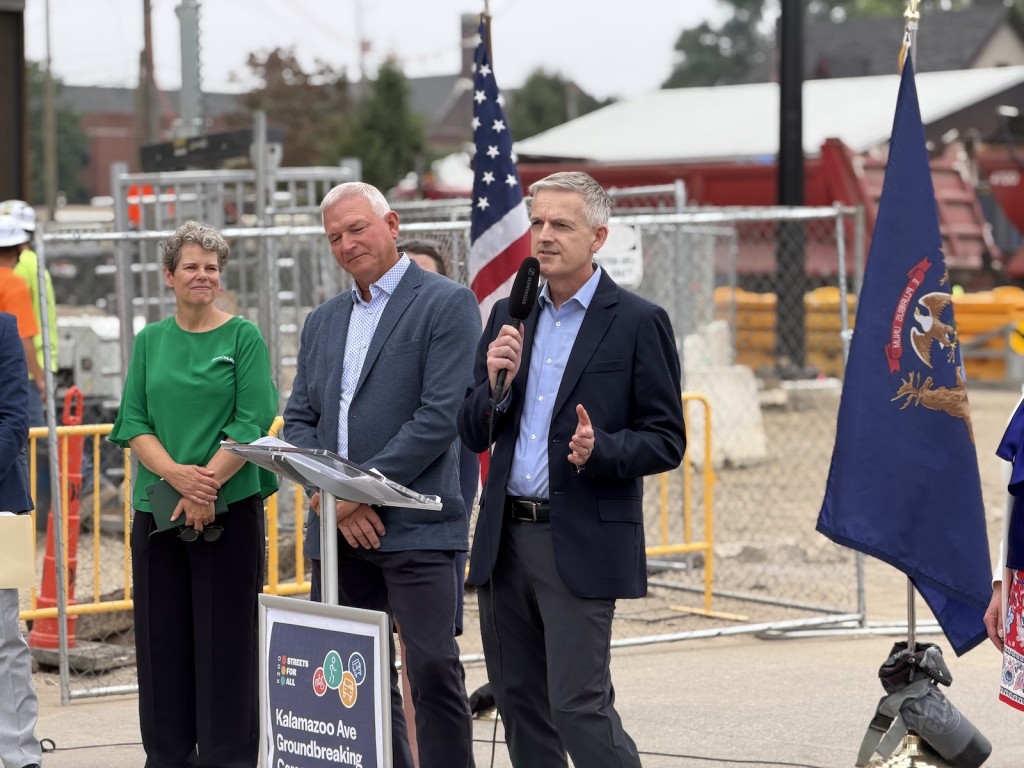
“Construction isn’t always exciting while you’re living here,” Becky Bil, co-owner of Pop City Popcorn and organizer of local business group Downtown Kalamazoo Collective, says. “It can mean orange barrels, detours, changing traffic patterns, and a little extra patience. But it’s also a sign that we’re investing in our future.”
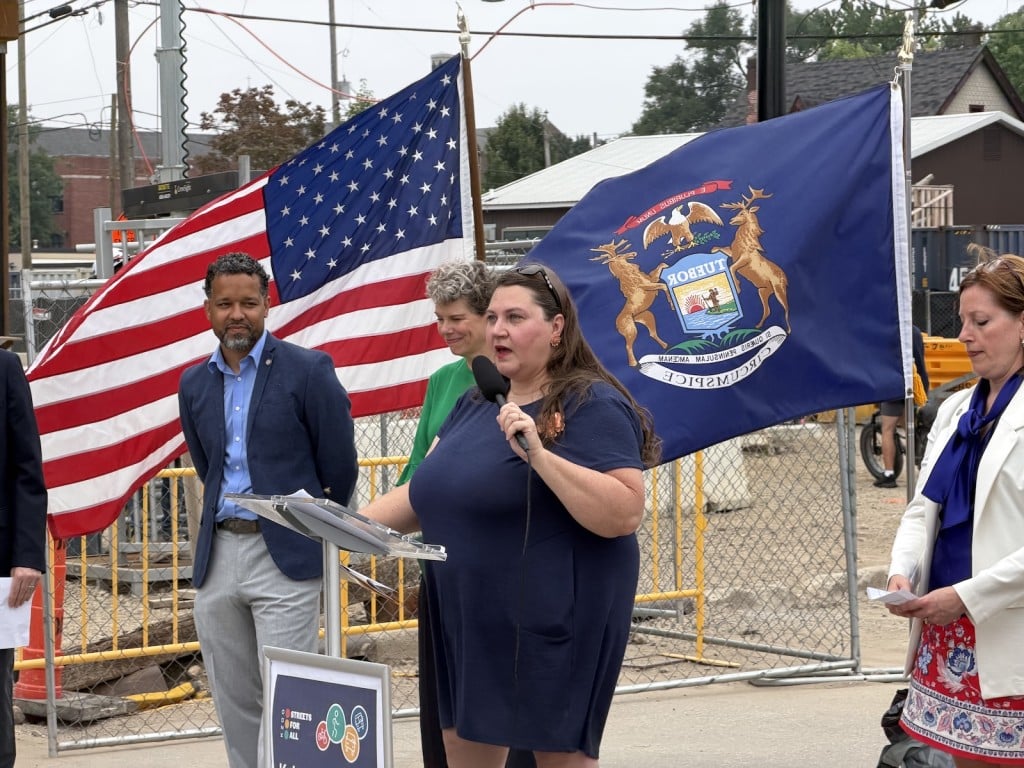
Bil calls on consumers to continue to support Downtown businesses. “I want everyone to know one simple thing. Downtown is still open.”
She continues, “Yes, it may take an extra minute to find parking or navigate a new route, but those extra few minutes can make a tremendous impact on the local businesses that make downtown unique. Every cup of coffee, every lunch meeting, every purchase, every gift, every dinner out, and every visit sends a message that these businesses matter.”
Author

Related Articles
Move over, kids: Gull Meadow Farms has a night for grown-ups
Gull Meadow Farms is giving adults their turn at fall fun with the return of Adult Only Night on Oct. 1, featuring classic farm attractions, hard cider, food and games for guests 18 and older.
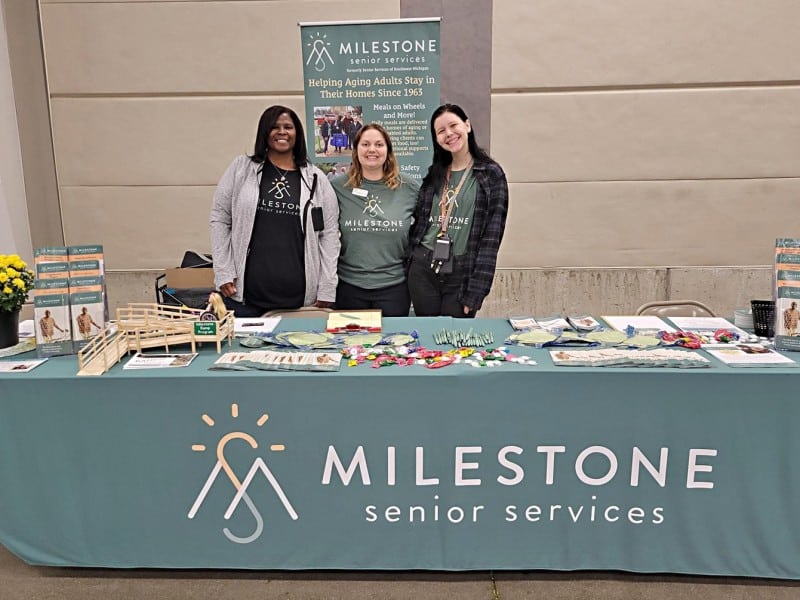
Senior Expo puts Kalamazoo-area resources all under one roof
The annual Senior Expo brings more than 150 organizations together to connect older adults, caregivers and families with information, services and resources available throughout Kalamazoo County.
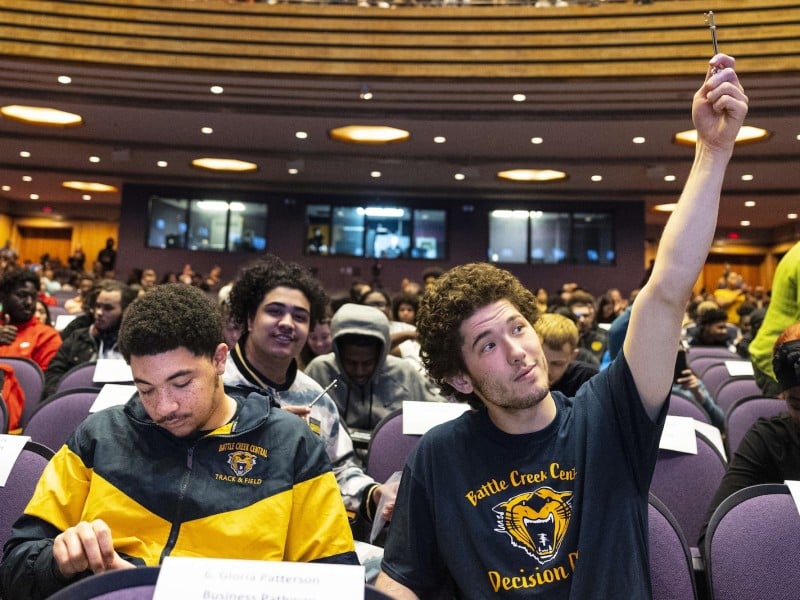
Three years of Bearcat Advantage: How Battle Creek’s free-college program is changing students’ plans
Three years after launching the Bearcat Advantage, Battle Creek Public Schools is seeing higher graduation rates and more students planning to attend four-year colleges, while the district works to make college more accessible.