Childcare fraud myth misses the larger story
The disproven allegations have burdened providers and threaten access as fewer seek to enter the field.

When allegations surfaced in June that a childcare facility in Macomb County had improperly received more than $1 million in state childcare funds, the claims quickly spread online and reignited familiar conversations about fraud, waste, and abuse in public assistance programs.
There was just one problem. According to the Michigan Department of Lifelong Education, Advancement, and Potential (MiLEAP), the allegations were false.
In a public statement, MiLEAP clarified that the facility named in the accusations was not a licensed childcare provider in Michigan and had not received any Child Development and Care (CDC) scholarship funding. The department emphasized that the state maintains multiple layers of oversight, including eligibility verification, audits, monitoring, and enforcement actions when necessary. Nearly 50,000 Michigan families rely on the scholarship program to access affordable childcare each year.
“The Child Development and Care scholarship provides nearly 50,000 Michigan families access to safe, reliable, and affordable childcare,” MiLEAP Director Dr. Beverly Walker-Griffea said in the press release. “We ensure every dollar invested is supporting children’s development, strengthening families and sustaining Michigan’s childcare system.”
For many providers and advocates, however, the incident highlighted something larger: The persistence of a narrative that paints Michigan’s childcare system as rife with fraud despite little evidence that widespread abuse exists.

A sector under suspicion
For longtime Detroit childcare provider Arleen Allen, the conversation feels disconnected from the realities providers face every day.
“I do believe in accountability because public funds should be used appropriately,” Allen says. “But these conversations focus on small numbers and fail to recognize the mass number of childcare providers who work tirelessly every day to serve families with integrity.”
Allen says providers are navigating staff shortages, rising food and utility costs, insurance increases, changing licensing requirements, professional development mandates, and reimbursement systems that often fail to reflect the true cost of care.
“We’re not getting rich,” she says. “We’re trying to balance staffing shortages, rising costs, regulatory requirements, and the changing needs of families while keeping our doors open.”
According to Allen, fraud allegations can also erode public trust in providers who often serve as far more than educators.
“We’re educators, counselors, advocates, support systems for families,” she says. “When discussions focus heavily on fraud, it overshadows the positive impact providers have on children and their development.”
Allen helps families access GED programs, workforce training opportunities, housing resources, and food assistance while supporting children’s educational development.
“We become family,” she says. “We’re building stronger families and stronger communities.”

Administrative burdens and unintended consequences
For providers already operating with thin margins and limited staff, advocates worry that additional oversight intended to prevent fraud may create new barriers for legitimate providers.
Lisa Leverette is director and chief change orchestrator at Community Connections Detroit the convener of Provider’s Place, an early childhood provider network. She says the accusations have landed as a “devastating” blow to providers who have historically been undervalued and underpaid.
“The folks that I work with are some of the most selfless and giving souls that I’ve ever encountered,” Leverette says. “To question their integrity while they are educating, caring for, feeding, nurturing, and supporting children is a huge blow.”
Leverette argues that many concerns labeled as fraud are more accurately described as reporting or paperwork errors occurring within an already complex administrative system.
“There may be some improper reporting that results from under-resourcing and understaffing,” she says. “That’s very different from fraud and abuse.”
She worries additional compliance requirements could actually worsen the problem.
“If you increase the amount of administrative work, you inherently create more opportunities for errors while taking time away from teaching and nurturing children,” Leverette says.
The consequences extend beyond providers themselves.
Michigan’s childcare workforce is aging, with many providers approaching retirement age. Fewer younger workers enter the field because of low wages, heavy administrative burdens, and limited public recognition.
“These narratives are doing nothing to encourage the next generation of childcare providers to enter the field,” she says. “Providers are increasingly asking who will do this work in the future.”

The bigger challenge: Access
For families, community advocates say the more pressing issue is not fraud but access. Furqan Khaldun, co-coordinator for Hope Starts Here‘s Imperative #2; Detroit Champions for Hope, points to shortages in licensed childcare slots, transportation barriers, staffing challenges, and a lack of care options for parents working nontraditional hours.
“The actual number of available childcare slots is a major barrier,” Khaldun says. “Providers aren’t reimbursed at rates that make the business sustainable, and workers can often make more money elsewhere.”

Khaldun emphasizes that many Detroit families work shifts in manufacturing, healthcare, and service industries that require care outside traditional business hours.
“There is very little overnight or off-hour childcare available,” Khaldun says. “Even when providers exist, transportation and scheduling become significant barriers.”
Khaldun also pointed to data suggesting widespread fraud is not occurring.
“I haven’t seen evidence that this is a major problem,” he says, citing findings that approximately 0.3% of participating providers were disqualified following investigations. “There is a difference between fraud and reporting errors.”
For the overwhelming majority of providers operating legitimately, additional scrutiny only adds stress to an already strained system.
“When providers are less stressed, they provide better care to children,” Khaldun says. “When parents know their children are in safe, affordable care, they’re better able to work, go to school, and support their families.”

Childcare as infrastructure
Across interviews, providers and advocates returned repeatedly to one message: Childcare is not simply a service. It is infrastructure.
“Every nurse, teacher, police officer, factory worker, and business owner depends on childcare,” Allen says. “When childcare programs close, parents can’t go to work.”
Leverette describes early childhood educators as “the lifeblood” of communities, supporting workforce participation, educational outcomes, economic development, and family stability simultaneously. Khaldun agrees.
“If we want businesses to attract talent and families to stay in Michigan, we need a strong childcare system that supports children and families,” he says.
For those closest to the system, the conversation about childcare fraud misses the larger story. Allen says the real question is simpler.
“What would you do without your childcare provider?” she says. “Without us, what could you not do?”
Photos by John Grap.
Photo of Furqan Khaldun courtesy subject.
Early Education Matters shares how Michigan parents, childcare providers, and early childhood educators are working together to create more early education opportunities for all little Michiganders. It is made possible with funding from the W.K. Kellogg Foundation.
Author

Related Articles

CMHA: Telling the whole story about Michigan’s public mental health system
The Community Mental Health Association of Michigan gives a voice to the issues and the people experiencing them.
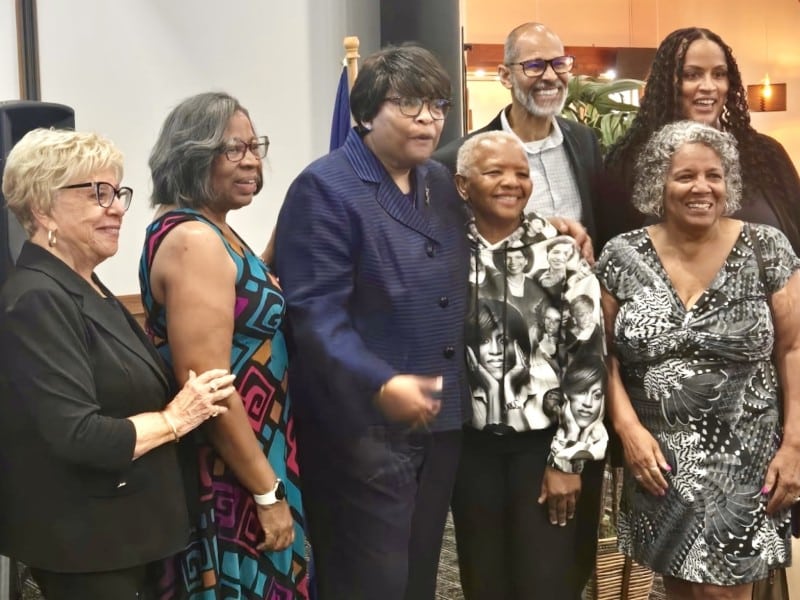
‘We go where they are’: Lucinda Stinson’s vision for a more connected Rotary
Lucinda Stinson, the new president of the Rotary Club of Kalamazoo, aims to broaden the organization’s community outreach, increase its diversity and engage members more directly with people and neighborhoods in need.

Three years of Bearcat Advantage: How Battle Creek’s free-college program is changing students’ plans
Three years after launching the Bearcat Advantage, Battle Creek Public Schools is seeing higher graduation rates and more students planning to attend four-year colleges, while the district works to make college more accessible.