From cannabis to AI: Proposed Kalamazoo data center sparks questions about its future in Milwood
A proposal to convert a former Kalamazoo cannabis grow facility into an AI data center has sparked community debate over its potential impacts.
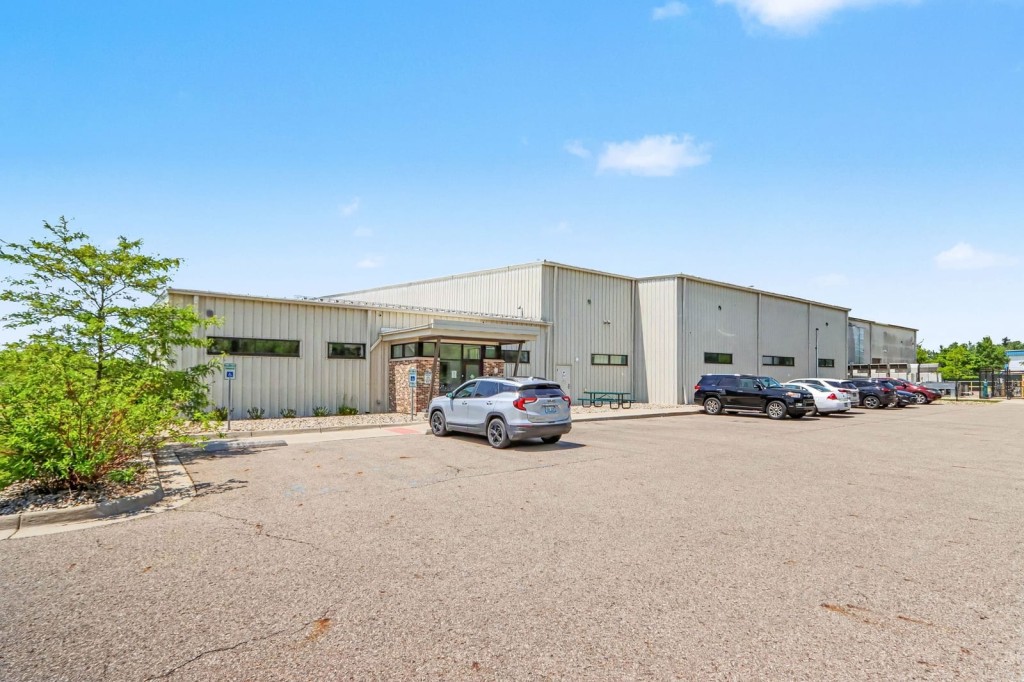
KALAMAZOO, MI — As generative AI services like ChatGPT and Claude have exploded in popularity in recent years, demand for the data centers that power them has grown just as quickly. Now, amid a downturn in Michigan’s marijuana market, Michael Ward, owner and CEO of local cannabis company Harbor Farmz, has issued a press release proposing to sell his grow house in Kalamazoo’s Millwood neighborhood for redevelopment into one of these data centers.
Ward says the property already has the infrastructure needed to support the intensive energy and water demands of AI computing, and that its existing industrial zoning classification makes it an ideal location for constructing such a facility. But many Kalamazoo neighbors aren’t so sure.
Data centers, thousands of which are being constructed all around the country to power new AI technology, can process and store huge amounts of digital information, but they also come with a host of questions and environmental concerns for the communities where they are located.
Many in Kalamazoo are saying they want to learn more about what data centers are and do, and what benefits they would bring versus the potential costs, such as strain on local infrastructure from water and energy use, air, noise, and heat pollution, and the existential questions about the fact that many people will be losing their jobs to such programs in the near future.
News of the grow house-to-data center proposal has just begun to spread throughout the community, and Kalamazoo residents are responding to the news by organizing community meetings, protests, and panels to get informed about this new industry which has its eyes set on Kalamazoo.
Harbor Farmz in Kalamazoo
Michael Ward, CEO and owner of Michigan-based cannabis business Harbor Farmz, who could not immediately be reached for comment, told Cannabis Business Insider in an interview in 2021 that he lives with his family in Chicago on the weekend, driving nearly three hours to get to his Kalamazoo grow house on Monday mornings and back home on weekends.
The 32,850 square foot facility in question is located at 2839 Full Circle Drive in the Davis Creek Business Park, about one mile away from Milwood Middle School. It was originally built in 2020 as an indoor marijuana cultivation and processing facility. Now, as oversaturation in the cannabis market has caused prices to plummet, he’s looking to sell the property to a new owner. Ward says that the specialized building was “designed from the beginning for continuous, power-intensive operations,” exactly the kind of infrastructure needed to power a data center. Like Ward, many owners of cannabis businesses across the state are now looking for ways to unload their large, expensive specialized facilities right at a time when tech companies are looking to build.
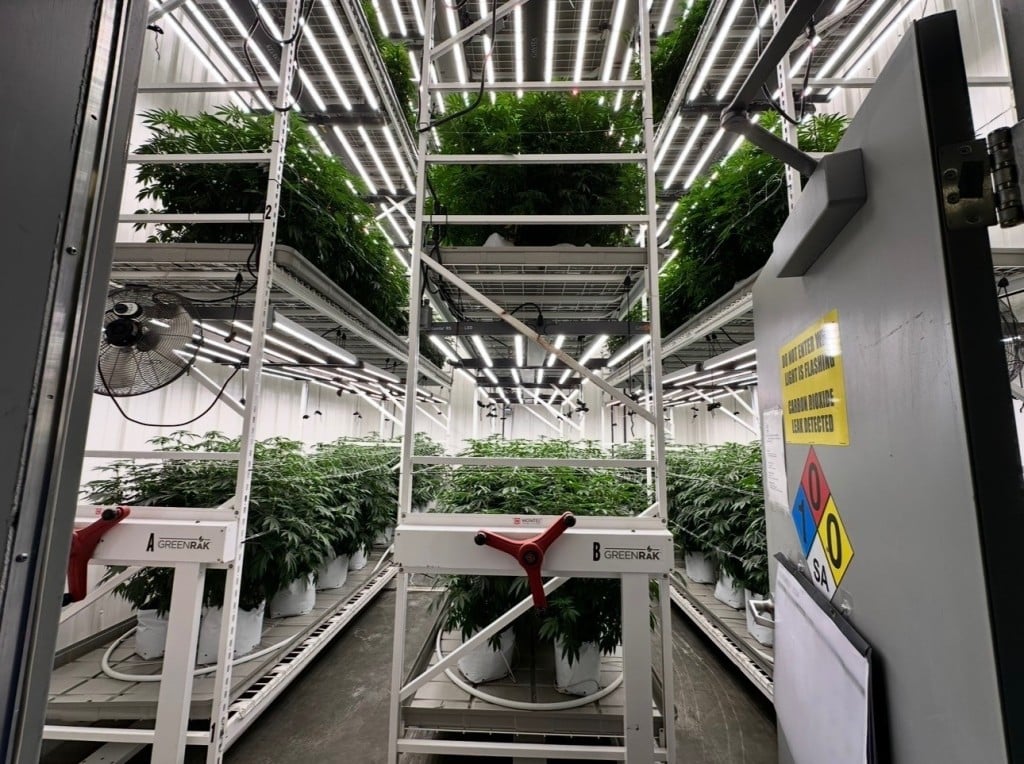
Ward contacted the Kalamazoo Community Planning and Economic Development Department earlier this year about the possibility of repurposing the former grow house into a data center, and city staff determined that it would be a permitted use of the land, which is already located in an M2 high-intensity industrial zone, Kalamazoo’s most intensive industrial zoning classification.
Why Michigan is being targeted
Data centers are large buildings used by companies to house computer servers that process and store digital information. There are different types of data centers, ranging in scale from just a few thousand square feet to massive facilities the size of warehouses.
Some enterprise data centers, which may contain anywhere from a few hundred to a few thousand computer servers, are relatively small and typically occupy between tens and thousands of square feet.
At the other end of the spectrum are hyperscale data centers, enormous facilities that can house upwards of 5000 advanced computer servers capable of processing massive amounts of digital information. These supersized facilities can range in size from tens of thousands to hundreds of thousands of square feet, with the largest exceeding one million square feet.
Right now, tech companies are increasingly targeting Michigan as a desirable location for new data center construction thanks to the ready accessibility of fresh water, cold climate, and new tax benefits eliminating sales tax for data center construction in the state.
Neighbors have concerns
At the Kalamazoo City Commission meeting on June 15th in Milwood, a dozen or so neighbors gave comments universally opposed to the idea of data center construction. One Millwood resident, who lives less than a mile from Harbor Farmz, said that the neighborhood had been her home for over 20 years. “I stand here tonight to be a voice for thousands of my neighbors,” she said, citing her concerns about how much noise pollution a data center might cause.
Another commenter said during the meeting that the benefits of a data center wouldn’t outweigh the costs to the community. “[Data centers] ruin our environment, they waste resources, they do not help our economy at all. The very few jobs they do supply are not full-time,” she said.
“I don’t think anybody other than the people proposing [a data center] think it’s a good idea. The city commission meetings recently have shown very clearly that people across the city, especially the people in Millwood, don’t want anything to do with it,” said David Benac, chair of Kalamazoo’s environmental concerns committee in a recent phone interview.
Environmental concerns
So why all the fuss? Well, for one thing, data centers use a huge amount of electricity. By the year 2028, the Lawrence Berkeley National Laboratory projects that data centers alone will use as much as 12% of all of the electricity consumed in the United States.
Currently, the Harbor Farmz facility uses about 1 MW of electricity, which is relatively low compared to hyperscale centers, but it has the capacity to expand its electricity intake within just a few months, and eventually could potentially use up to 15 MW of power.
Traditional data centres use between 10 and 25 megawatts (MW) of power, equivalent to the annual electricity consumption of 10,000 households,” according to the International Energy Agency.
Data centers also use lots of water, one of Michigan’s most precious resources. A single data center could need millions of gallons per day to cool its servers, and this increase in water usage is projected to continue to climb over the next few years. A 2025 report from Alliance For the Great Lakes found that data centers in Great Lakes states could potentially consume more than 150 billion gallons of water every year, leading to issues with drinking water supplies, businesses, and food production as demands for water increase with climate change and data center use.
The Harbor Farmz facility currently draws about 1 megawatt of power but has the capacity to grow to 15 Megawatts, roughly enough electricity to power several times the number of homes already in Milwood. It also comes equipped with a 600 kW backup generator. Backup generators in facilities in Virginia, where a majority of the country’s data centers are currently located, have caused air and noise pollution problems for residents.
Are there other options?
Currently, under Michigan’s Zoning Enabling Act, local units of government cannot outright ban a particular land use (like building a data center) as long as there is a demonstrable need for it. That means that if the city tried to pass a blanket ban on all new data center construction, it would most likely get overturned in court. However, a new bill in the state House of Representatives, House Bill 5846, the Data Center Overlay Districts Act, would potentially give local governments greater authority to regulate large-scale data centers within their districts.
One thing the City Commission does have the power to do is implement a moratorium preventing data centers from opening. A moratorium isn’t an outright ban; it’s more like a pause where the city decides to halt any data center construction for a certain period to allow for more time to look into what potential environmental and community impacts a data center might have.
Texas Township just approved a twelve-month moratorium blocking all data centers in order to give themselves time to study potential impacts and draft new zoning regulations. In Solon Township just North of Grand Rapids, the planning commission there also adopted a six-month moratorium on data center projects last February in response to community pushback to inquiries from a developer looking to build a data center there.
They are just two of the largest cities and townships across the state that have implemented similar legislation. The “moratorium zone” of Michigan cities and townships temporarily limiting data center construction has grown to about 1,500 square miles, roughly equivalent to the size of the state of Rhode Island.
How to get involved
As news of the proposal spreads through the community, neighbors are organizing to get informed about the recent announcement from Harbor Farmz and what it might mean for their communities.
Around 150 people gathered in an auditorium at Kalamazoo Valley Community College last week to attend an educational event organized by Kalamazoo County where experts explained the potential economic benefits versus the economic risks of data center and battery facility developments.
They recommended several things if Kalamazoo is going to go ahead with such developments. One, binding written agreements that commit tech developers to strict regulations (like restricting backup diesel generators to emergency use only) with clear penalties should those rules be broken.
Another thing was verifiable reports that track water and electricity usage monthly, as well as legally binding community benefit agreements which commit to profit sharing or direct payments to locals. They also recommended budgeting that allows neighborhood residents a say in how potential new property tax revenues from these projects will be spent in the community.
Milwood neighborhood residents have formed a community group as well as a newsletter called The Milwood Update to keep each other informed. You can subscribe for free to follow along or get involved with their work. For now, there is no formal application yet under review by the city, and no approved data center project planned.
It seems like many Kalamazoo residents are determined to see it stay that way.
Author

Related Articles

From 65 farms to one table: Allegan County celebrates local food
Allegan County will celebrate its farmers, food and community Sept. 25 with a farm-to-table experience featuring local food samples, a performance of “Seedfolks,” and a community dinner and conversation at Griswold Auditorium.

Planet Z Commentary: We are nature — it’s time we started acting like it
The greatest challenge of the 21st Century may be remembering our place in the natural world. In this commentary, Planet Z Project Editor Harper Horvath explores how our growing disconnection from nature threatens both environmental sustainability and human well-being.
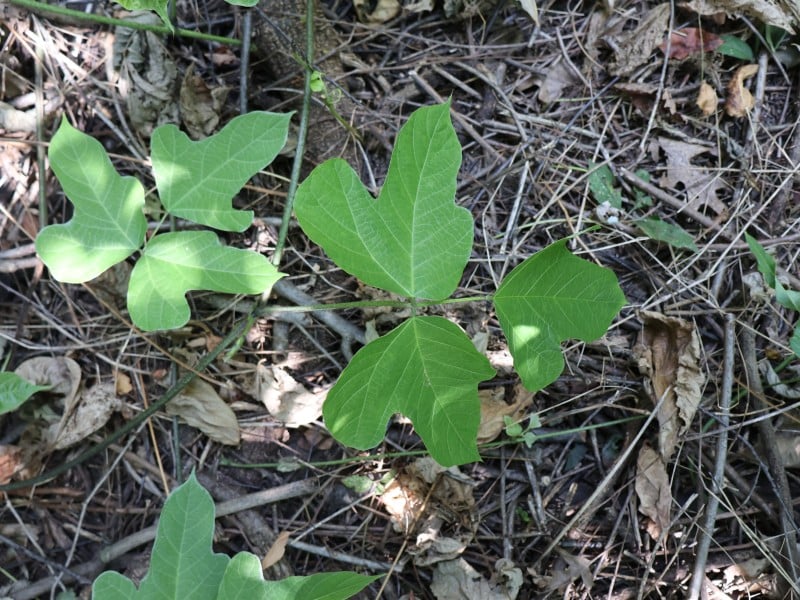
Kudzu and Japanese Knotweed: Two invasive plants, one ongoing fight
The Van Buren Conservation District is continuing efforts to eradicate Kudzu in Southwest Michigan while encouraging residents to help identify and report both Kudzu and Japanese Knotweed, two aggressive invasive plants that threaten native ecosystems and infrastructure.