CDFIs investments in childcare allows daycares like Detroit’s Lil Love Bugs to further invest in children’s futures
Childcare is not a family issue, but a workforce issue. Members of the MI CDFI Coalition showcase how investing in quality, affordable childcare and early childhood education positively impacts the entire community.
Block by Block is a solutions journalism series that is supported by CEDAM, Michigan CDFI, and Invest Detroit, and is focused on community development leaders and initiatives in Michigan.
Having quality, affordable childcare doesn’t just have an impact on parents and families, it affects the workforce as well. When working parents cannot access or afford childcare, they are not able to show up as fully in their careers or communities.
The MI CDFI Coalition is a network of mission-based community development institutions (CDFIs) across the state who uplift underserved communities, deliver vital programs and services, revitalize neighborhoods, and advocate for community investment.
This coalition knows how important supporting childcare centers throughout the state is. Many of its CDFI members have provided financial support to develop early childhood education (ECE), assisted daycare providers with acquiring or consulting of real estate — and maintained those relationships long after the check-writing or ribbon-cutting ceremonies.
IFF, a Chicago-headquartered CDFI champions nonprofits across Midwest communities including Cleveland, Columbus, Indianapolis, Detroit, Grand Rapids, Detroit, and more. IFF focuses on community-centered lending, development, and real estate consulting.
Celina Byrd, managing director of early childhood strategy says access to high-quality, affordable childcare is the heart of everything IFF does.

“Childcare is not just a family issue, it’s a workforce issue, it’s a community issue,” Byrd says. “Michigan employers lose $2.8 billion annually because of employee absenteeism and turnover due to inadequate child care. That’s money that’s not going to families, not going into our communities.”
Over 10 years ago, IFF provided a loan to the Detroit Achievement Academy. They also administered $59 million on behalf of the State of Michigan for new and expanding ECE programs via the Caring for MI Future: Facilities Improvement Fund.
Today, their commitment to ECE has expanded with support from JPMorganChase and First Children’s Finance. IFF has launched the Stronger ECE Spaces program — to help child care providers in Detroit experiencing operational and financial strains overcome facilities challenges.
“Safe and inspiring child care spaces are essential to the vitality of communities and help lay the foundation for positive early childhood experiences that in turn are the foundation for success throughout their life,” Byrd says.
In Wayne County, Detroit has the biggest gap between available child care spots and the number of kids aged 0-5 who require those spots — with an estimated 27,267 more children than spots available.
The child care crisis really affects all of us though, says Byrd.
Most counties in Michigan have at least three children for every one child care slot,” she says. “We are working with partners and clients in communities where the gap is as high as 20-1. It can be even worse in rural communities. While this hits historically under-resourced communities the hardest, it’s an issue that affects all of us.”
Byrd has a unique perspective seeing early childhood education from both sides.
“As a family child care provider, I remember the leap of faith it took to expand from my home to a dedicated facility,” she says. “I know the uncertainty, the sacrifice, the hope, and the deep sense of purpose that comes with creating spaces where children and families thrive.”
Although Byrd’s role has shifted from serving children directly, now she has the opportunity to support providers and their respective communities in a different way.
“Every time I walk into a program and see a provider growing, expanding, or realizing a vision they once only dreamed about, it feels deeply personal,” Byrd says. “It brings me genuine joy — not because I’m reliving my own journey, but because I understand theirs. I know that it took to get there. Seeing others succeed reminds me that while my role has changed, my purpose has not. I have the privilege of helping create the conditions for others to flourish — and that is incredibly fulfilling.”
Jodee Taylor is the communications coordinator at Northern Initiatives, another Michigan CDFI Coalition member. This CDFI provides small business loans to entrepreneurs whose needs were unable to be met from traditional banks. After providing those loans, Northern Initiatives offers technical assistance, knowledge, and online learning for those next entrepreneurial steps.
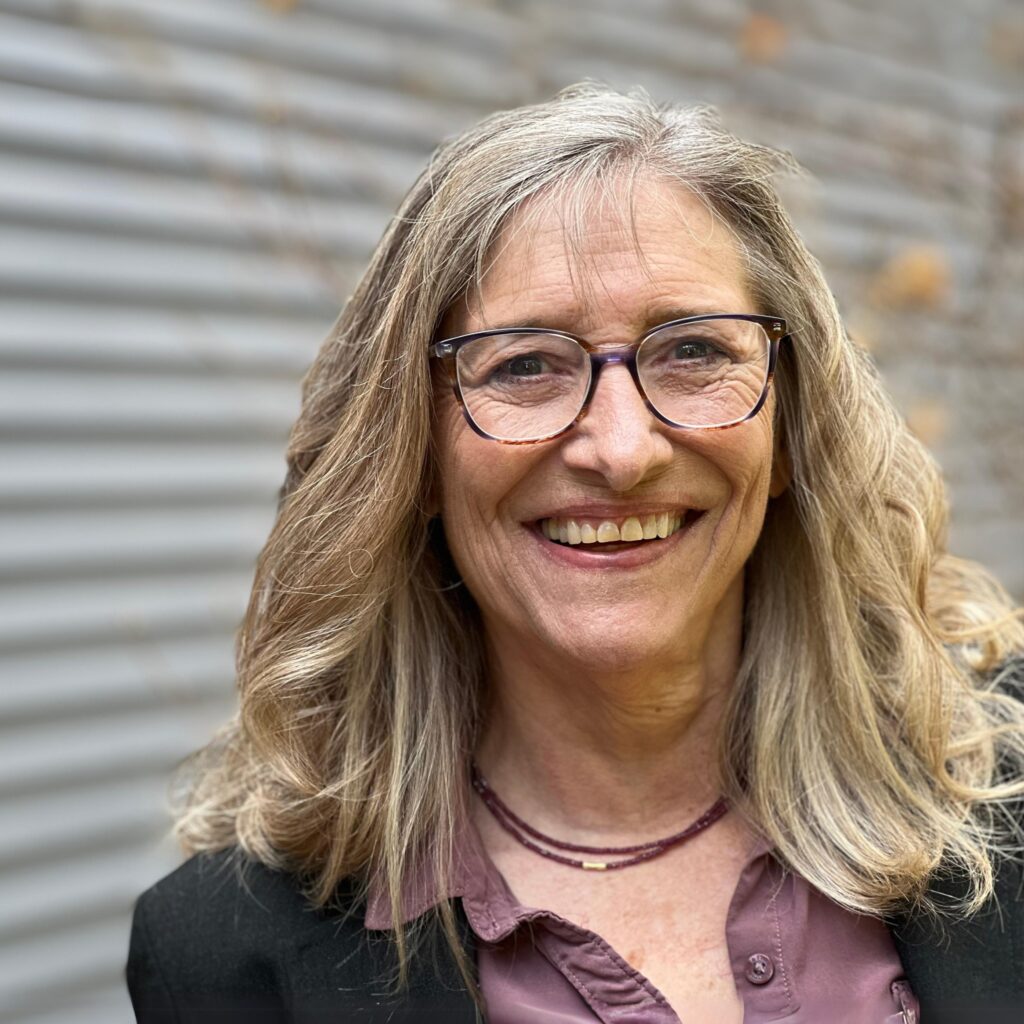
Taylor says child care centers are vital because without child care — entrepreneurship gets a lot more complicated.
President of Northern Initiatives, Elissa Sangalli says the CDFI has made several loans where an employee was buying the business.
“They’ve worked there for years and know the children, the parents, and the operations inside and out,” she says. “But, because there’s a new owner, the childcare [center] is considered a startup — and most banks can’t loan to startups.”
Northern Initiatives helped support Tiny Treasures in Gaylord when its owners were looking to retire. Sarah Brown, an employee there, stepped into the new owner role, after Northern Initiatives provided an SBA Community Advantage loan with funds from the Michigan CDFI Coalition.
Staff continue to provide ongoing coaching via the online portal of videos and templates to help entrepreneurs with profit and loss statements, money management, and more.
“At Northern Initiatives, supporting childcare businesses is one of the most important ways we can support Michigan small businesses,” Sangalli says. “Not only is the day care a small business, but its customers include small business owners and employees. It’s a win-win.”
Derek Edwards is the senior vice president of Lending at Invest Detroit, another MI CDFI Coalition member.
“On a global scale, Invest Detroit’s mission, from a small business perspective — looks to bring essential businesses and services to the neighborhood communities,” he says. “Childcare is key to that — especially in working families, to a single or dual-parent household that needs that service.”

Edwards says the challenge for ECE providers tends to be their access to capital.
“Most providers we have experienced are home-based providers, so their challenges are being able to scale,” Edwards says. “They’re limited obviously within the confines of their own residences. Being able to move on to commercial structures, they’re typically in lease situations, but those can be limited as well. Most folks want to be able to expand and kind of control their own business.”
Invest Detroit has supported these business owners in the acquisition of brick and mortar locations, and extended support with technical assistance with proper licensing and permits, financial management, personnel management, legal and risk management.
Together with grant investment from IFF, Invest Detroit helped provide technical assistance to help get Detroit daycare Lil Love Bugs renovation project across the finish line after 18 months.
Lil Love Bugs had been a home-based business for 10 years, but owner Irene Sparkman was looking to expand and move into a brick and mortar space at 13515 East 7 Mile Road.
When Edwards met Sparkman, he remembers explaining how mission-based lenders like CDFIs and Invest Detroit are positioned in the community.
“It kind of opened up a world to her that she wasn’t in this process by herself,” he says. “That’s kind of the mindset many entrepreneurs have, I think — especially in Detroit, they’re used to bootstrapping and piecing their pennies together to try and move forward.”
Irene Sparkman, daycare director of Lil Love Bugs Daycare Center, worked for Headstart for years before starting her own home-based daycare center in 2018.
After running her daycare in her home for eight years, she wanted her space back and started looking for a brick and mortar. In July 2025, Sparkman moved into her current space on East 7 Mile Road.

With the help of IFF, Invest Detroit and the Motor City Match fund, Lil Love Bugs was able to purchase the building on a land contract. Sparkman also purchased the lot next door to the building. She has future expansion plans for new parking and playground areas.
“They helped me with the legal part of it,” Sparkman says. “I didn’t have to pay for anything with the lawyer, which was very helpful in making sure everything that was going on — even on behalf of Invest Detroit, that they were doing right by me as well. Invest Detroit was a big help.”
Investing in the neighborhood she grew up in feels like a calling for this entrepreneur.
“I grew up down the street on 6 Mile, and I remember when we moved there in the early eighties, it was such a beautiful neighborhood. You had so many nice places to go over there, and the neighborhood has really taken a dive for the worse. The City of Detroit is coming back though, building and making things look good again. I just wanted to be a part of that and bring something to the community — a good quality daycare service to the community.”
At Lil Love Bugs, Sparkman aims to offer just as good of a service available in the suburbs. At the daycare, they provide daily breakfast, lunch, and snack time. A curriculum helps students ages six weeks to four-year-olds become prepared for kindergarten — teaching them how to write their names, identify shapes and colors, numbers and birthdays. There are still available spots within the toddler room and the infant room, says Sparkman.


In the future, she hopes to expand her business even more — providing a top quality service for her community.
“One of my dream goals is to have an after school program for the youth there, maybe from 8-15 years old,” Sparkman says. “Here, we would have tutoring, board games, and give kids something to do instead of being on the streets.”
Edwards, a fellow born-and-raised Detroiter, also feels a certain sense of responsibility and pride in helping support operations that serve as cornerstones to revitalization.
“It’s really rewarding,” he says. “I still remember and actually drive past my childcare center which was right on West Grand Blvd. almost every day when I’m going home from work. Those are early memories that can be really impactful to kids. So when we can provide that support and help parents who are trying to make ends meet, to provide them with a resource right within their own neighborhood versus traveling extended lengths to get their kids to quality care — it’s absolutely worthwhile.”
Related Articles
‘We go where they are’: Lucinda Stinson’s vision for a more connected Rotary
Lucinda Stinson, the new president of the Rotary Club of Kalamazoo, aims to broaden the organization’s community outreach, increase its diversity and engage members more directly with people and neighborhoods in need.

From 65 farms to one table: Allegan County celebrates local food
Allegan County will celebrate its farmers, food and community Sept. 25 with a farm-to-table experience featuring local food samples, a performance of “Seedfolks,” and a community dinner and conversation at Griswold Auditorium.
Community Land Trusts in Portage and elsewhere help residents become homeowners affordably
As the statewide housing crisis continues, communities of all sizes are looking at how to increase affordable housing options for current and future residents. In Kalamazoo County, the Portage Community Land Trust is helping residents become homeowners affordably with their new workforce housing development, Stanwood Crossings.