
Back in business: How the Southwest Michigan First Chamber rebuilt membership and renewed its mission
After years of declining membership and organizational change, the Southwest Michigan First Chamber is rebuilding its influence by expanding business connections, fostering inclusion, and helping strengthen Kalamazoo’s small business community.
Editor’s Note: This project is sponsored by Southwest Michigan First and produced in partnership with the Southwest Michigan Journalism Collaborative coverage of equitable community development.
For more than a century, the chamber of commerce supporting the Kalamazoo area has served as a business advocacy organization, boasting companies big and small from around the county as members.
And for most of that time, it was a robust organization. In 2011, the Kalamazoo Regional Chamber of Commerce was recognized as the Outstanding Chamber of the Year by the Michigan Association of Chamber Professionals. It had a staff of nearly 30 and a roster of more than 1,100 members.
But after a 2013 agreement to enter into a partnership with the regional economic development organization Southwest Michigan First and subsequently becoming a division of SMF, the chamber faced several challenges, including enduring the COVID-19 pandemic and community backlash and withdrawal of support over the hiring of Lee Chatfield as SMF’s CEO, and its membership dwindled to less than 250.
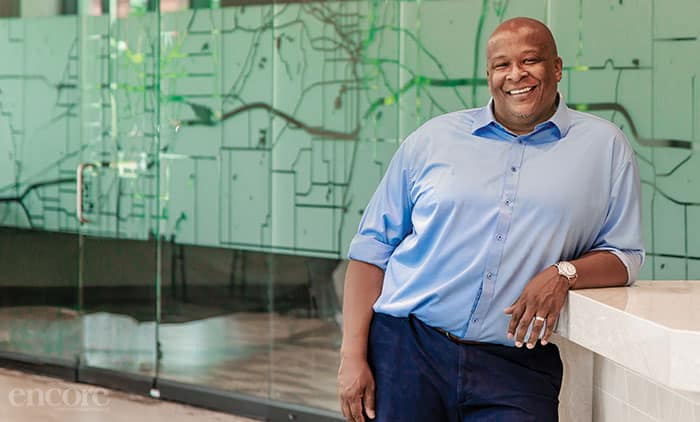
Now, however, the renamed Southwest Michigan First Chamber has grown to just over 600 members, according to its director, Clarence Lloyd.
Lloyd, a vice president of SMF who has led the chamber since May 2021, has largely been tasked with rebuilding the organization. At the end of his first year at the helm, the chamber had 246 members, he says, not only because of SMF’s struggles but also due to changing cultural and political landscapes.
“I think our chamber here had gone through it and had been less relevant maybe than what it had been in the past. When this transition (into SMF) was happening, the perception outside of the rooms where it was happening was largely that Southwest Michigan First went in and co-opted the chamber. That’s not what happened, but nobody came out and said publicly, ‘That’s not true.’
Cultural shifts drive decline
Chambers are primarily supported by membership fees — in the case of the SMF Chamber, these run from $325 to more than $2,500 annually, depending on the level of benefits desired. Lloyd says that one of the reasons behind partnering with Southwest Michigan First was that chambers across the country had been seeing declining memberships due to a cultural shift in the way businesspeople connect. Fostering connections between businesspeople and potential strategic partners had been “the primary currency of most chambers,” says Lloyd. But with the advent of free apps and websites like LinkedIn, people found they could easily connect with others through the digital realm.
Another benefit of chamber membership had been that many chambers, including Kalamazoo’s, offered group discounts for healthcare insurance for small businesses. But a change to Michigan insurance law in 2003 effectively prohibited insurers from offering discounts solely because an employer belonged to a chamber of commerce.
“Chambers were facing this existential crisis. People were like, ‘Man, I don’t know if the investment makes sense anymore,'” says Lloyd. “Small businesses were like, ‘I can connect online for free, and I can’t get that discount,’ and they’re starting to be like, ‘Yikes.'”
According to Lloyd, one solution chambers looked to was partnering with other organizations. In the case of Kalamazoo’s chamber, that organization was Southwest Michigan First.
“Something had to be done. The decision was made to partner with Southwest Michigan First, an organization already leading regional economic development efforts and working closely with primary employers that have a significant impact on job creation and economic growth,” Lloyd says.
By bringing the two groups together, he says, the chamber would have the support of SMF in hosting events and providing small businesses with better access to potential strategic partners. It would also bring small- and medium-sized businesses and larger employers under the same umbrella. The melding of the two entities occurred between 2012 and 2015.
Now “we’re one group. We’re one company,” says Lloyd.
“Based on what I have seen and heard from colleagues around the country, we were early. It is now becoming so commonplace that chambers and economic development companies are partnering.
“In some communities, the chamber was the larger entity that brought in an economic development arm. In some it was the other way around, where a larger economic development company brought in a chamber arm. But the end result is the same in that the community is served more comprehensively. Instead of having two organizations that sometimes feel like their programs compete, now those programs work together.”
While SMF represents a seven-county region, the SMF Chamber will continue to be “Kalamazoo County-focused,” Lloyd says.
The chamber is governed by the same board that oversees SMF, which is made up of business and community leaders from those seven counties (Berrien, Cass, Van Buren, Kalamazoo, St. Joseph, Calhoun and Branch). The three members of the chamber’s leadership team, including Lloyd, are Southwest Michigan First employees.
“We’re still governed by the same board. We’re still governed by the same team here,” Lloyd says. “I’m a part of this team obviously, but the things that we focus on in terms of (chamber) programs are focused closer to home.”
However, he says, there are benefits to being under the larger SMF umbrella.
“An organization like ours, we think, is good for small business regionally, and we think it’s good for our community as a whole. You know, 47% of all jobs come from small businesses nationally, and what we have seen is that our area largely reflects those national trends. So, having a good, strong small business community is critical, and we can bring some of the success we’ve been having here (at SMF) to revitalizing the chamber.”
‘Meaningful connections’
Jeannie Henderson, owner of Jeannie Cleaning, has been a member of the chamber since the 1980s and has served on the organization’s board of directors. She and her husband owned several franchise restaurants in the area that they sold in 2015. She started Jeannie Cleaning that same year, and the company now has nearly 50 employees and recently expanded into Grand Rapids. Henderson says that she is “delighted” with the chamber’s rebirth.
“We were members when the Kalamazoo Chamber went away, and Southwest Michigan First Chamber started,” she says. “There really wasn’t a chamber, so we were delighted when it was reborn, and it’s been such a pleasure working with Clarence (Lloyd) and his team.”
Henderson’s devotion to the chamber goes deep, she says, since the connections she and her husband made through the organization were pivotal when credit card hackers hit their business in 2009.
“We lost almost everything,” she recalls. “The hackers were in Czechoslovakia, and they hit hundreds and hundreds of businesses through a glitch in the software we used. This was before
cybersecurity insurance was a thing. They went to jail, but we didn’t get anything back.
“When really bad things happen, you need relationships so much. We had really good relationships with our chamber connections. One of our good friends at the chamber was our attorney, and I can’t imagine going through that without him. And our landlords and bankers were so good to us. All of these were relationships we built through the chamber before this happened.”
Brad DeBoer, director of commercial and industrial sales and business development for Gordon Water Systems, also speaks of the “meaningful connections” that come from his company’s participation in the chamber. DeBoer isn’t sure how many years the company, which started in 1973, has been a chamber member, but “it’s in the double digits,” he says. DeBoer himself began to get involved with the chamber in 2023 and admits he found the benefits surprising.
“What I didn’t expect with membership were the meaningful connections that come about from the chamber, those introductions and collaboration opportunities that allow you to connect with others,” he says. “They do a variety of different events that pull various people together — not just networking but education and events that are able to bring the community together. They do such a great job uniting the community.”
Henderson echoes this comment in her observation about the chamber’s transition.
“The chamber that I see now just seems to be welcoming to everyone,” she says. “The spectrum of the types of businesses involved is so much broader now. When we were members of the Kalamazoo and Portage chambers, we only got to know business owners. Today they (the staff of the SMF Chamber) are thinking layers deep into organizations and really thinking about future development to strengthen business and build up leaders. I would invite any of my people to attend their events.”
Reaching the underrepresented
Lloyd says that Henderson’s observations are indicative of the chamber’s concentrated effort to expand the diversity of its membership — not just in the types and sizes of businesses but in the communities that haven’t been well represented in the past, such as the Black, Latinx and LGBTQ communities. To that end, the chamber has started specific groups and events to support those businesses.
The Black and Brown Connect Mixer, for example, is a quarterly event for professionals of color. Lloyd helped create the event when he was working as an office branch manager at Consumers Credit Union and brought it with him to the Southwest Michigan First Chamber. Lloyd, an African American, says that many times in his professional life he would often be the only person “who looked like me” at an event or meeting.
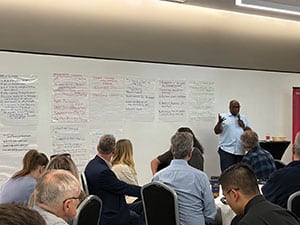
“I didn’t feel defensive,” he says, “but I was aware of people’s perceptions and their body language and energy. You’re just a little sensitive to it. It’s just how it is. I’m sure that there’s other people who aren’t African American who have felt similar in various rooms in their lives too. So we started a group for professionals of color, whether they be elected officials, nonprofit leaders, community leaders, entrepreneurs, whatever.
“The goal was to bring folks together. We could have both community conversations and business conversations and conversations that feel uniquely built for us. And when you walk into that room, I don’t care what you look like; it feels warm, it feels welcoming. I think that is from a sense of almost, like, relief, being able to be in a space here in our community that is both professional in nature but also has that kind of social, familial feel to it.
“The reason why the chamber officially adopted it was because it was important to me but also because it was a part of that mission work of creating these spaces for folks to really feel like they could be plugged into the work we’re doing and still bring their whole selves.”
The chamber also offers regular lunch meetings for female professionals, partnering with the local group Kalamazoo Women2Women, and it offers a group for military veterans interested in entrepreneurship that is supported by Kellogg Community Credit Union.
“We’ve tried to be really intentional both to invite everyone to participate in the things that we host but also recognize that some people are going to feel more connected if they feel a natural affiliation with the people they’re gathering with,” says Lloyd.
Developing businesses
At the same time that the chamber is fostering connectedness, it is also dipping its toes into the waters of business development. The chamber is providing resources and connections for the nine finalists of Cultivate 269, a Shark Tank-like business pitch competition for college students held by Kalamazoo Forward Ventures, a venture capital firm.
The chamber also hosts the Brick & Mortar Retail, Restaurant & Service Storefront Growth Lab, an intensive program for owners of retail stores and restaurants to develop tools to sustain their businesses. The program is underwritten by Kabundant LLC, a private community development organization focusing on empowering local entrepreneurs, which is led by former Kalamazoo mayor Bobby Hopewell.

Shop Local Greater Kalamazoo, an e-commerce platform that lists small businesses, is also a chamber initiative. “It’s a platform designed for small, locally owned businesses to be able to help them compete online, encourage discovery, sell stuff,” explains Lloyd. The site has 33 businesses and more than 700 products on it and is searchable by location, type of business and product type. Businesses can be listed free of charge and do not need to be members of the chamber to participate.
Lloyd admits that chamber programs like Shop Local Greater Kalamazoo are often met with a bit of skepticism and distrust.
“When we reach out to business owners to say, ‘Hey, we want you to list on here. It’s free because some cities and community partners are paying for it,’ they’re like, ‘Well, what cut does the chamber get? How much is it going to cost me?’ That level of skepticism tells us we have more work to do in clearly communicating the value we provide.
“I think that a lot of the challenges that businesses are feeling and facing are solvable, but it’s going to take connecting to strategic partners like us and others. I’m not saying we could solve it all, but we know somebody who could help. A big part of our role is connecting business owners with the resources, expertise, and partners that can help them overcome obstacles and continue to grow.”
Henderson agrees.
“They’ve been there for us,” she says. “It is so important as business owners to not try to do it all alone. They will connect you with people to talk to who will come alongside a business owner and share ups and downs and point them in the right direction.
“All they have to do is ask, and this chamber will do that.”
Editor’s Note: The Southwest Michigan Journalism Collaborative is a group of 12 regional organizations dedicated to strengthening local journalism. To learn more, visit swmichjournalism.com. For more stories about entrepreneurs, small businesses, and the ideas driving Southwest Michigan forward, please check out Second Wave’s weekly Momentum series.
Author

Related Articles

Childcare workforce crisis fuels push for wage reforms
Without sustained investment, families will continue to have difficulty accessing stable, high-quality childcare.

How Spirit of Kalamazoo and Downtown Kalamazoo Collective are revitalizing the downtown area
Local businesses like Spirit of Kalamazoo are the backbone of the community. Beyond providing goods and services, they create spaces that foster connection and a sense of belonging.

Is PreK for All meeting its goals?
Roadmap co-author encouraged by how the state is expanding its Great Start Readiness Program into universal pre-K.