At Kalamazoo’s Stulberg Competition, audiences fall in love with the future of music
The 51st annual Stulberg International String Competition returns to Kalamazoo May 15–17, 2026, featuring elite young string musicians from five
countries and marking a new era under Executive Director Garret Jones.
KALAMAZOO, MI — Are you someone who enjoys reality TV competitions — “The Voice,” “America’s Got Talent,” or “The Great British Bake Off”?
If so, then imagine the national spelling bee on orchestral steroids, and you’ll have a sense of what’s in store if you attend the 51st Annual Stulberg International String Competition.
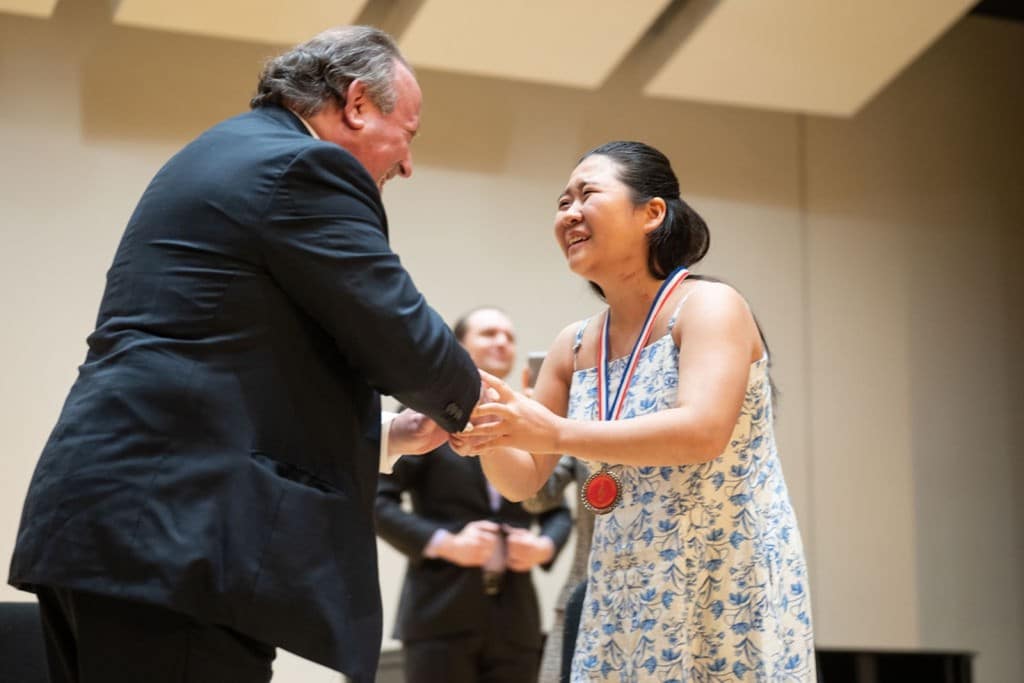
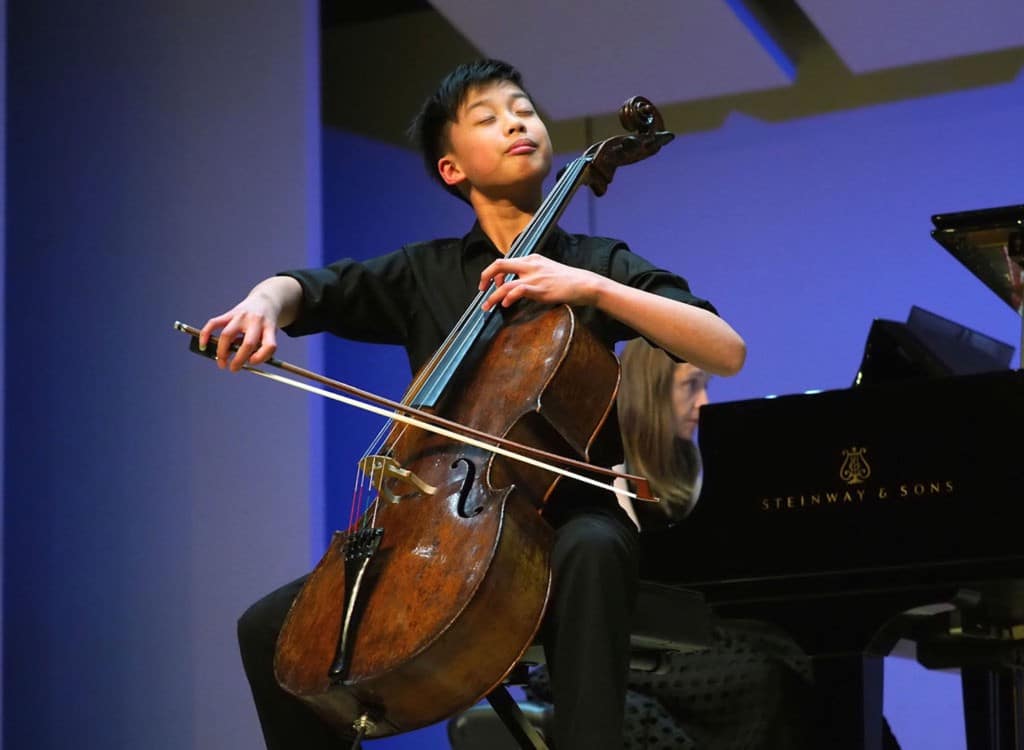
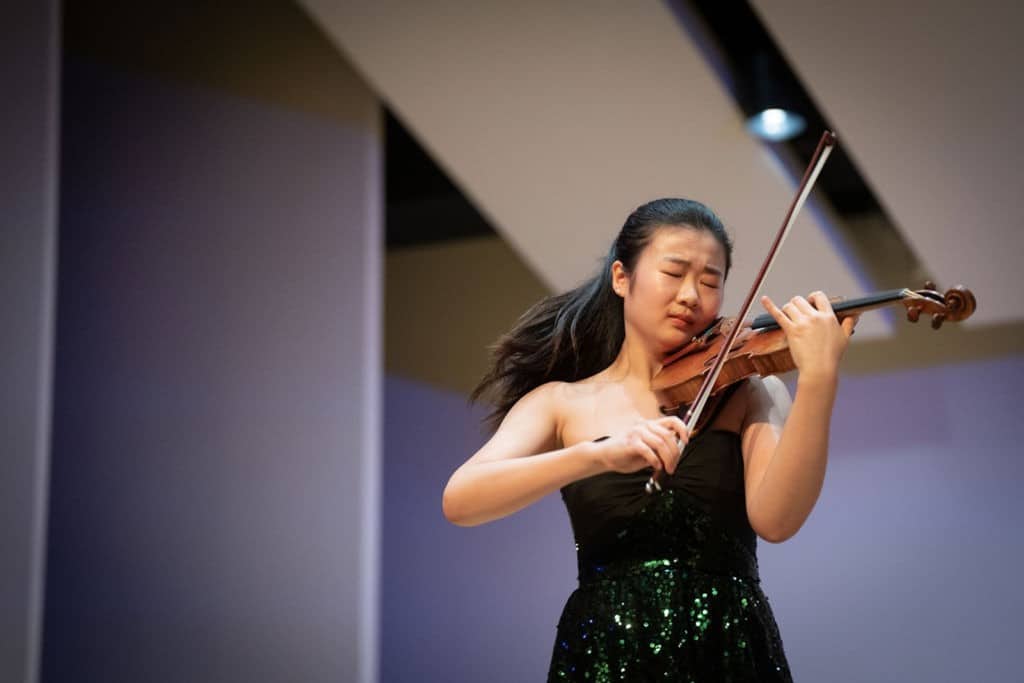
This weekend, Kalamazoo welcomes 12 of the world’s rising classical music stars, all under the age of 20, to compete over two days, with a third day devoted to master classes for both semifinalists and local young string musicians. They compete for medals and over $30,000 in cash prizes.
String competitions are often private affairs, face-offs between the musician and a judge or panel of judges. Seldom do they have live audiences. And even rarer would the young musicians who compete be so celebrated, welcomed, and embraced, as they are in Kalamazoo.
The Stulberg has become renowned as a pivotal competition that has launched several careers, including, notably, that of 1981 Stulberg Gold Medalist Joshua Bell, who recently performed in Kalamazoo in a collaboration between the Stulberg and the Gilmore International Keyboard Festival.
And it all started in 1975, inspired by the legacy of a beloved Kalamazoo Junior Symphony Orchestra conductor and Western Michigan University professor, Julius Stulberg, following his passing.
Why is it so exciting to watch young string musicians from around the world perform to the best of their ability in a real-time competition?
New Stulberg Executive Director Garrett Jones has a succinct answer: “You get to fall in love with them.”
New ED brings music experience and passion
A clarinetist with the Kalamazoo Symphony Orchestra, Jones is not new to the area, but he’s fresh to the Stulberg, having assumed the role of ED in late December, just as competition preparation was heating up.

Courtesy
“I came into the role packing 11 months into five,” he says. “Even with the competition stresses, I am so happy it worked out this way. Because it helped me realize how special this organization is, what it’s built on, and the legacy we’ve continued to uplift for the last 50 years. I’m just really honored for this opportunity to lead it into the next chapter.”
Jones says the role has been a great fit, allowing him to combine his artistic background and administrative experience. “It’s a melding of two very different skills infused in this role,” he says. “Having that musical background has helped in looking at judges, both from the (young musician’s) perspectives, but also from the adjudicator’s perspectives.”
He credits a highly supportive board and part-time executive assistant, Claire Acheson, with helping him acclimate and keeping the engine running smoothly
“It’s been a fun challenge,” he says. “I do love a good challenge.”
Win, place, and show
If you’re a lover of classical music or jazz, maybe you’ve already attended several Gilmore events this spring, caught the last of the Kalamazoo Symphony Orchestra and Fontana Chamber Music concert seasons, and now you just want to find a comfy place to sit and bask in the sun.
Understandable, but you’d be missing something very special, much of which is free. On Friday, the 12 semifinalists perform in half-hour intervals throughout the day at WMU’s Dalton Theatre. Attendees can choose which semifinalists to see, with entry to the auditorium open in between performances. The semifinals are also livestreamed.
On Saturday, six of those musicians will move to the finals. You will likely have your favorites. They may or may not win, but the tension and excitement are palpable. The passion and personality these young musicians bring are unparalleled. In between the performances and the announcement of winners, the Stulberg hosts a reception in which you can exchange notes with others before the big reveal.
“People get to come out and compare their lists, and guess who is going to win,” says Jones. Next year, he adds, everyone’s program books will include printed cards listing musician names to “lean into the fun factor” and say, “oooh, I was the closest.”
On Sunday, local musicians will participate in master classes with the judges, which are also free and open to the public. And new this year, the semifinalists who don’t win will also be participating in master classes as an additional opportunity to receive coaching and feedback.
“I think that you will be absolutely floored if you come and watch these performances because these are youth that are performing at such a high level that you forget they are so young,” says Jones. “It’s mindblowing what their mastery is over the instrument, over these pieces. They know the music. They know the history.
“A 15-minute concerto performance feels like it passes in a minute. You leave so inspired. And you’re left feeling really hopeful about the future of music because you are seeing such stellar musicians.”
This year’s participants — and what’s new?
Besides Jones taking the helm as the new ED, the Stulberg, coming off the high of its 50th anniversary, made some changes to this year’s lineup of events. For one, an extra day was added, separating the semifinals from the finals, which used to be on one day (Saturday). They also added the semifinalist master classes.
Who’s coming this year?
Selected from 226 applicants representing 18 countries, this year’s semifinalists arrive not only as competitors, but as emerging artists already shaping the future of classical music. This year’s musicians, representing five different countries, are comprised of 6 violinists and 6 cellists, an unusual combination. Typically, violists and occasionally a double-bassist are chosen to compete. To see a full list of semifinalists, check here.
Each year, Stulberg judges represent some of the highest-level string musicians. This year’s trio is no exception. Suli Xue, violinist, is one of the most acclaimed Chinese American violinists on the international stage today. Xue is a member of the Los Angeles Philharmonic and an artist in residence at Azusa Pacific University. James Dunham, violist, has a distinguished performance and teaching career. He is Co-Chair of Strings at Rice University’s Shepherd School of Music. Kalamazoo also welcomes back hometown cellist, Anne Francis Bayles, who is a member of the Fry Street Quartet, the resident quartet at Utah State University, where she is on the faculty.
When in Kalamazoo, Francis studied with Grace Field, a longtime Suzuki cello teacher, and was a member of the Kalamazoo Junior Symphony. In addition to adjudicating, she will be offering master classes to Field’s cello students.
“She’s such a gem,” says Jones. “And she is so excited to have that opportunity to share with the next generation of musicians in Kalamazoo.”
What’s next?
While in the middle of the busiest time of year in the role of Stulberg ED, Jones is already thinking about next year. The global audience through livestreaming has expanded exponentially in the past few years. Last year, more than 110,000 people worldwide livestreamed the competition. But Jones says he would like to spread the reach and understanding of the Stulberg to local and regional audiences.
“People know what the Stulberg is, but do they really know what the Stulberg is?” asks Jones. “Coming out of a milestone year, it’s in a very good position to take the next step in its growth.
“We want to remind our community of who we are and what we are doing. As we look ahead to the next year and next season, we’re really wanting to amplify the reach and channels with which we tell that story.”
Whatever changes are made, Jones says he wants them to be strategic and intentional.
“I’m big on intentionality. Why are we bringing in this specific judge? If we were going to take the next step, like a chamber music component, why are we doing that?
“Were we to bring in Yo-Yo Ma, we would do it because he’s a world-class artist, but we would also be bringing in Yo-Yo because of his commitment to young musicians and the arts. I want to bring well-rounded people so we can share in that intentionality.”
Is this a tease? We’ll have to wait to find out.
“I think that’s really important as we look ahead to the future of the arts in general. Staying relevant in our current environment is a challenge,” says Jones. “As the arts begin to suffer, we all suffer. Live music is absolutely important to everything we do. Music, because it translates to all ages, connects us.”
Semifinals, which take place from 9 a.m. to noon and 1 to 4 p.m., are free and open to the public. Finals take place at 7:30 p.m. Saturday, May 16, and include a free reception. Tickets are $25 for general admission and $10 for students. Semifinalist masterclasses take place on Sunday, May 17, from 9 a.m. to noon. For tickets to the Finals or for more information, please call the Stulberg office at (269) 343-2776 or visit online at stulberg.org.
Related Articles
Connecting Chords offers a passport to global music in Kalamazoo
Connecting Chords brings an eclectic mix of global music, dance, film, and cultural traditions to Kalamazoo, continuing a 25-year mission of connecting audiences through the shared power of art.

Move over, kids: Gull Meadow Farms has a night for grown-ups
Gull Meadow Farms is giving adults their turn at fall fun with the return of Adult Only Night on Oct. 1, featuring classic farm attractions, hard cider, food and games for guests 18 and older.

Fontana turns 25 with new leadership and a vision for the future
Under the leadership of new Executive Director Dr. Sophié van der Westhuizen, Fontana Chamber Arts kicks off its 25th season featuring four premier ensembles — from innovative early music to vibrant global sounds.