RxKids writes new prescription for pregnant women and new moms in Kalamazoo and Calhoun counties
RxKids is expanding across parts of Calhoun and Kalamazoo counties, providing eligible pregnant women with $1,500 during pregnancy and $500 monthly for six months after birth to support maternal and infant health regardless of income.
Expectant mothers in certain areas of Calhoun and Kalamazoo counties will benefit from the expansion of a program that provides funds to cover costs during their pregnancies and after they give birth.
Through the program, known as RxKids, mothers-to-be living in the cities of Albion, Battle Creek, and Springfield, and Sheridan Township will receive $1,500 during their pregnancies and $500 a month to be used for the care of their babies from birth through 6-months-old, says Chris Sargent, President and Executive Officer for the United Way of South Central Michigan (UWSCMI).
Eligible participants must be at least 16 weeks pregnant at enrollment, and newborns must be born on or after June 1, 2026.
UWSCMI assembled a diverse group of stakeholders who were instrumental in securing just over $1.1 million for a three-year matching grant offered through RxKids.
“We have raised all but $5,000,” Sargent says. “We have financial commitments from philanthropy partners, corporations, and public organizations. We’ve had some intended commitments from local municipalities exploring a gift.”
By philanthropic standards, he says, the fundraising to establish RxKids in Calhoun County happened quickly, with a local coalition of stakeholders coming together in Fall 2025, who understand the value of the program for children, moms, and families.
“That was a lot of money to raise locally in a short amount of time. We’ve been really successful in getting a diverse group of people and organizations behind it.”
The Battle Creek Community Foundation (BCCF) will serve as the fiduciary for RxKids, and Grace Health is the Community Champion. BCCF also partnered with UWSCMI to raise the funds
“Usually, this level of fundraising takes much longer. Those state dollars would not have come to the community if we hadn’t raised private dollars,” says Mary Muliett, President and CEO of BCCF. “We only needed to fund the first year and we’ve actually funded it for three years.”
Similar to other municipalities participating in RxKids, the funds in Calhoun County are available to all pregnant women and their babies, regardless of income level and what other state or federally funded programs they’re participating in.
Beginning at conception
Launched in Michigan in 2024, the City of Flint was the first municipality to participate in the program, a first-of-its-kind initiative in the United States to offer a community-wide prenatal and infant cash prescription program, according to the organization’s website. The program was conceived and created by Michigan State University (MSU).
In October, 2025, the state of Michigan announced that it was making a $270 million commitment to the program. In a press release, former MSU President Dr. Kevin M. Guskiewicz said, “Michigan State is proud to lead Rx Kids, a transformative initiative that reflects our deep commitment to advancing public health, equity, and opportunity across the state. This is a model of how state government can partner with public research universities, and MSU is honored to boldly improve health for thousands of moms and babies during the most critical stage of life.”
The list of participating municipalities now includes 49 cities, counties, and townships throughout the state, with the recent addition of the four municipalities in Calhoun County and Galesburg, Oshtemo, and Wakeshma townships in Kalamazoo County. Pregnant moms living in the newly-added communities will be able to sign up to participate on June 1.
The City of Kalamazoo joined the program in 2025.
Municipalities are selected for inclusion based on need and their Medicare birth rates, but it is available to all pregnant women living in communities that participate in RxKids, says Alyssa Stewart, Chief Community Impact Officer with the Kalamazoo Community Foundation (KZCF).
KZCF led the fundraising efforts in Kalamazoo to qualify for the matching grant and also serves as the fiduciary for the program. The Battle Creek Community Foundation serves in that role for RxKids in Calhoun County.
“In Kalamazoo County, for the city, we have raised the funds needed for the first couple of years, and we’ll raise additional funds to sustain the program for 2027/2028,” Stewart says. “Local match funds leverage significant state funds.”
In May, 2025, KZCF made an inaugural pledge of $500,000, followed by investments from UWSCMI and Bronson Health Foundation. These financial commitments were followed by a “significant” $5 million investment from the Stryker Johnston Foundation. This ensured that the first year of the planned five-year Kalamazoo Rx Kids program was fully funded.
Additional funds will be needed in 2027 and 2028 to continue the program, which began on June 1 in the city of Galesburg and Oshtemo and Wakeshma townships. Stewart says $10 million has already been raised to support the program in Kalamazoo, which requires $3.8 million annually to operate. The local cash match is being leveraged with the same amount in state dollars.
“One-third of the more than 1,000 births in Kalamazoo County are happening in those four geographic areas,” Stewart says. “Based on past birth rates, there will likely be 754 births on average in the city and 300 between all Galesburg, Oshtemo, and Wakeshma.”
A painless labor
The lexicon of many would-be parents has expanded to include the term “sticker shock” to describe the average cost of raising a child from infancy to adulthood.
In Michigan, the average annual cost is $23,000, according to the website Visual Capitalist. These costs include childcare, healthcare, transportation, food, and housing.
A map showing cost rankings by state puts Michigan in the middle, with Massachusetts ranked highest at $36,000 per year, and Mississippi ranked lowest at $16,000.
Based on data she’s seen, Muliett says U.S. household income drops by 10 percent when a baby is born, with a financial decline beginning at conception.
“You have an additional family member and all of the needs that come with a baby,” she says. “It doesn’t matter if the household is making six figures or four figures. Having the RxKids dollars may be a windfall for those making four figures and shoring up the decline for those making six figures.”
Having these additional funds will likely increase medical visits from pregnant women and new mothers because they won’t have to worry about paying the rent or coming in for routine care, says Dr. Peter Chang, President and CEO of Grace Health.
“The reason we get better health outcomes for these women is because they’re coming in to see their healthcare provider more,” Chang says. “This is the most risky time period for a woman because of a loss of income. They need that financial bump to stabilize their homelife and do the right things.”
Grace Health was established 40 years ago with a focus on women’s healthcare, followed a short time later by Pediatric healthcare.
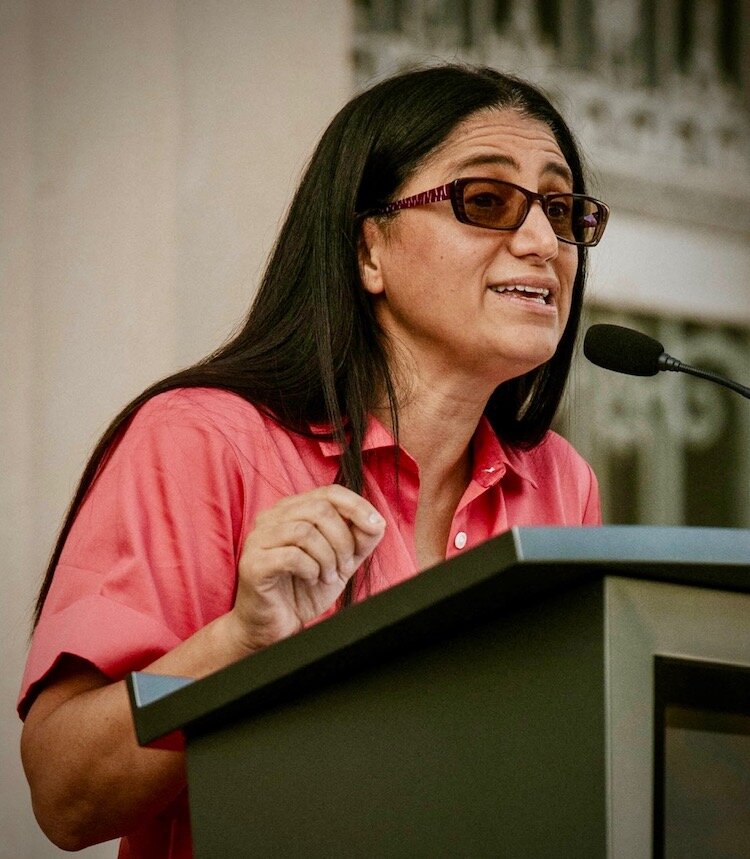
“We understand the needs the community has,” Chang says. “We’ve seen how difficult financial insecurity, food insecurity, and lack of transportation can be even before a baby is born. That’s why we decided to champion this process and momentum in our community.”
Cradle Kalamazoo has been serving as the local Community Champion for the City of Kalamazoo and will extend its reach to Galesburg, Oshtemo, and Wakeshma.
“This is such a cool collective movement,” Muliett says. “If folks want to become involved, we have an avenue for this change.”
Although there is a great deal of support for RxKids locally and statewide and recognition at the national level, the program has its share of detractors, including Michigan House Speaker Matt Hall, a resident of Calhoun County.
During a press conference in February, where he criticized the program’s administration and funding sources, Hall called RxKids a “scam” and said Republicans won’t back additional funding for it in the next state budget.
While there is no formal monitoring in place or mandated reporting for pregnant women and new moms about what they’re spending their RxKids dollars on, Stewart says there are regular check-ins to see how it has impacted their ability to pay rent, utilities, and purchase baby supplies.
“It’s pretty straightforward,” she says. “This is a program based on empowerment, love, trust, and dignity.”
Data and research affirm that the program is making a positive impact on the health of mothers and babies, which contributes to the overall economic health of participating communities, Stewart says.
Based on data collected in Flint, Chang says people are spending the funds on what they are intended for.
“Mothers want to do the right thing for that baby,” he says.
Author
Related Articles
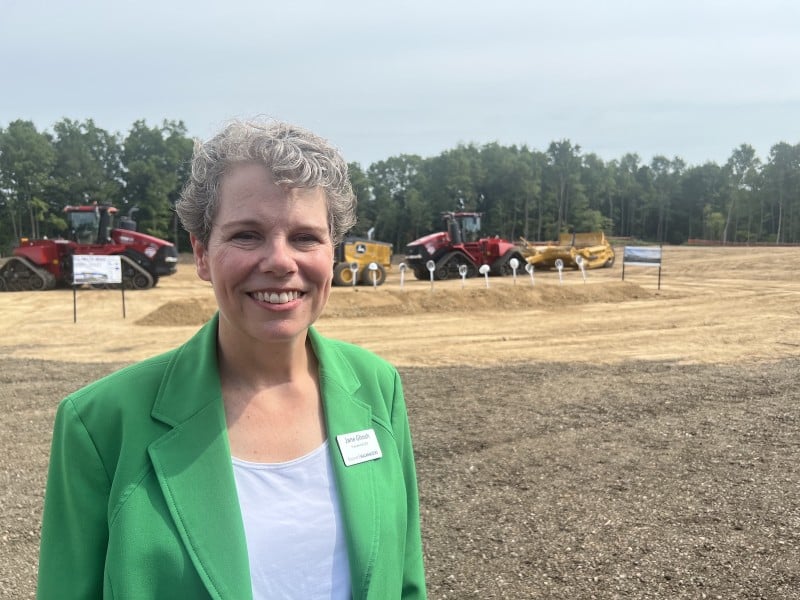
Double play: Two new sports venues (arena and complex) could change the game for Kalamazoo’s economy
With a new downtown arena and a $49 million indoor sports complex under construction, Kalamazoo is positioning itself to attract major sporting events, boost tourism, create jobs, and generate millions in new economic activity.
CMHA: Telling the whole story about Michigan’s public mental health system
The Community Mental Health Association of Michigan gives a voice to the issues and the people experiencing them.
Recovery: Michigan offers many options outside of residential care.
Michigan professionals providing SUD services contend that Michigan’s far from being a rehab desert.