
Vintage clothing finds new life in Constantine’s historic heart
A new shop devoted to vintage clothing has opened in downtown Constantine, where owner Stacy Synstelien is turning decades of collecting and retail therapy into a small-town business rooted in history.
Editor’s Note: This story is part of Momentum: The people and companies shaping what’s next, a weekly series that explores new ventures, founder support, and the resources powering entrepreneurship and small businesses across seven counties in Southwest Michigan. This project is sponsored by Southwest Michigan First.
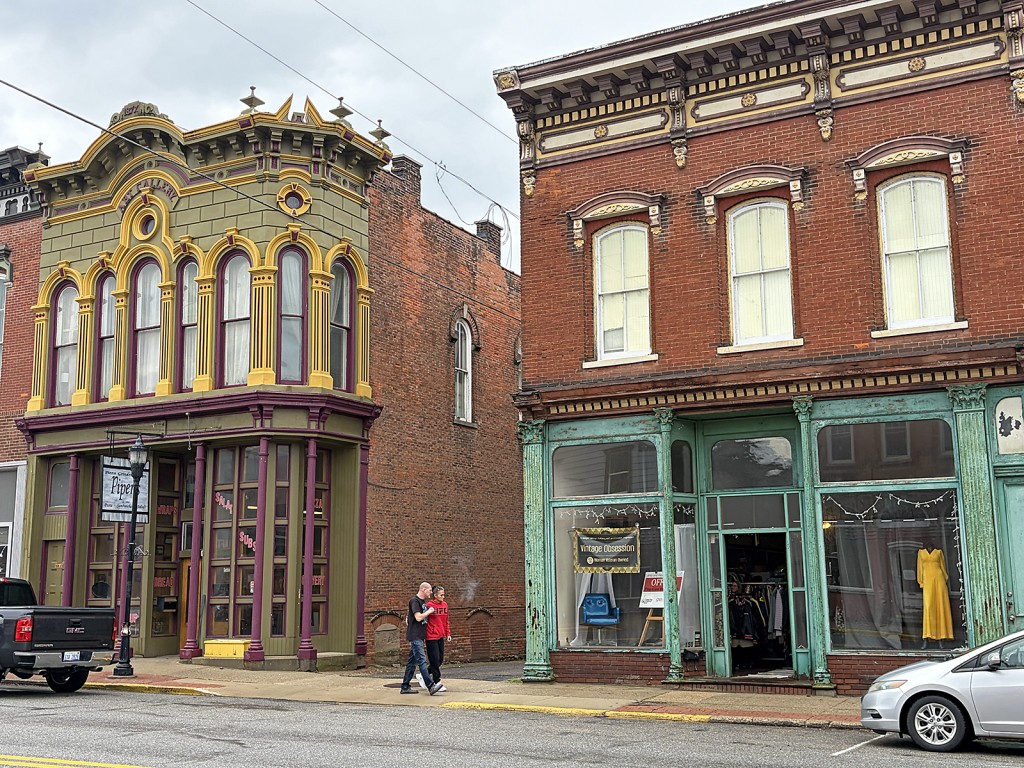
CONSTANTINE, MI — A store selling vintage clothes and accessories has opened in a vintage building in a vintage town. Vintage Obsession opened April 4 in an 1870s building in downtown Constantine, founded in 1831.
The store’s owner is Stacy Synstelien, 53, of Gary, Indiana, a 90-minute drive from Constantine. She had been trying for many years to establish a permanent retail space for her huge collection of clothing from the 1920s to the 90s. “The more popular Gary gets, the higher the rents go, so I couldn’t afford a place there,” she says.
She saw an online advertisement for a large space in Constantine’s downtown, which is in the National Register of Historic Places.
“I chose Constantine because of the affordability and because it’s just a really cute village,” Synstelien says. “The space is huge. The building is gorgeous. It’s from the 1870s, I believe. It’s still all wood inside; no one has torn it out and made it modern, so it’s exactly what I wanted. And the building started as a retail space for clothes.”
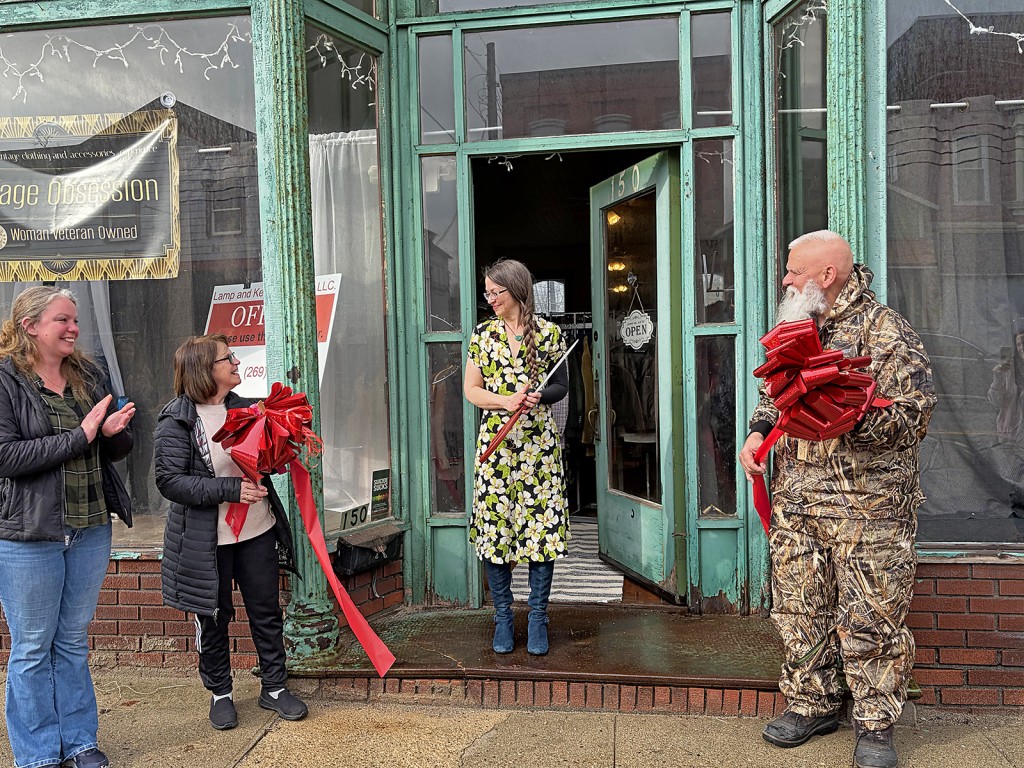
Her store’s name, Vintage Obsession, describes Synstelien’s condition.
“I want to fulfill my passion project,” she says. “When I was young, I would dress up in my mother’s clothes. I fell in love with vintage clothes, and I’ve been wearing them my whole life. I don’t have a lot of money for expensive designer clothes, and you can find better quality in the vintage clothing because they have natural fibers like cotton, wool, and linen, not the synthetics.”
Initially, her store at 150 S. Washington St. is open on Saturdays from noon to 6 p.m. until she learns what shoppers want. “I heard that the summers are very busy,” she says.
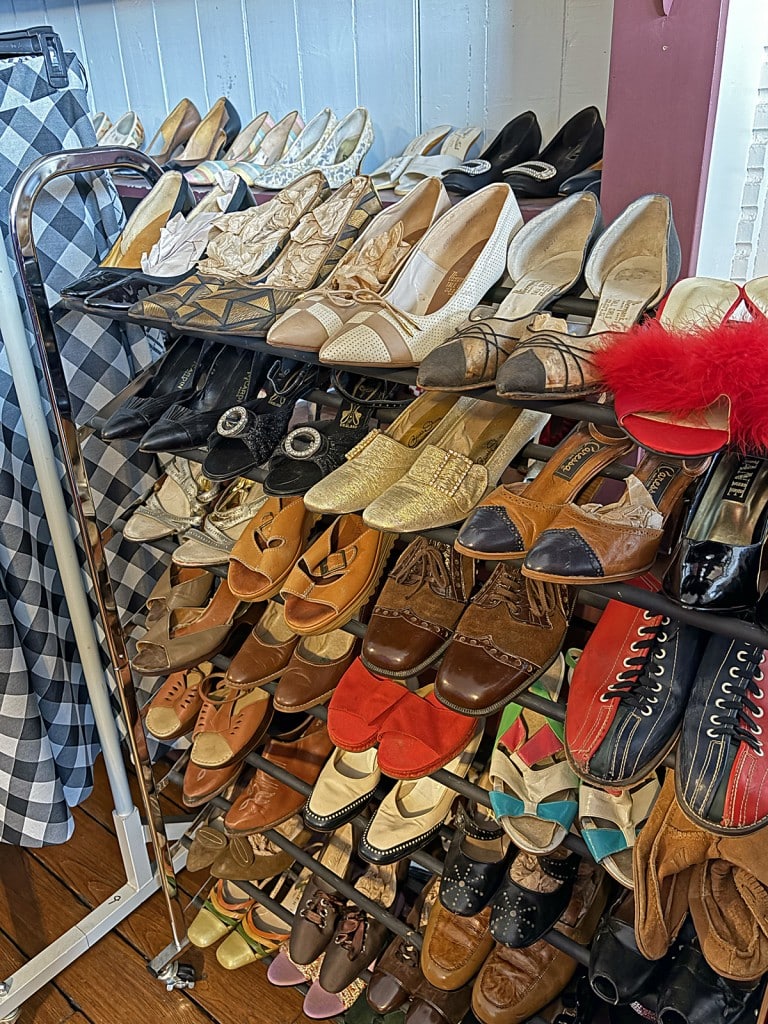
The store is opening with around 3,000 items, mostly for women but also some for men, that she began collecting about 20 years ago. “I handpicked every single piece,” she says, citing estate sales and other opportunities.
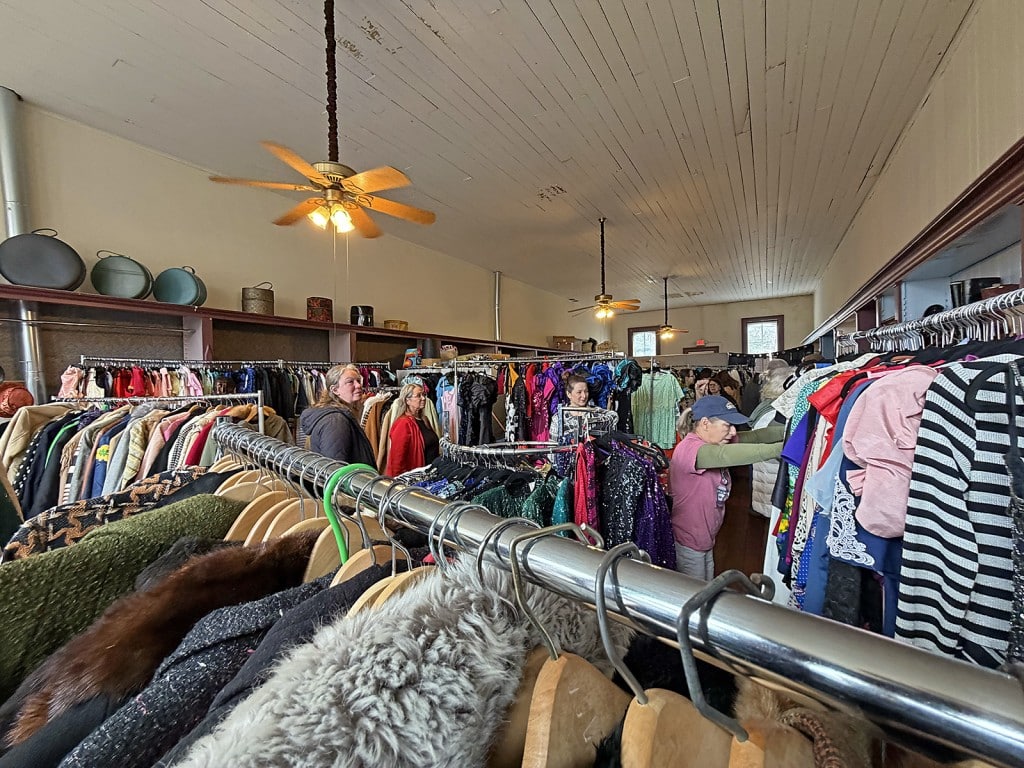
A driver for her constant shopping was treatments for her long-term breast cancer and what she calls retail therapy. “After a treatment, I would feel a little better, and I would go shopping. I had the idea to have a vintage store.”
Synstelien is an Air Force veteran, having joined at age 22 and later becoming a pharmacy technician with the rank of staff sergeant. She served for eight years, then went to college and became a registered nurse, working as a liver and solid-organ transplant nurse and neurological nurse.
Synstelien’s enterprise is one of a series of investments in Constantine’s historic downtown, a preservation effort appropriate for the village (population 2,100) that produced Michigan’s third governor. Diana Lammott was with the Downtown Development Authority (DDA) for 16 years and retired as its director at the end of March. “Last year we did five ribbon cuttings in one day, so we had a lot of new businesses start,” she says, referring to the traditional ceremony held when a business opens. “The five that we did are still going.
“DDAs help a lot; they get money so that they can help preserve the downtown and stimulate economic growth in the downtown. They are important, and Michigan is very supportive of them. We got state and federal grants; overall, we’ve put about a million dollars into Constantine.

Photo: Courtesy
“We brought in nine high-end apartments above the stores. There were no residential properties at that time, and now there are,” she says. “About 75 percent of the businesses we have downtown are women-owned. Lots of them are startups.”
Constantine grew in the 1830s and 40s because of its location on the St. Joseph River, where steamboats were used for trade and water power was available for mills. Many merchants prospered, including John S. Barry, who was elected Michigan’s third governor and served from 1842 to 1850.
Constantine claims it’s the Seed Corn Capital of the World. The area around the village produces more than 10 percent of the seed corn grown in this country, and the surrounding counties produce another 10 percent. Seed corn is saved from a harvest to be planted for the next growing season.
Author

Related Articles

Coalition proposes that no family pay more than 7% of their income for child care
Universal Childcare without Conditions centers affordability for families and sustainability for providers.

A new idea for the healthcare industry wins $100K at Cultivate 269 student pitch contest
A Western Michigan University graduate student won $100,000 in a Kalamazoo pitch competition for his AI-powered medical language platform, highlighting the region’s growing support for student entrepreneurs and high-impact startups.

Housing pros answer the question: Are these places really affordable?
How do you define “affordable housing”? It turns out there is a precise definition.