Brookings Fellow helps Kalamazoo explore shared prosperity
All but gone are the days when Americans could move from poor to rich in a lifetime.
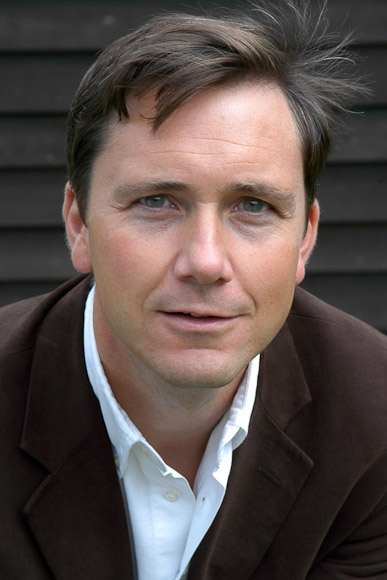
And this shift in the ability to achieve social mobility is a serious issue for a county that prides itself on equality and independence for all, says Richard Reeves, Senior Fellow in Economic Studies at the Brookings Center and the former director of strategy to the United Kingdom’s Deputy Prime Minister.
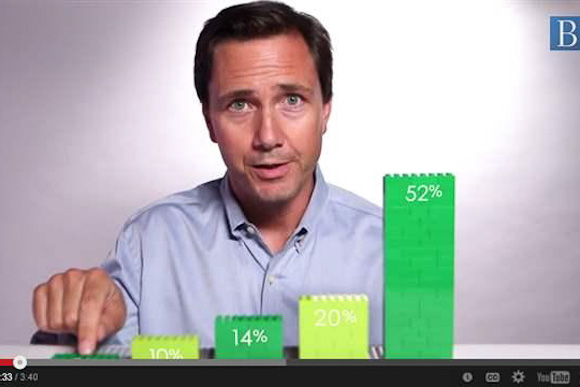
Reeves was recently invited to speak on the WMU campus by Shared Prosperity Kalamazoo. The group is working to address the problem of poverty in Kalamazoo, which has been on the rise since 2000. Statistics from 2010-12 show that of the children living in poverty 52 percent (3.302) are black, 28 percent (1,798) are white and 14 percent are Hispanic.
With a self-deprecating sense of humor delivered in his British accent, Reeves took on this serious topic.
He comes from the United Kingdom where “we know a thing or two about class systems,” he said in jest. He assured the audience that he had his Green Card, that he was born on the Fourth of July, and that his wife and family are all American. That established he moved on to talk about The Opportunity Ecosystem.
“Shared prosperity is increasingly a local issue, though many of the things that can be done to to promote shared prosperity at the federal and state level have to do with moving money, which is harder at the local level,” he said.
As Reeves sees it, shared prosperity is what it takes to keep the American Dream alive. Equality and independence are particularly American ideals. The ability to create one’s own destiny is in the DNA of America, Reeves says.
And the measure of American equality is not the income gap between the poor and the rich, but the chance to trade places.
If equal opportunity ceases to be true, that represents a fundamental change for the United States. “This inequality would be inconvenient in the U.K. and embarrassing in France,” Reeves says, “but in the United States it challenges the very idea of America itself.”
The American Dream rose out of the Horatio Alger’s tales in which characters were likely to say things like: “In this free country, poverty early in life is no bar to a man’s advancement.”
When that is no longer an option, Reeves says, it is “a very big problem indeed, for America.”
Today, there is bipartisan support for economic mobility, Reeve says. But social mobility has become more difficult in America, particularly for black Americans.
A black child born into poverty has a 50 percent chance of staying stuck in poverty for his or her lifetime, and a 3 percent chance of making it to top income levels. A white born in poverty has a 23 percent chance of remaining there for life and a 16 percent chance of moving into the top income levels.
Reeves has a video (here) that uses Legos to demonstrates in a strikingly visual representation the ways in which the black population gets stuck in poverty.
Family–the stability of your parents and whether or not they are married; education–your level of academic achievement and skill; your race–especially if you are black; and where you live all affect your economic mobility. But the greatest determining factor is your race, he says.
Going to college gives those at the bottom a better chance of pulling themselves out of poverty. Reeves also points out that right now children living in poverty in Saginaw and Lansing have a better chance of getting a college education than those in Kalamazoo.
He urged the community to assess what social mobility means in Kalamazoo as it pursues shared prosperity. To get there takes a clear goal, clear ways of measuring success, quality data, evidence-based policies and programs, integration and co-ordination of such programs, and bi-partisan and agency support.
As Reeves says in his video: “We can have a long argument about the gap between the rich and the poor. But I think we can all agree that we don’t want to live in a society where where you’re born determines so strongly your chances in life of where you end up. America has a dream of equal opportunity and we’re a very long way right now from that dream. We have a big problem and we need big solutions.”
In the second portion of the program, panel members Von Washington Jr., executive director of community relations for The Kalamazoo Promise; Stephanie Moore, former city commissioner, program director of the nonprofit Mothers of Hope; and Timothy Suprise, founder of Arcadia Ale discussed the need for shared prosperity in Kalamazoo.
Washington said that the community has a lot of “passion and juice around the Kalamazoo Promise that can be a catalyst for the work that needs to be done for this kind of work. With everyone on the same page, if we can get that, we have the the opportunity for the community to transform.”
“We have to deal with the issue of race,” Moore told the crowd. “We people of color are always disadvantaged and no real effort is made to see we are allowed to have equal and fair opportunity.
“At the heart of what Mothers of Hope are trying to accomplish is to parent children who have an opportunity to be successful.” Moore went on to say that there are many barriers to success for children in poverty. “Poverty hurts. We expect children to go to school every day and understand their lessons when they don’t know if their mother or father will be there waiting for them when they get home.
“We need real change. What our kids see now is that mom and dad can’t get work or they go to work every day and they still can’t afford to go grocery shopping. None of us want a hand out. We just want to feed our children. We need to create a community that is fair and equatable, where the schools teach skill building and literacy so our children can realize The Promise.”
Systemic issues will have to be addressed to bring about shared prosperity, Moore said.
Next, Suprise talked about racial divides in the community. “The truth is we are polarized. We are not together.” Having come from New York, he was used to having more people of color around and wanted that again. “It would be really cool to see a color palette that actually reflected the our community. It would be very refreshing.”
As a business owner, he says he wanted that more colorful palette in place at Arcadia Ales, as well. “We realized we were too white and that bothered us. We are starting to do something about it.”
Another step was to put in common tables that could create a place for community discussions, Suprise said. “When we come together, good things happen.”
Reeves presentation and the panel discussion was the inaugural event Shared Prosperity Kalamazoo, a community collaborative initiated by the Kalamazoo City Commission in 2014 to promote increased access to well-paying jobs; strong and economically secure families, and healthy growth; and development and learning for the city’s young people. The event was presented in collaboration with the Lewis Walker Institute of WMU.
Kathy Jennings is the managing editor of Southwest Michigan’s Second Wave. She is a freelance writer and editor.
5 Principles for Social Mobility
• A long term view: Social mobility is, by definition, a long-term challenge. The government’s investment and policy decisions will reflect that. There are no quick fixes.
• A progressive approach: Resources will be focused on those from disadvantaged backgrounds while narrowing opportunity gaps all the way up the income scale.
• Government does not have all the answers: Improving social mobility requires the whole of society to play its part. The strategy challenges government and wider society to do better, supported by greater accountability and transparency.
• A ruthlessly evidence based approach: Effort and finance will be channelled in the ways that evidence tells us makes most difference to social mobility–particularly essential in a time of fiscal constraints when we must do more with less.
• A life-cycle approach: Policies need to impact across the life-cycle to make a difference–from the foundation years (the first five years of life), through school life, and the key transition from education to the working world.
Related Articles
Battle Creek woman turns healing journey into New Eden Microgreens
After overcoming a life-threatening illness, Battle Creek entrepreneur Nicole Hart launched New Eden Microgreens with support from local business organizations, bringing fresh, health-focused products to stores and restaurants across Southwest Michigan.
The Village Network of Battle Creek dissolves as an organization
The Village Network of Battle Creek is dissolving after helping direct more than $1.25 million to BIPOC-led organizations and entrepreneurs, saying its mission to build community-led economic justice networks has successfully created lasting local momentum.
Brick-and-mortar businesses get boost with new Kalamazoo training program
A new six-week Storefront Growth Lab in downtown Kalamazoo will help Southwest Michigan retail, restaurant, and service business owners improve profits, marketing, operations, and long-term growth through hands-on coaching and peer collaboration.