
Youth Reviewer Lab: ‘Northern Lights’ ignite Kalamazoo Junior Symphony season
The Kalamazoo Junior Symphony Orchestra opened its season with a polished, emotionally charged performance of Bruch and Sibelius, showcasing the young musicians’ dedication and artistry as captured through the perspective of a youth reviewer.
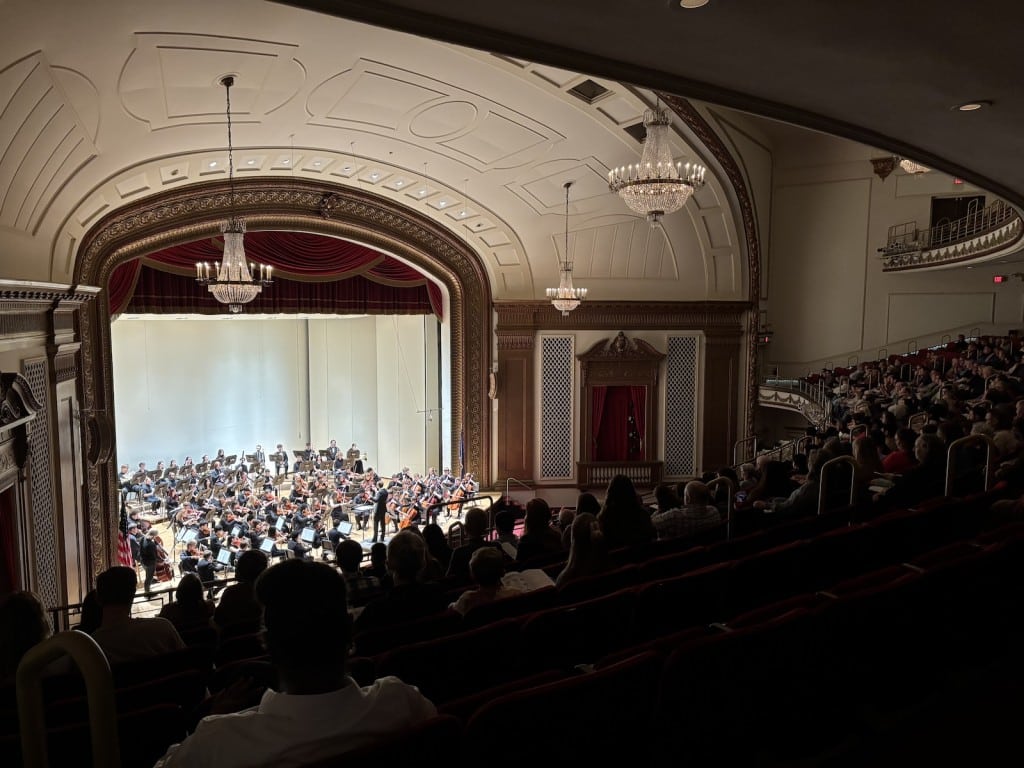
Photo: Braylon Youker
Editor’s Note: Youth Reviewer Lab is a new series that is part of our Voices of Youth Kalamazoo, sponsored by the Stryker Johnston Foundation, and Curtain Call, sponsored by the I.S. Gilmore Foundation. Youth reviewers offer a front-row seat to the unique, lively, and memorable performances shaping Kalamazoo’s youth arts scene
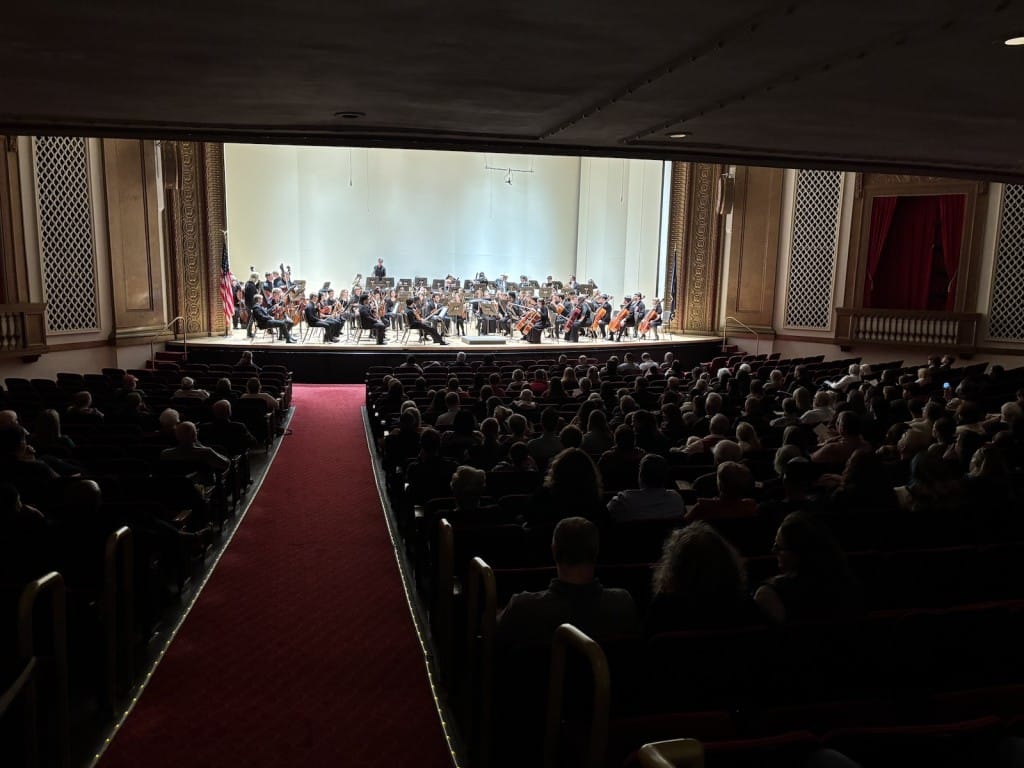
KALAMAZOO, MI — The audience filled Chenery Auditorium on Sunday afternoon as members of the Kalamazoo Junior Symphony Orchestra (KJSO) raised their bows and instruments to tune. Soft chatter dissipated into silence when conductor Andrew Koehler raised the baton. The opening notes of “Swedish Dances” by Max Bruch filled the space, setting the tone for an afternoon of beautiful music and immense skill.
The performance showcased intensity and dedication, underscoring the orchestra’s continued commitment to musical excellence within the community.
Being the first concert of the season, “Northern Lights” was a shorter program than usual; however, the length did not lessen its impact.
The program began with “Swedish Dances,” in four short movements by a German composer inspired by the folk traditions of Sweden and the broader Nordic region.
The first movement began with a sharp, attention-catching call that evolved into a call-and-response structure between the sections of the orchestra. Smooth, well-controlled dynamics created a sense of depth, highlighting the musicians’ skill. The shifting tempo and tone created a sense of mystery and drama. Musicians maintained focused expressions, reflecting the intensity and emotion carried through each note.
The second movement introduced a sorrowful melody that gradually built into a quietly hopeful mood. Each phrase, filled with dynamic changes, sought a resolution, which arrived in a calm conclusion.
The third movement contrasted with bright, warm energy. The rhythmic beat and quick tempo drew from Nordic dance and music culture, as the mood invited toe-tapping amongst the audience.
The final movement opened with a sharp, mysterious pattern, creating tension and suspense among sections of the orchestra. Through repetition and layering in wind and string sections, the orchestra created waves of tension, leading into a grand, ascending finale that closed the piece with a sense of triumph and fulfillment.
The music: Bruch’s Swedish Dances
Symphony No. 2 in D Major, composed by Jean Sibelius, demonstrated masterful blends and balance between the different sections of the orchestra. A “mini-symphony” of rising and falling three-note motifs, each movement carried traces of the last, emphasizing the “idiosyncratic way that Sibelius composed,” says Koehler. “No single movement is one thing — it contains multitudes.”
The first movement opened with delicacy and careful dynamics, tension swelling gradually into an emotionally-charged crescendo. The orchestra moved between calmness and anxiety, shaped by the timpani, brass, and strings, ending with a quiet sense of peace.
The second movement deepened the atmosphere with the thunderous timpani and low, rumbling strings. Conversation between winds and strings created shifting moods, from sunlight to shadow, the tension lingering in the timpani’s buzz. An ominous rise from the repeated phrase of the string sections ultimately led to an almost evil-sounding, sustained outro.
A burst of speed and energy launched the third movement, driven by fast scales and a sudden shift in tone. The woodwinds’ questioning lines cut through the peace with passages of intensity. The movement served as a turning point, vehemently searching for a resolution.
“They must constantly balance listening and leading, skills that seem opposed and yet are very much complementary…they learn, I hope, to care about beauty, living in community, and more fully cultivating what it is to be human,” – Andrew Koehler, KJSO Conductor
The final movement bloomed seamlessly from that tension into a triumphant, beautiful melody. The once-simple scales and arpeggios transformed, declared by brass and strings with overwhelming power. Subtle contrasts between sections heightened the emotions, leading to a grand, rumbling climax held down by the brass section. The performance closed in a sense of fulfillment and victory; not only was the music overwhelmingly beautiful, but the musicians’ hours of practice were finally recognized as the audience rose for a standing ovation.
Sibelius and the heart of the program
Throughout the concert, stage presentation, synchronization of movement, and ensemble coordination contributed to an atmosphere of professionalism and composure.
For the youth performers, the concert represented months of preparation and collaboration. “Compared to the orchestra at my home school, Loy Norrix, KJSO certainly has an extra level of difficulty to its repertoire,” says violist Emma Sinclair. “We only meet once a week…meaning a lot more work is done by each individual on their own time. When we meet for rehearsals, we have to focus on connecting a variety of different parts and sounds, which can take a lot of effort, but overall creates a masterpiece that the KJSO is proud and overjoyed to present.”
The limited rehearsal schedule adds to the challenge but provides a learning experience. “Alongside its technical challenges, Sibelius requires a high level of musicality and expressiveness,” Sinclair adds. “The most rewarding part, though, was getting to witness how the ensemble brought together the piece and how our collaboration improved over time, leading to a final, polished piece.”
Despite the challenges of learning and performing Sibelius, Rinzel Arroyo, first chair of the viola section, says, “it’s something about performing a piece with a standing ovation that just… resolves the anxiety in my heart.” He adds, “KJSO has really shown me that despite what we do, our determination to succeed and tell a story are the most important factors in putting on a show, which are life-lessons I take with me wherever I go.”
Outside of music, KJSO has helped young musicians develop leadership and social skills. “I developed the majority of my leadership skills from KJSO, specifically, being a “totem pole” of reliance and support to those in my section that need it,” says Arroyo.
KJSO’s Legacy and Mission
Founded in 1939 and one of the oldest youth orchestras in the United States, the Kalamazoo Junior Symphony Orchestra provides young musicians in Southwest Michigan with opportunities for advanced orchestral training and public performance. Under the direction of Andrew Koehler, the ensemble continues to “instill excellence in youth and enrich the community through the power of music.”
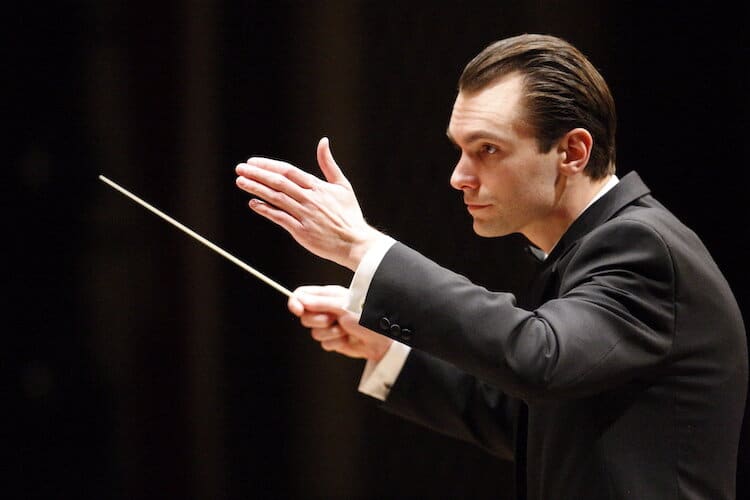
Koehler explained that each season’s repertoire is selected to challenge and inspire performers. “I solicit input from students annually, and add those desires to my own, carefully weighing works that can be played together coherently…strike the right balance between challenge and feasibility,” and “give students exposure to a range of styles and compositional voices.”
However, the choice of Sibelius’s Symphony No. 2 in D Major came from a collaboration with the Kalamazoo Symphony Orchestra. This partnership will be showcased in a full side-by-side performance on February 7.
Building community through music
Koehler emphasizes that the orchestra teaches musicians deeper lessons that extend far beyond the notes on the page. “They must constantly balance listening and leading, skills that seem opposed and yet are very much complementary…they learn, I hope, to care about beauty, living in community, and more fully cultivating what it is to be human,” Koehler says.
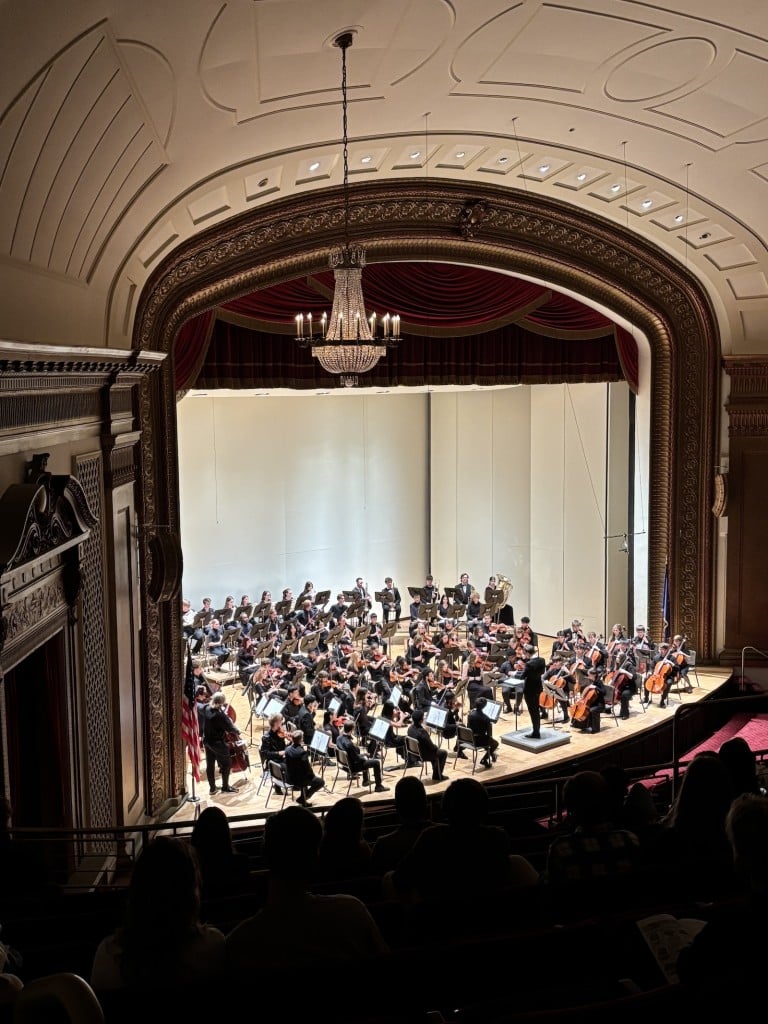
Within Kalamazoo’s vibrant arts scene, KJSO plays a pivotal role in education and the community, striving to “transcend any limited preconceptions of what young musicians might sound like” by doing “justice to these very complicated pieces of music” to create an “artistically enjoyable experience.”
KJSO’s vast network of professional musicians helps “sustain a deeply interconnected artistic ecosystem,” says Koehler. Student musicians have access to opportunities to attend masterclasses, audition for musical competitions, and much more.
KJSO collaborates with organizations like the Stulberg International String Competition, Gilmore Festival, and Kalamazoo Symphony Orchestra, strengthening the musical network across the area.
The performance by the Kalamazoo Junior Symphony Orchestra demonstrated both technical skill and artistic maturity. Each piece reflected the dedication of the young musicians and the guidance of their directors.
Through continued performances and educational programs, KJSO remains a cornerstone of Kalamazoo’s cultural life. Information about upcoming events and auditions is available HERE.

Braylon Youker is a junior at Kalamazoo Central High School and the Kalamazoo Area Mathematics and Science Center, both in Kalamazoo, Michigan. In his free time, Braylon enjoys working out, reading political fiction, playing guitar, and hanging out with his pets.
Related Articles

Art you want to walk in: ‘Future Now’ lands at the Kalamazoo Institute of Arts
See some kicks for kicks at the Kalamazoo Institute of Arts, where the exhibition “Future Now” turns sneakers into art that blends design, culture, sustainability, and the irresistible urge to try them on.

At Kalamazoo’s Mic Check & Connect, art is the icebreaker
At Mic Check & Connect, Kalamazoo artists gather not just to perform, but to spark intentional conversations that turn creative expression into genuine community and collaboration.

Voices of Youth Commentary: More teens reverting to vinyl and CDs to protest large streaming services
‘The 2026 Music Media Reset’ means teens and others are ditching digital music and opting instead for LPs and CDs.