Tsunami Lab to build a new generation of owners before Kalamazoo businesses wash away
Thanks to Kalamazoo Forward Ventures, a wave of help is coming to address a potential ‘Silver Tsunami’ of mostly Baby Boomer-owned small business closures in Kalamazoo — the program aims to help preserve jobs, wealth, and legacy.
Editor’s Note: This story is part of Momentum: The People and Companies Shaping What’s Next, a weekly series that explores new ventures, founder support, and the resources powering entrepreneurship and small businesses across seven counties in Southwest Michigan. Southwest Michigan First sponsors this project. Photos are courtesy, unless otherwise noted.
KALAMAZOO, MI — So what does a business owner do when he wants to retire but has no family or partner interested in taking over?
And what do you think when a business you admired — and always wished you could own — closes before you were prepared to make a move?
Only 30 percent of all small business owners have a succession plan — a strategy for what will happen when the owner/operator moves on, says Dwayne Powell Jr., of Kalamazoo Forward Ventures. And ultimately, only one in five is acquired by private equity and continued as an ongoing enterprise.
At the same time, approximately 10,000 Baby Boomers (Americans born between 1946 and 1964) are reaching age 65 every day, according to the U.S. Census Bureau. And they own about 40 percent of all small businesses in the nation. The disconnect between retiring business owners and prepared business buyers is a major problem, Powell says. It has the potential to create a wave of small business closures that is being called a ‘Silver Tsunami.’
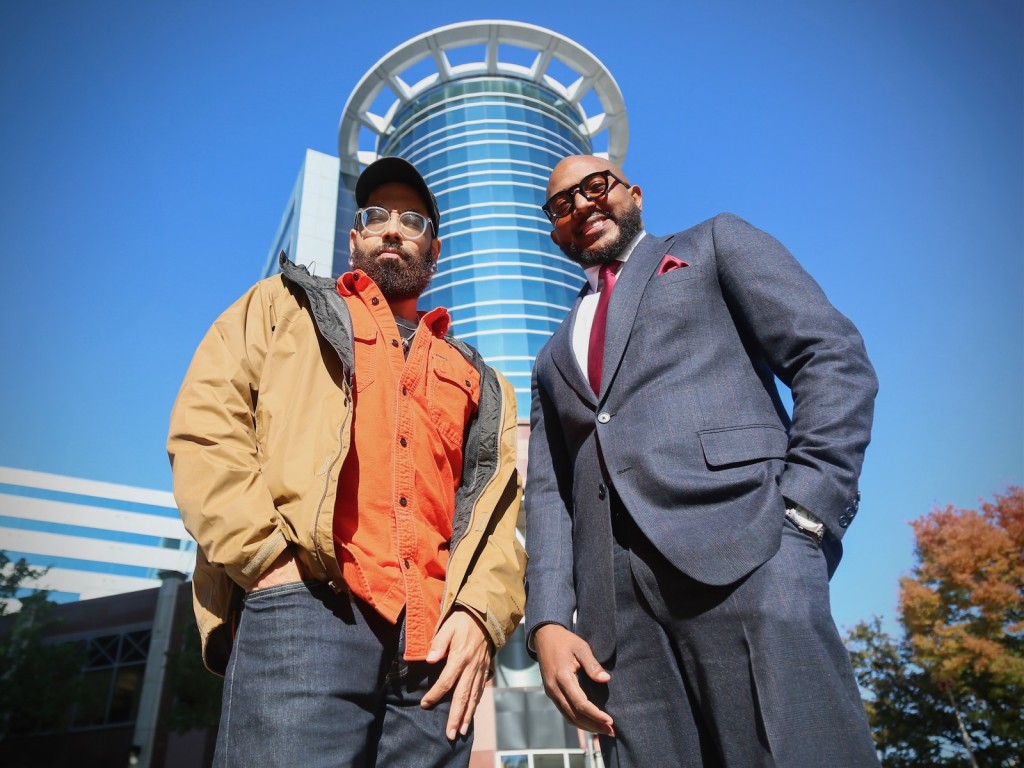
“People have to learn that this is really a major problem,” says Powell, who is chief operating officer of Kalamazoo Forward Ventures (KzVF). “And if we don’t address this and really do a good job of succession planning in our community, this will dramatically hurt our economy — job loss, wealth loss, assets loss, tax base loss, and a loss of legacy.”
His capital investment firm is therefore launching a 12- to 16-week intensive training program to help prospective business owners learn what they need to know to acquire and become successful business owners. The “Tsunami Lab” is intended to help everyday people learn the mechanics of acquisition, operational excellence, and legacy stewardship. Participants are expected to have access to specialized coaching, a community of peers, and capital partners they need to close a deal.
“Too many strong businesses are at risk of closing simply because there’s no clear plan for who comes next,” says Powell. “Tsunami Lab is about preparing everyday people with the discipline to step into ownership, take care of what is already working, and build long-term stability for our local economy.”
Kalamazoo Forward Ventures is a $50 million, Black-owned investment fund started in the fall of 2024 to provide venture capital to overlooked small business operators, unique start-ups, and innovative creators. Its mission is to make early-stage investments in growth-oriented businesses. With Tsunami Lab, KzFV is “making a long-term commitment to strengthening the regional economy by helping new owners step into existing, successful businesses as current owners retire,” according to information provided by Marcel Fable Price, its director of Platform and Programming.
“We understand that to keep our region’s soul intact, we have to keep our businesses rooted,” Price says. “Tsunami Lab is the bridge between the builders of today and the owners of tomorrow.”
With high-caliber instructors, Tsunami Lab is being designed to be a world-class on-ramp to business-ownership “for women, people who think differently, veterans, previously-incarcerated individuals, and Black and Brown folks,” Price says.
Described as an acquisition accelerator, the program is taking applications for the upcoming cohort from now through March 31. The first sessions are slated to begin in mid-April in partnership with Kalamazoo Valley Community College. Those interested in business ownership can learn more and apply.
Participants will be required to attend a weekly, three-hour session at The Catalyst Center, 180 E. Water St., as well as two off-site field trips to shadow existing businesses. Each enrollee will be required to submit a $500 deposit that will be refunded if they complete the course.
The program is designed for 15 participants. KzFV will invest in the business acquisitions of three to five of the participants.
“We’re expecting to take 10 to 15 (participants) in the class,” Powell says, “and we’re going to invest in the top three to five.”

While KzFV will have an initial equity stake in those companies, each business is expected to gradually buy out the firm.
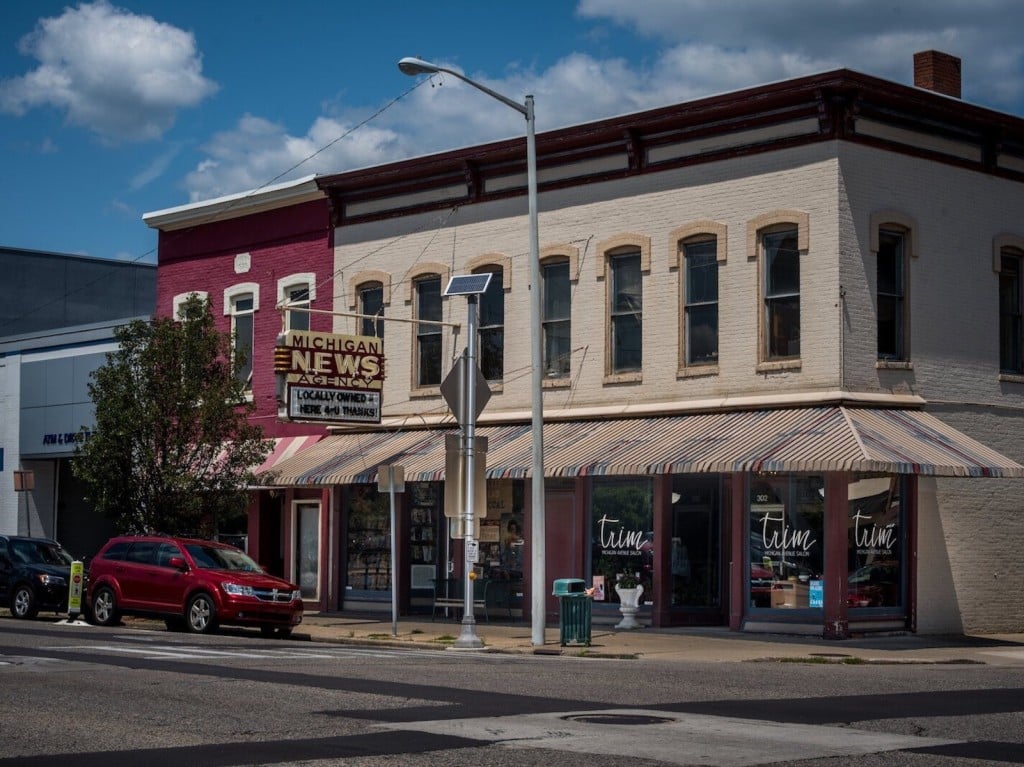
Powell says the loss of local businesses is also a loss for the area’s economy. He laments the closing of local businesses such as Precision Heat Treating Co., a specialist in heat treating small parts for automotive and machinery equipment. It was a third-generation, family-owned business that had operated at 660 Gull Rd. since 1948. It closed, and its location was sold in 2024 to make way for a 228-unit apartment complex. While the housing is appreciated, Powell says the near Northside community lost a manufacturing business because there was no one to keep it going.
“It was a family-owned business,” Powell says. “It was quietly for sale, and no one bought it. And now we really don’t have it. Back in the ’80s, ’70s, and ’60s, you had probably a dozen factories on the Northside. So one of our last few factories on the Northside, that could be employing local people, is gone, absolutely gone.”
He says that’s a huge loss because there aren’t many inner-city factories being built these days.
The idea for Tsunami Labs surfaced as KzFV fielded requests for capital over the past year.
“After a year of us (KzCF) being open, we had fielded over 200 inquiries just within our Main Street Fund,” Powell says. “Of the 200, only 4 percent of the companies that pitched us (requests for funding) had revenue of over $150,000. And as such, the overwhelming vast majority were too small for us to invest a significant amount of money. They just weren’t ready at that stage to be invested in.”
Still wanting to have a local impact, Powell says, “The solution kind of presented itself that acquisitions would be the right way to really empower entrepreneurs as well as those that may be working jobs but want to transition to be an entrepreneur. Maybe they always wanted to be an entrepreneur but didn’t see the pathway, or didn’t have the capital they thought they needed.”
Viable businesses, companies that have been established for many years and are looking for buyers, are usually ripe for re-investment, he says.
“This is the way for underinvested entrepreneurs to be able to transition to owning a significant company without having to take a huge pay cut,” Powell says. “Oftentimes, it will be a major pay increase. You’re able to buy a company with existing assets, with a financial history, with talent and resources, and that’s been proven. It’s already at a certain level, so you have the infrastructure of a successful business. To be able to take that business and now scale it, really puts people into a position to own significant companies and create generational wealth within underserved communities.”
Looking for sellers, not just buyers
Kalamazoo Forward Ventures is also engaging with and building a portfolio of business owners who are interested in selling. To that end, the organization will host a conversation with business owners about business succession and ownership from 2 to 4 p.m. on March 12, 2026, at the Catalyst Center.
“So we’re looking for buyers, and we’re also looking for sellers,” Powell says. “And it’s our goal to have (a portfolio of) at least 50 companies for sale by the end of summer — in terms of companies in the community that say they want to sell their businesses.”
Succession planning is important to our entire community, Powell says, “because as the Baby Boomers retire, it’s going to affect all of us.”
“Our goal is to make sure that the ownership of these businesses stays local,” Powell says, “It’s to make sure that these businesses do not close their doors, and we’re not losing out on tax base, and that these jobs aren’t going away., and that this wealth is being transferred, and that the legacies are being continued and built upon.”
Author

Related Articles
Kalamazoo Women2Women builds connections, fuels growth for local businesswomen
Kalamazoo Women2Women, a growing local network founded in 2016, is fostering mentorship, collaboration, and business growth by connecting professional women across industries in a supportive, no-dues environment.

Plunge, sweat, connect: House of Plunge brings contrast therapy to Benton Harbor
House of Plunge in Benton Harbor’s Arts District combines cold plunges, saunas, and recovery therapies as a one-stop shop for “feeling darn good.”

Collaborative collisions: Entrepreneurs ‘Reach Forward’ to find new opportunities and connections in Kalamazoo
The Reach Forward Conversations Event brought local entrepreneurs, product sellers, and buyers together to spark connections that could lead to contracts, growth opportunities, and stronger small-business networks in the Kalamazoo area.