‘This is where people belong’ — amid rumors, change, Kalamazoo Gospel Ministries commits to downtown
As rumors swirled about the future of Kalamazoo Gospel Ministries amid downtown redevelopment, CEO Pastor John Simpson reaffirms the organization’s commitment to remaining downtown while championing a faith-based model of dignified sheltering and long-term transformation for people experiencing homelessness.
Editor’s Note: Voices of Faith is a series that amplifies the insights of local faith leaders — voices too often missing from conversations about community development, city planning, and civic life. The series explores how these leaders address pressing issues such as housing, safety, equity, mental health, climate, and youth engagement through love, faith, and action.
KALAMAZOO, MI — Rumors are easy to spread in a small city like Kalamazoo. A looming tower above the state psychiatric hospital was long whispered to house hospital residents, or even ghosts, only to be confirmed as a water tower. Or less wholesomely, residents of Kalamazoo’s Eastside once believed a consistently potent stench invading the neighborhood was an odor coming from the local cemetery. Well, it turns out the nearby wastewater plant was the true culprit.
More recently, Kalamazoo Gospel Ministries (formerly Kalamazoo Gospel Mission) CEO, Pastor John Simpson, started hearing a few rumors about the fate of the organization he ran. That just maybe, KGM was moving out of the city’s downtown.
With the shadow of the new Kalamazoo Event Center looming larger, the announcement of a new family shelter on the south side of town, and swirling questions about what would happen to the old Wings arena, it was fair to assume some rumors would start to circulate.
After all, it’s often thankless work to address homelessness, one of Kalamazoo’s biggest challenges, which has only become more pressing in recent years. As candidates for city office in 2025 raised questions, and influential business leaders dangled their pursestrings over the effectiveness of funds spent on housing and homeless-prevention efforts, some may have speculated that Pastor Simpson had been looking for an off-ramp.
On one of the first warm sunny days of the year, Pastor Simpson gave no hesitation to this question, “Absolutely not. This is where people belong.”
From ‘unchurched’ to growing his faith
John Simpson was born into an “unchurched home” in Schoolcraft, meaning his parents were not religious. One day, a bus ministry from the Berean Baptist Church in Portage pulled through his neighborhood, and young John jumped on.
Soon enough, the church pastor was picking John up personally and mentoring him as his faith grew. It was in high school that he felt called to ministry. This led John to attend Baptist Bible College in Pennsylvania to become a minister.
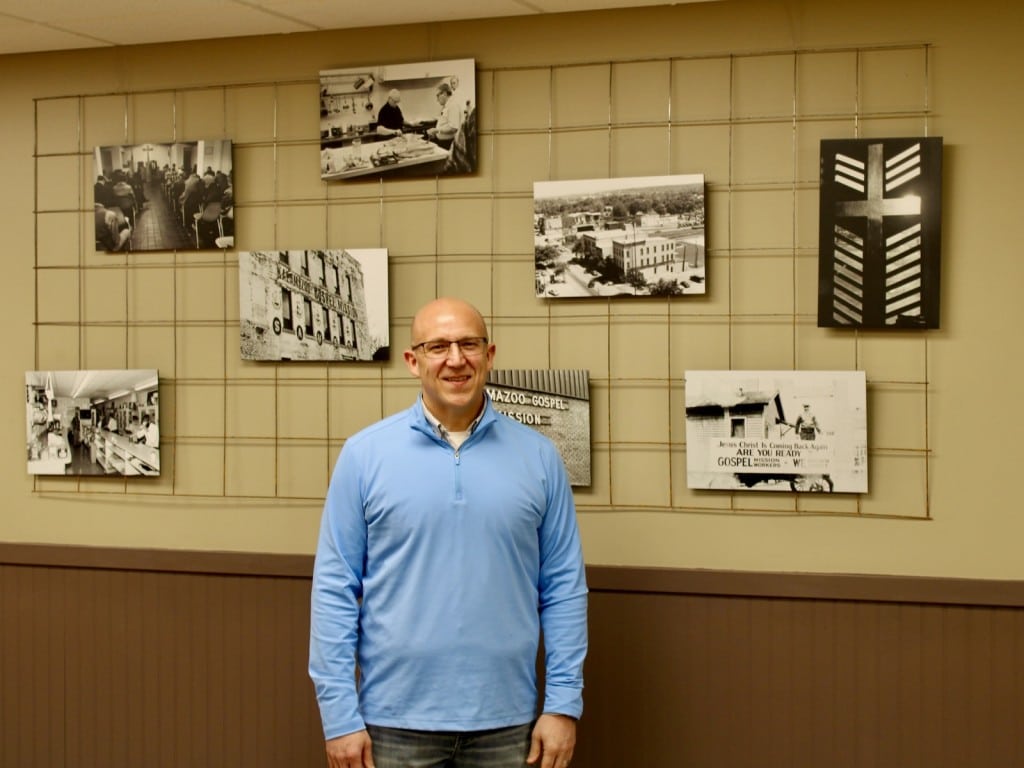
Yet, like many of the clients he serves today, he started to experience what he calls a “Jonah moment.” As the biblical prophet Jonah, who turned away from the calling God had for him, John ran towards the corporate world instead of ministry.
For 18 years, he worked for AT&T in Southwest Michigan, working his way up to a regional leadership role that afforded many luxuries and comforts in life. “I just pursued life, the self,” says John in reflection.
It wasn’t until 2012 that the Lord began to shake the foundation of his soul again. In an attempt to “not give the Devil any glory,” Pastor Simpson shares simply that this was a period of revelation, exposing the areas of pride and selfishness in his life. Quoting Joel 2:25 from the Bible, the pastor shares, “So I will restore to you the years that the swarming locust has eaten.” As God promised the Israelites divine compensation for many years of hardships and famine, John saw that his god was to give back to him something greater in magnitude than that of the present pain in his life.
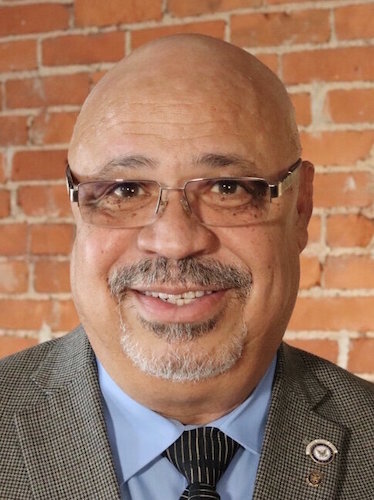
Through his family’s devotion and Biblical counseling, he found his true north again and returned to school for faith-based counseling. A search for a part-time role landed him at the formerly-named Kalamazoo Gospel Mission.
For his first five years, Pastor Simpson oversaw the New Life New Hope program, a year-long residential program that aims to provide “deep transformation through accountability, community, and personal growth.”
Over the next decade, he sat in the wings of the longtime leader of KGM, Pastor Michael L. Brown, who served for over 28 years as the CEO before leaving in 2025. John worked his way up to Chief Operating Officer, so when the vacancy needed to be filled after Brown retired, there seemed to be no better person to lead an organization dedicated to providing that opportunity to many in need.
With a wide view of his own life journey in mind, Pastor Simpson humbly shares, “The Lord prepared me for this.”
Dignified sheltering
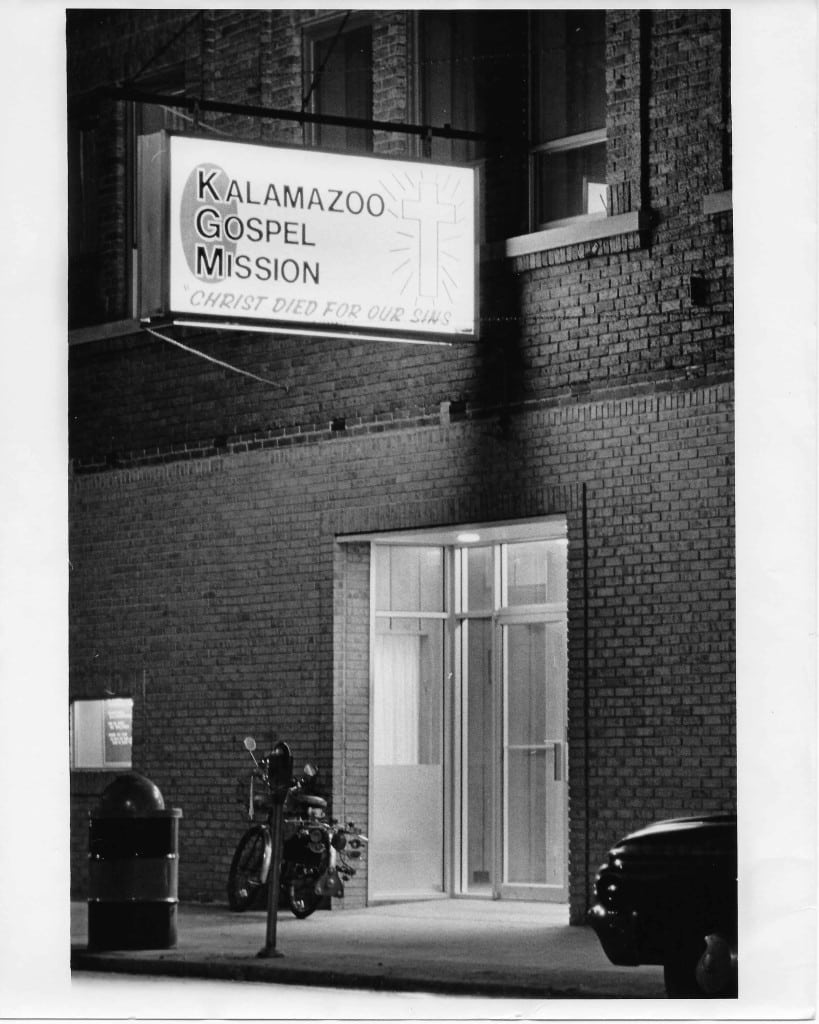
Kalamazoo Gospel Ministries started as a Depression-era soup kitchen in 1933 by Jacob and Anne Hildebrand, a couple that met while conducting jail ministry work in the area. For over 50 years, the couple and countless volunteers viewed their work of providing something simple — a sandwich, soup, and coffee — as a gateway for struggling individuals to find salvation in the Christian gospel.

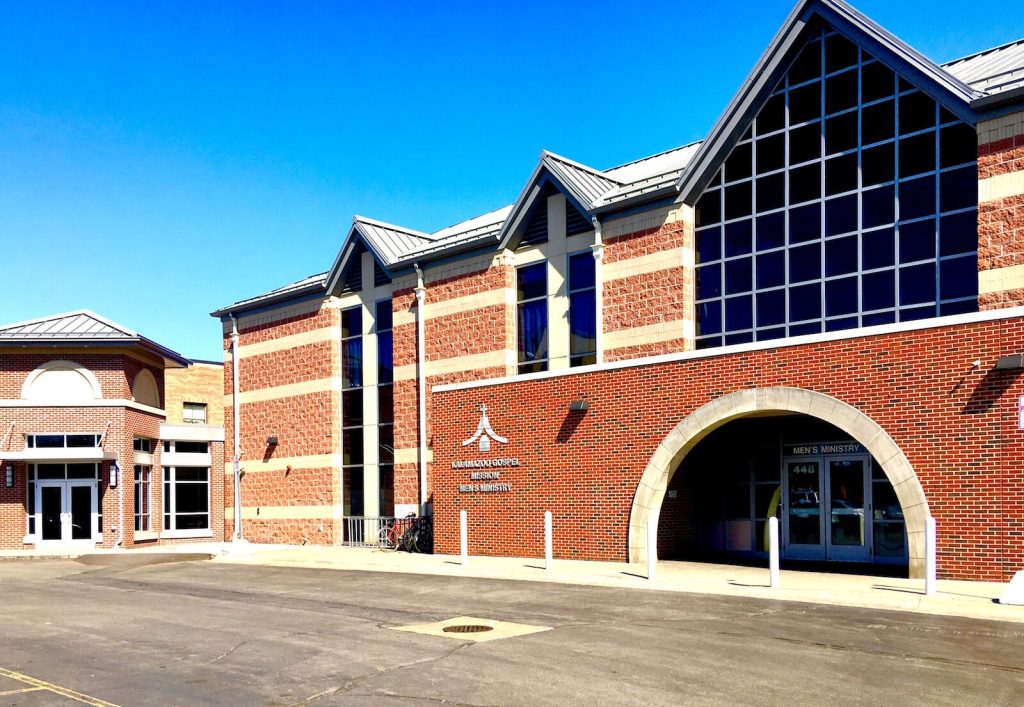
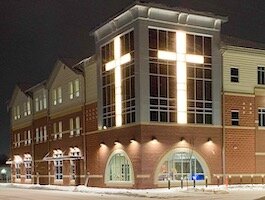
KGM later moved to its present downtown location in 1957, allowing for overnight accommodations for guests. Over the decades that followed, the campus grew and built updated facilities. Most recently in 2022, KGM raised the iconic three-story building along North Burdick and East Kalamazoo Avenue. This new section created space not only for expanded emergency beds services, but also rooms for families and long-term program participants. Throughout this time, KGM became the de facto shelter for the majority of Kalamazoo County’s unhoused population.
Yet with less than six months on the job as CEO, Pastor Simpson had to make a difficult choice in 2025. The population of unhoused folks in Kalamazoo rose to an all-time high, totaling nearly 800 reported individuals during the latest Point-in-Time count, a 19% increase from the year before.
For Kalamazoo’s largest overnight shelter, this brought the burden of shouldering this work to unbearable levels. One metric key to this decision was the guest-to-staff ratio, which ballooned to 150-to-one some nights.
In October of 2025, KGM announced it would cut down on its available emergency shelter beds with the hope that many of the guests impacted by the reduction would jump into one of their structured residential programs.
According to Pastor Simpson, many of the headlines from this time focused on a negative angle on this decision. “We never reduced our beds,” he says. “We just stopped doing mats on the floor. Which is a dignity piece. Dignified sheltering.”
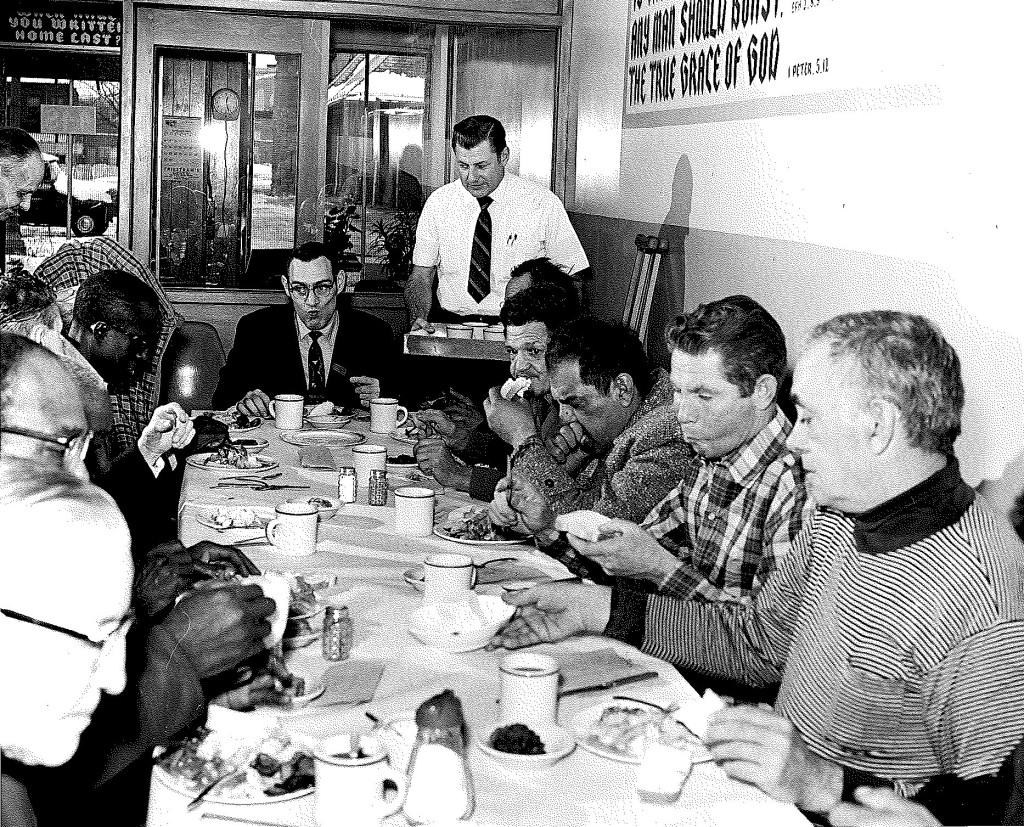
The dignity piece is key to Pastor Simpson. While rumors have swirled around every aspect of KGM’s programming and decision-making for years, at the heart of his leadership approach is facilitating programs that positively support the self-worth of guests who are otherwise turned away from the community and struggling with their own afflictions.
“Our mantra was ‘from crisis of emergency shelter to calling of programming,’” says Pastor Simpson.
In the months that followed, KGM saw 150 guests move from emergency beds to program beds. From October to December of 2025, 30 of KGM’s long-term program guests transitioned to permanent housing, according to Simpson. The latter was the largest increase over three months for the entire year.
While emergency beds provide a front-line response to the rising number of unhoused folks in the county, it’s the program beds where KGM sees its truly transformative work at play.
The heart behind the programming
Pastor Simpson understands the sense of urgency the community feels about “solving” homelessness, but he wants KGM to be an advocate for the unhoused population by accepting the significant time it takes for an individual to overcome the barriers in their life.
“Our programming is designed for people to come back into the community. Emergency shelter doesn’t do that, as much as we desire for it to do, it’s too transient,” he says. “Our culture says that there is an immediacy to change right now. Change takes time.”
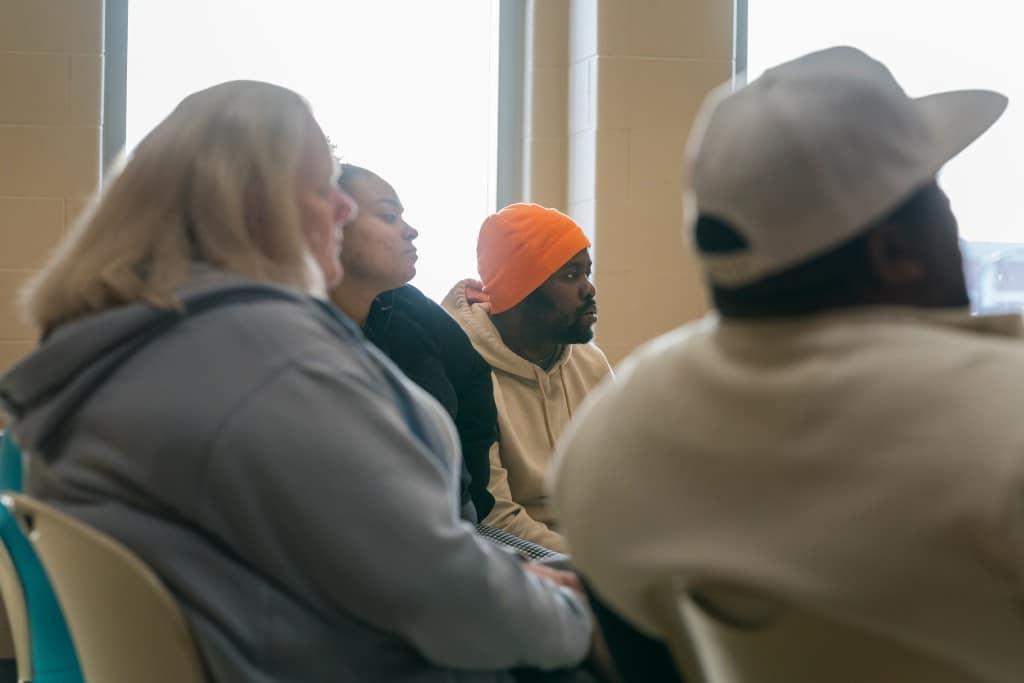
KGM’s New Life New Hope is the pinnacle program aimed to meet this challenge. Slated as a one-year experience, guests in New Life New Hope spend their time in a structured environment oriented towards redemption.
In this residential-style program, guests’ days are split into two halves. In the morning, a guest may be in the classroom engaging on a variety of topics, from skill-building around conflict resolution, relationship building, and dealing with change, to dealing with the thorniest of subjects like addiction. Most research shows that around one-third of unhoused folks deal with drug and/or alcohol challenges.
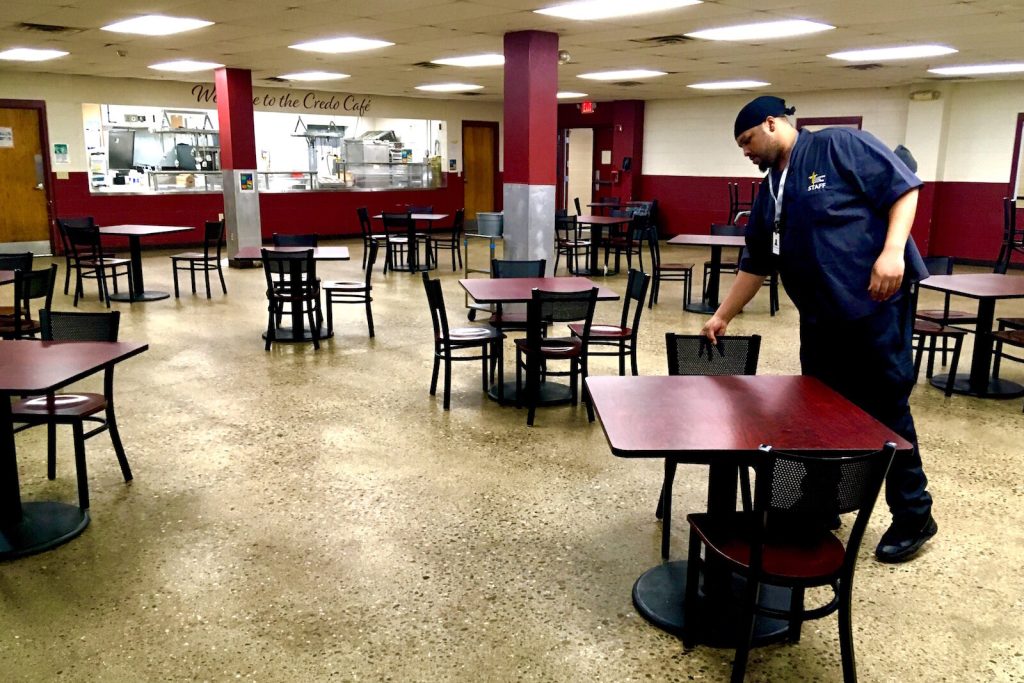
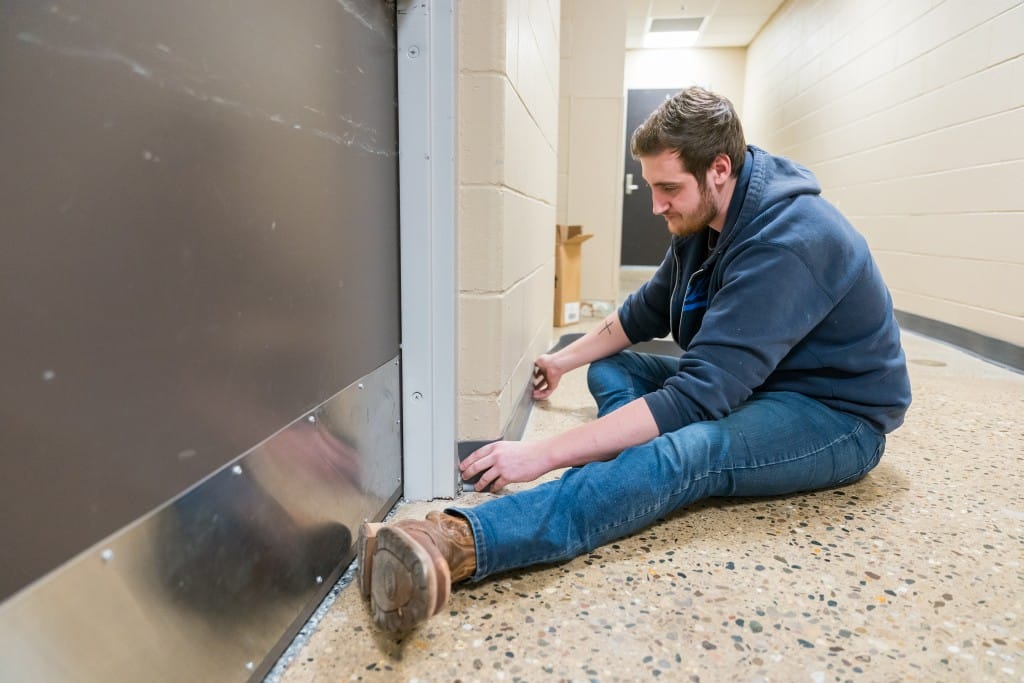
The other half of the day, guests take part in some form of work training assignment. Based in large part on the person’s interests, guests will work alongside KGM staff to build experience in maintenance, education, food service, or retail. If a guest completes New Life New Hope, they are able to put the time spent down as work experience on a resume. This ensures a person doesn’t “have to explain what they’ve been doing for the last year,” says Pastor Simson.
As they advance through New Life New Hope, guests have weekly one-on-one counseling with case managers, called Program Advocates. Pastor Simpson looks to their co-founder, Hildebrand, as a model for that advocate role, “He was an advocate, so we advocate for the people that we serve, for their needs, and we are making sure they are cared for and are loved. Not only for their immediate needs, but more importantly, that they get their long-term needs met.”
Some of those long-term needs include planning for their time after KGM. Many guests face massive hurdles like debt, building income, and a criminal history. Program Advocates work with their guests over the final three months of New Life New Hope to secure employment, housing, and overall stability. When the timeline doesn’t always perfectly map to one year, guests can continue to stay in the residential building until they are ready to transition out.
“It took a long time to get where we were,” Pastor Simpson points out about the difficult situations guests may be in when they join the New Life New Hope program. “So it will take time to undo those things and rework that identity. And then live in that [new] identity to establish it and walk in it the rest of our lives. We want to create an environment to be able to do that.”
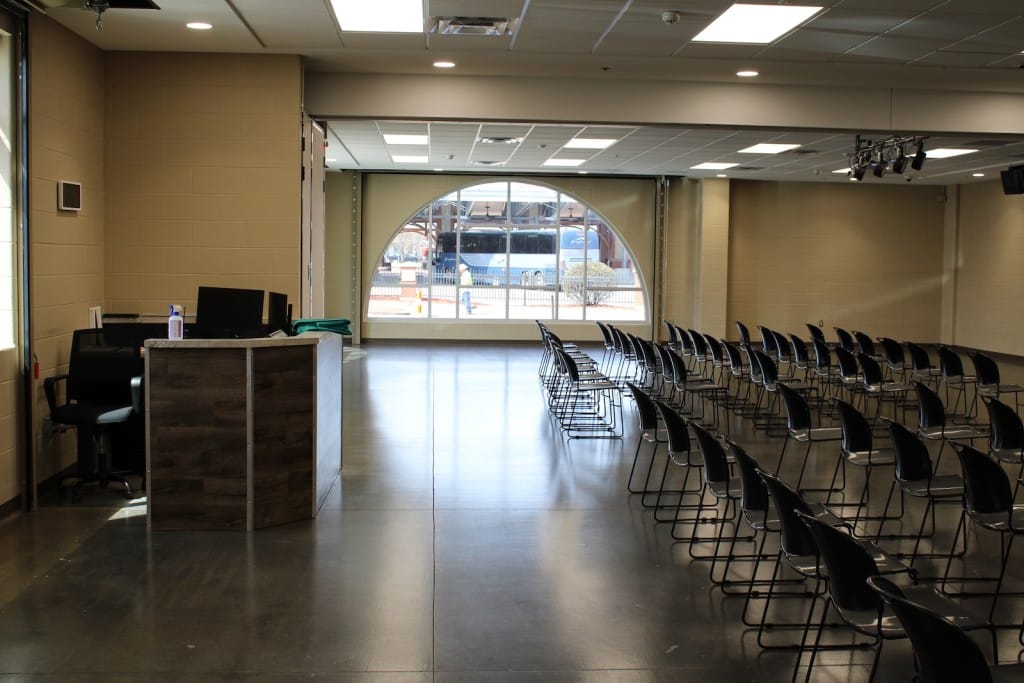
The goal is also to create a strong sense of community among the cohorts of New Life New Hope guests. “One of the greatest tools of the Devil is isolation,” says Pastor Simpson. While daily meals are provided through KGM’s food kitchen, guests have their own communal kitchen. Multiple hangout areas and community rooms provide space for socializing and games. A workout room is available for fitness, while the roughly 50 kids staying in the shelter have daycare facilities, an outdoor recreation space, and child-focused rooms with books, games, and toys.
A faith-filled program
While many of these program features may not seem particularly unique when compared to a standard shelter model, the New Life New Hope program does contain a key element that has drawn controversy in the Kalamazoo community over the years: faith.
“It’s a faith-filled program,” says Pastor Simpson. Program guests sign a document before joining that outlines how Christian values will be infused in the fabric of the structure, lessons, and experiences. This shows up in areas like classroom time, where guests study the Bible to better inform the process of finding a new identity, one free from obstacles like addiction, anger, guilt, or shame.
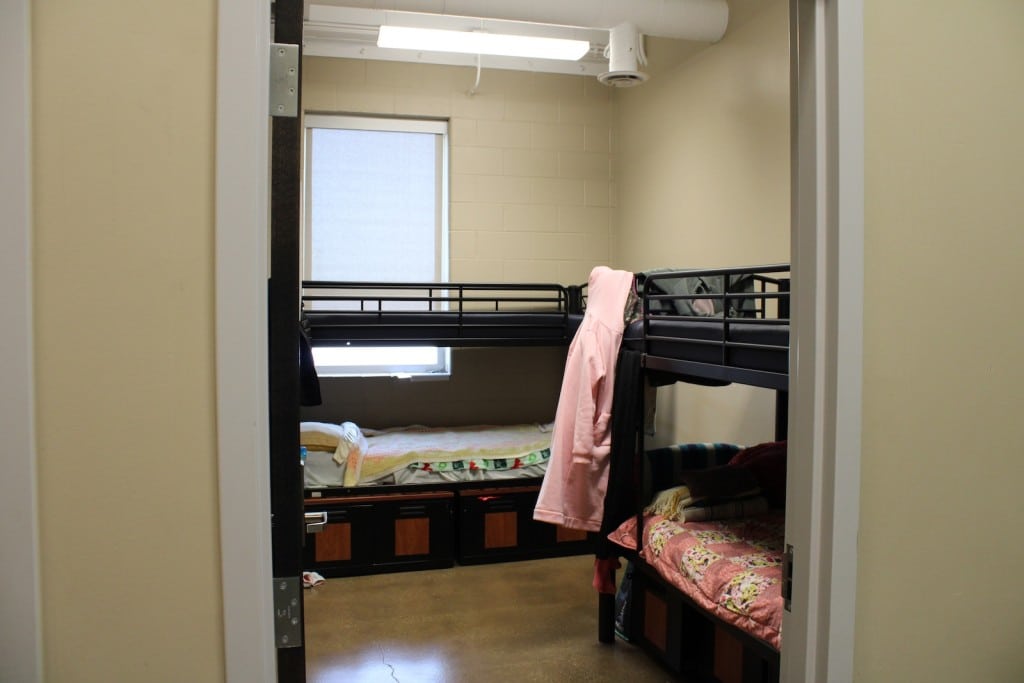
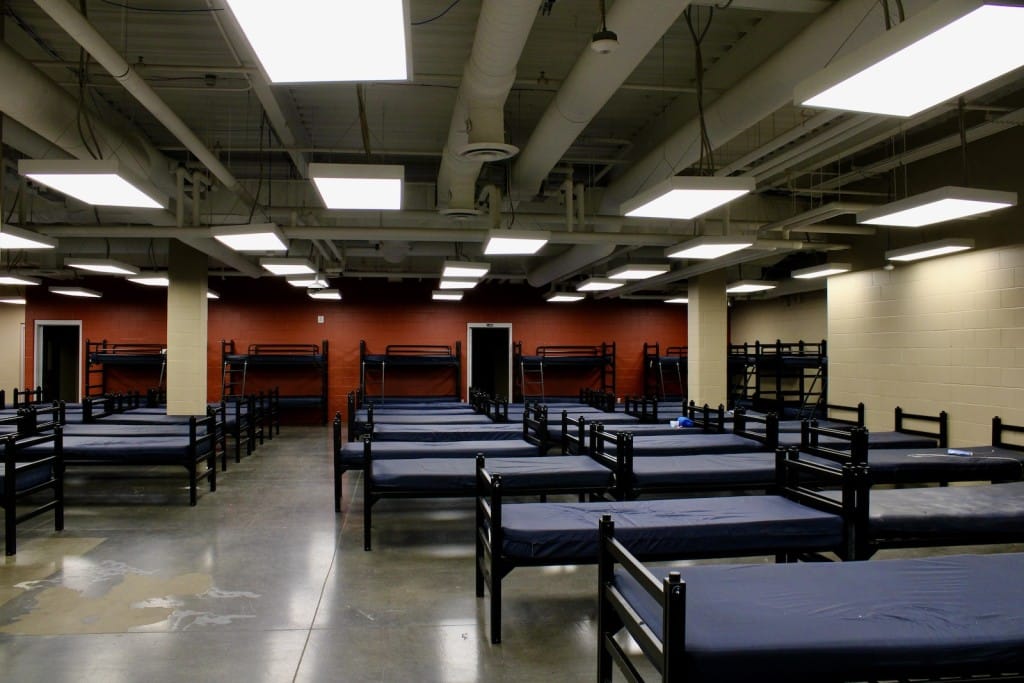
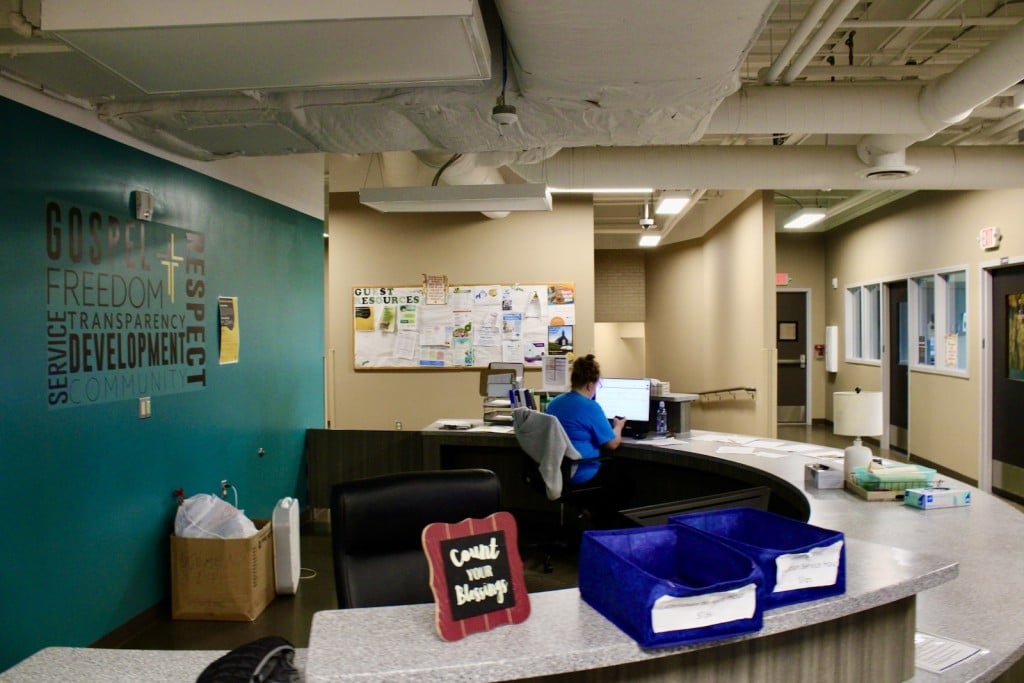
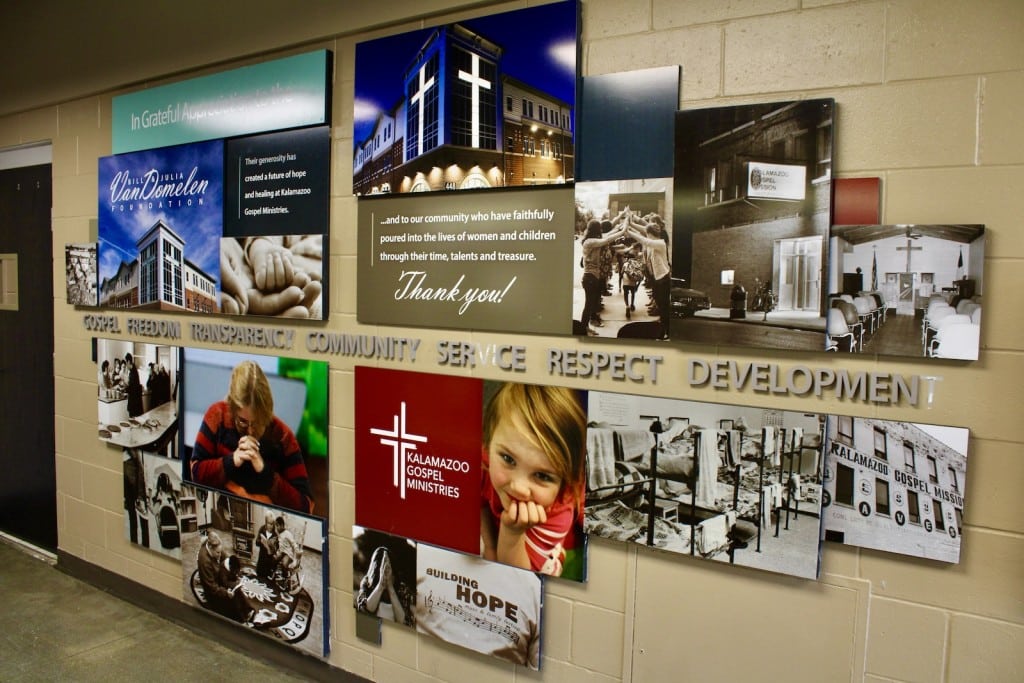
Resident rooms and emergency shelter beds at KGM. Photo: Matthew Miller
For KGM, it’s about redemption and development. “The motivation for the work that we do is giving back what has been given to us,” explains Pastor Simpson. “I recognize the deep mercy God has so richly poured out on me, a guy who really does not deserve it. God has been so gracious, patient, kind, good, gentle, and so much more with me. And when I fully got a sight of the reality of that, I couldn’t help but want to be the vessel by which God could pour all those same things into the lives of others. I often say, I don’t want to just be a mercy taker, I want to be a mercy giver. I want to be used by God to pour out His mercy into the lives of others.”
He points to Matthew 10:8 as the guiding scripture for this philosophy, “Freely you have received; freely give.”
When asked why the infusion of faith was necessary for a program like New Life New Hope to be successful for guests, Pastor Simpson points out, “While most programs are a behavior modification model, we are a heart modification model.”
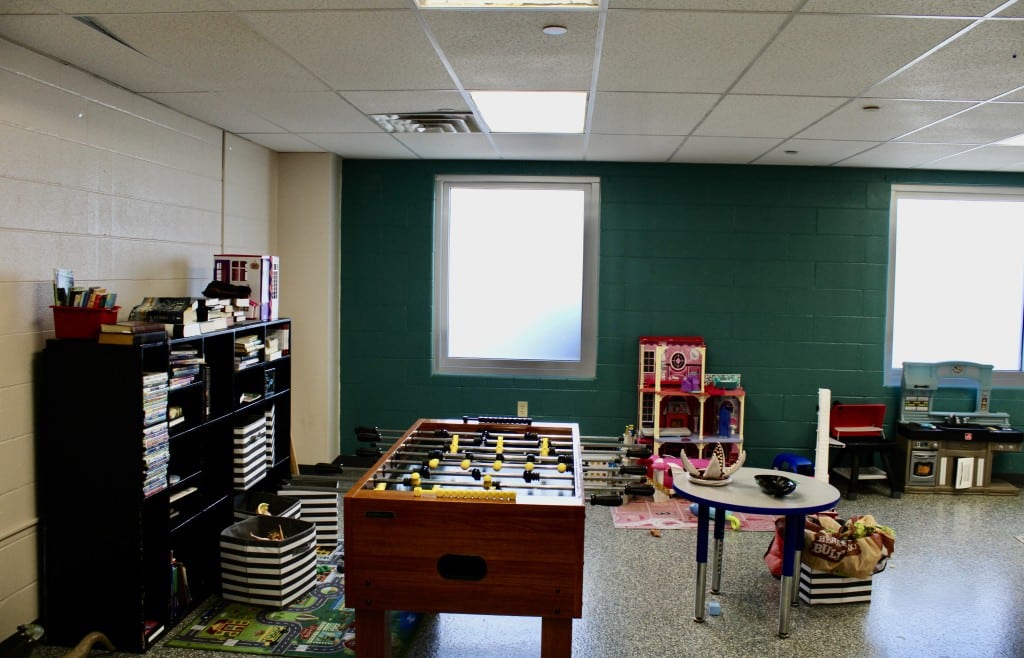
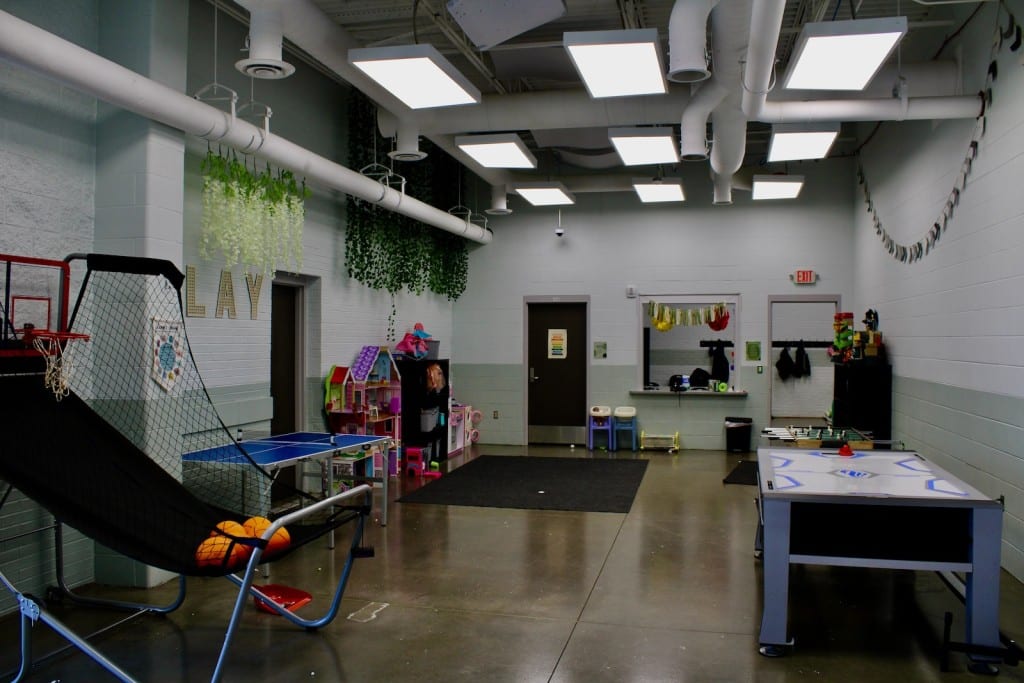
A community room and children’s area at KGM. Photos Matthew Miller
Through reflection on his own personal journey and what he has witnessed in other folks as a counselor, behavior modification efforts are often successful only in the short term. Faith, and specifically a belief in the redemptive qualities of following Jesus Christ, “softens and shapes the heart” with truth and grace. That softening gives way for an individual to make long-term behavior modification, as the incentive lies not in immediate gratification but in a hope for the future.
Pastor Simpson knows the entire community may not fully appreciate KGM’s approach. “There are many people who support our work. There are some that are critical of the work we do, that is just the nature,” he says.
While that stoic resolve to follow a calling is evident in the organization’s leader, he is also adamant about addressing rumors. While faith is discussed in the classroom and group sessions, it is never a requirement to receive a meal or have a bed to sleep on at night. Guests are just asked not to actively stand in opposition to the faith that guides the programming.
“We have several folks who have zero faith,” explains Pastor Simpson. “We will love you right where you are at, we just want to serve you.”
In the end, the goal is transformation for folks who are often afflicted with obstacles, barriers, and challenges that the rest of the community may only be able to sympathize with.
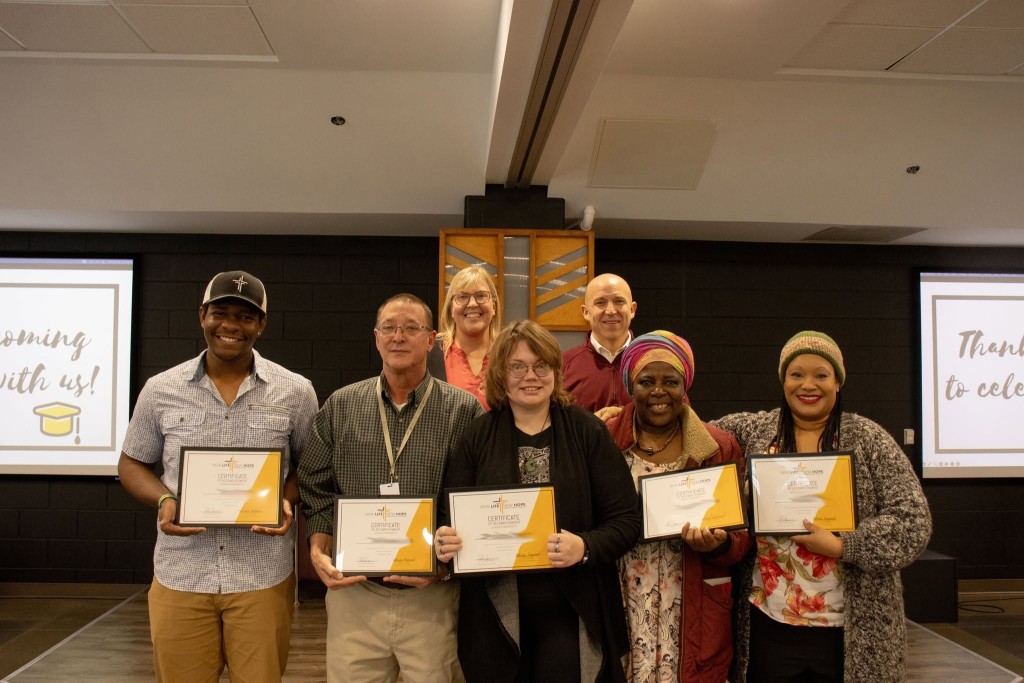
As guests prepare to leave the year-long program, ideally with long-term housing, employment, and community connections in place, it is a season to celebrate. Graduation in the building’s chapel includes cake, sharing of stories, and a meal with loved ones. A certificate of completion and a plan for the future provide prevailing hope.
KGM keeps connected with graduates for up to a year after they leave to assess the impact the program has had on their lives. They use four pillars to measure that level of success. The first is a graduate being free from whatever “life-dominating issue” brought them to the shelter in the first place. This could be achieving a sober lifestyle or developing a sustainable, healthy approach to prior trauma, for example. The final three pillars include having success in finding independent living arrangements, securing a source of income, and developing a strong sense of community. Pastor Simpson reports that over the last year, 72% of New Life New Hope graduates found success in all four pillars one year after graduating from the program.
Seeking Solutions
As the rumors circulated about KGM’s future in downtown Kalamazoo, Pastor Simpson called Mayor David Anderson and former City Manager Jim Ritsema. Both knew of no plans to force the area’s largest shelter out of its home.
When the excavators moved in, and steel beams started to rise higher and higher, it was clear that many in the community viewed the arena as an unstoppable force coming up against an immovable object that is KGM. Yet Pastor Simpson saw a third rail.
“The arena is not a competition,” he says. “Bring it.”
In an effort to make something that seems impossible actually work, Pastor Simpson is hoping to explore a “social enterprise” with the leaders of the new Kalamazoo Event Center. In his vision, KGM would build on its successful workforce development programming by securing employment opportunities for guests within the center’s various operations. To this end, he sees KGM helping the arena, and the arena helping KGM.
While the plan is very much an idea at this point, it aligns with what Pastor Simpson sees as critical to KGM’s placement in an ever-evolving downtown landscape.
“I get that there is this perception that we are unwelcome because the arena is in town. It discourages me,” he says. “I don’t like that people don’t think we should be downtown. This is where people belong, near other people.”
Author
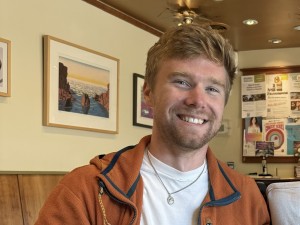
Matthew Miller is a social worker and freelance writer who started with Second Wave in 2025. He is the lead writer for the Voices of Faith series and resides in Kalamazoo.
Related Articles
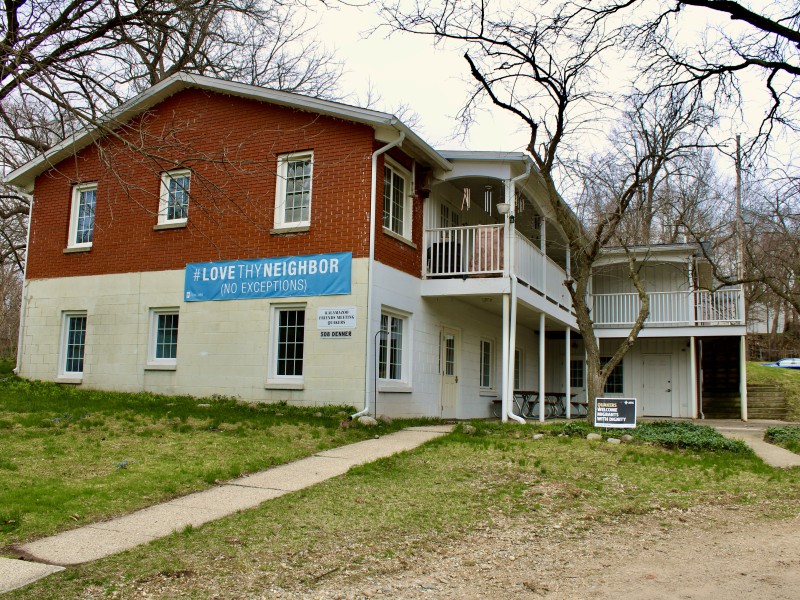
How a small Quaker Meeting has helped shape Kalamazoo for nearly 80 years
In Kalamazoo’s Douglas neighborhood, the Kalamazoo Friends Meeting blends silent Quaker worship with decades of local activism, from peace advocacy to community care at Adda Dilts Peace Park.

Baseball great Darryl Strawberry to share his faith journey at Battle Creek Community Prayer Breakfast
Former MLB star Darryl Strawberry will share his powerful journey from fame and addiction to faith and redemption at the 2026 Battle Creek Community Prayer Breakfast, offering a message of hope and healing to the community.
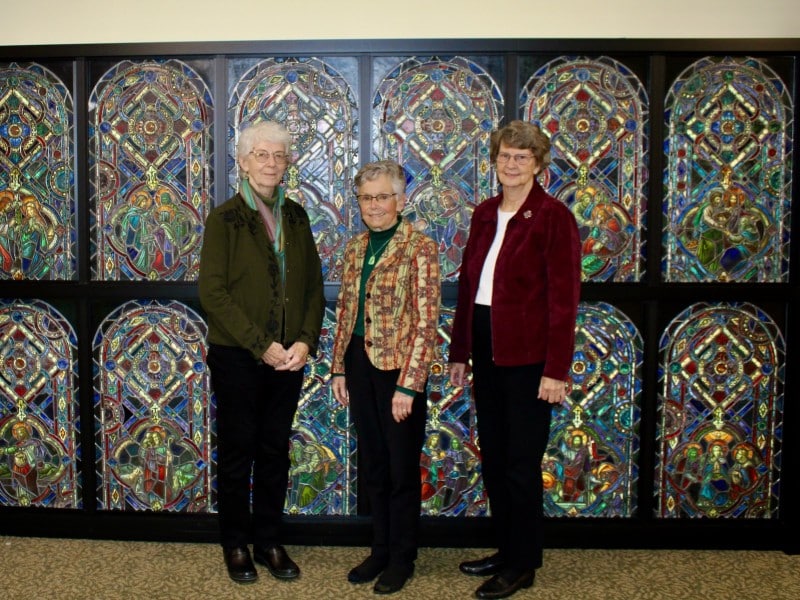
Sisters leading a revolution of love — for the earth, the elderly, and every ‘dear neighbor’
Once nearly a thousand strong, the Nazareth Sisters of St. Joseph helped shape Kalamazoo’s identity. Today, even as their congregation shrinks, their commitment to serving the “dear neighbor” is only growing deeper.