The 12-Year journey that put Junkless on grocery shelves nationwide
Former Kellogg executives Ernie Pang and Larry Beyer spent 12 years building Junkless Foods into a national granola bar brand focused on simple ingredients before selling a majority stake to Impact Capital.
Editor’s Note: In 2023, former Kellogg executives Ernie Pang and Larry Beyer sold a majority stake in the company they founded, Junkless Foods, to Impact Capital, the private equity arm of entrepreneur Mike Repole’s family office. They recently shared with On the Ground Battle Creek how they built Junkless Bars from a startup idea into a nationwide grocery brand.
Super 8 Motels, mounting credit card debt, and mouthfuls of Tums were part of the journey to finding a place for Junkless Bars on grocery store shelves in the United States.
Larry Beyer, co-founder of the granola bars, says, “This was 12 years of a lot of pushing water uphill. We were being told, ‘No, you’re not doing it right’ by institutional investors more times than I can count.”
Beyer and his partner, Junkless Co-founder Ernie Pang, had amassed a wealth of knowledge about the food industry while working for the former Kellogg Co., now Kellanova. They had both started their Kellogg jobs on the same day in 1997. Beyer left in 2010 as Chief Financial Officer of Kellogg’s U.S. Retail Cereal Business, and Pang departed about the same time as Director of Marketing/Innovation.
“When Ernie and I left Kellogg, we asked each other, do we want to go back to working for a Fortune 500 company, or do we want to go out on our own?”
“It all started as an epiphany,” Pang says.
From ultra-processed to pure and simple
At the time, there were warnings from physicians and medical organizations, including the American Medical Association, about the link between ultra-processed foods and diseases like diabetes, cancer, and cardiovascular disease.
One day, Pang’s son, who was then 12 years old, started reading the ingredient label on a frozen chicken dinner in the family’s kitchen. He asked his father a simple question: “What is this stuff?”
“I was caught off guard and barely able to read what it was,” Pang says.

While still at Kellogg’s, Pang and others pitched the idea to create healthier food options with natural ingredients.
Unfortunately, “big companies didn’t have the heart for this idea. We came out with all of these organic and whole food ideas, which were contrary to the system,” he says.
During a conversation with Jeff Grogg, Founder of JPG Resources in Battle Creek and a former Kellogg executive, Pang was told that the litany of ingredients is designed to make a product “addictively good” and inexpensive to make while also giving it a longer shelf life. While this may seem more efficient, Pang says he saw it as ‘anti-efficient ‘and continued to believe that less is more in the ingredient world, while also aware there were industry risks to this way of thinking.
For instance, in 1985, the Coca-Cola company had launched a New Coke, changing a legacy brand to a new formulation. It backfired with consumers. Pang also cites the consumer backlash after the makers of Trix cereal removed artificial coloring.
“The idea was there, they just didn’t know how to put it together,” Pang says.
He and Beyer began figuring out the best entry point for a product that would taste good and appeal to health-conscious consumers while using limited ingredients. They decided a focus on the granola bar/cookie sector would be the easiest place to start.
Enter Simple 8
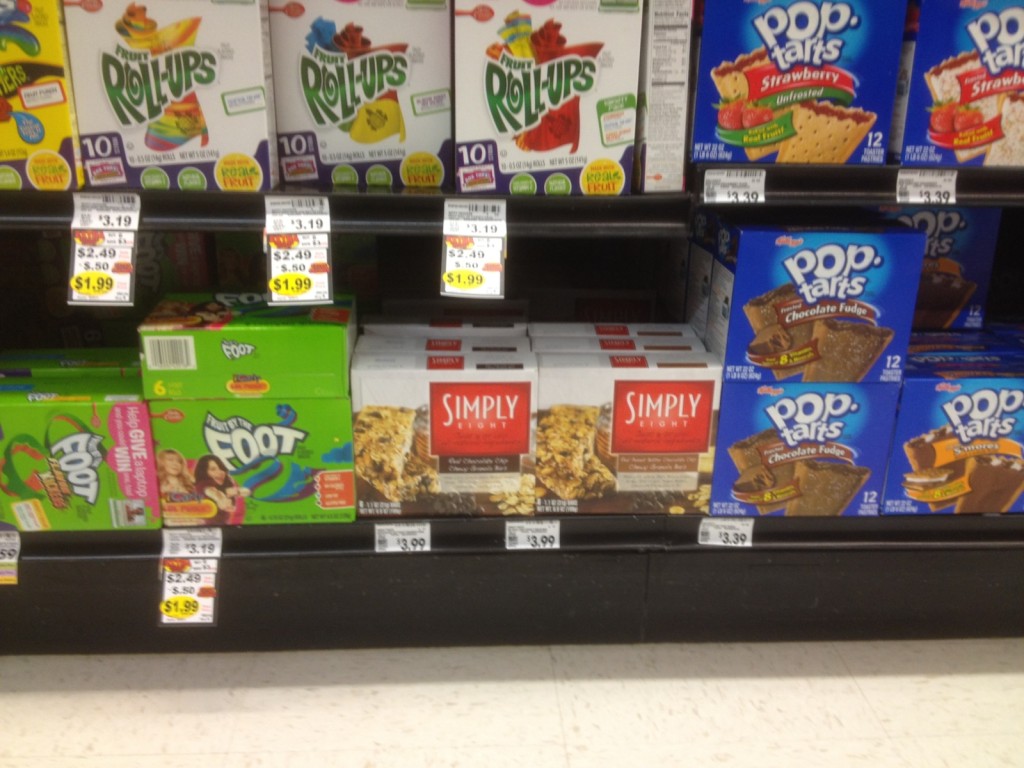
With Grogg’s input, the bar prototype was created under the moniker Simply 8, a nod to the bars’ 8-ingredient limit. This name, Pang and Beyer later realized, confused the product with their target audience of women between the ages of 18 and 44 who make the majority of their family’s buying decisions. According to the Entrepreneurs’ Organization, Women influence 85% of global consumer spending, controlling $31.7 trillion in buying power.
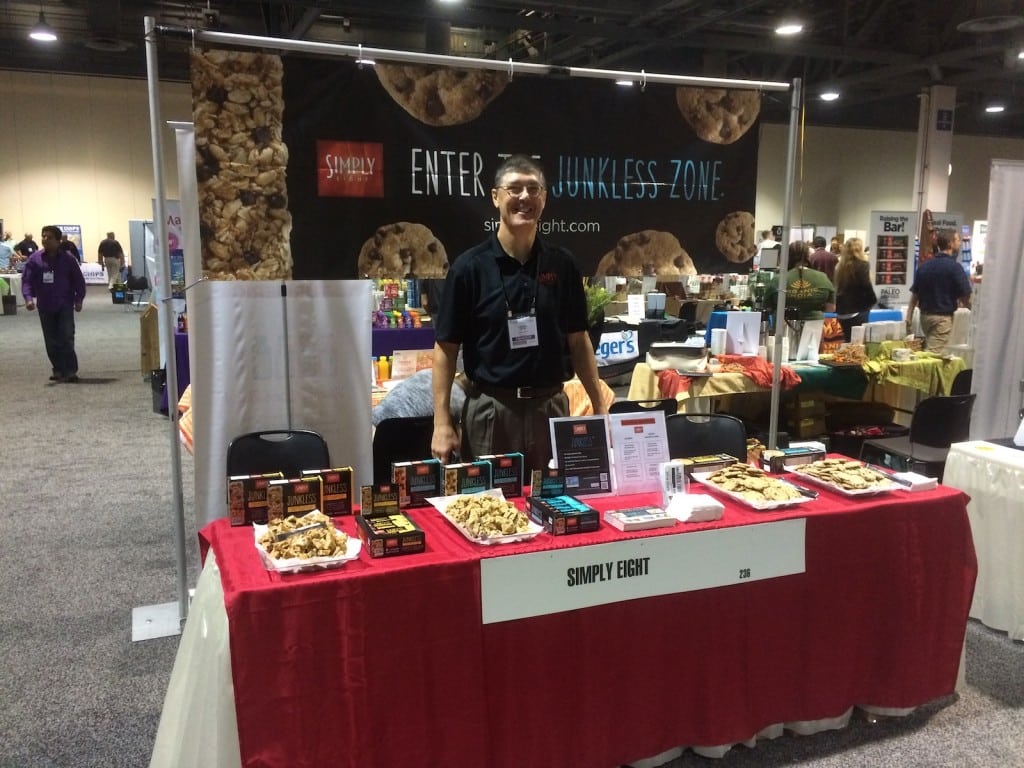
Knowing this, Pang and Beyer brought their product to Women’s Expos, where they garnered honest feedback.
“We found these expos to be tremendous because women there were looking to try new things. We had big banners up there, and I would lose my voice from saying the same thing over and over again,” Beyer says. “One woman walked up and asked us what was so special about our bars, and Ernie said, ‘They don’t have all of that crap in them.”
Another woman brought the idea full circle when she said, “You don’t have any fake s*&t in that.”
Crapless or Junkless?
The closest Pang and Beyers got to the ‘crapless’ thought was the word “Crapless.”
“Looking back, that was a pivotal moment,” Pang says, “but we knew there was no way a name like that would encourage consumers to buy our product.”
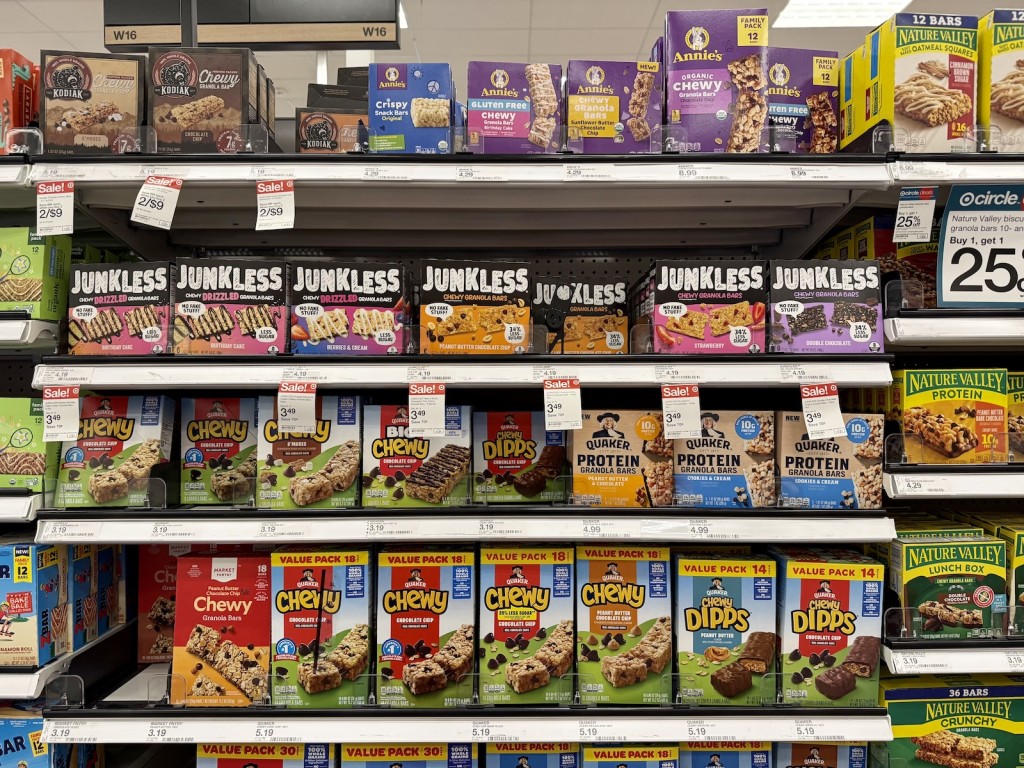
After brainstorming, the duo came up with “Junkless.” Along with the rebranding, they had to develop a product design that would stand out from other granola bars already taking up space on store shelves. Borrowing a page from Breyer’s Ice Cream (no relation to Larry), they used a black background, which made the bars stand out on store shelves.
Trial and error with production
The duo began producing their Simply 8 bars in earnest in 2012 at a bakery in Oregon that Grogg owned at the time. They became very familiar with Super 8 motels and continued to sweat the details of their business venture.
Pang says the first Simply 8 production was a financial loss for Grogg because the volume of product was so low. After getting through the third month, they realized that the bars, which didn’t contain any preservatives, didn’t taste right.
“It fell apart. It was a nightmare,” Pang says. “We pulled everything out of production, which killed an entire year. Over a cup of coffee after dealing with the production snafus, Beyer says they knew they had to start working on cost and quality. Through a convoluted route, Pang became aware of a pilot line that could produce small quantities of the then-named Simply 8 bars. A company that had been using that line, operated by a small bakery in Montreal, Canada, was no longer using it.
They stepped in, and about 25,000 Simply 8 Bars per day were rolling off the line. The bars cost two to three times more to make than what they were being sold for.
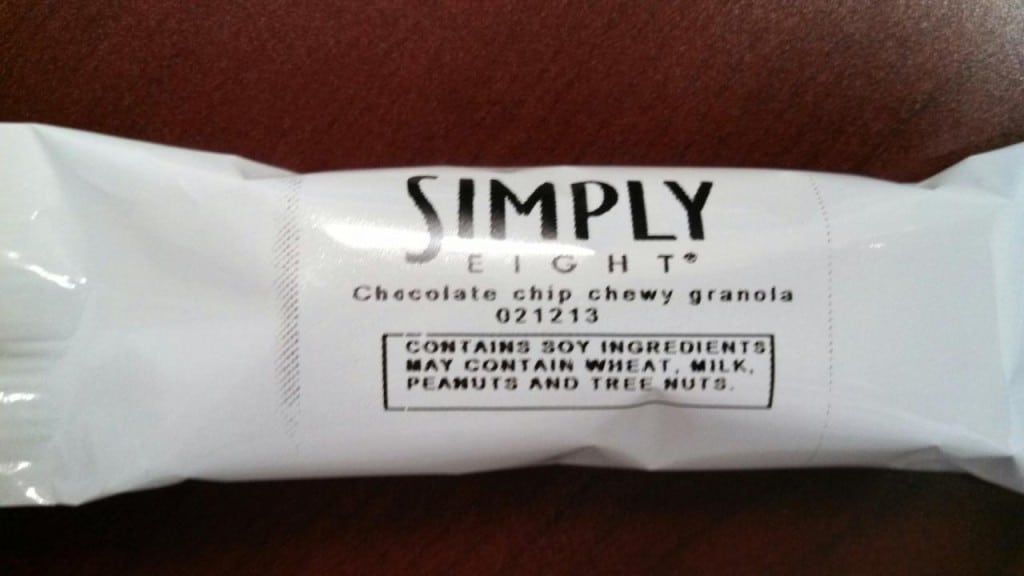
“That’s the price of early entry and running small batches,” Beyer says.
When they met with potential buyers, “they all wanted samples,” Pang says.
The pair still had no external investors and continued to self-finance their venture. Beyer says grocery store chains want data because they “don’t want to put you on the shelf and take a risk.”
Pang and Beyer started with two large accounts and a very small production of the bars.
“We had 30 or 40 Meijer stores, and Kroger, which was making a push to highlight Michigan-made products in their stores.
“This got us on store shelves by the produce section, and then we hit the women’s expos,” Beyer says. “We also picked up smaller grocery chains, gas stations, and convenience stores.”
Name change at last
Forward momentum really kicked in after changing the name from Simply 8 to Junkless and getting into 100 of the 260 Shop Rite grocery stores on the East Coast. The day their bars were to launch, a major snowstorm was arriving, and shoppers were stocking up.
“They were buying the bejeesus out of our bars,” Beyer says. “The people with Shop Rite said they thought they could expand us into New York and New Jersey. Once you do that, other stores take note.”
Pang says Shop Rite was the first grocery where the mainstream customer was everyday shoppers.
No expiration date on good ideas
The relationship with Shop Rite allowed them to collect data that every buyer and investor wanted to see before committing to any involvement with the Junkless brand.
They were able to pick up other accounts, mostly in the Northeast, and were doubling their business year over year, while trying to break into the grocery store big leagues. That all changed when they brought in Jim Holton, who had retired from Kellogg’s as its Vice President of Sales, and held the same title with Junkless.
Beyer readily admits that sales wasn’t his or Pang’s forte. Holton was well-recognized in the grocery industry because of his time with Kellogg’s.
Holton was able to pick up accounts with Meijer stores and Food City stores in Virginia and accelerate the business. He also got Walmart to agree to carry Junkless Bars in their stores, in addition to grocery store chains like Hanniford, Food Lion, and Harris Teeter.
“Jim was able to get appointments to see buyers where Ernie and I were not even able to get appointments,” Pang says.
In addition to Holton, other former executives with Kellogg and one from Spartan Stores worked for Junkless, with some serving in advisory roles.
Pang and Beyer also found a larger production plant in Syracuse, N.Y., which allowed them to experiment while making the bars. They maintained production at multiple sites, with Syracuse being one of the main plants.
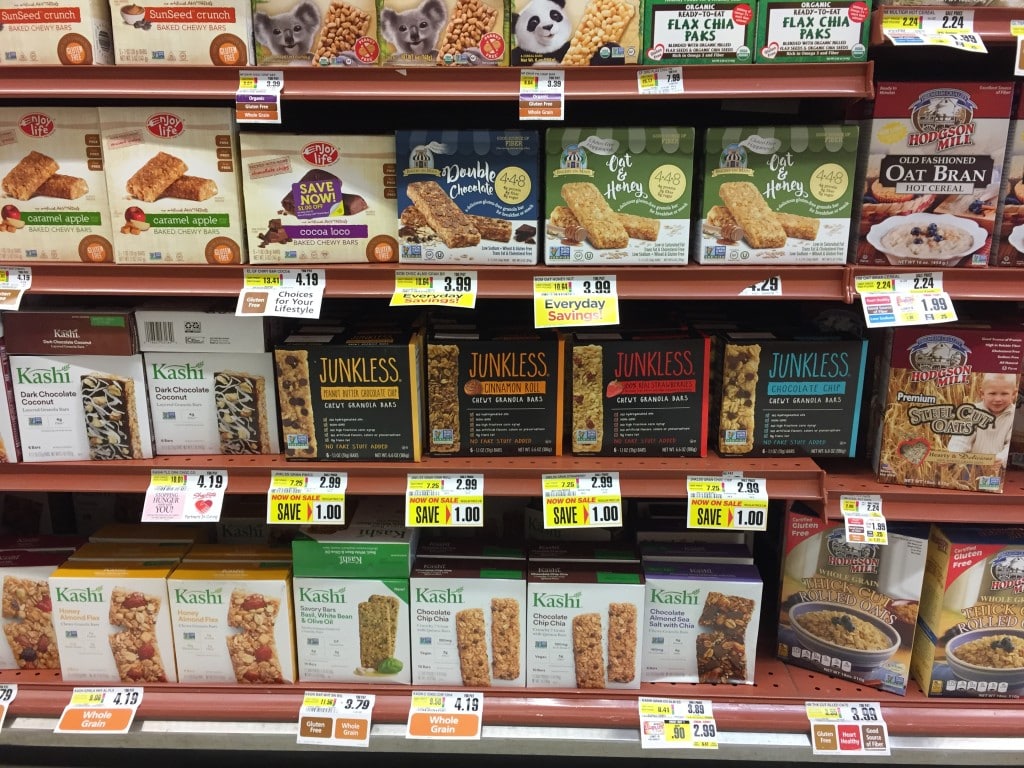
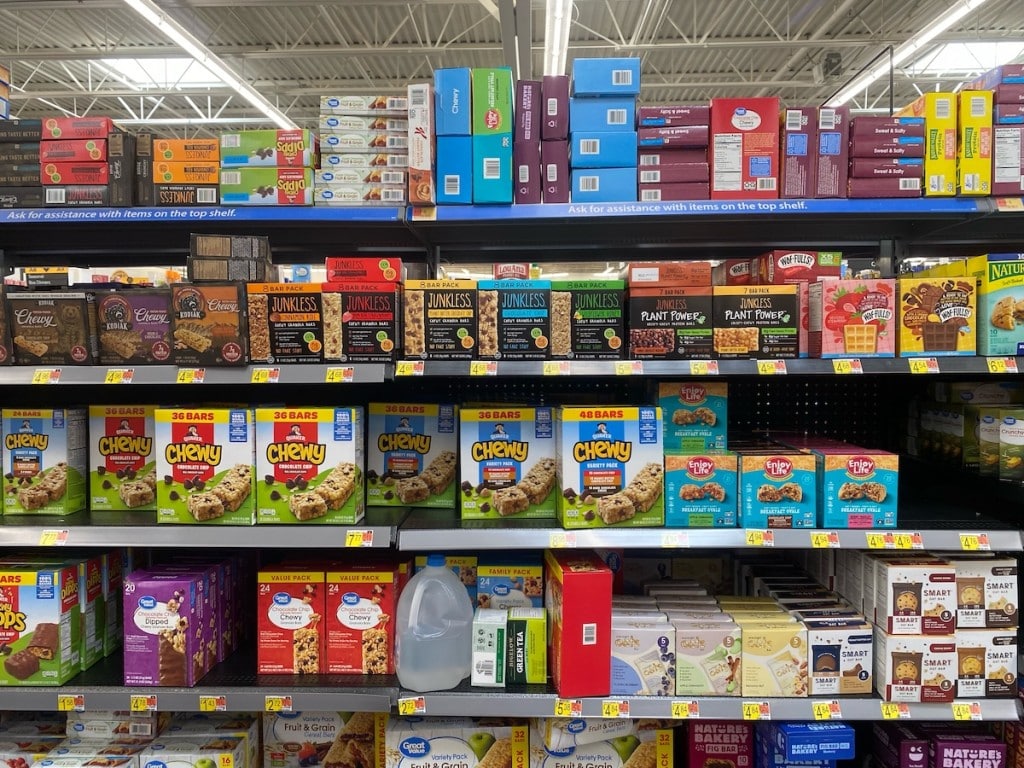
Having gotten their company into a place where it was making money and gaining nationwide traction, they looked ahead to what the next steps in the company’s growth might look like for them.
“When you talk about taking it to the next step, you’re looking at managing an organization and making key decisions,” Beyer says. “We’d been running this marathon for 12 years.”
They caught the attention of serial entrepreneur and sports investor, Mike Repole, and he caught their attention.
“He’s not a banker making projections and looking at us through the lens of a banker,” Pang says. “He’s genuine. This guy is true to what he says. He has the vision to see the world very differently. He’s a disrupter. He was like music to our ears. I am very happy that another very bright group of people is doing what we couldn’t do.”
Beyer says Repole saw where Junkless could go. He and Pang say they’re proud of what they accomplished. When not spending time with their families, volunteering, or traveling, they are meeting with startups to share anecdotes and their own experiences.
When asked if he would do it all over again if he knew then what he knows now, Beyer says, “I have not been able to answer that question in the last two years.”
Pang’s answer was a bit more philosophical.
“Innocence is what propels enthusiasm, but experience is what prevents you from that excitement. You’ve got to do some stuff you’re not comfortable with.”
Author

Related Articles

Gene the Pumpkin Man’s legacy lives on at Evans Acres
After 67 years of growing pumpkins and creating fall memories, the late Gene “Pumpkin Man” Rhodes’ family legacy continues as Evans Acres Family Farm opens with plans to offer year-round family experiences.
‘We go where they are’: Lucinda Stinson’s vision for a more connected Rotary
Lucinda Stinson, the new president of the Rotary Club of Kalamazoo, aims to broaden the organization’s community outreach, increase its diversity and engage members more directly with people and neighborhoods in need.
Strong Leader Series offers practical leadership training for Southwest Michigan
The Strong Leader Series offers Southwest Michigan professionals a three-part, hands-on opportunity to strengthen communication, strategic thinking and team-building skills while learning to lead more effectively.