SDOH Hubs improve mental and physical health while reducing disparities
The goal is to improve health outcomes, achieve health equity, and remove barriers to opportunity.

Social determinants of health (SDOH) — access to housing, education, transportation, health care, and employment — greatly influence both physical and mental health outcomes. These encompass where people are born, grow, work, live, worship, and age. Research has shown that when people live in under-invested areas, face housing instability, and experience food insecurity, health inequities result.
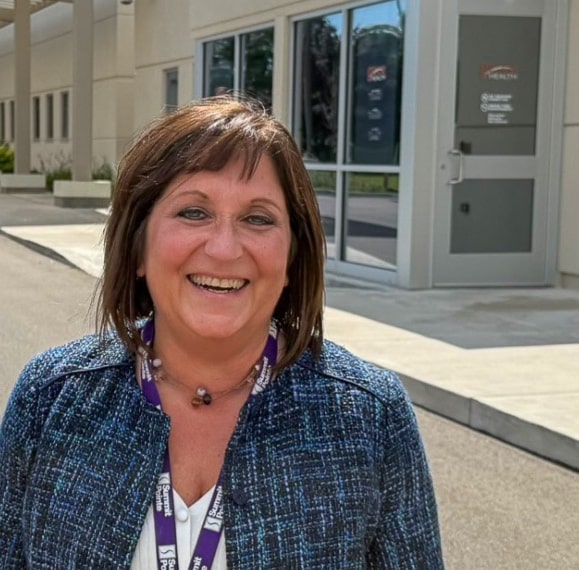
“As we have seen in our 2025 Community Health Needs Assessment, mental health and access to care are major community concerns,” says says Jeannie Goodrich, CEO of Summit Pointe, the community mental health agency serving Calhoun County. “Many residents face barriers such as limited transportation or difficulty finding affordable services.”
In 2022, the Michigan Department of Health and Human Services (MDHHS) initiated SDOH Hubs. The goal is to improve Michiganders’ mental and physical health and social outcomes while achieving health equity, eliminating disparities, and removing barriers to social and economic opportunity.
“An SDOH Hub would bring together hospitals, mental health agencies, social service groups, and community organizations to share information, coordinate care, and make sure people don’t fall through the cracks,” Goodrich says. “By tracking local data and outcomes, the Hub could help leaders see what’s working, reduce health inequities, and make Battle Creek a healthier, more connected community for everyone.”
Laina Stebbins, the Michigan Department of Human Health Services’s associate public information office, says that addressing access to health care, stable housing, and healthy food has been an MDHHS priority for many years.
“The hub model creates a local network where residents, community organizations and partners all have a stake in addressing the social and economic factors that impact health,” Stebbins says. “By collaborating through the hubs, communities can connect people to the resources they need, reduce gaps in care and improve health outcomes both locally and across the state.
MDHHS, community mental health agencies, local health departments, community-based organizations, and health systems were working to address social determinants of health well before the pandemic.
“Long before COVID-19, data consistently shows that non-medical factors such as housing stability, access to nutritious food, transportation and economic security drive up to 50% of health outcomes,” Stebbins says. “The pandemic did, however, shine a brighter light on these inequities.”

According to CDC data, nationally, COVID-19 hospitalization and death rates were disproportionately higher among people of color, ethnic minority groups, and individuals with underlying economic or housing vulnerabilities. These national trends were mirrored in Michigan.
“The SDOH Strategy provides a roadmap that allows us to align efforts, reduce duplication and work together in ways that are more impactful and sustainable,” Stebbins says. “This approach has allowed us to gain valuable insight from partners as each phase was rolled out, ensuring the strategy remained responsive to community and partner needs. It also created opportunities to adapt next steps as feedback was provided.”
To start, MDHHS built upon previous work led through the Community Health Innovation Region (CHIR) partners from over 10 years ago. Then in 2022, planning grants funded testing of the hubs with local health departments.
“Efforts to address the root causes of health disparities have similarities and differences at the community, local and state levels,” Stebbins says. “State-level work sets strategy, funding and infrastructure. Local level efforts, led by health departments and regional partners, implement programs and coordinate SDOH Hubs tailored to community needs.”

Across Michigan’s SDOH Hub network, grantees have made notable progress in building, promoting and operationalizing Community Information Exchanges. Key areas of advancement include increased visibility and partner engagement, expanded closed-loop referral capabilities, and stronger integration with partner systems.
Examples include The Thumb Region’s web platform which drew more than 1,800 new users in one quarter, generating nearly 4,000 “Get Help” page views. In Lapeer County, outreach efforts expanded to schools, clinics and workplaces to raise awareness and connect community members to services. And the Kent County Health Department’s electronic referral process to 211 is strengthening infrastructure and enabling coordinated care.
“At the same time, we are centering the voices of Michigan residents through our Community Voice Workgroup, which provides direct perspectives from community members to guide the ongoing implementation of Community Information Exchanges (CIE) across the state,” Stebbins says.
In 2026, the SDOH Hubs will focus on strengthening technology and infrastructure to better support local and community partners through investments in tools and platforms that make it easier for community mental health agencies and other organizations to coordinate services, share information, and connect residents to the resources they need.
“The main takeaway about the SDOH Hubs is that health and well-being are strongest when communities work together,” Stebbins says. “Michigan residents and partners have the opportunity to be involved in shaping solutions and making a meaningful impact on the health of their community.”
Top photo by Nick Hagen.
Jeannie Goodrich and Laina Stebbins photos courtesy subject.
Other photos by Kampus and RDNE vis Pexels.com.
The MI Mental Health series highlights the opportunities that Michigan’s children, teens and adults of all ages have to find the mental health help they need, when and where they need it. It is made possible with funding from the Community Mental Health Association of Michigan, Center for Health and Research Transformation, Genesee Health System, Mental Health Foundation of West Michigan, North Country CMH, Northern Lakes CMH Authority, OnPoint, Sanilac County CMH, St. Clair County CMH, Summit Pointe, and Washtenaw County CMH.
Related Articles

Objects of Affection: From a crochet hook to a bowling ball, love stories in Kalamazoo
In honor of Valentine’s Day, Western Michigan University multimedia journalism students explore how everyday objects become powerful symbols of love, identity and memory through photos and captions.
Sisters leading a revolution of love — for the earth, the elderly, and every ‘dear neighbor’
Once nearly a thousand strong, the Nazareth Sisters of St. Joseph helped shape Kalamazoo’s identity. Today, even as their congregation shrinks, their commitment to serving the “dear neighbor” is only growing deeper.

Lights, Camera, Great Lakes: Wolf Tree Film Festival returns bigger and bolder
The Wolf Tree Film Festival returns to Marshall for its 8th year this spring, highlighting Great Lakes filmmakers and fostering community through accessible, regional storytelling.