Program assists some unhoused from elsewhere to find their way back home
A program called Finding Your Way Home operated by the Kalamazoo Department of Public Safety, with assistance from local organizations that help homeless people is assisting people get back to their hometown.
A Way Home — Housing Solutions: This story is part of Southwest Michigan Second Wave’s series on solutions to homelessness and ways to increase affordable housing. It is made possible by a coalition of funders including the City of Kalamazoo, Kalamazoo County, the ENNA Foundation, and Kalamazoo County Land Bank.
Sometimes the best thing a homeless person in Kalamazoo can do is go home — to their family or a shelter in another city or wherever they will be better off. Kalamazoo operates a program to help them move, and so far, 76 unhoused people have used it, relocating to places ranging from Maine to California and from Wisconsin to Florida.
The program is called Finding Your Way Home. It’s operated by the Kalamazoo Department of Public Safety (KDPS) with assistance from local organizations that help homeless people. The program generally is praised, but residents here also ask, “Why is somebody from Florida homeless in Kalamazoo?”
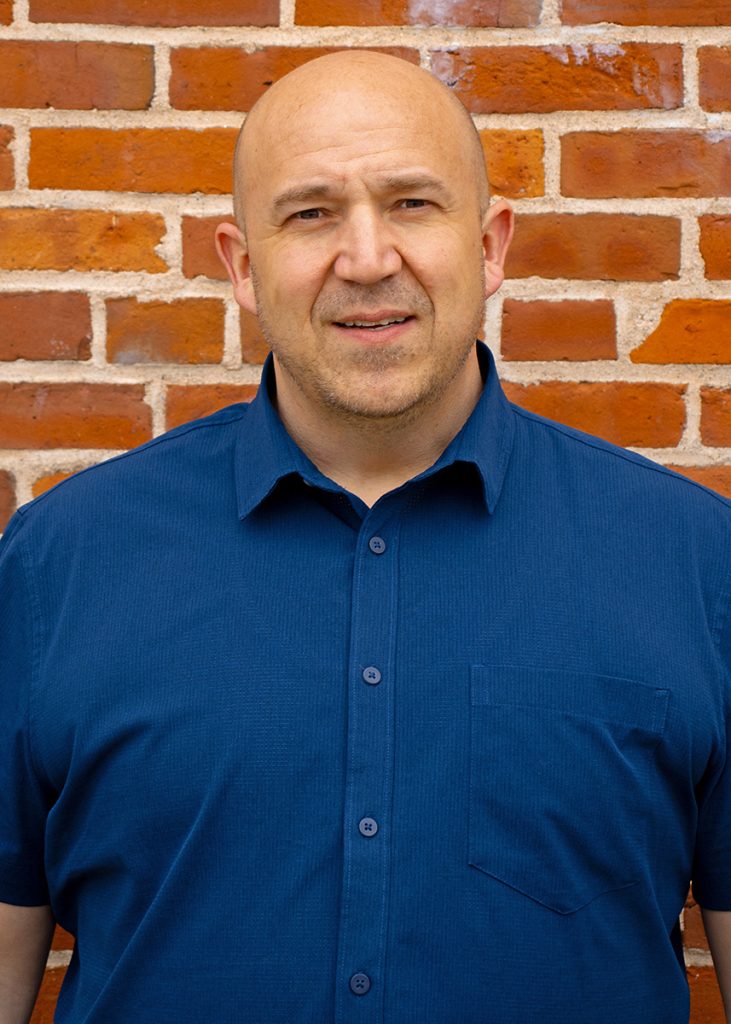
John Simpson,
Kalamazoo Gospel Mission
Chief Operations Officer
Evidently, the communications grapevine among the homeless around the country has reported that this city has excellent resources available, even housing that’s affordable for hard-up people. So some people come to Kalamazoo, where they learn that such housing isn’t available, and the assistance programs sometimes are diminished because they’re overloaded with newcomers.
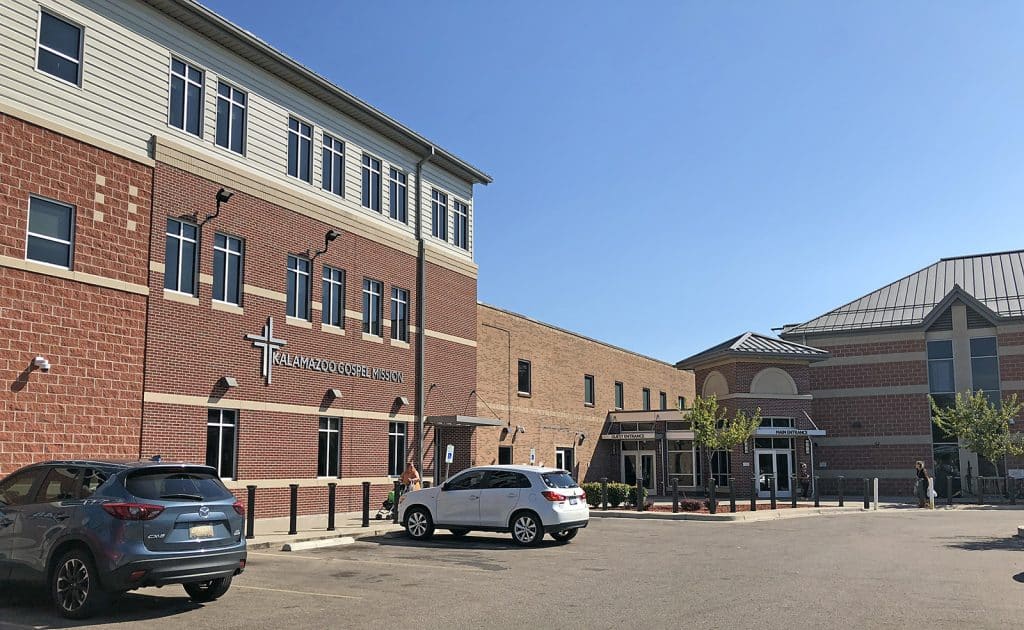
Kalamazoo Gospel Mission, 448 N. Burdick St. near downtown, is the main shelter for unhoused people, and Chief Operations Officer John Simpson says, “Thirty-five percent of my new intakes are coming from outside of Kalamazoo County. I hear the same thing from my counterparts at other shelters. I was just talking to a counterpart in Holland (Mich.) and he was saying 40 percent of his new intakes are coming from outside of his county.”
Finding Your Way Home can reduce this load a little, and Kalamazoo County recently gave $15,000 to the program. This sum will enable the program to operate for about a year, says KDPS Sgt. Amil Alwan, leader of the department’s Community Service Team. This team was founded a little over three years ago to improve relations with the homeless and make helping them more efficient.
Alwan says, “People were asking for bus tickets to go back to their families, especially since we had an influx during COVID of people coming here for resources from out of the area. In 2024, we received some funding from a grant, about $10,000, and we pushed the Finding Your Way Home program.
“We established it by adding criteria. Some criteria are that the person is willing to relocate and they have to have a support system that they are going to — a family member or a shelter willing to accept them.
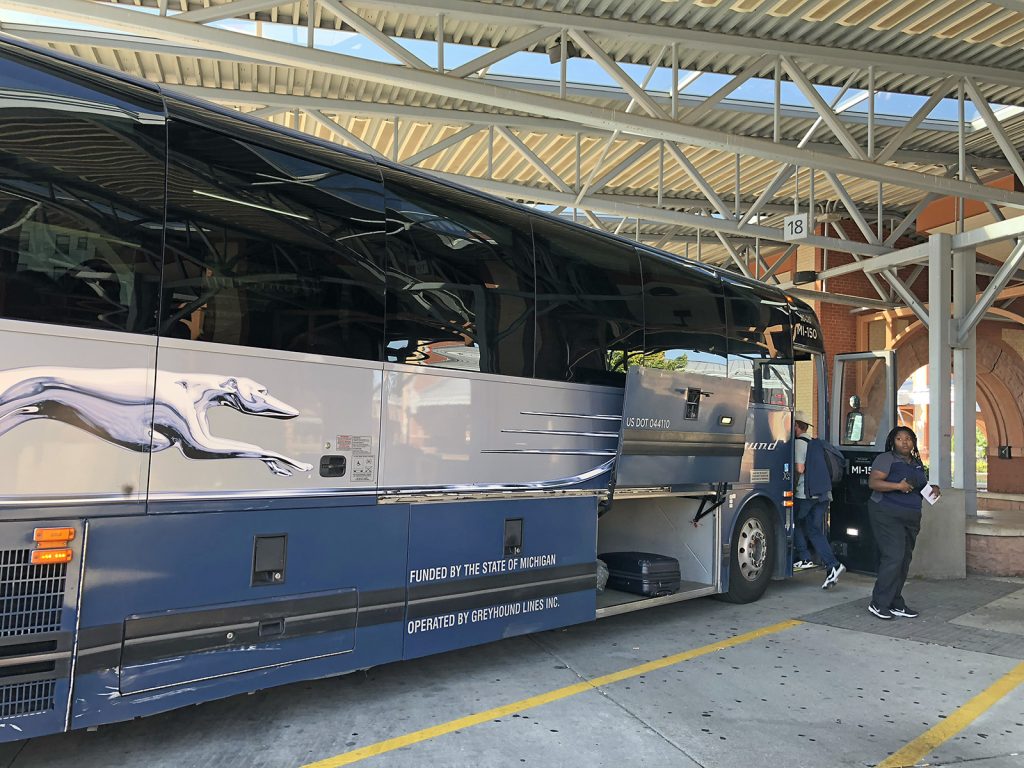
Unhoused people relocating from Kalamazoo travel by bus. Here a bus driver checks in passengers at the Kalamazoo Transportation Center. Photo by Mike Wenninger
“It’s now to a point where other agencies such as the Mission, Integrated Services of Kalamazoo, the Ministry with Community, and some of the advocates for the unhoused will give us information, say, ‘Hey, this person is looking to go back home, go back to where the hometown is,’ and then we make the follow-up. Sometimes they’ll do the follow-up of contacting family members and whatnot.
“We’ve had an influx of people come knock on our door or stop us. Just today we had a person come to our headquarters and ask about going back to where they came from. We accommodate them just as long as they have a support system to go back to.”
Approximately 70 percent of those relocating are men and 30 percent are women.
Kalamazoo now has an exceptionally high number of unhoused people, so lowering that is very important. John Simpson at the Gospel Mission says, “From 2022 to 2025, we have seen a 168 percent increase in men and a 151 percent increase in single women.
“We’re part of Citygate Network, which is a network of rescue missions that do similar work to what we do, and 350 or so are part of that. I just spent the last couple of days with all of the CEOs of those rescue missions and all are facing the same problem.
“We believe the key to that is finding an individual’s root cause and why it is that they are experiencing homelessness, what it is that their barriers are, and then finding the right programming to help them. That’s why we have various levels of programming, from Next Steps, which is more case-management focused, to our one-year, residential program called New Life New Hope, which is very structured — half a day of classes, half a day of work training. It’s got counseling and case management, group counseling, a very intensive program for a full year.
“We’re diligently trying to help people move from emergency services, the sheltering world, into programming to help them move out of chronic homelessness.”
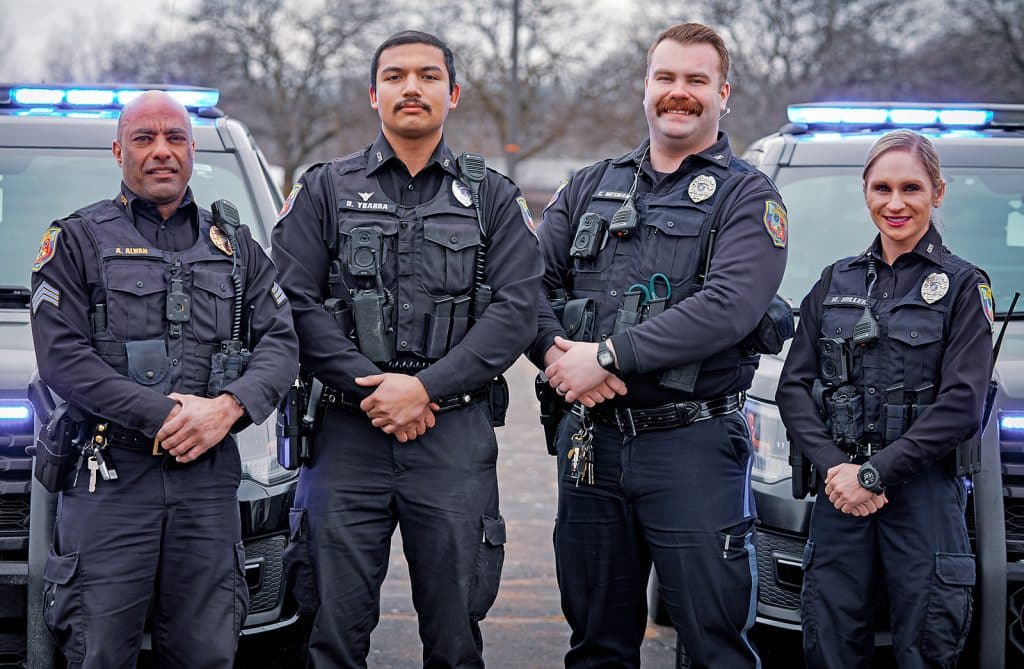
The Community Service Team consists of (from left) Sgt. Amil Alwan and Public Safety Officers David Ybarra, Caleb Mesman and Mary Miller. Photo courtesy of KDPS
The police Community Service Team is made up of Sergeant Alwan and three other officers. “We’re the consistent face for the unhoused population, so they know us by name,” Alwan says. “Most of them will call us by our first names. We try to personalize it in that manner where we talk to them, we try to get on their level.”
Another agency helping the homeless is Integrated Services of Kalamazoo, which fields a team of four social workers called the Mobile Integrated Behavioral Health Team. Its work concentrates on people with mental illnesses. Team leader Danielle Lewis says, “It’s a grant-funded program that started in 2019 to work really closely with the shelters and unhoused individuals to help them make sure they’re connected to services, and stay connected to services.
“We reach out to the Community Service Team when we have individuals who maybe aren’t from this area and want to return somewhere. We do whatever that team needs us to do to make sure that happens. Sometimes they just take it over and work with the individual, but sometimes we’ll help make sure that they have a safe place to return to.
“We definitely are seeing an increase in numbers of individuals who are unhoused. We are trying to make sure that we’re connecting individuals to whatever services are available or whatever kind of support we can get them connected to. My team does help individuals look for housing so when we’re working with someone we’re looking at every option they have for housing. We often work with Housing Resources Inc.
“We primarily work out of Ministry with Community (500 N. Edwards St.). We have an office space there; that’s where my team is primarily at.”
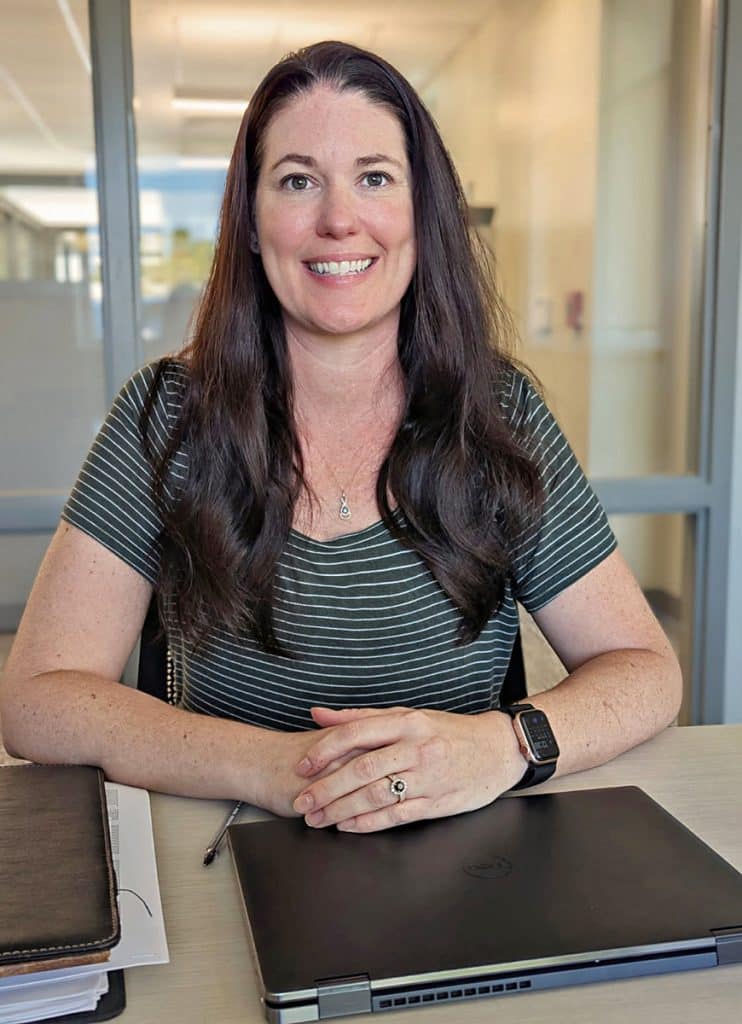
A common misconception is that most homeless people are mentally ill, but nationwide studies conclude that only about 25 percent have a mental health issue. Danielle Lewis notes that simply being homeless can have an impact. “Being homeless probably impacts your mental health,” she says. “If you end up homeless — maybe for the first time in your life — and you struggle to find housing because of housing costs, that would probably lead you to feeling kind of depressed. You would struggle with your mental health at that point. It’s a very hard place to be.”
The people operating the Finding Your Way Home program get a little feedback. Sergeant Alwan says, “We’ve had some who have reached out and thanked us for getting them back to their families.” And John Simpson at the Mission says, “There have been folks that have called and said, ‘I’m thriving, I’m good.’ Also, it’s a success if we don’t hear from them. They’re there and doing what they need to. I can’t think of anybody that has kind of circled back.”
For individuals who are relocating, the program buys them a bus ticket but only after a member of the Community Service Team meets them a half-hour before the bus departure time at the downtown Kalamazoo Transportation Center.
Second Wave asked to talk with somebody who had relocated, but privacy laws prohibit identifying them.
Author

Related Articles
Edison residents take opportunity to Imagine Kalamazoo 2035
Edison residents kicked off Imagine Kalamazoo 2035 by turning potholes, sidewalks, and other everyday neighborhood concerns into hands-on input about the city’s long-term future.
New city manager aims to tackle Battle Creek’s challenges — and harness its assets
Three months into her role, Amanda Zimmerlin discusses how her Ohio background prepared her to tackle Battle Creek’s housing, homelessness, and childcare challenges while championing the city’s assets.
Wheel the World puts Kalamazoo on the map for accessible travel
Wheel the World’s accessibility audit has positioned Kalamazoo as a national leader in inclusive travel, benefiting both visitors and local residents.