New city manager aims to tackle Battle Creek’s challenges — and harness its assets
Three months into her role, Amanda Zimmerlin discusses how her Ohio background prepared her to tackle Battle Creek’s housing, homelessness, and childcare challenges while championing the city’s assets.
Editor’s note: This story is part of Southwest Michigan Second Wave’s On the Ground Battle Creek series. All photos were taken by John Grap.
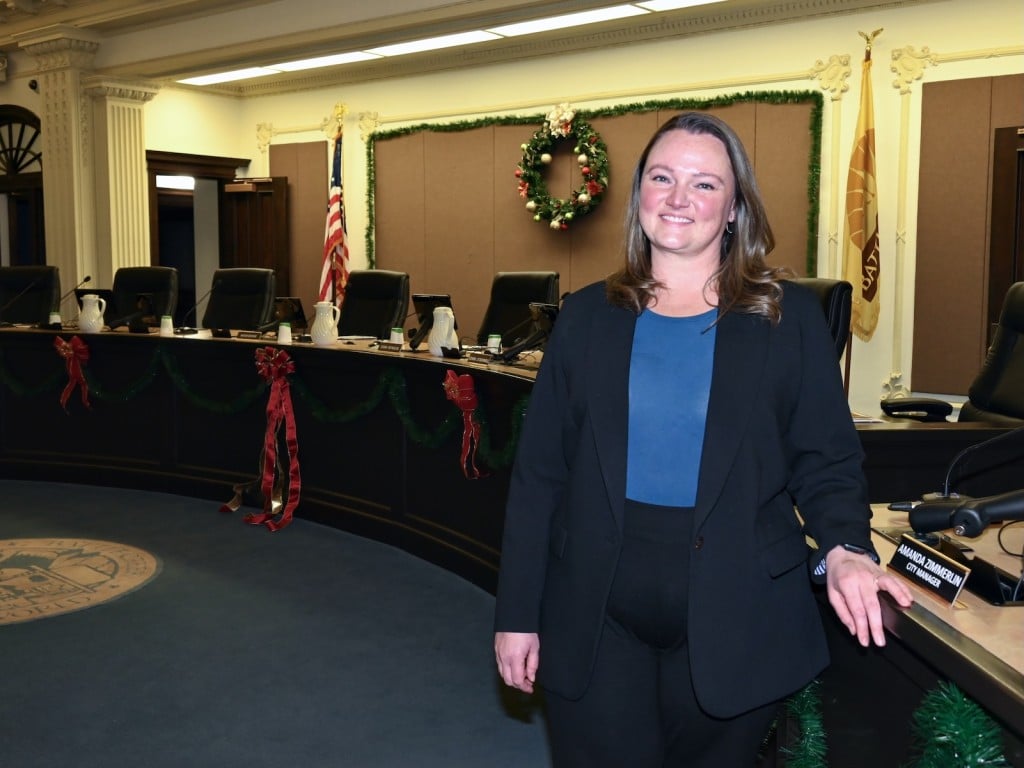
BATTLE CREEK, MI — As she enters her third month as Battle Creek City Manager, Amanda Zimmerlin reflects on her new position and what she hopes to accomplish. Zimmerlin recently participated in a Q&A with On the Ground Battle Creek. Before assuming her current role on October 6, she served as Assistant City Administrator for Springdale, Ohio, from 2016 to 2020, and as City Manager of Clayton, Ohio, from 2020 through September 2025.
How did your previous roles in Ohio prepare you for the job in Battle Creek?
My previous roles gave me a wealth of experience. I experienced so many different things.
During my time in Ohio, I dealt with development issues and social unrest that popped up. My experiences with this will help me here in Battle Creek.
Clayton, a suburb of Dayton, was the result of a merger in 1998 of a village and township. Prior to the merger in 1988, there hadn’t been much development, and the population stayed at 13,000. We re-did our Master Plan called Plan Clayton. We aligned our zoning codes to meet the requirements for development in our Master Plan. By the time I left to come to Battle Creek, we had put in 200 new residential units.
In 2020, there were a lot of people upset about a lot of things. We had a couple of marches in Englewood, the neighboring community. Because Clayton didn’t have a designated downtown, people from our city went to Englewood to participate in the marches. They wanted answers and equality. Protests were not common at all in Clayton. My police chief and I went over to Englewood to stress that violence was not acceptable, and we were there is they wanted to talk about their concerns.
How did the issues you dealt with in Clayton and Springdale differ from the top issues you have identified in Battle Creek — homelessness and childcare?
Housing was an issue in both communities. Although we didn’t have significant unhoused populations, the issue in both Clayton and Springdale is that basically, residents didn’t want any development in their backyard. It was market-rate housing, and people were still not interested in having it in close proximity to where they live. There was a lot of open communication with residents, and developers had submitted plans prior to these discussions as a way to get in front of these developments. We were trying to help shift the community mindset. Sometimes it didn’t matter because people just don’t want it.
Growing up in Trotwood, Ohio, I was exposed to people who were homeless and in need. When I was in fourth grade, I wrote a letter to President Bill Clinton talking about buildings that were available and how we could take these places and turn them into places for people to live.
Finding solutions to homelessness isn’t insurmountable. You have to have a very strong network of nongovernmental organizations willing to jump in and help.
I haven’t been here long enough to form a plan to address the needs of our homeless population. We have amazing people on our staff who are living and breathing this every day.
The lack of safe, affordable, quality childcare was a concern in Clayton and Springdale, just as it is in Battle Creek and communities throughout the United States.
I think people sometimes overlook that childcare is a big factor in economic growth. Having their children go some place where they feel safe is a concern for parents. If you wish to go out and work, you should have that opportunity. If the childcare support network isn’t there, nobody’s going to be able to fill those jobs. There are opportunities for the city to help in this arena.
What prompted you to apply for the job in Battle Creek?
Even though we were from Ohio, my husband and I really like Michigan, and we would come up to visit Grand Rapids. On these trips, we would drive through Battle Creek. The first time we came through, I thought, Battle Creek, that’s a really interesting name, and I was familiar with the city when a recruiter contacted me about the City Manager job.
I applied for the job because I see a lot of potential here with the airport and the strong network of organizations and businesses that are working hard to create a vibrant place to live, work, and play. I was floored by the community turnout and feedback I received after my public interviews.
How do the city staff sizes in Springdale and Battle Creek differ?
The staff size in Battle Creek is more than 500. The staff in Springdale, a suburb of Cincinnati, was 260, with the majority being in the police and fire departments.
What do you see as BC’s biggest assets and how will you capitalize on those? What do you see as deficits?
I think our biggest asset is our people. I think the best way for us to capitalize on that is community outreach. We need to be out in the community and see how we can collaborate.
Battle Creek Unlimited is a great asset, and the work they’re doing in Fort Custer Industrial Park is wonderful. I’m impressed with the size and number of businesses in there. The airport also is an important asset. Few communities of our size have an airport and a runway that’s two miles long. We have a responsibility to promote it.
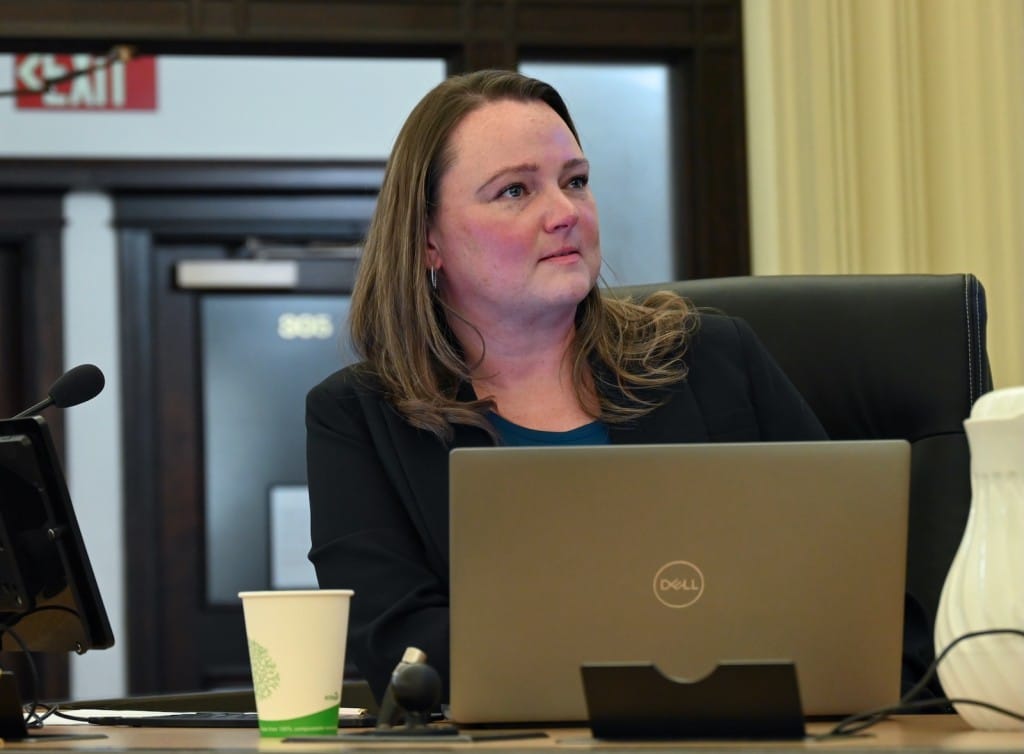
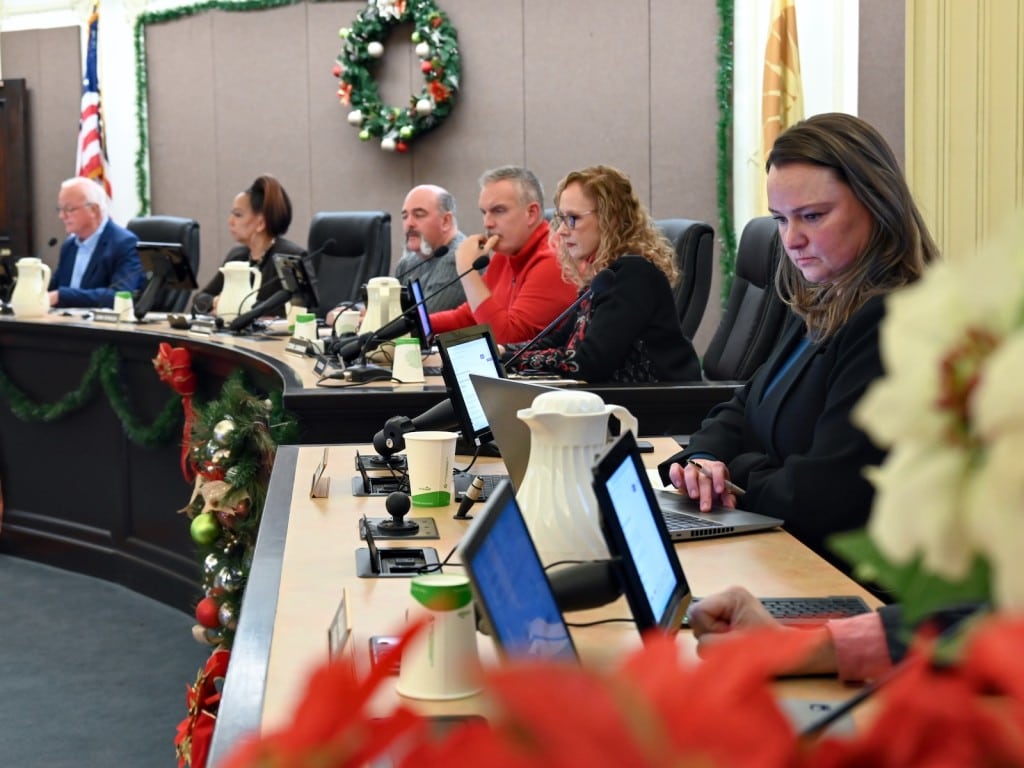
commission meeting.
When I’m looking at things on social media, I see that we have people who really want to come out and help, but there are also a number of self-deprecating statements about Battle Creek. There’s a lot to do here in Battle Creek. Seeing people disparage their own town is normal. People don’t see what they have, and we have to help people see that Battle Creek is great and we have the opportunity to make it greater.
How will you connect with residents?
My favorite thing to do is to get out and volunteer in the community, and getting out into the community and being part of the community. Three of our four children have moved here with us — a 17-year-old and identical twins who are 16. Our daughter, who is 19, is attending college in Ohio.
How did you settle on city government as a career?
I grew up around public service. My dad was a firefighter, and my uncle was the fire chief. I see this career as an opportunity to be able to help on a broader scale. I was part of student government in high school and originally focused on Political Science in college to become a lawyer. I took the LSAT’s (Law School Admission Test), and my scores were better than average. I made the decision not to attend law school because I was pregnant with our daughter, Lily. I was looking at other options and eventually earned a Master’s of Public Administration (MPA). After I graduated, I got an opportunity to work in Xenia, Ohio, and just kind of built my career from there.
What do you consider your strengths and weaknesses?
I’m not afraid to make hard decisions. This can be difficult for people because they don’t like to upset others. One of my strengths is being able to sell those unpopular decisions. We don’t want to do it, but we have to do it, and that’s how you have to frame it sometimes.
Some may see my lack of desire to play the political game as a weakness. It’s not my favorite thing to do, and I recognize that sometimes it’s just necessary.
What do you like to do when not working?
I like to hang out with my family. I love to bake. My husband James, who is Senior Director of Corporate Compliance for Caresource, is a pilot, and I like to go fly when we have the chance and look at the fall foliage. We have two dachshunds who keep us busy, and my three boys are all in sports. We are always watching them play.
What qualities do you possess that make you suited for this job?
Honesty, I do think I have a lot of integrity, and I do my best to do what’s right all of the time. I can respect a person’s position, but that doesn’t mean they get special dispensations or the ability to make decisions unilaterally. Confrontation doesn’t bother me. We can debate topics and still be respectful of one another.
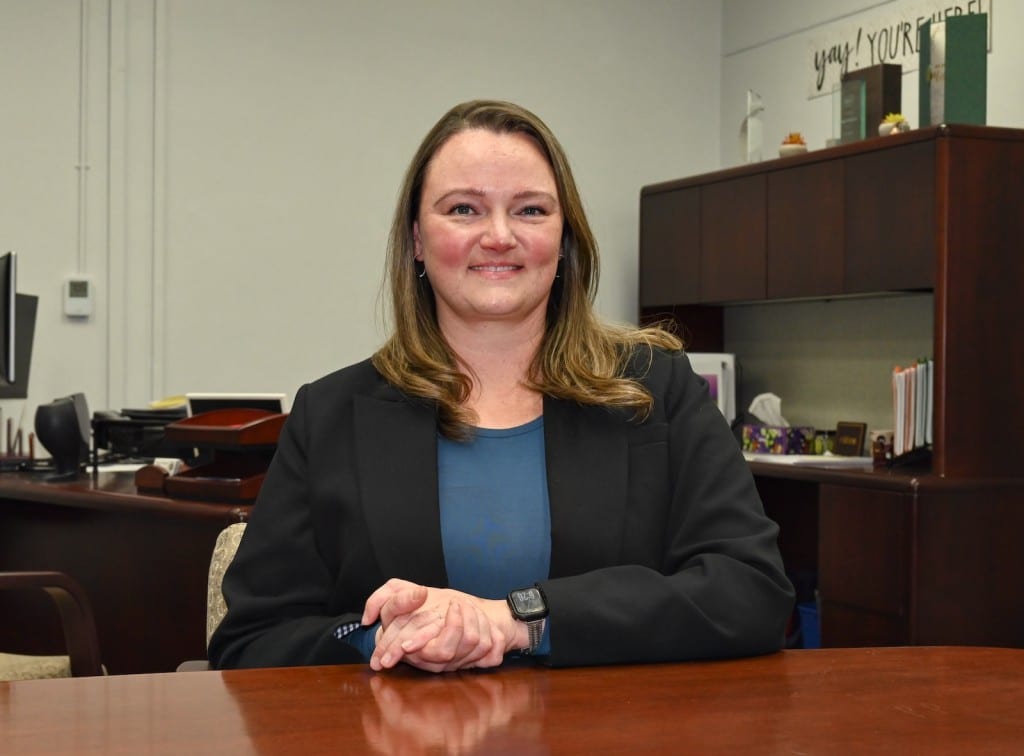
How has the city manager’s role changed and evolved?
There is a lot more attention paid to social media. There are a number of people who feel disenfranchised and dissatisfied with things that are happening at the Federal level, and we’re seeing how that trickles down to the local level, where we have better opportunities to dispel some of the inaccurate information that is being put out there.
What is something people may be surprised to know about you?
I have always considered myself pretty average. People are usually surprised to learn that I’m one of three siblings and a first-generation college graduate. I come from a really large Appalachian family. My mother is one of 15 kids in her family. I have 80 first cousins.
What do you want the community to know about you?
I really would like the community to know that I’m here to work for them, and my role here is to be a good steward and help guide us to a brighter future.
Author
Related Articles
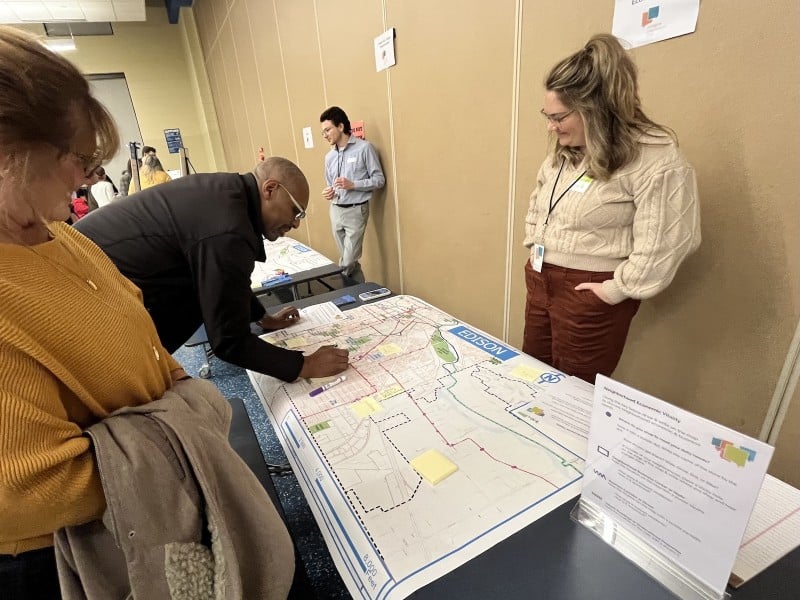
Edison residents take opportunity to Imagine Kalamazoo 2035
Edison residents kicked off Imagine Kalamazoo 2035 by turning potholes, sidewalks, and other everyday neighborhood concerns into hands-on input about the city’s long-term future.
Wheel the World puts Kalamazoo on the map for accessible travel
Wheel the World’s accessibility audit has positioned Kalamazoo as a national leader in inclusive travel, benefiting both visitors and local residents.
Suprise unveiling: Kalamazoo’s Cooney Cultivation Center at Farmer’s Market moving tribute to veteran activist
Kalamazoo honored longtime activist and commissioner Don Cooney with a surprise dedication of the new Kalamazoo Farmers’ Market Cooney Cultivation Center, a community hub designed to nurture youth, connection, and local growth.