Millage request is next stop for Kalamazoo’s Metro Transit
Kalamazoo’s Metro Transit is seeking a five-year millage increase to sustain bus services and expand its growing on-demand Metro Link program.
Editor’s Note: Our On Transit series explores the numerous impacts of Kalamazoo County’s public transportation. It was made possible by support from Kalamazoo Metro Transit.
KALAMAZOO, MI – Transportation costs won’t get any cheaper over the next year. That’s particularly true if you’re offering rides to everybody.
So Metro Transit of Kalamazoo, working through the Central County Transportation Authority, is seeking a millage increase to help it maintain its core bus system as well as a growing, on-demand transit service called Metro Link.
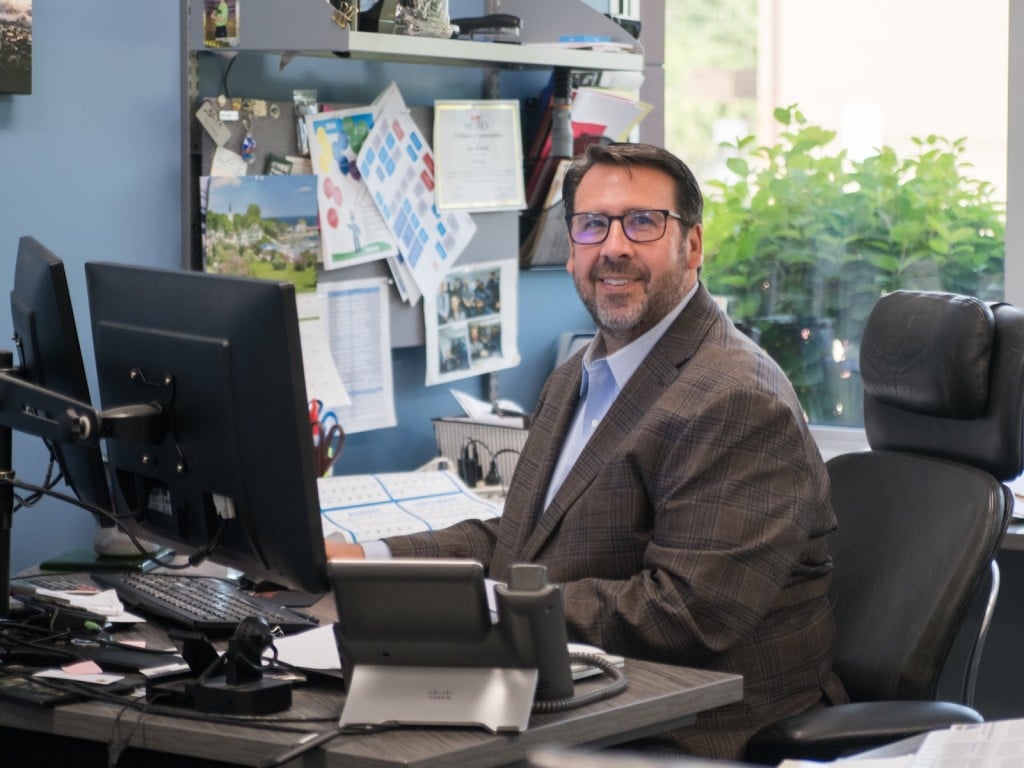
“The current millage is 0.9 mills, and that expires at the end of this year,” explains Sean McBride, executive director for Metro Transit. “We’re looking for a five-year millage, starting in 2026 to 2030, that funds the fixed-route bus system and Metro Link, and that will be for 1.1 mills.”
The region’s public transportation system is requesting a millage of up to 1.1 mills for five years. Starting in November of 2026, the new levy is expected to provide about 36 percent of some $27.5 million that Metro Transit will use to provide area residents with more than 175 million rides each year.
“The reality is that about 15 percent of any population doesn’t have regular access to a car. It’s important that that 15 percent have access to all those opportunities that our community provides.”
— Sean McBride, Metro Transid ED
If approved, the new millage will cost the owner of a $200,000 house in Kalamazoo County about $110 annually. A mill is a tax of $1 for every $1,000 of a home’s taxable value.
The Central County Transportation Authority oversees public transit in the cities of Kalamazoo, Portage, and Parchment, as well as Comstock Township, Kalamazoo Township, and the eastern half of Oshtemo Township.
Second Wave spent a few minutes with McBride, asking about the Nov. 5, 2025, millage request. Here’s what he had to say.
QUESTION: What are the major priorities here? Why does the area really need this millage?
ANSWER: “A voter-approved millage is a key source of funding for all public transit agencies in the state of Michigan. Basically, it represents a large part of our budget, and then we’re able to leverage those funds to really maximize the impact by getting state and federal grants that multiply what the voters approve. With that, we can provide a robust bus system and then our new service, the Metro Link service.”
He says millage revenue is expected to account for about one-third of Metro Transit’s budget next year.
Q: What happens if the request fails?
A: “We would assess the situation and consider bringing out another question to the voters. … That probably wouldn’t happen until 2026.”
McBride says the transportation authority would have to decide if it would adjust the millage rate or the amount being requested. It may also have to reconsider the services that are being offered.
Q: What happens in terms of Metro’s daily operations?
A: “If no millage is approved, it would result in a drastic reduction of service because we would not have those funds nor would we have the ability to leverage state and federal funds to the extent that we need. And so there would be reductions in the hours of service out on the street, the hours of service, and the frequency of routes that we provide.”
The transportation system is supported by federal, state, and local funding, along with fares from riders.
If the millage doesn’t pass, says McBride, the fixed-route bus system would have to operate on shorter hours, offer service on fewer days of the week, reduce the frequency of buses on routes, or reduce some routes.
A rejection of the millage proposal could also mean a reduction or elimination of its Metro Link service. That is an on-demand, app-based transit service that is available for anyone to use to be transported from a designated stop near their home to core locations or a bus line that takes them close to their desired destination. The service works with six-seat passenger vans.
McBride says the fixed-route bus system would have to operate on shorter hours, offer service on fewer days of the week, reduce the frequency of buses on routes, or reduce some routes.
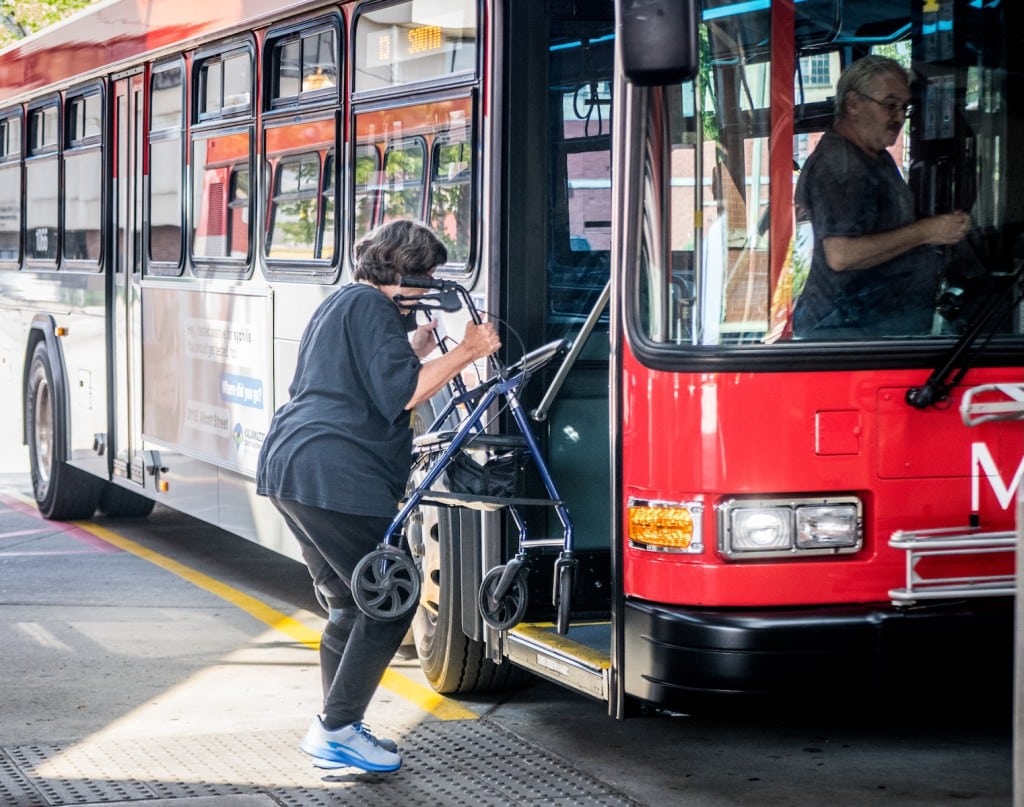
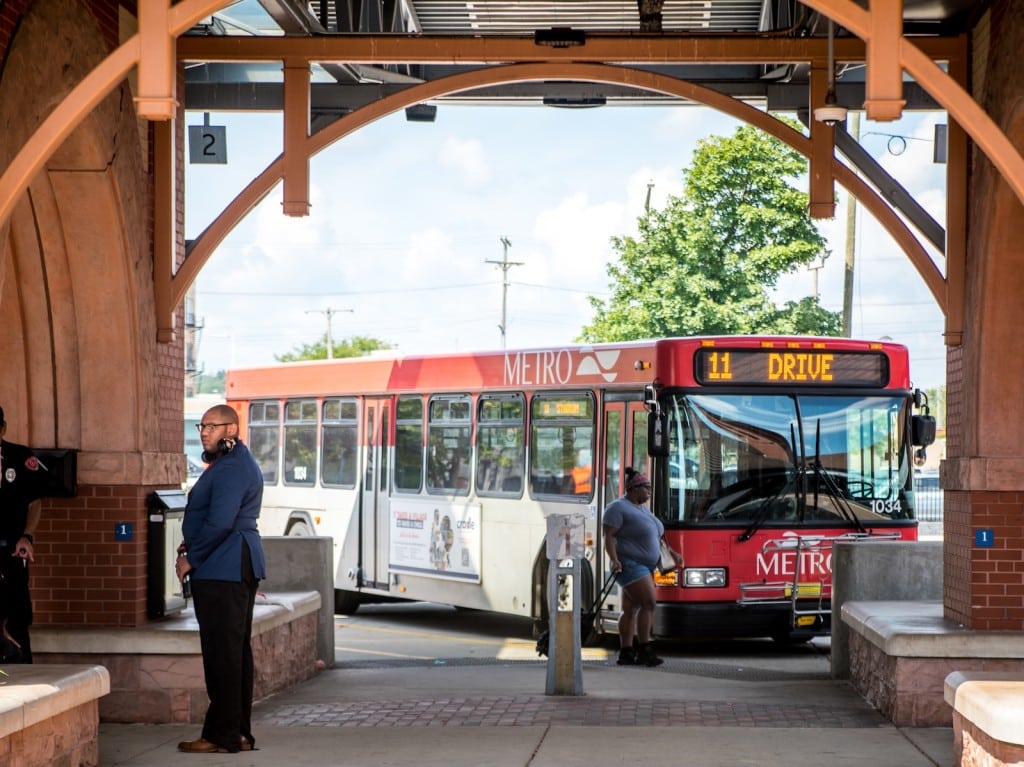
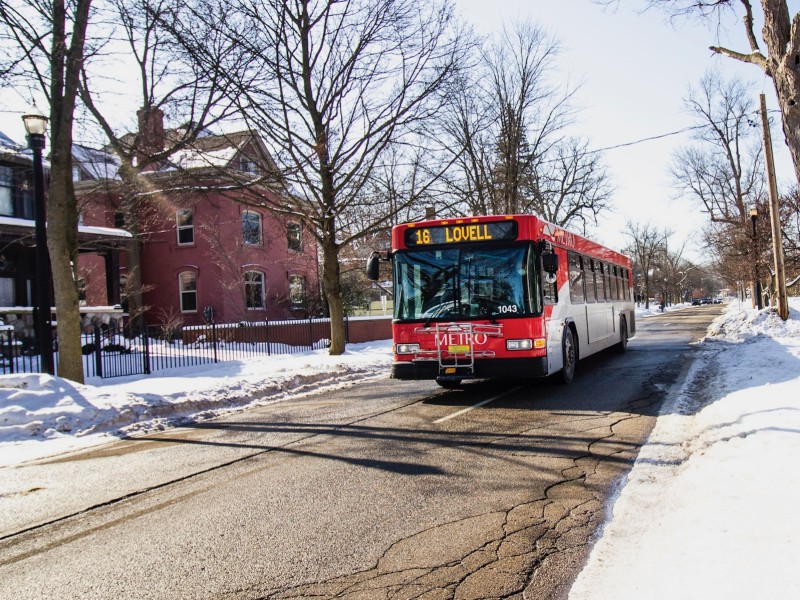
Metro Transit’s fixed-route bus system has 45 full-size buses that transport passengers on any of 21 routes, starting at the Kalamazoo Transportation Center in downtown Kalamazoo. The system’s South Westnedge Avenue route is its longest route. It provides more than 226,000 rides to people each year. The entire system provides about 4,800 rides per day. The standard one-way fare for any route is $1.50.
Q: If Metro does not get the increase it wants, who would be affected?
A: “All of our riders. So we’re impacting the ability of people to get to work, to get to school, to get to key services, get to medical appointments, get to shopping. Metro, I see as really providing for the economic vitality of our community. And this would really be severely hampered without voter-approved support.”
Q: When was the last time the Central County Transportation Authority made a millage request?
A: “The state requires that the duration of millage (that) we can go out and ask for is for five years. So the last time we went out was about five years ago.”
In that election, voters approved a millage increase from 0.75 to 0.9; about 70 percent of the voters who cast ballots.
Q: With the increased revenue, what will the public see?
A: “One thing we will see for sure is a continued Metro Link service. That’s our new on-demand service. … We’ve grown it to about 7,000 rides per month, and we expect that to continue growing this fall. Fall is usually our heavy ridership season for all our services.”
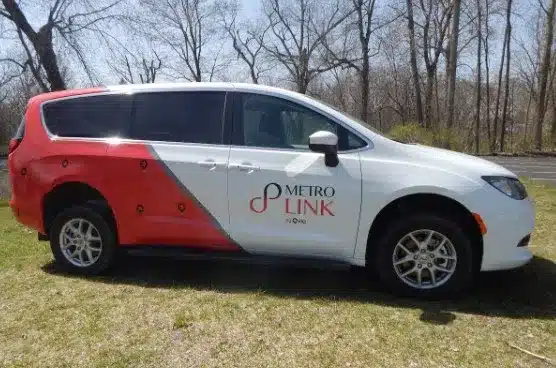
MetroLink is Metro Transit’s new, popular, on-demand service, which has grown to nearly 7,000 rides a month.
The service started in April of 2024 as a pilot program and has been promoted through partnerships with nonprofit organizations and through speaking engagements in the community.
Q: Who does that service benefit most right now?
A: “It was designed for a couple of reasons. One was to give people more mobility options. So it gets people from point to point more directly and more immediately. Then it gives people options that live outside a walkable distance of the fixed-route bus system. By using Metro Link, it can connect people to a stop on the fixed-route bus system … and then have full access to the fixed-route bus system.”
Q: Who’s using it?
A: “We saw a lot of growth in the western zone. We attributed a lot of that growth to a younger student demographic, maybe Western Michigan University students. And then this summer, we saw a lot of growth in the eastern zone, which is predominantly Comstock Township. Out there, with homes, it’s pretty spread out. It’s a little less dense out there. So it just gives people a mobility option when they don’t have access to the fixed-route bus system. People just started to learn about that.”
He mentioned that it allows people to access shopping on Gull Road and services at the Comstock Community Center.
Q: Will there be new buses? Raises for employees?
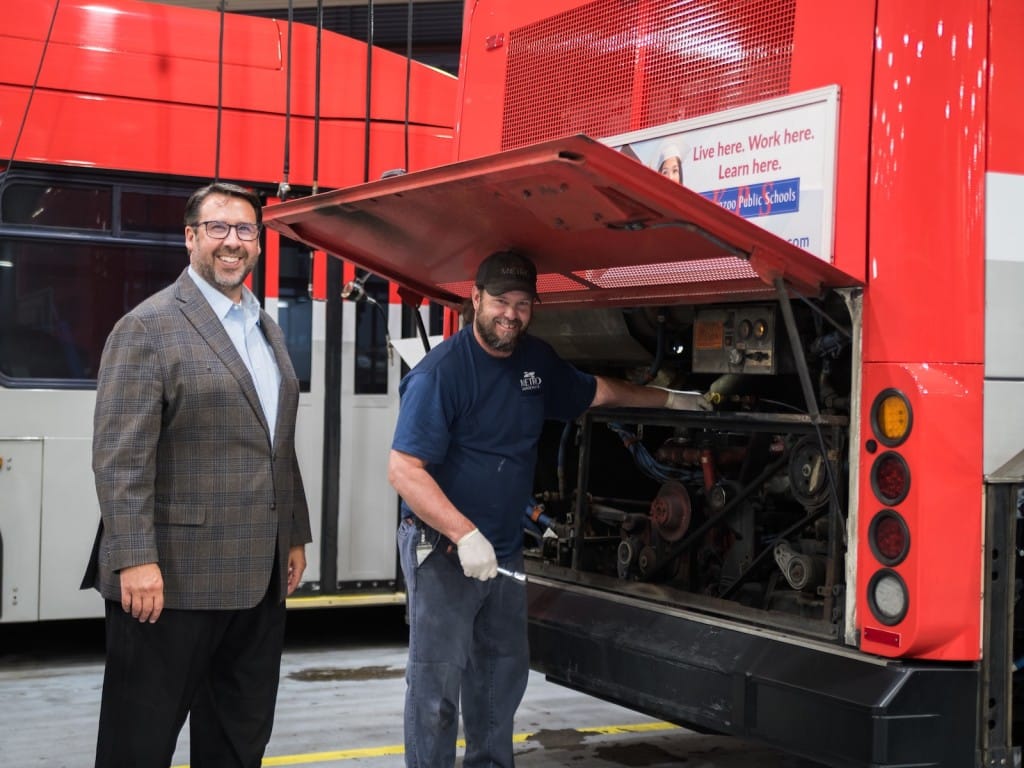
A: “We’re constantly working on having an up-to-date modern fleet,” McBride says. “We usually buy two or three buses a year. We get about 600,000 miles out of a bus and own it for about 14 years.”
But he says there has been about a 40 percent increase in the pricetag over the last five years.
“The cost of a bus has gone from pre-pandemic, 2019-2020 — about $520,000 — to about $750,000 currently. … We feel those inflationary impacts not just in the purchase of buses but in services and other operating expenses like wages. And the millage is a key part of funding that.”
He says most of Metro’s workers are members of the Amalgamated Transit Union and are provided a wage and benefits package that is competitive with other services.
Q: Why should people care?
A: “Our community thrives by having everyone participate in our community’s life. Public transit is a way for people to be mobile and get to the key things in everyone’s life. Getting people to school, getting people to jobs, getting people to medical appointments, getting people to services, getting people to the grocery store, the drug store, and just allowing people to socialize. The reality is that about 15 percent of any population doesn’t have regular access to a car. It’s important that 15 percent have access to all those opportunities that our community provides.”
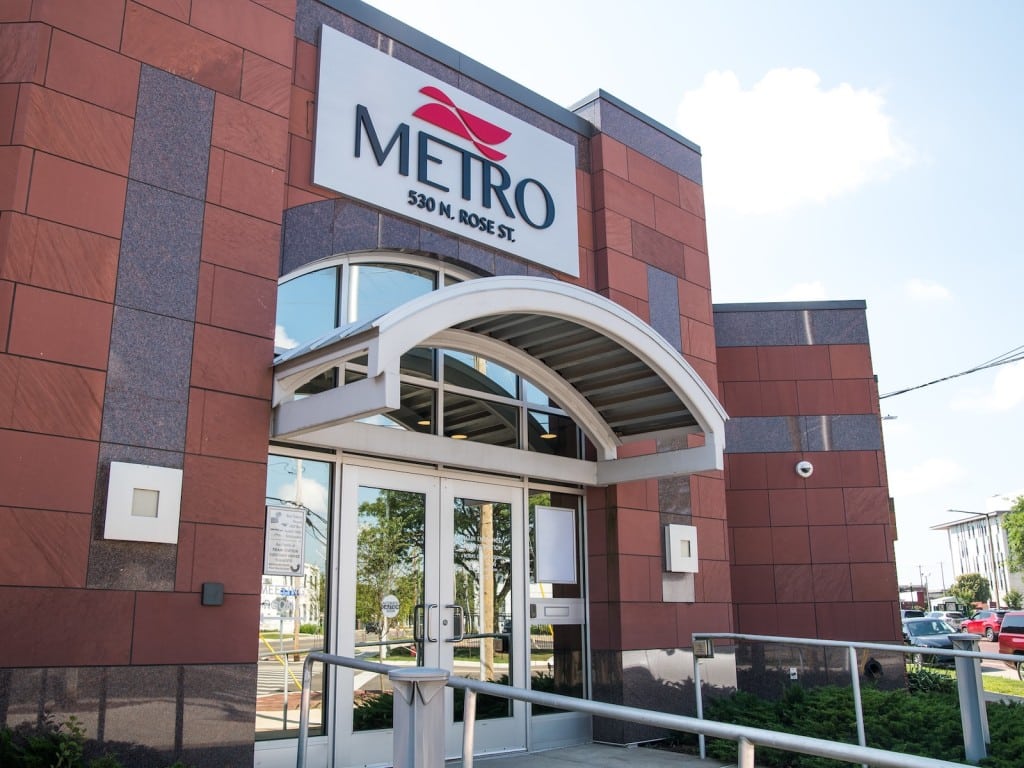
To find out more about Kalamazoo Metro Transit services, the public is invited to a Rider Open House from 11 a.m. to 12 p.m. and 5 p.m. to 6 p.m. Thursday, Sept. 25, in the Metro Board Room, 530 N. Rose St.
Author

Related Articles

Battle Creek clears the runway for drones and autonomous flight
Battle Creek is becoming a national hub for drones and autonomous flight by building the digital infrastructure needed for safe, long-distance operations and future aviation jobs.
For some Kalamazoo residents, public transit means freedom beyond their front door
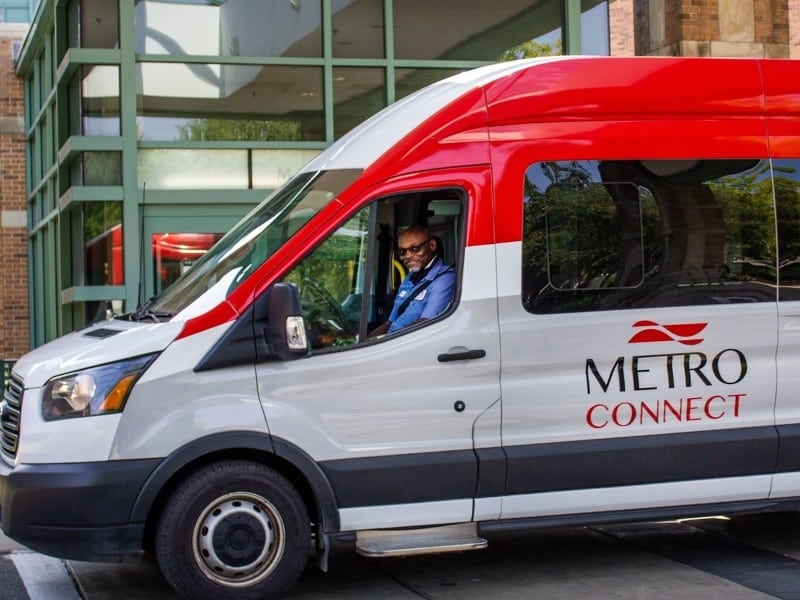
Public transit services like Metro Connect help Kalamazoo residents with disabilities and mobility limitations maintain independence, access essential services, and stay connected to their community.
Metro Transit boosts service on busy routes during holiday shopping season
Metro Transit is adding extra weekday bus service on three high-ridership routes from Dec. 15 through 28 to improve reliability during icy conditions and meet increased holiday shopping demand in Kalamazoo.