
Metro Transit leader Rob Branch honors father’s legacy through lifelong fleet-tending career
In Kalamazoo, longtime Metro Transit leader Rob Branch turned lessons from his father and a passion for skilled trades into a 40-year career overseeing fleet operations that keep the community moving.
Editor’s Note: This series focuses on the many impacts of Kalamazoo County public transportation. It was made possible by support from Kalamazoo Metro Transit. All photos were taken by Al Jones
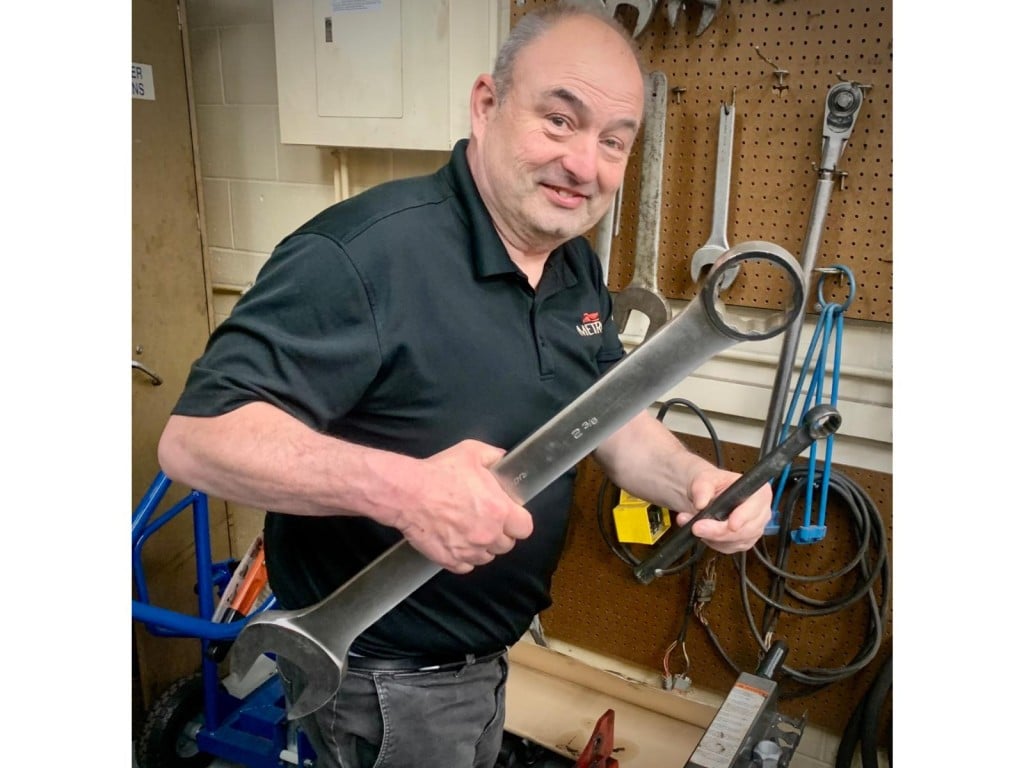
KALAMAZOO, MI — Rob Branch is doing a job that would make his father proud.
“My dad always stated that he … started ninth grade but never made it all the way through,” says Branch.
Dad’s formal education ended before he could complete ninth grade. He stopped to help work the family farm in Texas Township and fight in World War II. But, over time, he used the mechanical skills he honed in the U.S. Army to land a job with the U.S. Postal Service.
Robert Branch was 47 and was in charge of all Postal Service vehicles from Niles to just west of Battle Creek when his son Rob was born. But by the time Rob was a teenager, he was good with his hands. Dad had taught him how to rebuild, fix, and/or maintain automobiles and farm equipment. And Rob learned woodworking and home construction from his uncles and older cousins.
The older man died of a lingering illness when Rob was 16. That happened at 1:30 a.m. on the morning Rob was to take final exams to complete ninth grade at Loy Norrix High School. He reported to school shortly after 7 a.m. and muddled through his tests. Despite the huge loss in his family, he never considered skipping school that day.
“They rushed him to the hospital and revived him, but they figured there was no way to get him going,” Branch says.
The older man had lived with side effects from his service in the military, including the loss of a lung and congestive heart failure. He had also fought the effects of malaria and tuberculosis, and later in life, he suffered an injury that left him legally blind in one eye. But on weekends, he continued to help work the family farm, as did Rob.
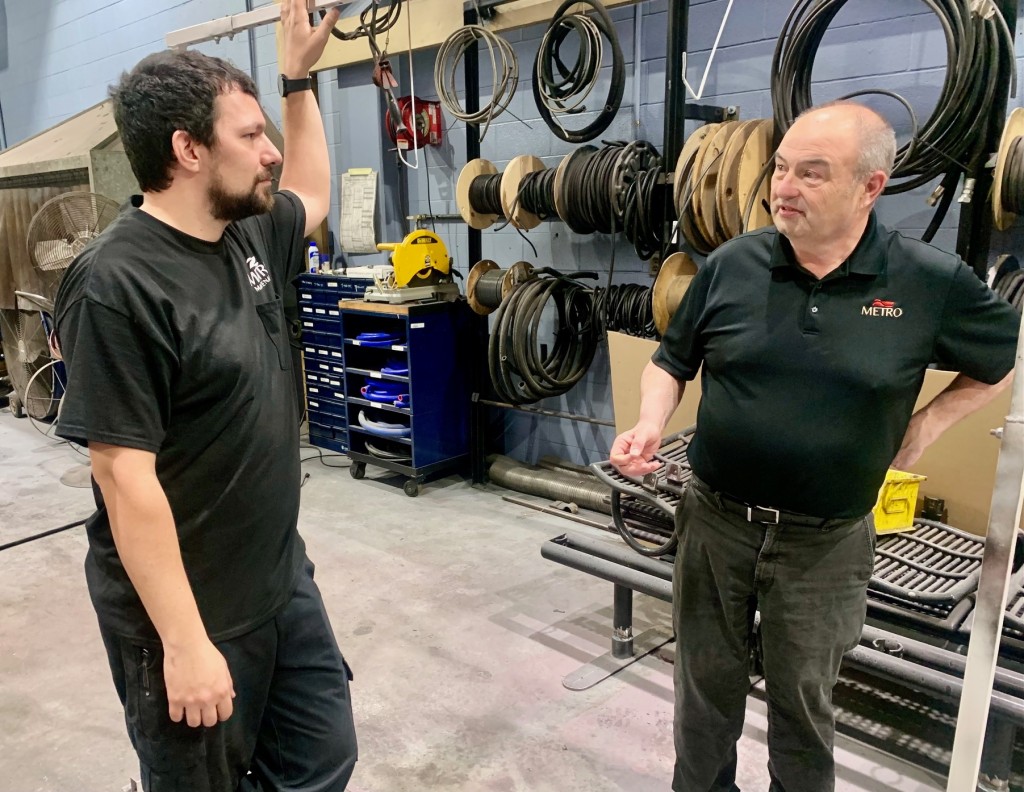
Speaking of his woodshop teacher and school, Branch says, “I went in there and told him that my dad passed away at 1:30 in the morning.” That teacher was the only educator who excused Branch from a final exam.
“I think he would have been proud of me,” Branch says of his father.
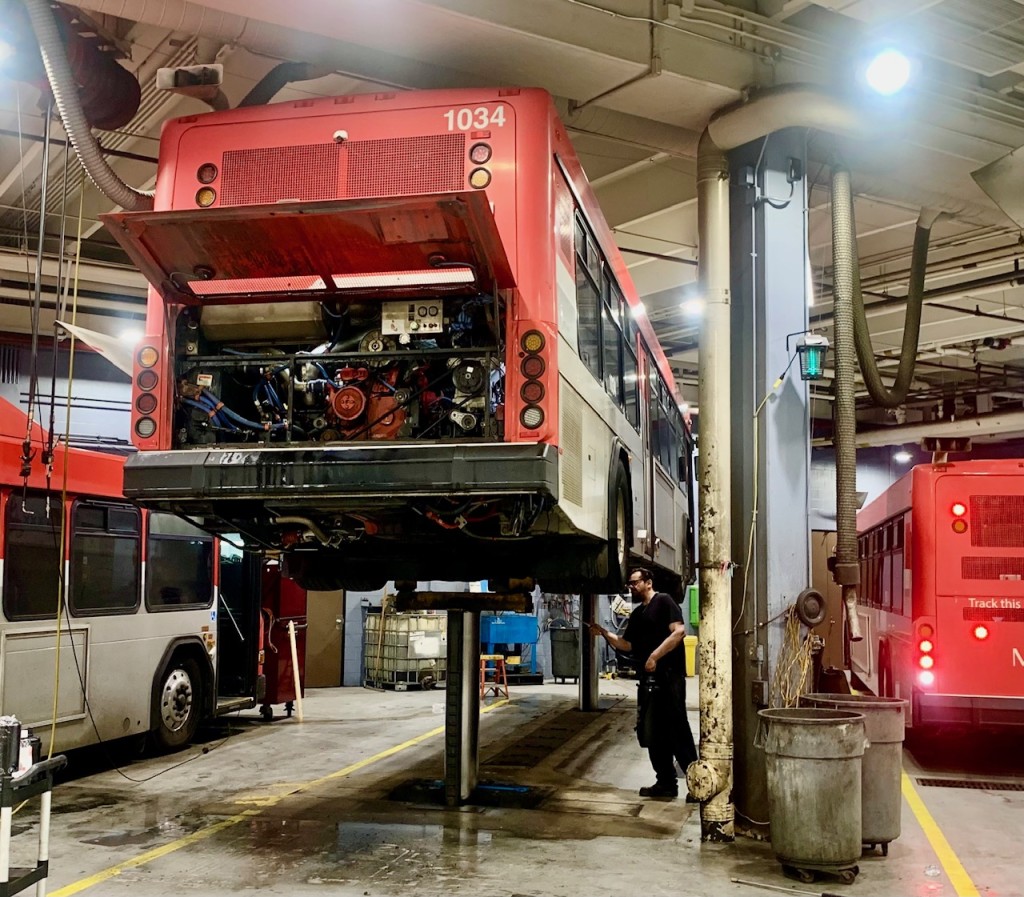
At age 57, he is now the deputy director of Fleet & Facilities for Metro Transit of Kalamazoo. As such, he continues to work with his hands, like his father. And, like his father, he is responsible for a large fleet of vehicles.
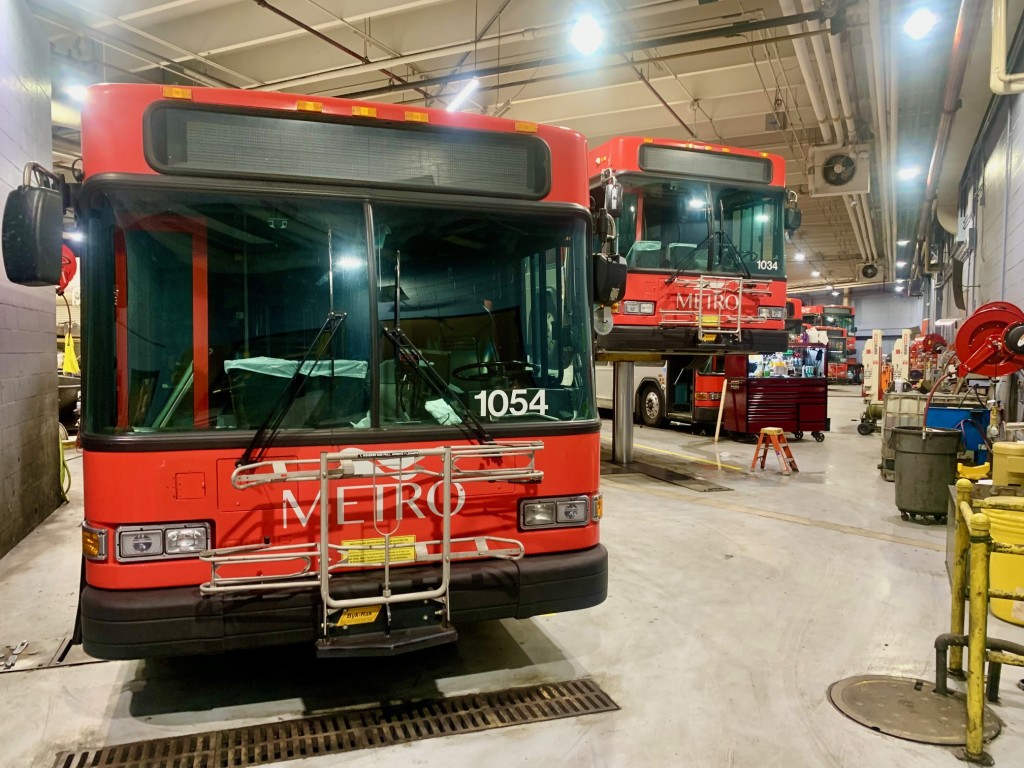
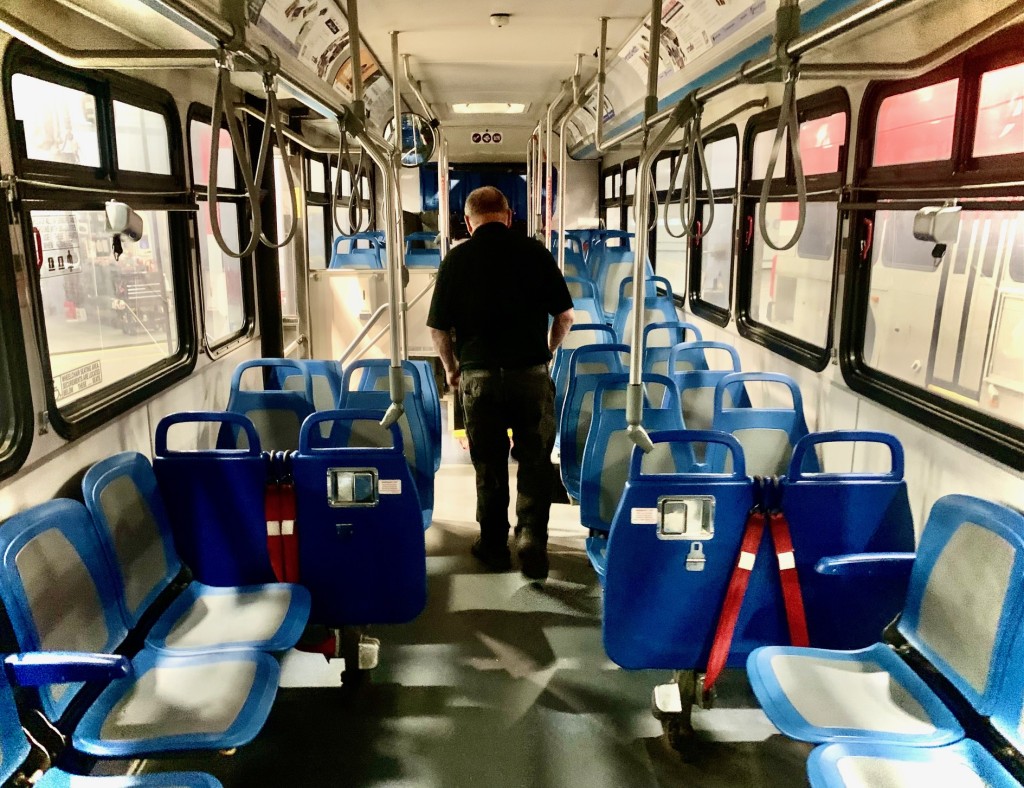
He oversees the maintenance and repair of the public transit service’s 46 large buses (including six hybrid-electric buses), its 48 para-transit vehicles (which transport combinations of people with wheelchairs and without), and its four transit vans (which also accommodate passengers with and without wheelchairs.
He is also responsible for the upkeep and work projects at Metro’s central garage at 520 N. Rose St., and at the adjacent Kalamazoo Transportation Center at 459 N. Burdick St. His staff of 28 (which includes 13 mechanics) also maintains the system’s 93 passenger shelters and more than 1,000 street signs. The staff includes service line attendants who fuel the buses at night, empty passenger fare boxes, clean buses inside and out, check the fluid levels of the buses, and make sure they are ready for the next day. Utility workers do custodial work in the facilities, assist mechanics, perform facility maintenance, clean passenger shelters, plow snow, and remove snow from bus passenger shelters. Rob is the definition of a public servant,” says Sean McBride, executive director of Metro Transit.
He praises Branch for running a 24-hour, seven-day-a-week operation. And for being available at all hours to make sure Metro is serving the community.
“He has dedicated his life to making sure people can get to jobs, school, and medical appointments in Kalamazoo County. He does this in a “behind-the-scenes” role and takes great pride in making sure Metro is reliably serving the community every day. “
Over a 10-year period, Branch rose from parts room intern (starting in 1985 as a co-op student in high school) to become maintenance supervisor for Metro’s central garage. Along the way, he worked as a utility person, a Class C Mechanic, and a Class B Mechanic. During those years, he learned everything from tire and wheel maintenance to how to rebuild bus transmissions and fix vehicle air conditioning systems.
In 1995, he was named Senior Maintenance Supervisor, and since 2016, he has worked as Fleet & Facilities Manager.
“Rob is our resident historian,” McBride says. “Having served at Metro for such a long time, he knows the who, why, and what of things that happened decades ago that will be lost when he someday retires.”
With his knowledge of mechanics, he is also a walking reference when co-workers ask if they’re getting a good price and the right diagnosis when they take their personal vehicles to area shops for repairs.
Branch takes pride in instituting ongoing training standards that make sure mechanics and other workers share and apply what they learn from off-site sessions and seminars. And he points out there are a lot of things workers repair in-house to save local taxpayers’ money, from public benches for bus passengers to GPS tracking systems that allow riders to track buses on their routes.
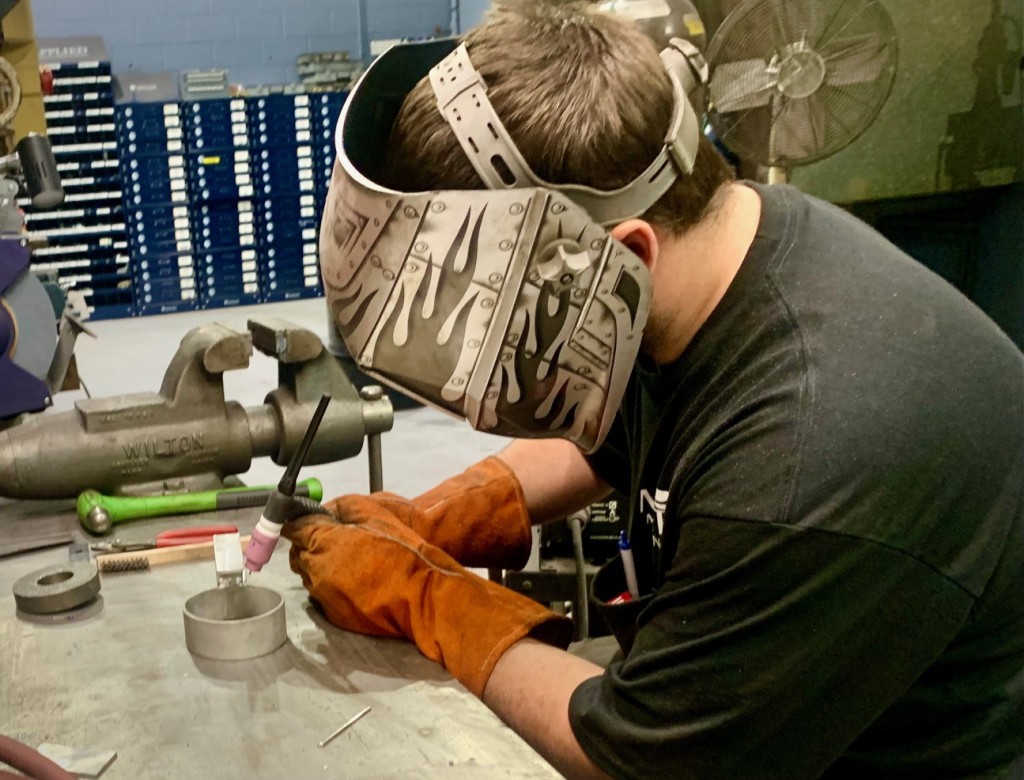
Those were things that Branch says he had the opportunity to learn and absorb over a long period of time. Things are happening more quickly for workers now.
“The new generation coming in, they almost have to know it all,” says Branch. But he doesn’t want them to be deterred from a career in skilled trades by thinking they need to know everything at once. He says it may take a mechanic two years to get to know the in-house work systems.
Branch graduated from high school in 1986, a year ahead of schedule. By then, he had been working as a parts room intern at Metro, a job that was recommended to him by the same shop teacher who gave him a break on the day his father died. “I think he was someone who saw that I was dedicated and tried to go the extra mile,” Branch says.
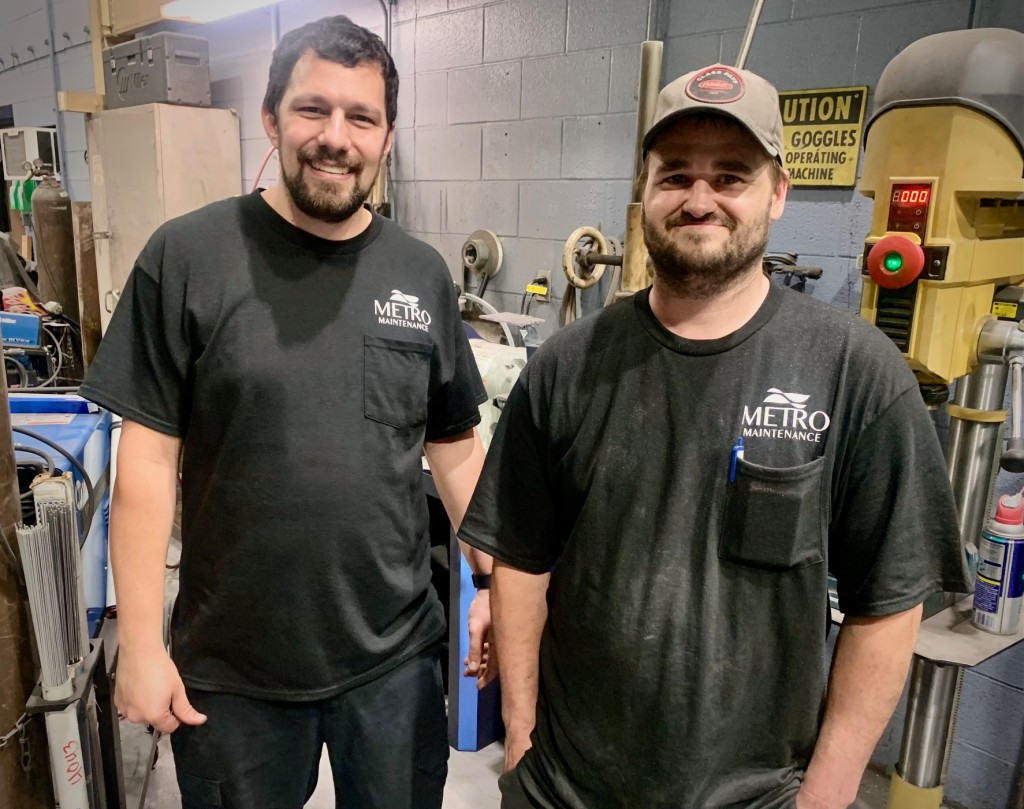
“We’re looking for people that have good aptitude, a willingness to learn, have some sort of fundamentals (in working with their hands),” Branch says. “We’ve had people — and I have a person out here — who started out cleaning and washing buses, which is basically entry-level. And now he’s a master mechanic.”
That describes John Elzinga, who started at Metro more than 15 years ago as a seasonal worker in the garage’s parts department. Like Branch, he learned mechanics from his father. He is now a master mechanic.
“It’s a great place,” says Elzinga, now 35. For young people who are looking for careers and who are able to pay attention, he says, “We have plenty of resources around so they can learn. A lot of us are really open with teaching new guys new things. In the end, it helps everybody out.”
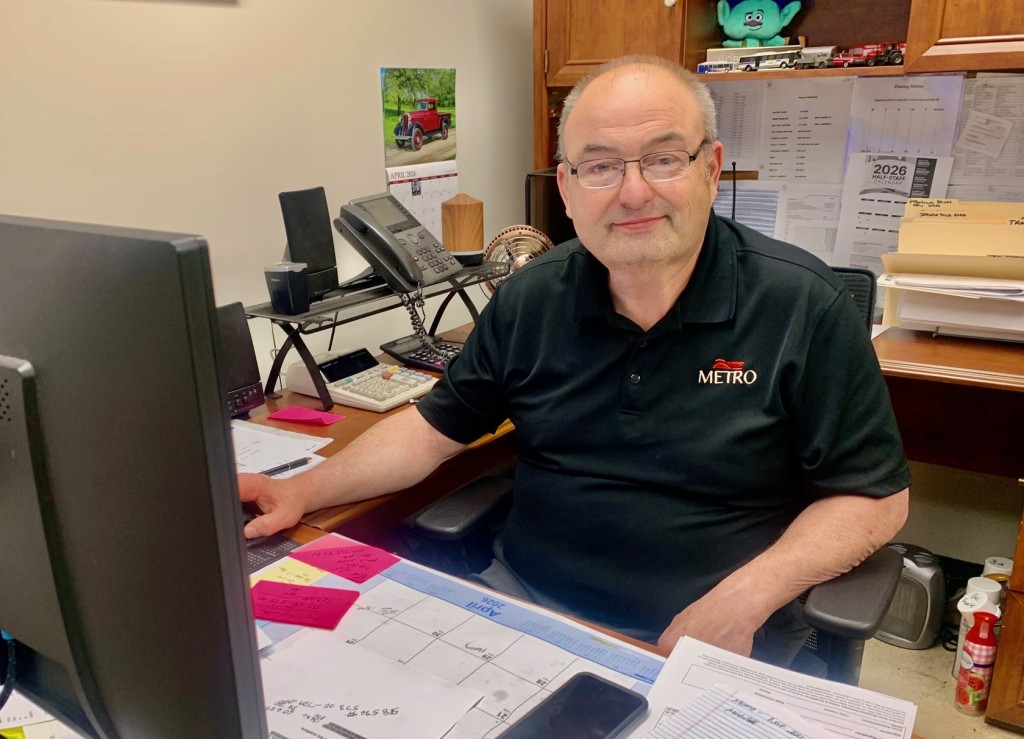
Maintenance Supervisor Tyler Wine says new workers are sometimes struck by the size of the vehicles that are serviced in Metro’s 80,000-square-foot garage.
“They come in. They look at the buses,” Wine says. “They see how big they are. I can tell. You can see their faces. They get big, wide eyes. But it’s not as bad (as difficult) as you think it is. Sure, things are heavy. But it’s just big stuff compared to your pickup truck. Everything’s just a little bit bigger. It’s all the same stuff. It’s just nuts and bolts at the end of the day.”
Branch says he looks for people with energy and who want to succeed. He would recommend that area young people consider vocational programs and job-placement internships offered through the Kalamazoo Regional Educational Service Agency. Metro Transit works with KRESA’s work experience program.
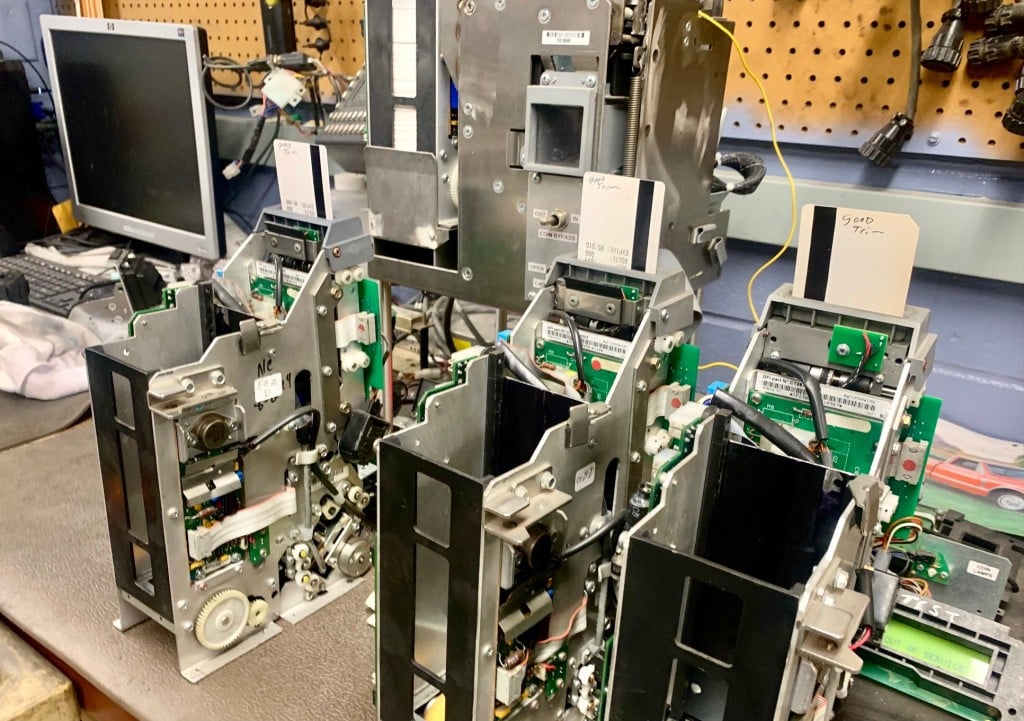
“It kind of makes me feel good that I can pass on knowledge,” he says.
Of Metro Transit, he says, “Basically, we do it all. We do everything from routine maintenance to engine overhauls, main chassis rebuilding, and body and accident repair work. We also have a lot of stuff (work) … as far as all the electronics on the buses.”
That includes new GPS systems, collision-avoidance systems, and on-board cameras. “It’s not just engine oil changes and brake jobs anymore,” Branch says.
The work also requires people who are willing to stick with it. There are a lot of people who don’t want to work nights or weekends, he says. But buses run at those times, and there are only a couple of hours during the work week when there’s not a mechanic or maintenance person working on something.
“As a transportation organization, we’re still hauling people around during holidays,” Branch says. “People are moving from one place to another when there’s a blizzard, and we’ve never shut this system down in my 40 years that I’ve been here.”
The exception is for one hour about 10 years ago to allow plow trucks to remove enough snow to make roads passable during a snowstorm.
Branch hopes to see more young people find their way back to skilled trades. A survey of mechanics, he says he saw not long ago by the Michigan Public Transportation Authority, indicated that working on heavy equipment like a front-end loader, a dump truck or a bus “is not sexy enough.”
Working on high-end vehicles like a Chevrolet Corvette sports car was a “sexy” job young people pictured when asked if they would consider a career in auto mechanics.
Branch says Metro pays good wages, good benefits, a clean work environment, and opportunities to advance. With a laugh, he says it’s a lot better than it was when he was a co-op student, attending school in the morning and working at the bus garage in the afternoons.
Branch, who helped raise the child of a significant other, was engaged but has never married. He owns about 11 farm tractors, which he uses primarily for tractor pull contests and tractor shows. A former president of the Lakeshore Antique Tractor Club, the hobby absorbs him from mid-May to late September. He says he cares about his role at Metro Transit because the people there have become like a second family for him.
“When the days are the crappiest, you stick it out,” Branch says, “because they will get better. That’s where a lot of people I think, especially nowadays, they get frustrated. They quit or leave. They don’t want to deal with it.”
But old people will tell you, “You gotta pay your dues,” he says.
“Rob is not only respected at Metro and in Kalamazoo.” McBride says, “But he is a state-wide leader and resource for other public transit agencies. He is often one of the first calls from other transit systems on how to solve a problem impacting their bus fleets.”
Author

Related Articles
Feeling slowed down? That’s the point. Kalamazoo crashes drop 25%.
Kalamazoo’s traffic calming makes roads safer for everyday mistakes, while enforcement targets truly dangerous driving.
Elbows up, hearts open: One Kalamazooan’s ride across a bridge built to connect
Kalamazooan Mark Wedel bikes the new Gordie Howe International Bridge, discovering history and connection as he pedals across the border from Detroit to Canada.
Short-term pain, long-term gain: Kalamazoo begins biggest Downtown street transformation in 60 Years
Construction is underway on Kalamazoo’s long-planned Streets for All project, with city leaders and downtown businesses acknowledging years of disruption while promoting the $100 million overhaul will create a safer, more accessible, and more vibrant downtown.