
Metro Transit hopes to replace aging fleet with hybrids, eyes federal grant
Kalamazoo Metro Transit is seeking federal funding to gradually replace its aging bus fleet with more environmentally and financially sustainable hybrid vehicles — and also seeking local millage support for current bus system and popular Metro Link.
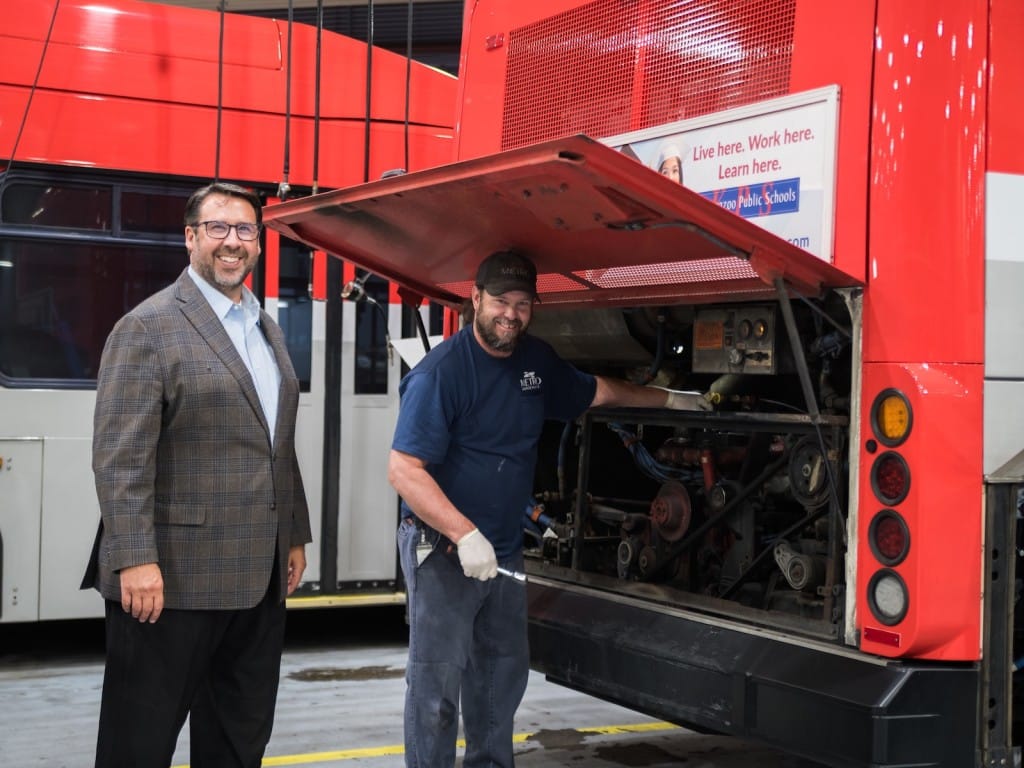
KALAMAZOO, MI — Kalamazoo’s public transit system is soon hoping to know if it has the federal support to add more hybrid electric buses to its fleet.
In July, Metro Transit submitted a bid for funding that would allow it to acquire up to eight new diesel/electric hybrid buses. It is working through the Michigan Department of Transportation to land a competitive No-Low Grant, a reference to no-emissions or low-emissions. Metro has made funding requests during each of the past two years, but they have not yet been approved. The competitive grants, which are provided by the Federal Transit Administration, would help as the public transit system looks to replenish its 45-bus fleet. It looks to replace two to three buses each year.
“We want a sustainable fleet,” says Sean McBride, executive director of Kalamazoo Metro Transit, “not just an environmentally sustainable fleet but a financially sustainable fleet that we can maintain efficiently. And with emerging technologies like battery electric and hydrogen fusion, that adds to the complexity and the cost. So all those things have to be taken into account to determine what’s about to happen.”
About $4 million of Metro Transit’s $27.5 million annual budget is federal funding that it uses for vehicles, facilities, and operations. New diesel buses presently cost about $775,000 each. Diesel/electric hybrid buses cost about $1.2 million each, he says. And all-electric buses cost about $1.6 million each.
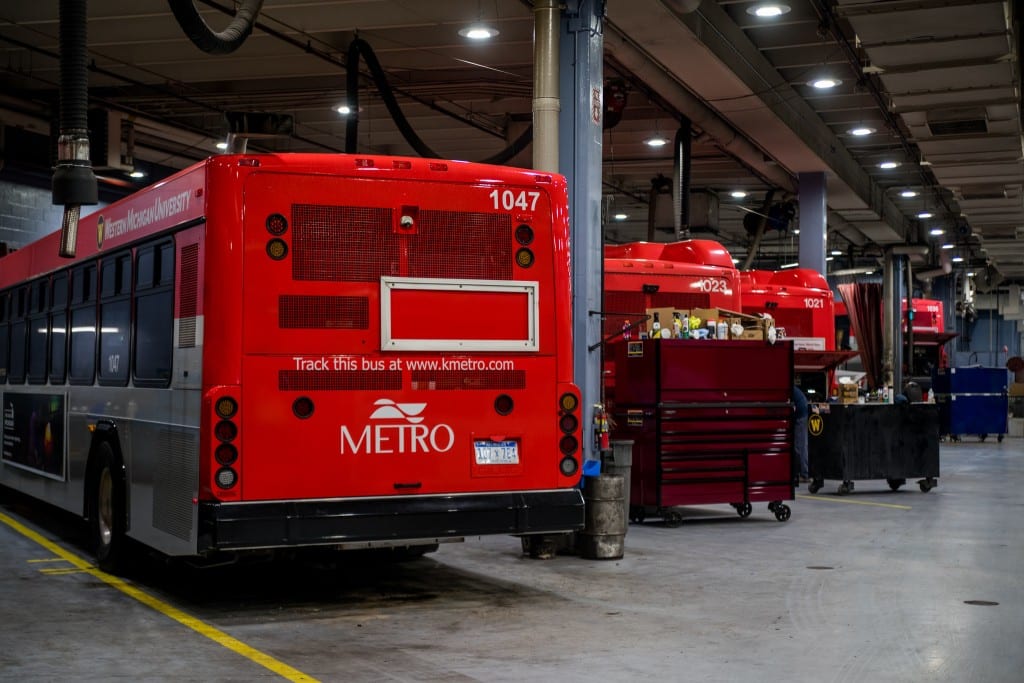
If Metro Transit receives the funding it needs, he says, “We’ll do a slow transition over time” to more energy-efficient vehicles. If it is not successful this year, it will continue to apply for federal grants to get the necessary funding, McBride says.
What would be necessary for the system to go to all-electric buses?
“Going to a pure electric vehicle bus fleet — what would that require?” McBride asked himself. “No. 1 is that we’d need the charging facilities to do that, and that’s a pretty heavy tax on the (electric power) grid.”
Metro would have to work closely with Consumers Energy to rework the power grid at the Kalamazoo Transit Center on 450 N. Burdick St. in order to supply enough recharging power. He says he does not know what it would cost to retrofit the facility for a large fleet of all-electric vehicles. But he says using all-electric vehicles is very unlikely to happen until there is an improvement in battery technology.
He estimated that present technology allows an all-electric bus to travel about 150 miles before it needs to be recharged. On some local routes, Metro Transit buses typically travel about 300 miles in a day. So, all-electric buses do not yet provide the travel range Metro needs now.
“We want a sustainable fleet, not just an environmentally sustainable fleet but a financially sustainable fleet that we can maintain efficiently. And with emerging technologies like battery electric and hydrogen fusion, that adds to the complexity and the cost.” — Sean McBride, executive director of Kalamazoo Metro Transit
Speaking of the technological advancements, he says, “It is moving in that direction for sure. But we need to see it work and get to that 250- or 300-mile range before we’re safe for a full transition.”
Metro Transit currently has nine diesel/electric hybrid buses. They have battery packs on top, and they supply power automatically, as needed.
“They run on batteries when they’re basically in flat conditions (and) in a controlled speed of say 30 to 50 mph speed,” McBride says. “When they are accelerating to get up a hill, they’ll use the diesel fuel, or when they exceed a certain rate of speed, they’ll use diesel fuel.”
While hybrid buses reduce carbon emissions, they would not provide a great improvement in terms of fuel consumption. Hybrids get about 4 miles per gallon of fuel, versus 3 miles per gallon with straight diesel fuel.
McBride says the public transit system, which provides area residents with 175 million rides per year, is also doing a facilities assessment to determine the need at its Kalamazoo Transportation Center at 459 N. Burdick St. and its administration building.
What will the upcoming millage support?
McBride says he continues to speak to community groups and others about the upcoming Nov. 5 election and Metro’s request for a millage increase to help maintain the core bus system and to grow Metro Link, an on-demand transit service it launched last year.
It is requesting a millage increase to 1.1 mills for five years (up from 0.9 mills currently). Starting in the fall of 2026, the new levy is expected to provide about 36 percent of the $27.5 million Metro Transit will need to provide services next year. The increase will cost the owner of a $200,000 house in Kalamazoo County about $110 annually.
What is the long-range goal for the system?
McBride says the biggest contributor to land pollution and air emissions pollution is traffic in general — the number of cars on the road. If we can make public transportation a greater choice for people, it can have a positive effect on the quality of life here.
“I think the bigger goal is to make public transit a choice for your mobility around town,” McBride says. “Use public transit for getting to work. Use public transit for some of your day-to-day activities instead of taking out your individual car every time.”
Author

Related Articles
Battle Creek clears the runway for drones and autonomous flight
Battle Creek is becoming a national hub for drones and autonomous flight by building the digital infrastructure needed for safe, long-distance operations and future aviation jobs.
For some Kalamazoo residents, public transit means freedom beyond their front door
Public transit services like Metro Connect help Kalamazoo residents with disabilities and mobility limitations maintain independence, access essential services, and stay connected to their community.
Metro Transit boosts service on busy routes during holiday shopping season
Metro Transit is adding extra weekday bus service on three high-ridership routes from Dec. 15 through 28 to improve reliability during icy conditions and meet increased holiday shopping demand in Kalamazoo.