Making radio waves at Harper Creek High School
Students at Harper Creek High are launching WHCX 97.1 FM, a low-power radio station to share school and community news.
Editor’s note: This story is part of Southwest Michigan Second Wave’s On the Ground Battle Creek series.
BATTLE CREEK, MI — The first-ever radio station in the Harper Creek community will be student-led and student-driven with a focus on school and community news, says James Parmelee, a senior and student leader of the Radio Club at Harper Creek High School.
The radio station’s call letters are WHCX located at 97.1 on the FM dial. In 2024, the Federal Communications Commission (FCC) awarded a permit for the construction of a local low-power station, says Jim Maynard, Technology Director for the Harper Creek Community Schools. That permit is good until the end of 2026.
“By then, we have to be broadcasting something. Then we can apply for a proper license, which is good for eight years,” he says.
The station will broadcast within a four-mile radius of the high school, where a tower already exists near the bus garage. WHCX is one of three low-power radio stations operating in the Battle Creek area, according to an FCC list.
A low-power radio station, such as a Low Power FM (LPFM) station in the United States, is a non-commercial, educational broadcast station that operates with limited power (100 watts or less), resulting in a shorter broadcast range, typically a 3.5-mile radius. These stations are authorized for specific entities, including educational institutions and non-profit organizations, and they are not protected from interference from other radio stations, according to information on the FCC website.
Maynard has been following low-power service since Congress created it in the early 2000s. He had to find a vacant radio frequency and had a 10-day window in December 2023 to apply.
Harper Creek is a school district that serves as the rallying point for the community. That connection is expected to deepen with the addition of the radio station, Maynard says.
“Local media is becoming scarce, and it’s hard to find out what’s going on. You can’t overcommunicate, so we thought, let’s get it out there. I think this is timely. It will be nice to help tie the school and community more.” — Jim Maynard, Technology Director for the Harper Creek Community Schools
“Harper Creek isn’t a town. The school district is it,” he says. “Local media is becoming scarce, and it’s hard to find out what’s going on. You can’t overcommunicate, so we thought, let’s get it out there. I think this is timely. It will be nice to help tie the school and community more.”
James says there’s no “really solid single source of general news in the area. People in the community will be able to get all they want and more from his radio station.”
“Magical” is how he describes the ability of one person on the radio to reach so many people at once. He was among the first students to sign up when Maynard announced the formation of the Radio Club.
“I decided to join this club because I love to write and I love talking to people. I hope that I’m able to encourage people to listen to these stories and have people listen to us daily,” Parmelee says. “It’s important to keep people updated. The parents need to know what’s going on with the school and things that are going to happen in the future.
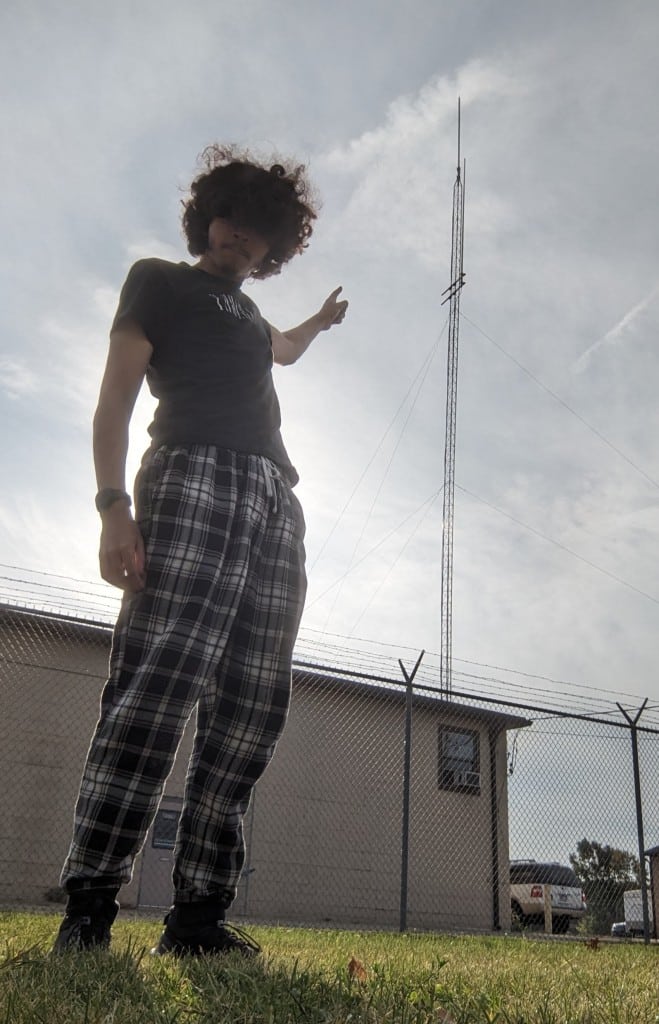
“Elementary and middle school kids often don’t tell their parents about things. I would rather people know what’s going on in their kids’ school. I would love to write fictional stories for people or have reports done on certain things. I love to research and to write things. I’m hoping I will be able to do it in the future.
“I’ve always been a huge fan of radio communication. I’ve been on the lookout for a radio program at Harper Creek for a while. I knew that Mr. Maynard had the station already. We make lots of decisions jointly.”
Making wavelengths
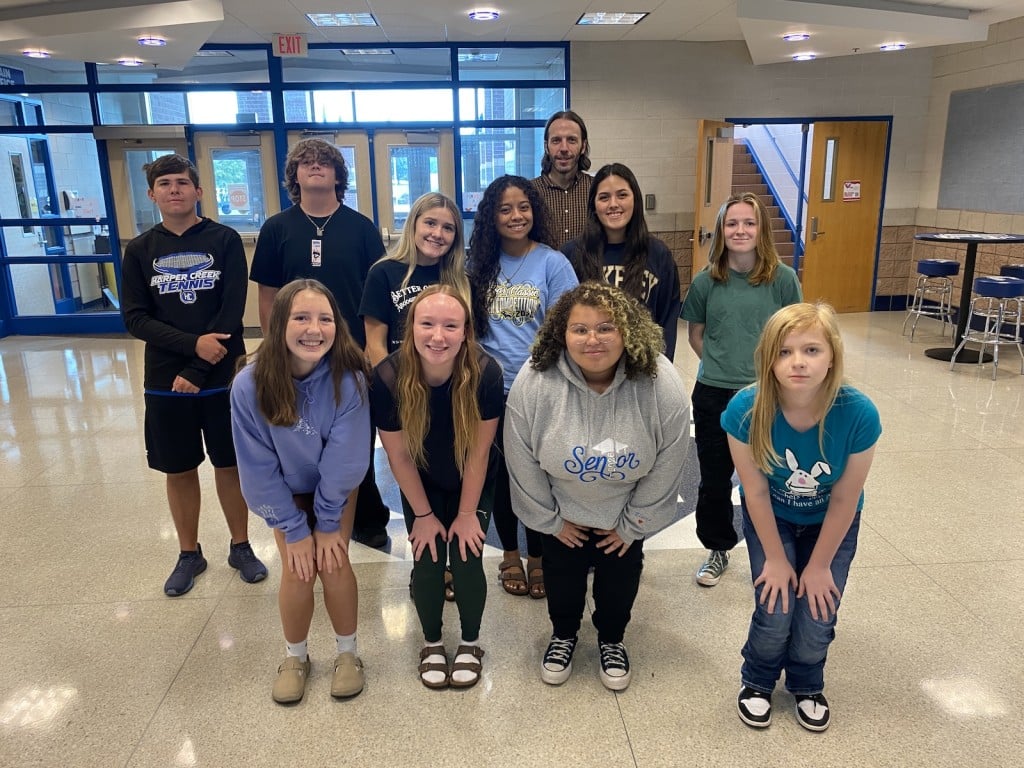
The Radio Club met for the first time on September 17 with nine students attending. James says he has been hearing from other students who want to get involved with the radio station. During that initial meeting, those who attended created a full segment of broadcast-focused stories that they’ll be reviewing and critiquing at their next meeting on October 1.
“The Radio Club is about doing stories based on the whole Harper Creek school district, including the elementary schools,” says Natalea Burrett, who is in 9th grade at the high school.
“We can do history, stories (fiction), what the sports are doing, what certain events are going on, et cetera. If we had a station, we would be sending a certain story for a week, so people would be able to hear about it while picking up their children,” Natalea says. “We would have people interview people, too, and be a reporter for the radio station. We are currently raising money for it, but once we have one, we would be making stories for each week and having them played through the station for the week.”
The initial fundraising goal is $20,000, which will cover the cost of essential equipment, including a transmitter and antenna that will be mounted on an existing tower on the high school property. A decoder for the Emergency Alert System, which every radio station is required to have, will also need to be purchased, Maynard says.
“Our initial goal is to get enough stuff so that we can be on-air and meet the requirements. If we want to play music, we’ll have to pay royalties, and if we want to have long-term live remote broadcasts, that also will cost money. We really want to double the fundraising amount.”
“I decided to join this club because I love to write and I love talking to people. I hope that I’m able to encourage people to listen to these stories and have people listen to us daily.” — James Parmalee, Radio Club participant
What is normally among the largest expenses for radio stations — wages and benefits — won’t be a factor for WHCX which will rely on student volunteers.
“The only vehicle for getting stories out into the community is the students and volunteers. We would have them cover events or activities. They will have to research, go out and actually cover it, record it on their phones, and edit it,” Maynard says. “We have a computer lab at the school and automation software where students can schedule files and play them out. If community organizations or individuals wanted to do it on their own, we’d like to offer equipment and training.”
Underwriting by businesses and individuals is a revenue stream being considered because, “We’re starting up with nothing and we’re not going to hit the ground as an award-winning station,” Maynard says. “The music is there, and it’s a secondary thing. We want to start with news and community programming. We’re not going to have a physical studio, and most of the programming will be pre-recorded.”
This programming won’t include stories focused on sensitive topics, religion, or politics.
“We have some procedures and policies in place,” Maynard says. “The only thing we’re going to do live is sporting or special events.”
Radio Club members will do the majority of the station’s reporting and storytelling. Maynard says Radio Club members are now working on the concept for a daily news show.
“The vision is there to have a community calendar students produce. We’d probably air it multiple times a day and during pick-up time. We’ll try to feature sports where we get students to go to the games and report. We have all sorts of ideas for what the radio station could be.”
This includes the establishment of an online presence where stories from WHCX will be available on the station’s website.
“There are lots of opportunities to springboard into even more groups of people,” James says. “We’ll have an online repository and will be setting up a perpetual livestream on an internet radio channel.”
In addition to a focus on the school district and opportunities to embed Radio Club members and other students at various sporting events and school events, individuals and organizations in the community will also be able to share stories about themselves.
James says the stories he looks forward to doing are those that focus on lesser-known people and places in the community.
“I’m really fascinated by the behind-the-scenes and lesser-known areas of the community,” he says. “People are looking for news and to be entertained.”
To learn more about WHCX or to donate, visit the station’s website.
Author

Related Articles

It’s scholarship season at the Battle Creek Community Foundation
Battle Creek Community Foundation scholarships help local students like Nylayiaha Smith afford college and inspire them to give back to their community.
Voices of Youth: A safe haven for children entering foster care comes to Battle Creek
Battle Creek’s Isaiah 117 House, set to open in March of 2026, seeks to reduce trauma for children entering foster care by providing a safe and supportive place during removal and placement.

Youth Reviewer Lab: Kalamazoo Academy of Rock musicians deliver high-voltage show at Bell’s
Check out our youth review of the Kalamazoo Academy of Rock’s showcase at Bell’s Backroom.