Madness, joy, and freedom: “The Colored Museum” Is a ‘love letter to Black people’
A bold collaboration between Face Off Theatre Company and the Kalamazoo Civic Theatre, “The Colored Museum” revives George C. Wolfe’s sharp, satirical look at Black identity — offering both celebration and confrontation as it challenges audiences to see why its message still matters in 2025.
Editor’s Note: Welcome to Curtain Call — your front-row seat to the unique, lively, and memorable performances shaping Kalamazoo’s arts scene. Supported by the I.S. Gilmore Foundation, this series highlights the creativity and community that make each show something special. All photos by Deborah Browning, Kalamazoo Civic Theatre, unless otherwise credited.
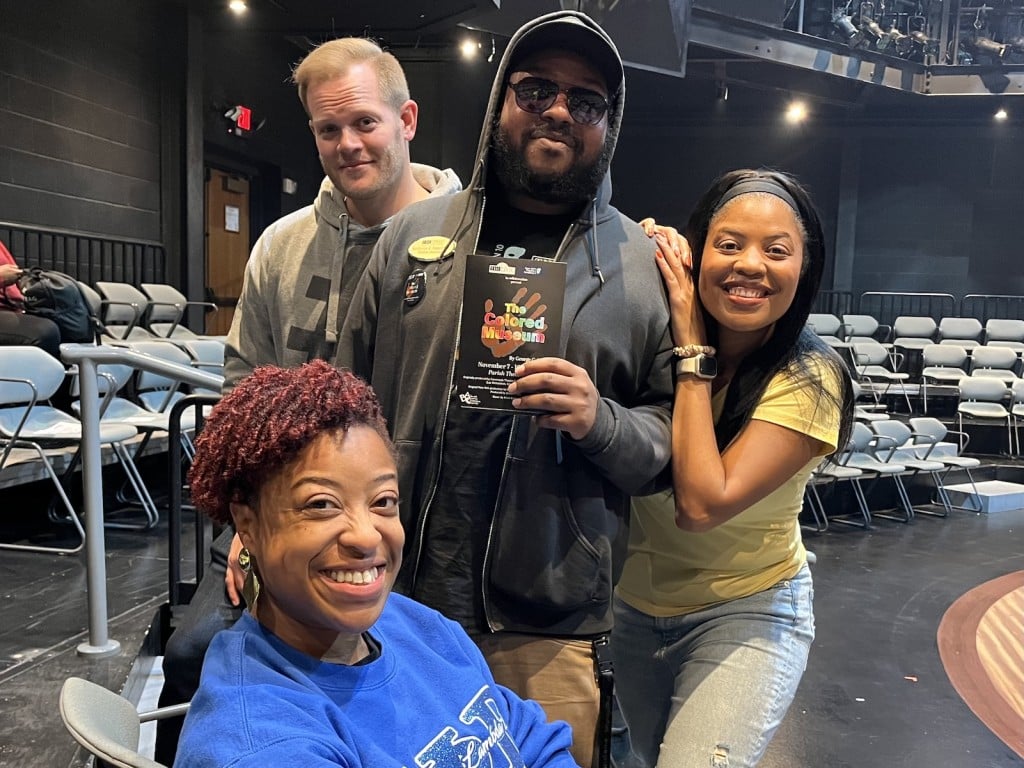
KALAMAZOO, MI — “The Colored Museum,” a collaborative production of the Face Off Theatre Company and The Kalamazoo Civic Theatre, will give audiences a lot to think about and to question.
The production is also the result of efforts to diversify Kalamazoo’s theatre scene.
Its last performance is Nov. 16, at the Civic’s Parish Theatre.
The 1986 George C. Wolfe work looking at Black identity was edgy then, and it feels just as edgy now.
“The Colored Museum” is a series of sketches, some hilarious, some haunting. Yes, Face Off says on their site, it’s like the later comedy of “Living Color” and “Key and Peele,” so we should all be familiar and comfortable with themes of race in satire, right?
Talk Back with the cast
I spoke with actors Alyssa Laney and Gweneé Hart after the final dress rehearsal on Nov. 6 about their opinions of the show.
“The word is relevant,” they both say.
It matters “anytime we can get our message out and let people know that we’re still here and we’re still strong and united despite everything that we’ve been through,” Hart says.
“I’ve done previous shows with the Civic, but this is my first all-Black show with a powerful message like this,” Laney says.
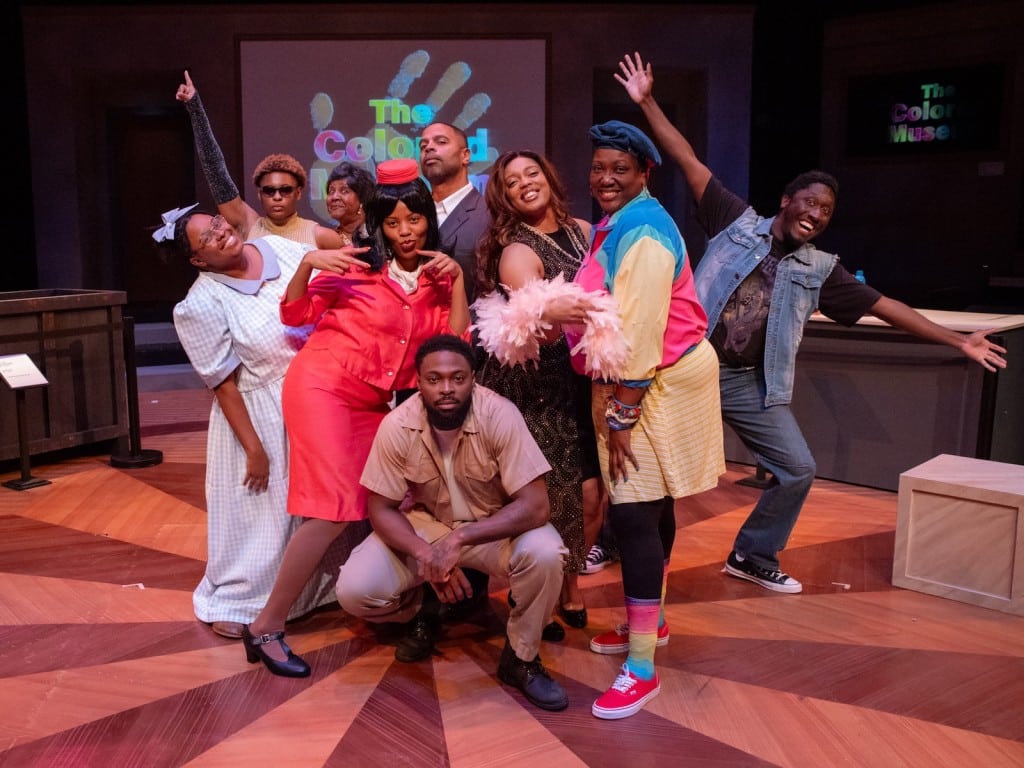
They then turn the questioning to me, asking simultaneously:
Hart asks, “What did you think?”
Laney asks, “How did you feel?”
Well, it made me think about how the issues raised are relevant still, or maybe more so, in 2025. Also how I have a lot of funk, soul, jazz, blues, early hip hop, etc., in my music collection.
Stewardess Miss Pat (Laney) in the “Museum’s” first exhibit, a slave ship/airliner flying newly-enslaved shackled passengers to a new life in the New World, gives them the rundown of their future. To try to uplift their spirits, she cheerfully tells them, sure, they might have to go through centuries of horror, but think of the complex culture that will result!
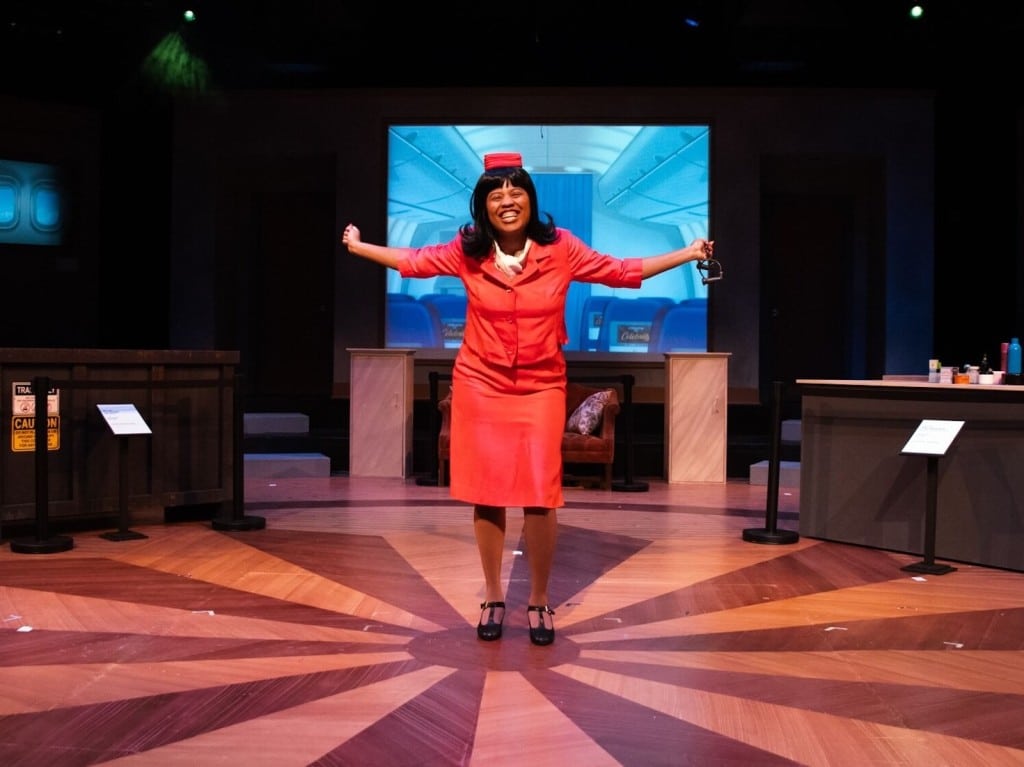
Yay! I get to enjoy that culture, too! One that arose out of kidnapping, enslavement, torture, and a long, bloody struggle for civil rights. Just the day before, I was jamming to James Brown, “Talking Loud and Saying Nothing.” An aging white man, making James Brown moves to the funk, as long as I’m sure no one is looking. Yes, I’m painfully aware of how that looks.
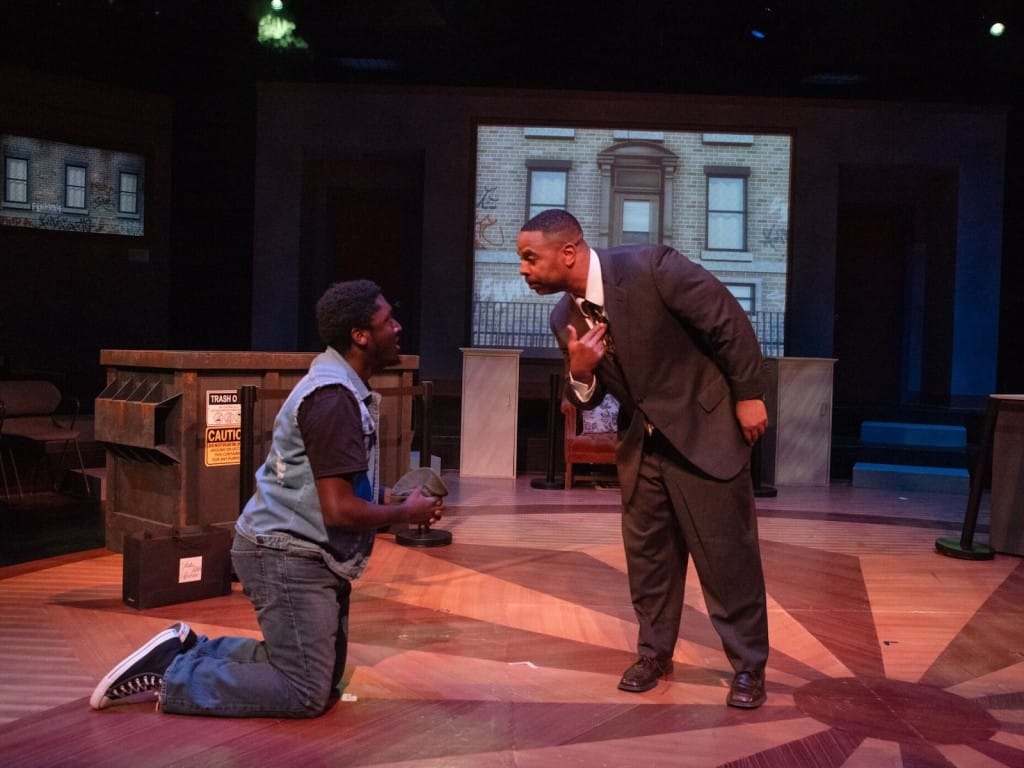
In another museum exhibit, “Symbiosis,” a man (Julian S. Newman) in a conservative suit, with conservative hair, speaking stiffly and “correct,” is tossing items representing his past into a dumpster, while his past self (Delanti Hall) grieves and wails.
“It doesn’t matter how many generations or centuries pass, we will always have a footprint. And we will always leave a mark. We are very relevant. We are needed, we are important, and we’re here.” — Gweneé Hart
It’s dated, with touchstones of the ’60s and ’70s being trashed (if updated, think of items of Blackness from the ’00s and 10s). His dashiki, his afro pick, his… Sly and the Family Stone record, his Stevie Wonder?!? Into the dumpster?!? Noooo!
In 2025, five years after the Black Lives Matter movement, there’s a backlash. People in power want to throw evidence of our diversity into a dumpster. Maybe we’ll get to keep the good times, great oldies, but we’ll be told to forget that it came from a people who went through a lot of bad history.
James Brown came out of that slave ship. We can’t forget that, can’t throw that in the dumpster.
“Never,” Laney says.
Hart says the show reminds her that, “It doesn’t matter how many generations or centuries pass, we will always have a footprint. And we will always leave a mark. We are very relevant. We are needed, we are important, and we’re here.”
“A love letter to Black people”
“The Colored Museum” shows the badness and resulting “madness,” but celebrates the complex joy that comes out of Black existence in this country.
“Well, I have to be clear and specific and say that for Black people, it is a celebration for us,” Civic Artistic Director and director of the show, Anthony J. Hamilton, says.
The series of scenes ends with “The Party.” Topsy (Hart) is a joyous woman who loves parties, loves to dance, loves the music. She brings out the ensemble and leads them to repeat, “There’s madness in me, and that madness sets me free.”
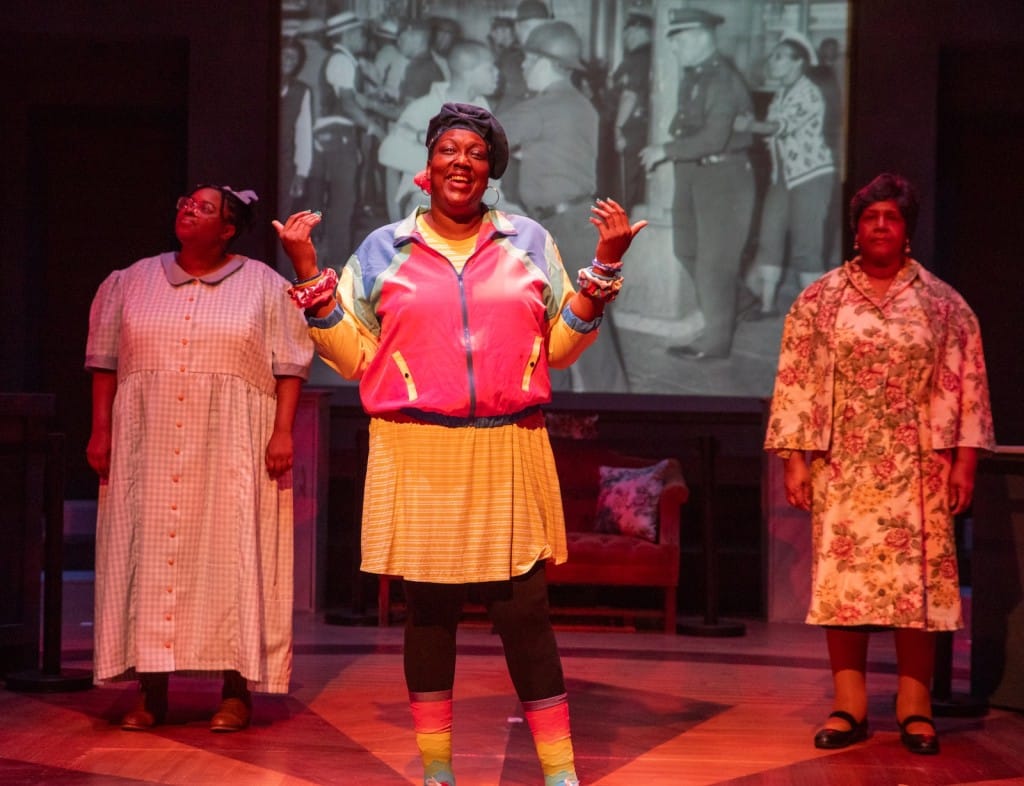
This means, Hamilton says, “We’ve gotta own even the tough parts of our history, of our existence. But there’s a freedom in that, and so it’s really a love letter to Black people.”
“Well, I have to be clear and specific and say that for Black people, it is a celebration for us.” — Anthony J. Hamilton, Civic Artistic Director and show director
He continues, “That doesn’t mean that someone else can’t come and enjoy it, and learn from it, and embrace it. But it is specific; it is specifically meant to uplift Black people. A celebration of all that we’ve come through, over the past few hundred years in this country.”
There were themes repeated through the sketches — people getting put in closets. People trying to be who they aren’t. The drums. Drums and call-and-response singing that Miss Pat said were forbidden on the slave ship because they tend to “lead to rebellion.”
There is also a mix of viewpoints within the script. Assimilate? Go along with mainstream culture? Be proud of who you are?
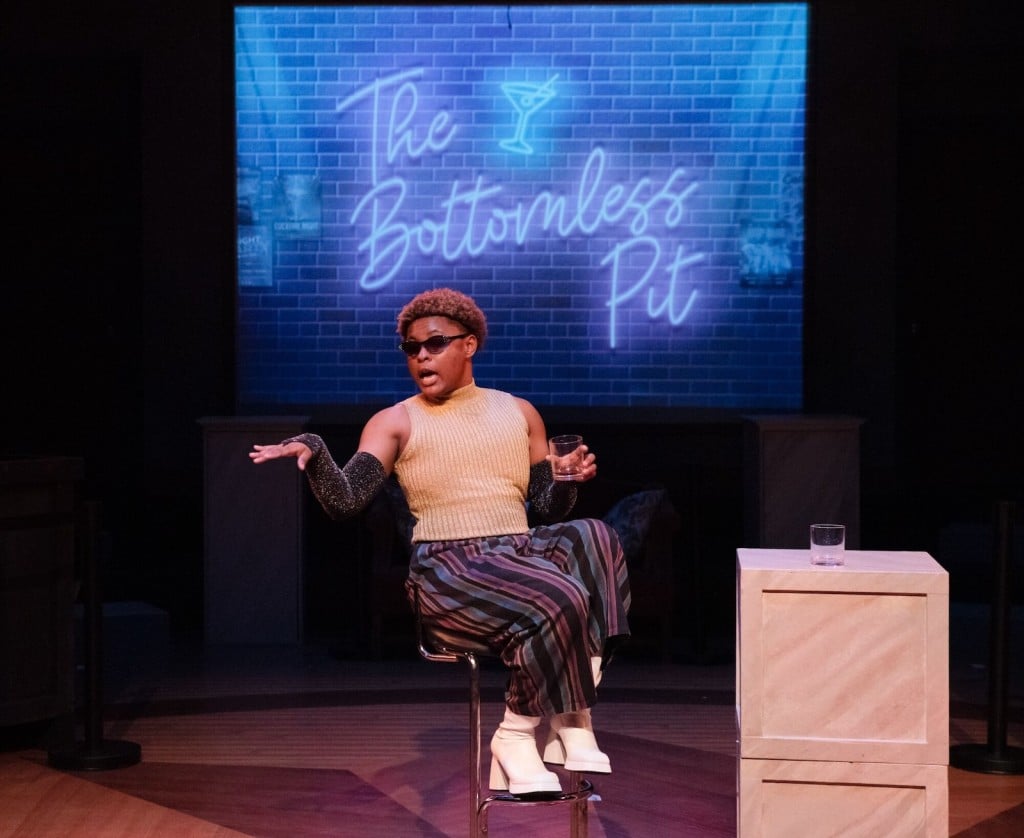
There were many varieties of pride, and doubt about pride:
Flamboyantly gay Miss Roj (Kayden Moore) downs cocktails and gets mean, talking about how it was Roj who ended up locking their father in a closet.
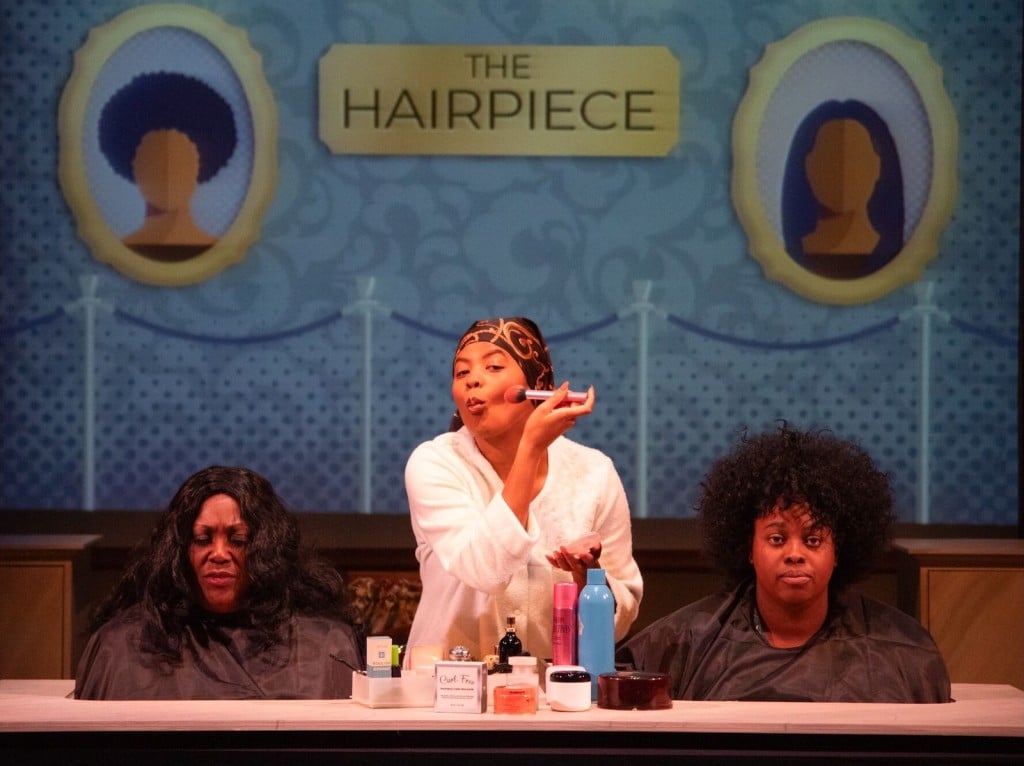
“The Hairpiece” had two wigs (Hart and Milan Levy) come to life. One kinky hair, one straight, they argue with each other and with the woman (Laney) who’ll choose which to wear for the evening.
The most bitingly, broadly comic was “The Last-Mama-On-The-Couch Play,” which heightened well-meaning stereotypes of mid-century plays like “A Raisin in the Sun.”
Hamilton loves “Raisin,” he says. But is it, first staged in 1960, the final word on Blackness in America?
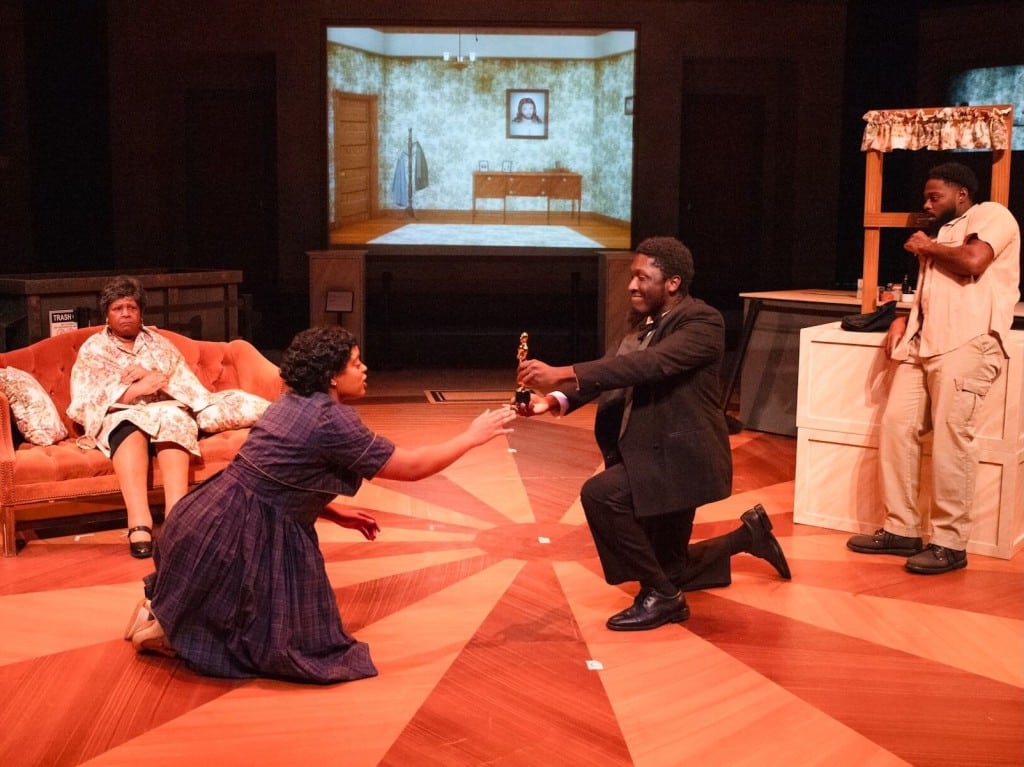
What “The Colored Museum” and playwright Wolf were saying, “even in the ’80s, and I want to say with this production now, is that Black people are not a monolith. We’re as varied and complex as any people. But I think often we’re viewed in one way. And what these exhibits represent is that there’s an array of what it means to be Black.”
Collaboration for diversity
Hamilton, as the Civic’s Artistic Director, says the collaboration with Face Off was all about getting Kalamazoo’s theatre scene a bit more diverse.
“Face Off is known for cutting-edge work, period. That’s why they exist. But the Civic is known for something different,” he says.
“So for my part in choosing this, I wanted to very consciously turn our subscribers on their head a little bit,” he says with a laugh. “This is not a season-subscriber type of ‘Camelot.'”
Hamilton had just directed “Camelot” in September. Kalamazoo’s community theatre started its 97th season with the beloved, familiar, and — be honest, very white — musical it’s staged three times before.
“And now for something completely different, right?”
Hamilton says, “For me, it was about allowing Face Off a place to do the work that they’ve been doing, and also to kind of diversify, that was the goal.”
Kalamazoo’s theater scene needed a bit more diversity. “Of course, there was the whole year of 2020 where, I mean, every theater in the nation dealt with that,” Hamilton says. “It was a reckoning nationwide. And the Civic was a part of that as well.”
“Empathy factor” in an anti-DEI era
As a professor at Western Michigan University’s theatre department, Hamilton has been teaching his students “The Colored Museum.” Though a work out of the 1980s, his students have “responded beautifully” to it.
“What I love about the young people in my group is that they’re hungry for knowledge that they don’t already possess,” he says. “They’re hungry for understanding…. They’re hungry for empathy. To see the other guy in life, what’s it like to walk in his shoes, so to speak. And so that’s why I do theater, and teach theater, because it’s promoting that empathy factor.”
This year, museums, schools, and theaters with any kind of connection to the federal government are feeling anti-DEI pressure.

“And we see attempts at erasing history, rewriting it. And so for me it’s not just a play that I’m reading with my class. It’s like, this is stuff that you must learn because it’s on the chopping block. Across schools, at every university level, high school level,” Hamilton says.
Honest depictions of the past are vital. “We can’t pretend like we just ended up here, right? Like some of the themes in this piece, that’s why I opened with that slideshow,” with historical images of people in shackles, people packed into slave ships. “Because this goes back to the drums.”
Talk Back with Marissa Harrington
Face Off is just about finished with its tenth season. Their last show for this year will be “Mahalia, A Gospel Musical,” Dec. 5-14.
“I’m happy to say we’re still standing,” Marissa Harrington, Artistic Director and company co-founder of Face Off, says as she joins me and Hamilton after the show.
(Face Off always holds discussions, Talk Backs, after its shows. But this was a dress rehearsal, so I had to seek out my own Talk Back.)
“I don’t think that we knew when we started this, what a feat it is, not only to start a regular theater company, but a Black theater company…. Of being women and doing this, being Black and doing this, being in a smaller city — and what does that mean? What does that look like?”
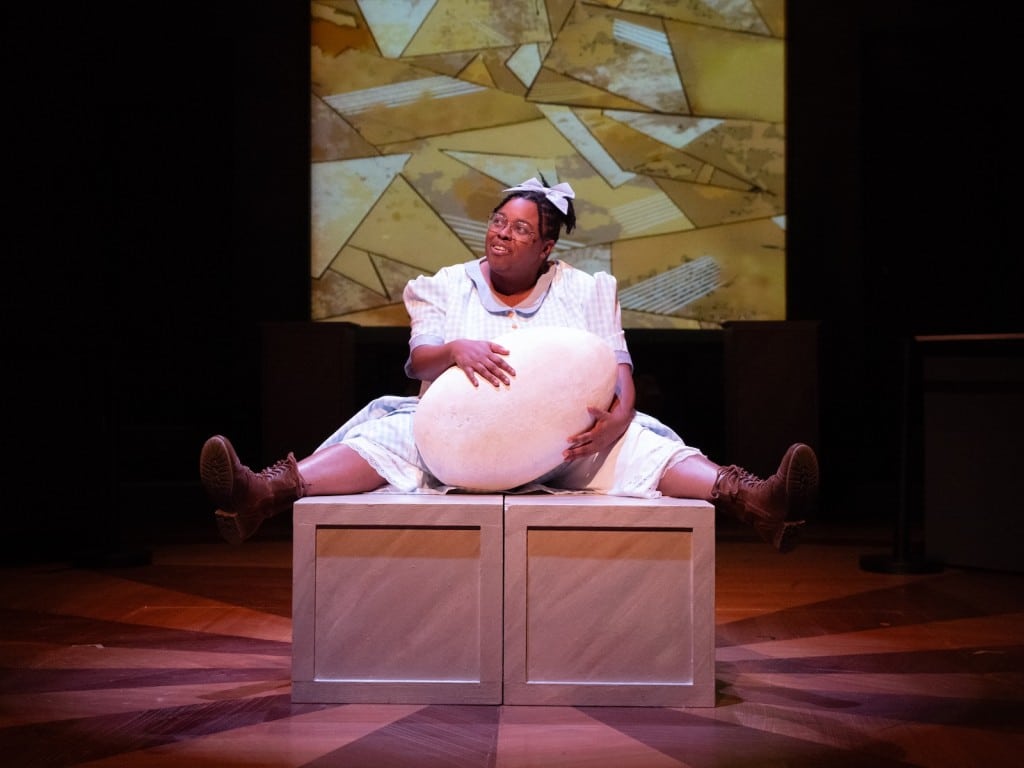
Face Off is art, but it’s also advocacy, Herrington says, “because we’ve had to advocate for ourselves for the past ten years. Still do, honestly,” she says. “Face Off has been the champions of DEI here in the theater scene before it was popular.”
During Black Lives Matter in 2020, “everyone shifted in that direction. And before 2020, we were five years old, that was not a priority, really,” she says.
“I don’t think that we knew when we started this, what a feat it is, not only to start a regular theater company, but a Black theater company…. Of being women and doing this, being Black and doing this, being in a smaller city. . .” — Marissa Harrington, Face Off Theatre Artistic Director
“And then it became one, and now it’s not again,” she says with a laugh. “I don’t feel like our existence is trendy, but it was for a few years.”
This was also a shift in Kalamazoo? The Black Lives Matter mural on Rose Street — is that fading?
“Oh, a thousand percent. I mean, I think that’s why Anthony and I wanted to do this show. A part of it was just like, ‘Hey-hey, this experience does not go away.’ “
Harrington continues, “I think the view that diversity is a bad thing, the view that equity is a bad thing, and inclusion is a bad thing — I think people have made it a polarizing issue or topic or theme, and it’s not. I’m saying that as someone who has a kid with special needs. We need diversity, we need equity, we need inclusion for everybody.”
“The Colored Museum” should be inclusive for all audiences — it’s certainly not a topic that is unfamiliar. We all live with the history and its results. “It’s joy, it’s madness, it’s challenging, it’s pain, it’s wonderful, it’s art. I mean, we’re multifaceted because we have to be,” Harrington says.
She adds, “I would put the question to people that come to see this show, why do you feel like it’s still relevant to do a piece like this? What are we seeing right now, and why do we think that we still need to do this? Do we think there is a time where we won’t need to?”
Author

Related Articles

Dimes lead to big change for underserved youth in the Battle Creek area
A Battle Creek mother and son turn bottle deposits into life-changing sports opportunities for low-income youth.

From blue light to green light: Former Kmart site set for affordable housing and childcare
Eight years after plans began, redevelopment of the former Kmart site in Battle Creek is moving forward with an 80-unit affordable and workforce housing development with an on-site childcare center, backed by tax credits, philanthropic support, and local partners.
Plunge, sweat, connect: House of Plunge brings contrast therapy to Benton Harbor
House of Plunge in Benton Harbor’s Arts District combines cold plunges, saunas, and recovery therapies as a one-stop shop for “feeling darn good.”