From Broadway to Kalamazoo: ‘Come From Away’ brings radical kindness — and sold-out shows — to Farmers Alley
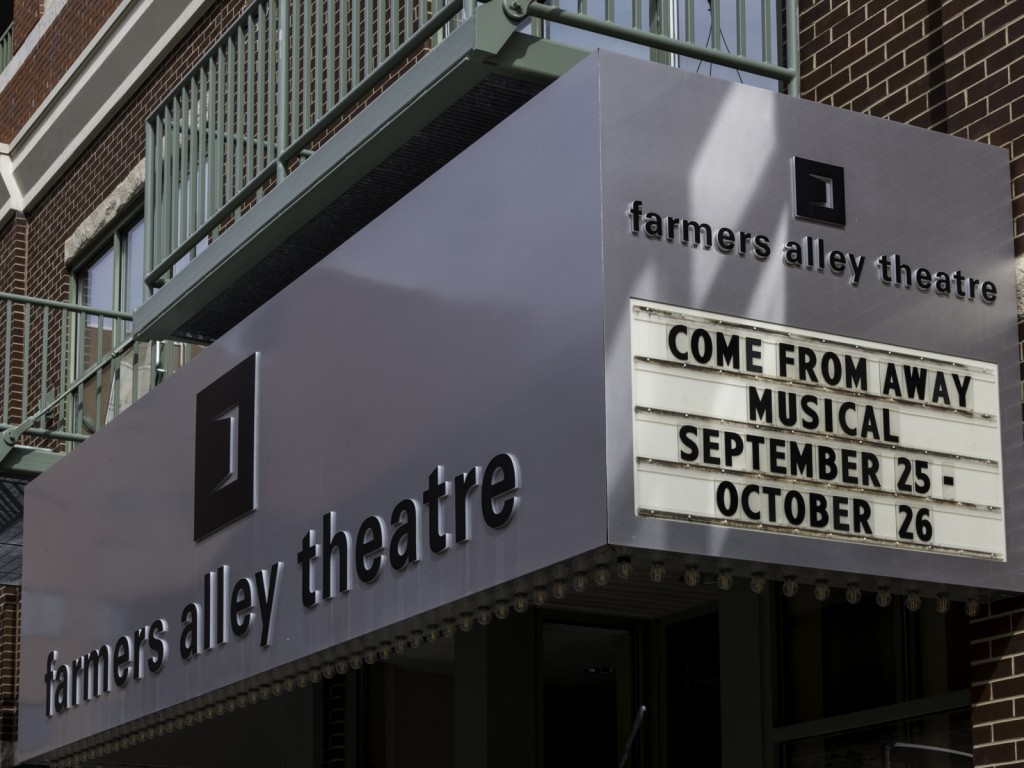
Farmers Alley Theatre’s record-breaking production of “Come From Away” is uniting Kalamazoo audiences through a powerful true story of compassion, community, and radical kindness in the face of crisis.
Editor’s Note: Welcome to Curtain Call — your front-row seat to the unique, lively, and memorable performances shaping Kalamazoo’s arts scene. Supported by the I.S. Gilmore Foundation, this series highlights the creativity and community that make each show something special.
KALAMAZOO, MI — Getting out of the house and sitting in a room packed with strangers went out of fashion around March of 2020.
Farmers Alley Theatre has been seeing this trend reversing in a big way in recent years, however.
The first weeks of their season 18 opener, “Come From Away,” were selling out before rehearsals started. They added dates, and those sold out.
A last additional performance for Oct. 26 went on sale Oct. 7, but Managing Artistic Director Jeremy Koch says that he expects it to be sold out by the time this story is published, and “folks could check on cancellations and/or come to the theatre to try to get rush seats.”
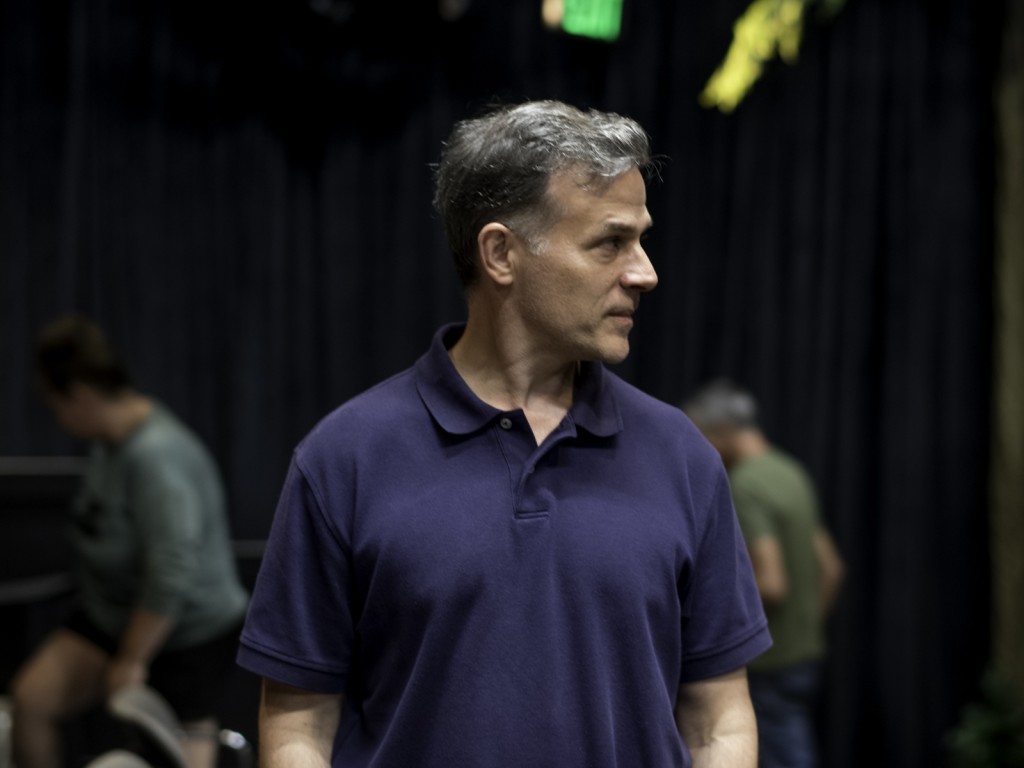
The early success isn’t surprising to Koch and Kathy Mulay, the show’s director.
They saw “Come From Away” on Broadway in 2017 and knew it was something they needed to stage at Farmers Alley.
Mulay describes the experience: “I was in a dark room with a bunch of people I didn’t know, and we were all collectively feeling the same thing. It was a unity that is unbelievable, with just a bunch of strangers.”
The stage musical was filmed in 2021 and is available on Apple TV. One can stay safe at home, away from the anxieties of the outside world, and experience a musical that is in part about the birth of our 21st-century anxieties.
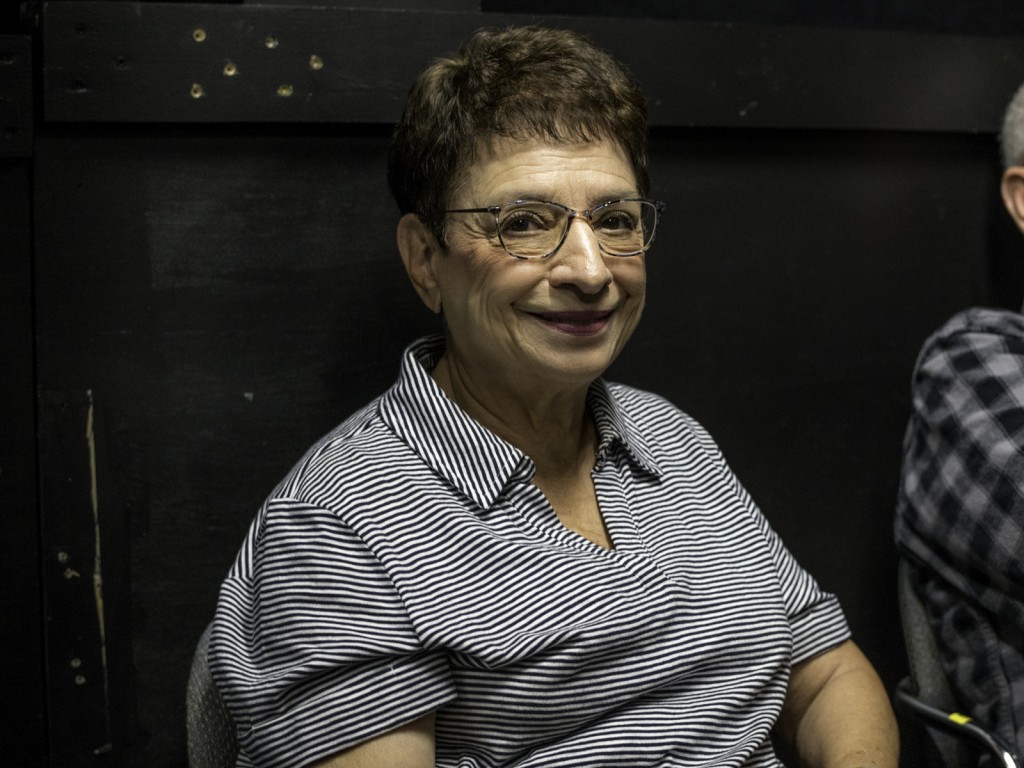
“You can watch it on TV,” Mulay says. “But it’s not the same experience. It’s still very powerful, but not like right there in front of you, with other breathing human beings next to you who are sharing the same emotions. There’s nothing like live performance.”
“Oh, Jay-sus!”
Maybe the show is selling like hotcakes covered with real Canadian maple syrup because of its theme: People of many nations, cultures, and religions, thrown together in a time of horrible crisis, and choosing to help one another.
“Come From Away” is the true story of the little town of Gander, on the eastern-most landmass of North America, the island of Newfoundland, and how residents took in 7,000 guests stranded at the airport on Sept. 11, 2001.
“We’re going to see a musical about 9/11?” my wife asked me when I told her.
In a previous life, I’ve dragged her to a lot of productions, back when I was an A&E writer for a local Kalamazoo newspaper. She’d enjoyed some shows. After other shows, I’d get an ominous “You owe me for this one” on the way back from the theatre. For reasons we won’t go into, she detests the classic musical, “A Chorus Line.” She’s not a theatre person.
But we’ve both always enjoyed Farmers Alley, the only professional theatre in the City of Kalamazoo.
The earliest show we could get seats for was on Oct. 5. The theatre was packed, and like Mulay said about her experience seeing it for her first time on Broadway, by the end of the show it was filled with a feeling of unity shared with a bunch of strangers — though there were people we recognized in the audience, so instead of strangers, make that unity shared with the Kalamazoo community.
“But it does feel extra relevant and timely. It’s radical kindness. It’s radical empathy. It’s welcoming strangers into your house because they have nowhere else to go. Basically, refugees. And doing it with happiness and love and, ‘what do you need?'” — Jeremy Koch, Managing Artistic Director of Farmers Alley Theatre
“Come From Away” is not about 9/11, but it is about a response to the horror of that day.
Tiny Gander has a huge airport, left over when trans-Atlantic flights had to stop there to refuel. Townsfolk had talked about tearing it down, but “just hadn’t got ’round to it.”
On a nice September morning, the town had gotten the message that all planes in the air, coming and going over the Atlantic, had to land. Immediately. American airspace had suddenly closed. Jetliners had been used as terrorist weapons in the US. Every jet is suspect.
“Oh, Jay-sus!” is the common Newfoundlander reaction to such news.
The news hits the town, Tim Hortons, and a haphazard emergency response forms to feed, house, and welcome 7,000 international travelers.
“Come From Away” is full of comedic regionalism — part of the uplifting climax involves music from an “ugly stick,” getting drunk on something strong and nasty, then being encouraged to kiss a cod.
The humor is intertwined with the heartwarming theme of people helping one another. Cultures meet and realize they can get along. A gay couple finds they’re welcome to be themselves at the local bar. A young New Yorker starts off fearing his wallet could be stolen, ends up with all the Irish whiskey he could drink from a mayor’s liquor cabinet.
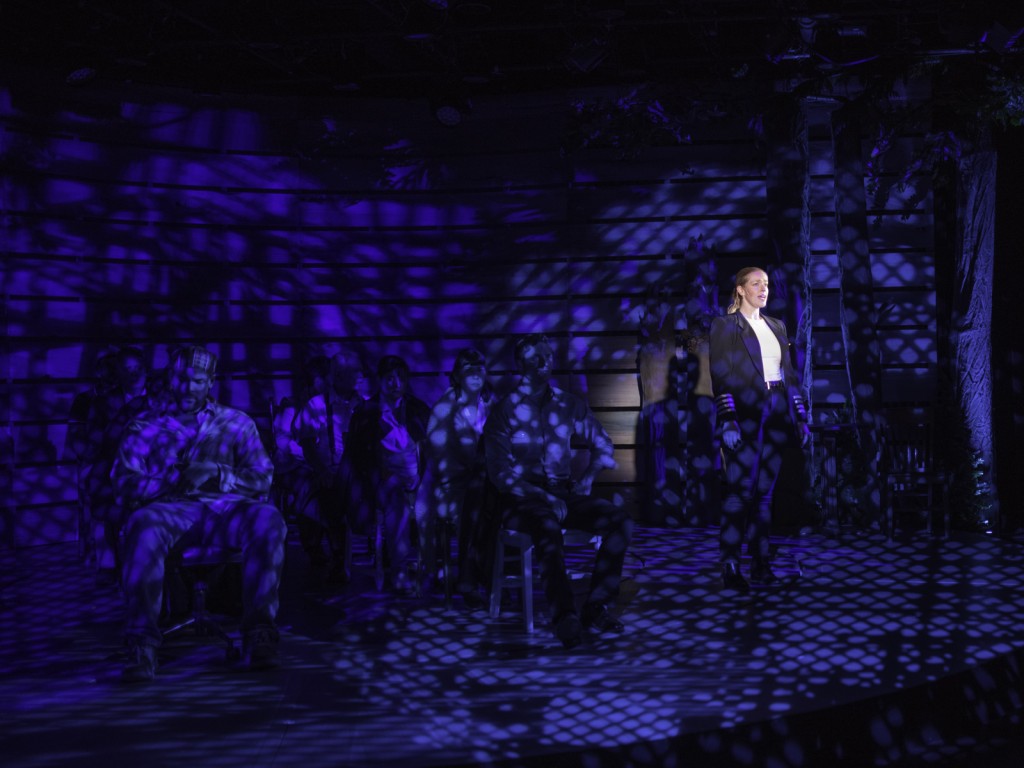
Yet it’s not drowning in syrup. The good, warm, and fuzzy is contrasted with the changing world during 9/11. Passengers are locked for hours in their planes, with rumors spreading and fear growing in the age before smartphones. A woman frantically calls for information about her missing firefighter son. An Egyptian man is suddenly treated with suspicion. A pilot sings a soaring song about her love of flight that ends with it all changed because planes can be used as “a bomb.”
“We just didn’t know that people were going to be so excited about it and clamoring for it that we were going to sell out the entire run prior to rehearsals even starting…. It’s now the fastest-selling show in Farmers Alley history.” — Jeremy Koch, Managing Artistic Director of Farmers Alley Theatre
12 actors, 60 characters, countless accents
It’s all very powerful because it happens mere feet from the audience.
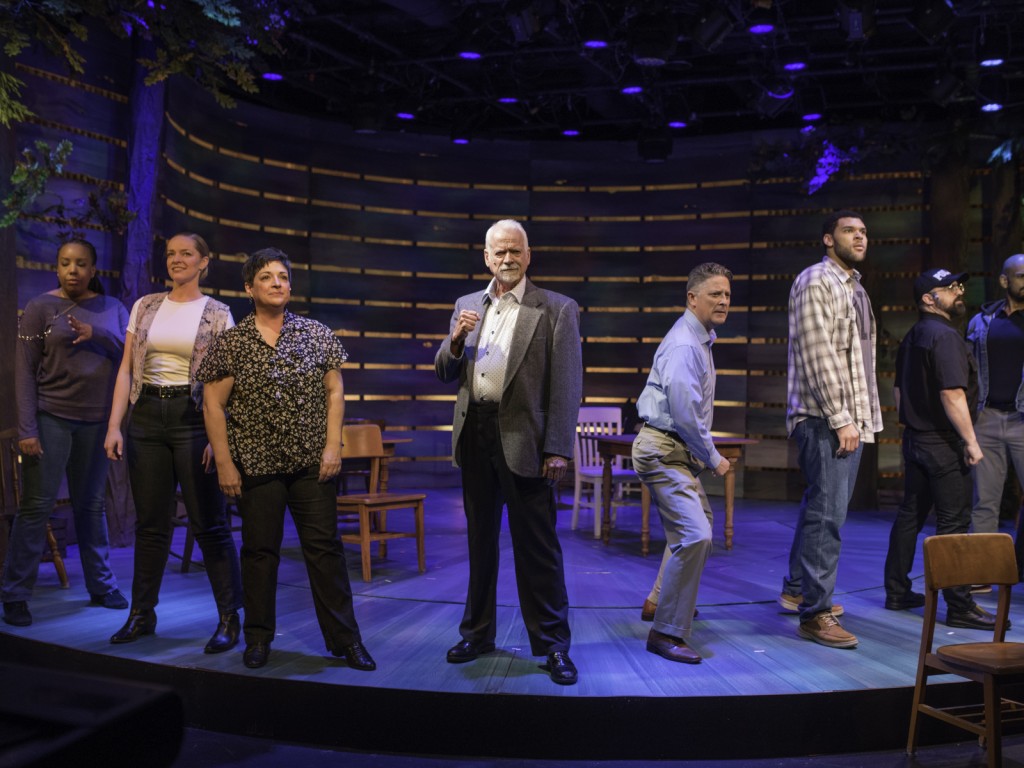
A big difference between Farmers Alley and Broadway, or most other theaters, is the size. As Koch says in an earlier interview, “When you’re at Farmers Alley, you get to see an actor, and see into their eyes and see into their soul. To be that close and be a part of the action, it’s exhilarating.”
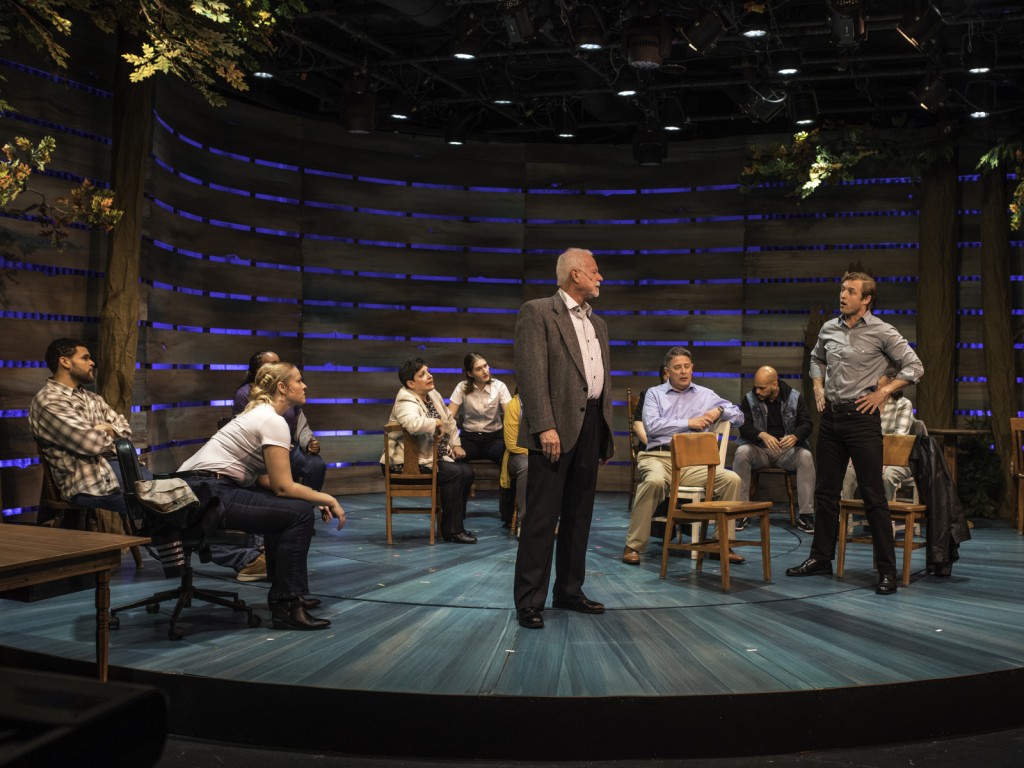
Even for the back rows, the stage is fairly close, with unobstructed views.
The front rows are close enough to the action that Executive Director Robert Weiner has to jokingly warn people up front “to keep your hands and legs inside the car at all times,” in his introduction. The ensemble cast will be moving non-stop with no intermission, on and off the stage.
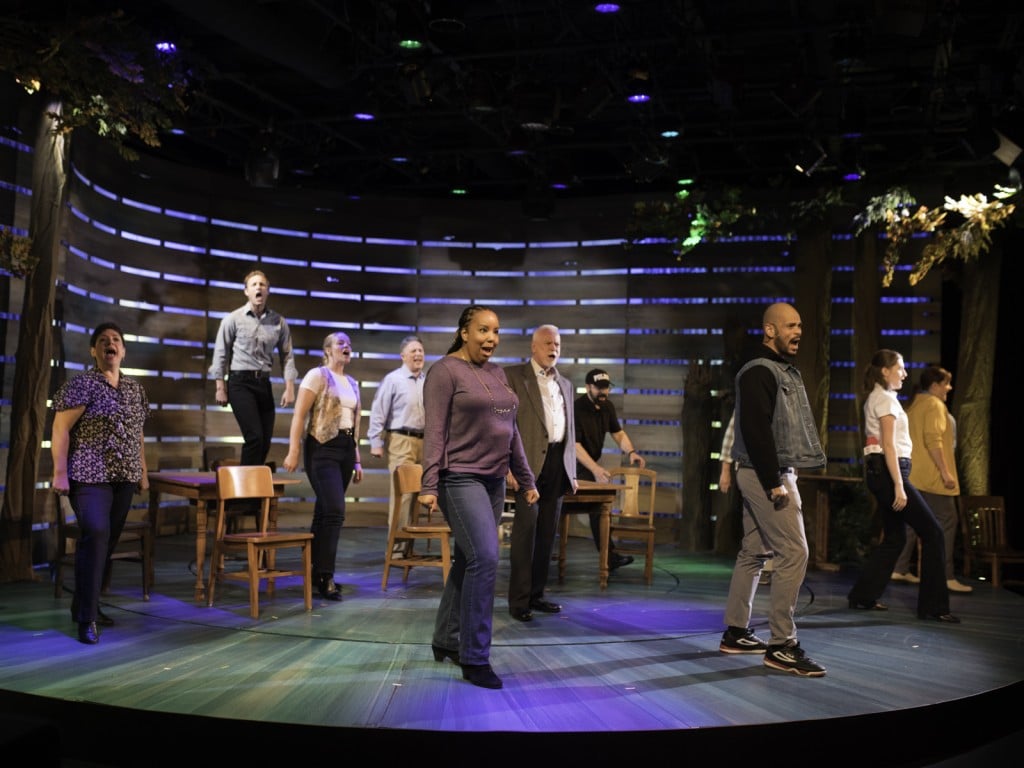
“Come From Away” is a complex production. Twelve actors play around 60 characters. They need to flip from unique Canadian accents to southern U.S. to African to British. Simple costume changes often happen on stage. Wood chairs and desks are flipped around to become jetliner cabins, buses, Tim Hortons, etc.

There’s a bit of dance choreography, but basic movement about the stage requires its own form of choreography.
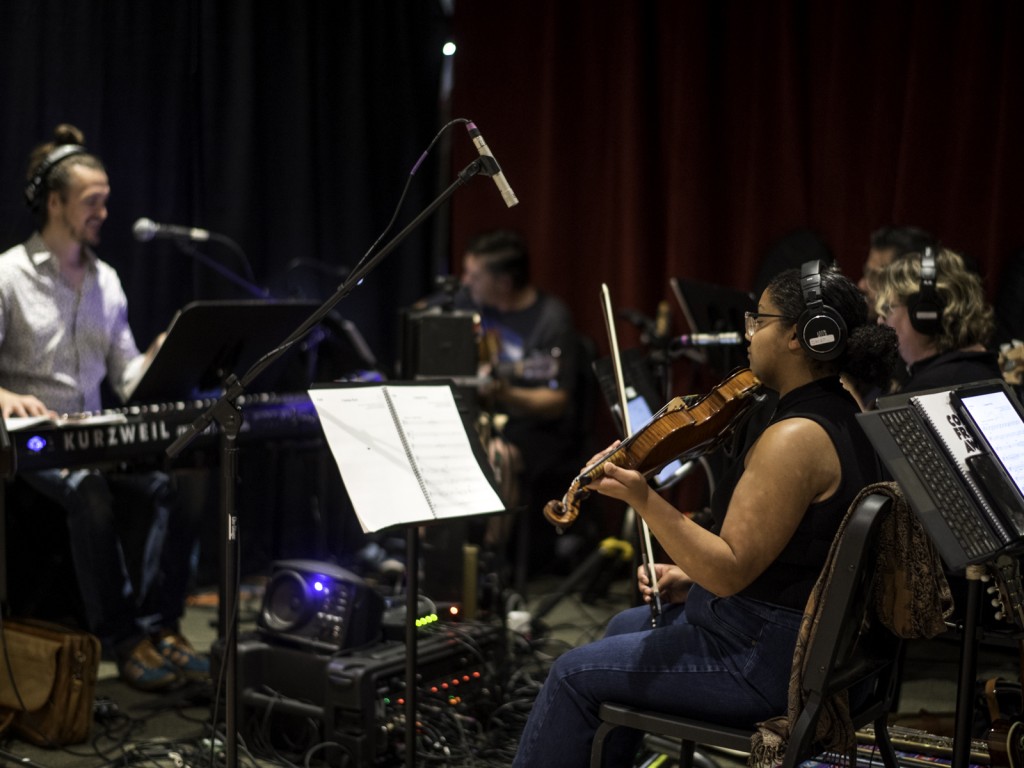
The seven-person pit orchestra is sequestered in another room, unobtrusively playing music that ranges from Newfoundland Celtic to sexy funk.
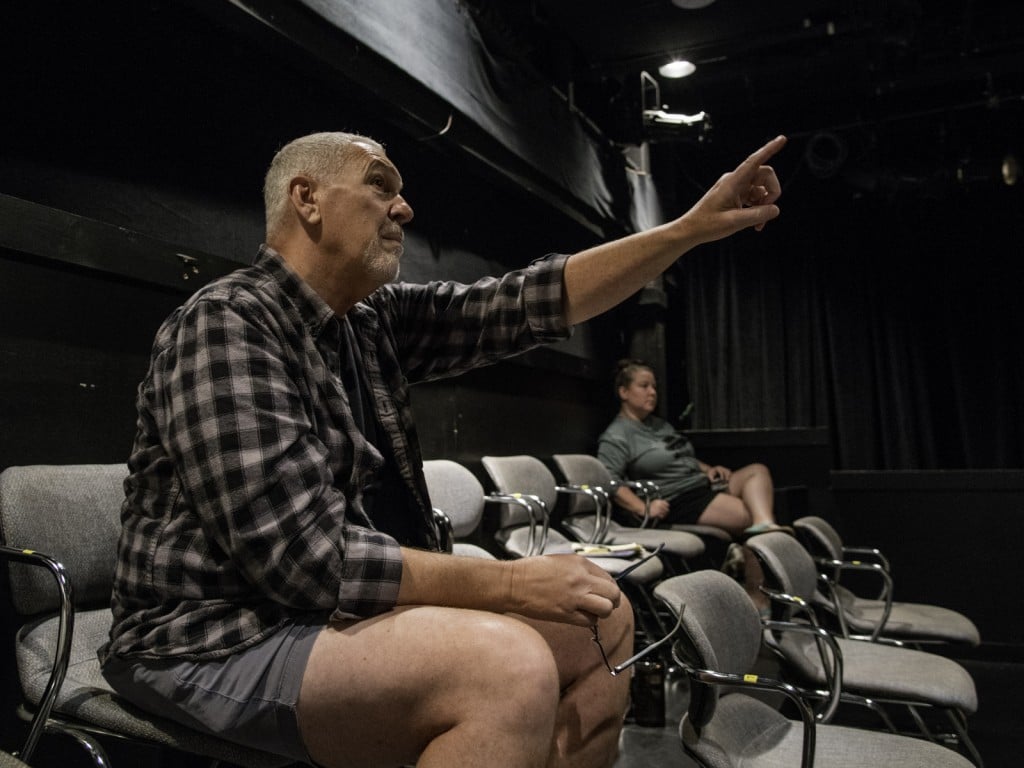
We got a look at the process when Farmers Alley invited me and our photographer, Fran Dwight, to witness the first run-through rehearsal in mid-September.
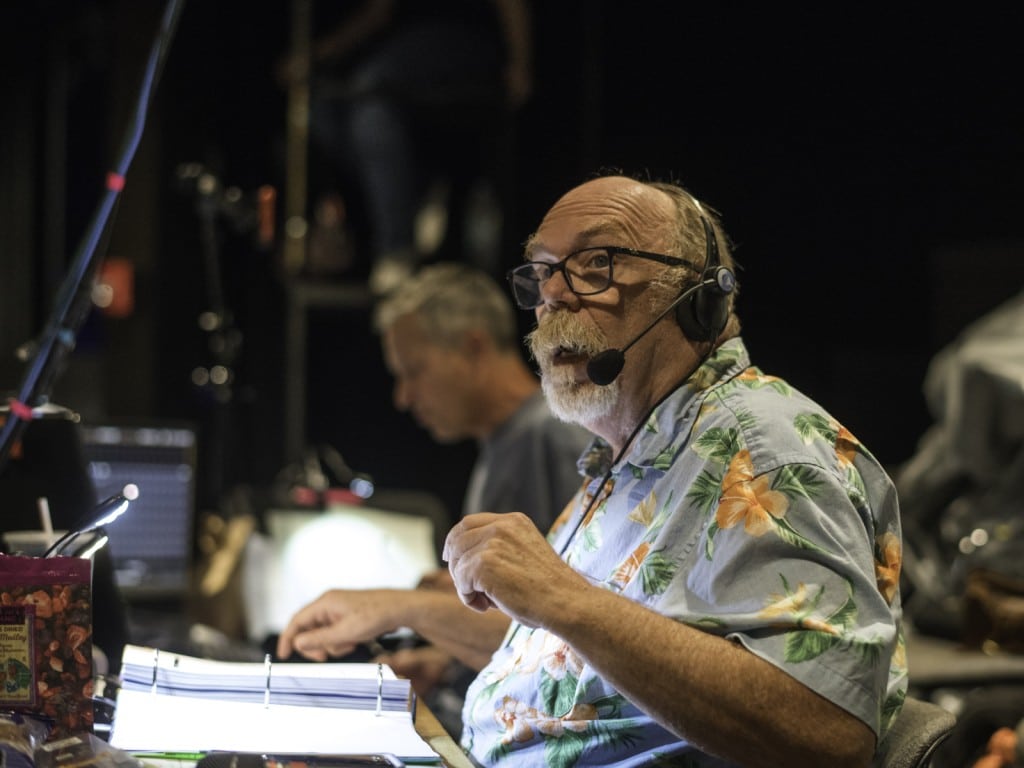
They were fixing sound glitches, dialing in the accents, but I got wrapped up in the story. I guess I gotta get tickets and see the actual performance, I realized, since stage manager Roger Burleigh was nearby, distracting with constant chatter, giving cues into his headset. He sounded like a Gander air traffic controller on that day, guiding in the flights.
“It’s not just Roger,” Koch tells me later, “we have two assistant stage managers.”
The team includes the orchestra, designers in lighting and costume, props, hair and wig, plus “the executive team, who’re marketing the show, answering phones,” Koch says. He estimates that musicals need around 50 people, and shows less complicated need around 40.
And the team needs to be paid. The theatre employs a lot of people, and actors are often Equity members. Each show is a financial investment, so if a show flops….
Mulay emits a stressed, “Mmm-hmm. Mmm-hmm,” when the subject of financial risk comes up.

Kalamazoo has a lot of community theater, university theater, staged by unpaid volunteers and students. So when Farmers Alley formed, they decided to be different, Koch and Mulay say.
“Not that it’s necessarily better or anything like that, but just a different model,” Koch says. “Could we pay our actors and our crew members and our spotlight operators, and just raise the bar a little bit?”
Mulay adds, “And we made the decision to become an equity house, which means that we have to employ members of the union, the Actors’ Equity Association. So that’s been exciting for us to bring in professional talent from across the nation and bring them into Kalamazoo.”
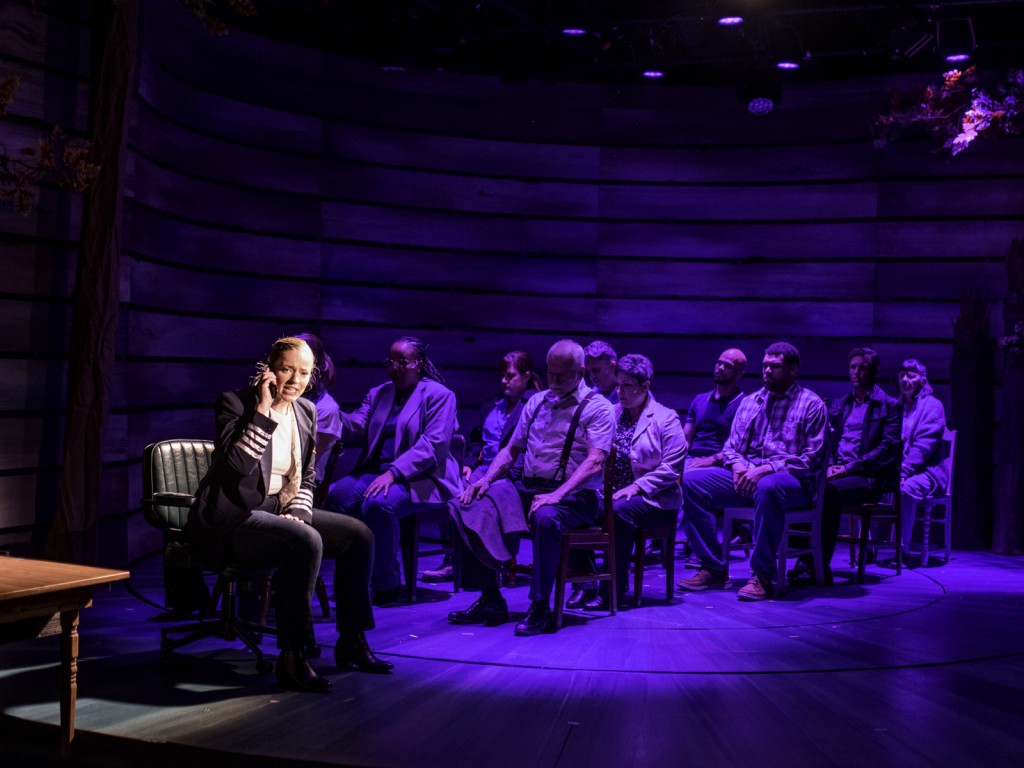
“Come From Away” cast includes familiar Kalamazoo faces, like Michael Morrison (awkward Britisher Nick) and Denene Mulay (Diane, Nick’s awkward love interest).
We also get visitors from away. Lottie Mae Prenevost, Ann Arbor/New York City actor, appears in her Kalamazoo debut as airline captain Beverley Bass (based on a pioneering woman pilot) as well as many other characters. From Chicago, Christian Andrews (Bob and others) is making his debut here.
New Jersey actor Melrose Johnson is a “Come From Away” veteran, having played the part of worried mother Hannah in the actual town of Gander last year.
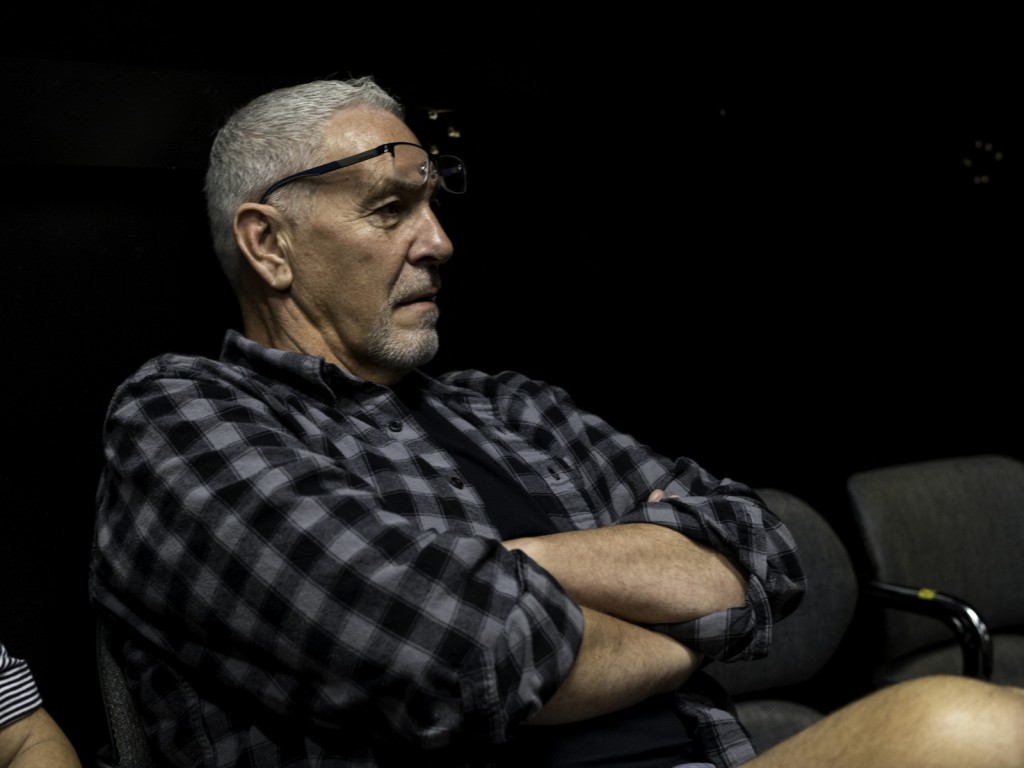
New York actor Christopher C. Minor (Egyptian man, Kevin J.) made his return to Kalamazoo (he was in Farmers Alley’s “Rent” a couple of seasons ago), as well as Curt Denham (Mayor).
Denham lives in California, Koch says, “he’s made so many friends here in Kalamazoo,” and has traveled here in other years just to catch productions.
The pandemic hit hard, from Broadway to Kalamazoo
“Come From Away” was a big hit with critics and audiences when it opened on Broadway in early 2017. The pandemic shut it down in March 2020. It reopened the next year, but closed in October of 2022. Both Mulay and Koch feel it had too short a run.
For Farmers Alley, “Those first couple of years after COVID — it was rough,” Mulay says.
“We’re finally at a point where people are not afraid to gather… until some other creepy thing comes along,” she says with a laugh.
“We had our most successful season last year, probably of all time,” Koch says. Known titles like “Jersey Boys,” “Beautiful: The Carol King Musical,” “Dial M for Murder,” sold out.
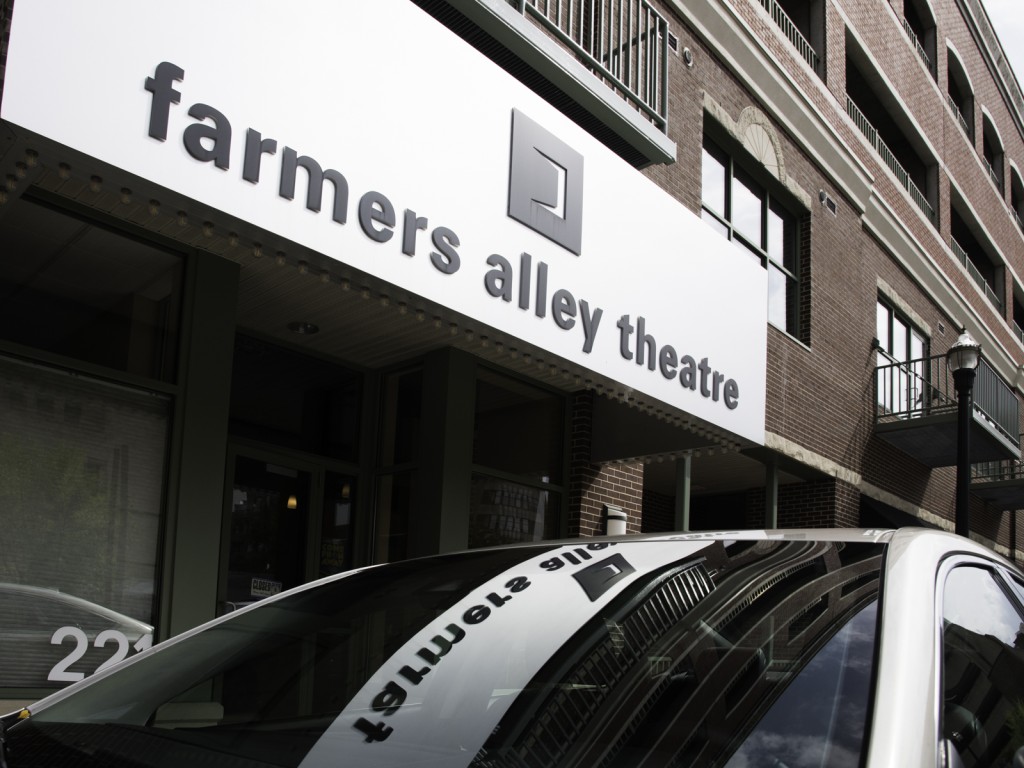
But they also threw in unfamiliar and new shows like last season’s “A Jukebox for the Algonquin” and “Ride the Cyclone.”
“We weren’t quite sure that audiences would flock to new-ish titles, but they also both sold out,” Koch says.
“Those two new shows in particular, I mean, the excitement,” Mulay says. “People have said this, ‘We know, no matter what we go to see, we may not like that show as well as another one, as far as the genre or the content. But we know when we go to Farmers Alley, we’re going to see quality.'”
Koch often hears comments like, “I dragged my husband here; he doesn’t like theater, but boy, he loved this production.”
For this season, the theatre again has a mix of well-known, new, and not-so-well-known titles.
People should know the Stephen Sondheim musical “Into the Woods,” and the Stephen King story about a writer and his biggest fan, “Misery.”
But “nobody in the state knows,” Koch says, “Goodnight Oscar,” about pianist Oscar Levant’s 1958 appearance on Jack Paar (a collaboration with the Gilmore Piano Festival).
For the holidays, Farmers Alley will have “A Very Kalamazoo Christmas” by (note the pen-name) “Robert Hawlmark” — it’ll be a Hallmark Christmas movie parody in a Kalamazoo setting.

“Bringing in new works is really fun,” Mulay says. “It’s really wonderful to direct something that nobody has seen.”
People have seen “Dear Evan Hansen,” the winner of six Tony Awards, and its tour did play at Miller Auditorium last November, but it’s not well known to audiences out of the theatre world loop. It will close out their season in July. Like “Come From Away,” it should be familiar to Broadway fans, but new to a general audience.
A touring “Come From Away” played at Miller Auditorium in January 2024, but Farmers Alley is the first local theatre to put it on. So they knew it would be a fresh title to many, Koch says.
“We just didn’t know that people were going to be so excited about it and clamoring for it that we were going to sell out the entire run prior to rehearsals even starting…. It’s now the fastest-selling show in Farmers Alley history.”
Mulay and Koch have been eager to stage “Come From Away” since 2017, but is there any reason they got it for 2025? This story of Canadians helping their neighbor, of a horrible event uniting a diverse bunch of people, does it resonate a bit more now than in pre-pandemic times?
“We’ve been trying to get it, and boy, the minute we could, we grabbed it,” Mulay says.
“But it does feel extra relevant and timely,” Koch says. “It’s radical kindness. It’s radical empathy. It’s welcoming strangers into your house because they have nowhere else to go. Basically, refugees. And doing it with happiness and love and, ‘what do you need?'”
“It could change lives,” he says.
“I felt when I saw it in New York, I walked out a changed person,” Mulay says. “That’s the beauty of theatre…. It broadens our world so much.”
Author

Related Articles

Readers and bakers eat their words at Kalamazoo’s 19th Annual Edible Book Festival
See who took the cake at this year’s Kalamazoo Book Arts’ Edible Book Festival.
Pulp & Press Lit Arts Fest brings world-class authors to rural Southwest Michigan
A new literary festival is coming to Vicksburg this spring, but the idea behind it reaches further than just arts programming.

An artist’s love song: David Small gives ‘Prufrock’ new life
Acclaimed Southwest Michigan artist David Small reimagines “The Love Song of J. Alfred Prufrock” through a limited-edition collaboration with Kalamazoo Book Arts Center.