
Formerly unhoused, Bill Brown now builds trust and hope with Kalamazoo’s unhoused
For Bill Brown, it’s important to be out there first thing in the morning when the homeless wake up cold and hungry, wondering what they are going to do. He offers hand warmers, gloves, hats, and food bags. He gives them hope.
A Way Home — Housing Solutions: This story is part of Southwest Michigan Second Wave’s series on solutions to homelessness and ways to increase affordable housing. It is made possible by a coalition of funders, including the City of Kalamazoo, Kalamazoo County, the ENNA Foundation, and Kalamazoo County Land Bank.
How do you trust someone?
Are they providing reasons to earn your trust?
Do you trust them enough to help them?
If you need help, are you trusting enough to receive it?
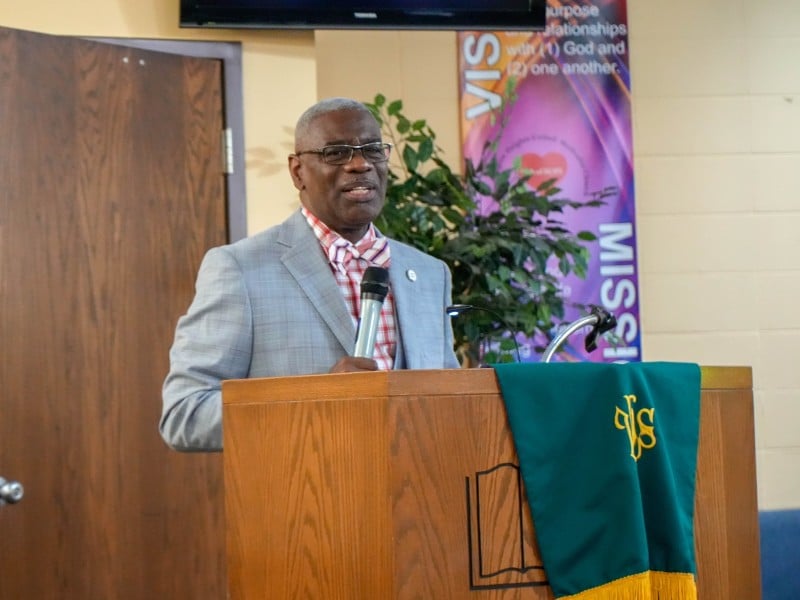
Bill Brown spent 28 years of his adult life in prison. He’s now helping unhoused people as part of Integrated Services of Kalamazoo’s Street Outreach team.
To help people onto a path towards rebuilding their lives, a relationship of trust needs to be built.
Brown says, “One way is by meeting with them out there, where they are at that moment. Being out there first thing in the morning when they wake up cold and hungry, wondering what to do. And being there with encouraging words, as well as hand warmers, gloves, hats, and food bags. Giving hope.”
He hopes to give them a “different perspective” with his actions. Once he has their trust, Brown tells them, “Who you are today don’t dictate who you’re going to be.”
Who Brown was, and is
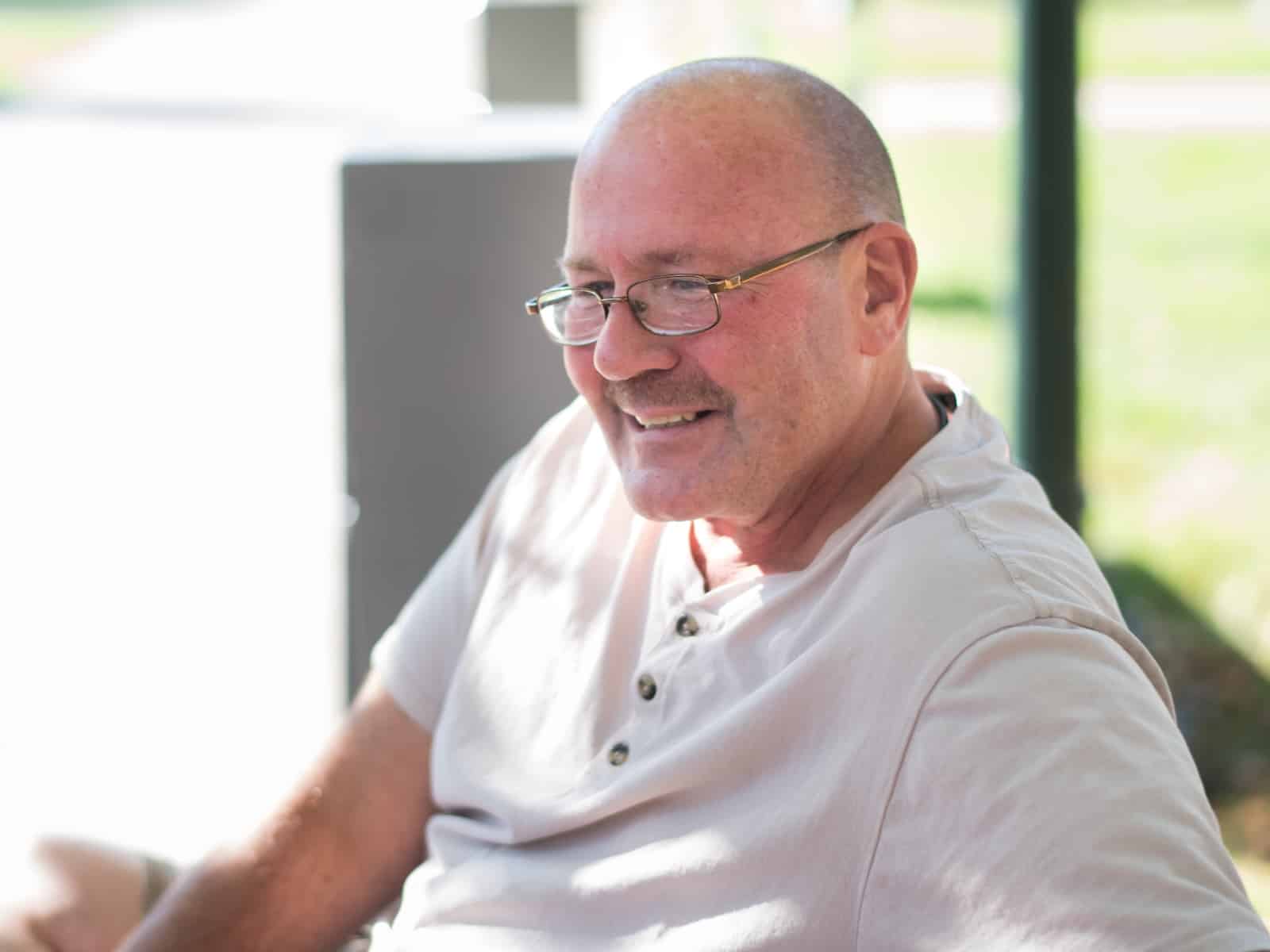
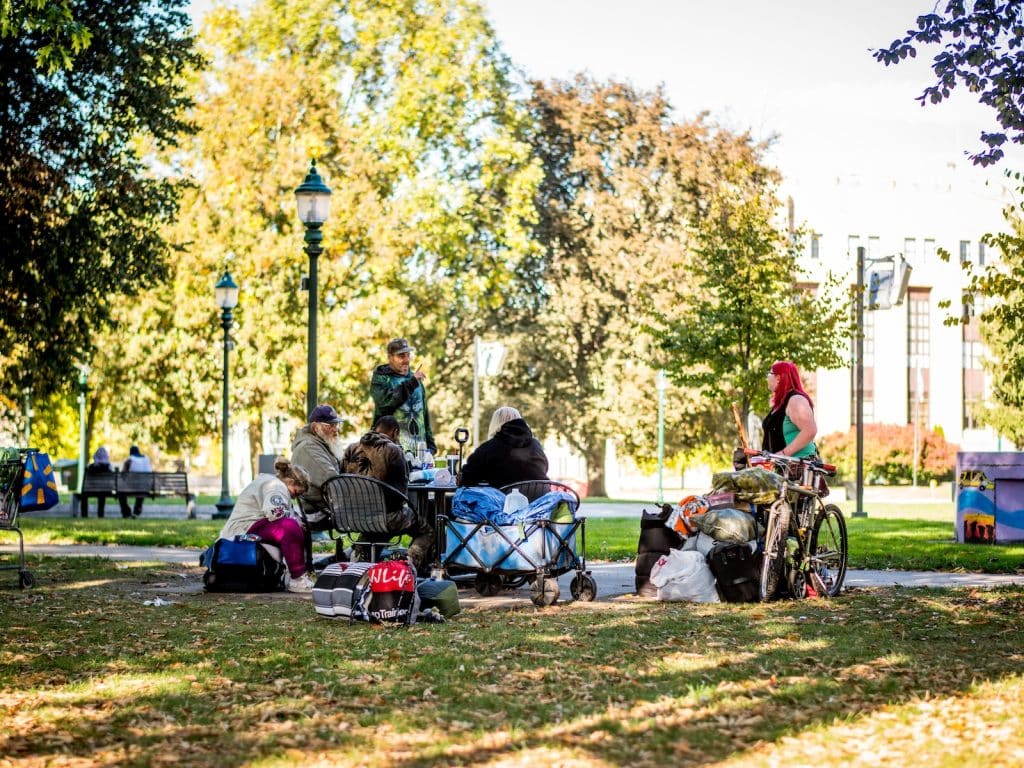
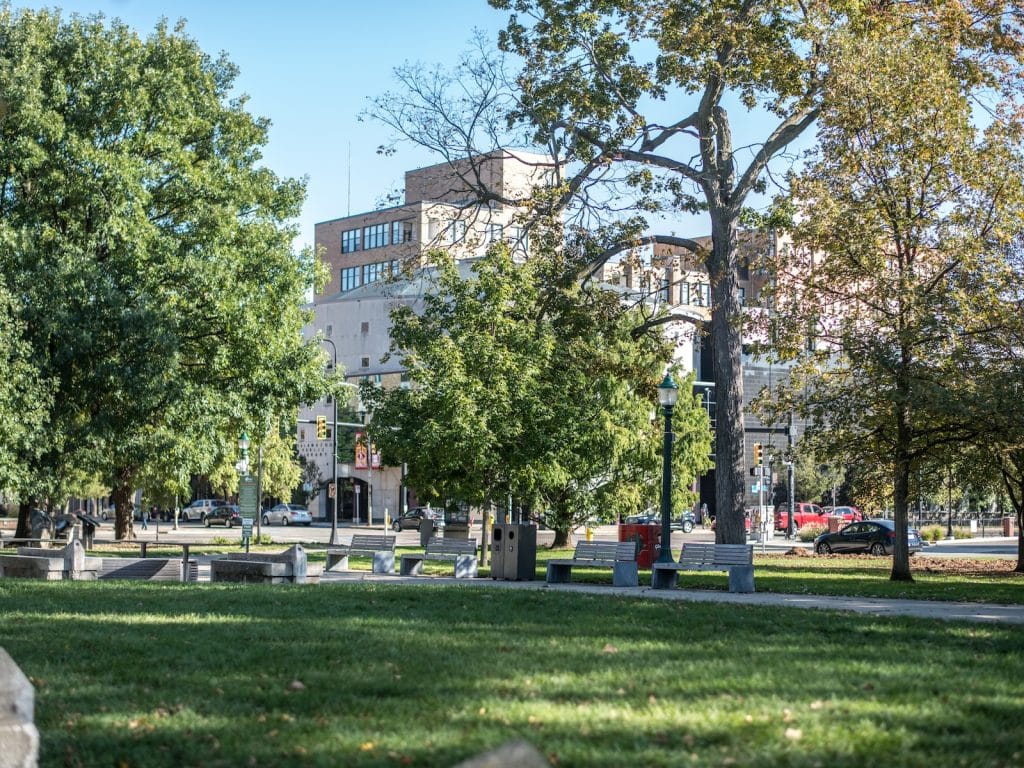
We met Brown at Bronson Park on a warm October day.
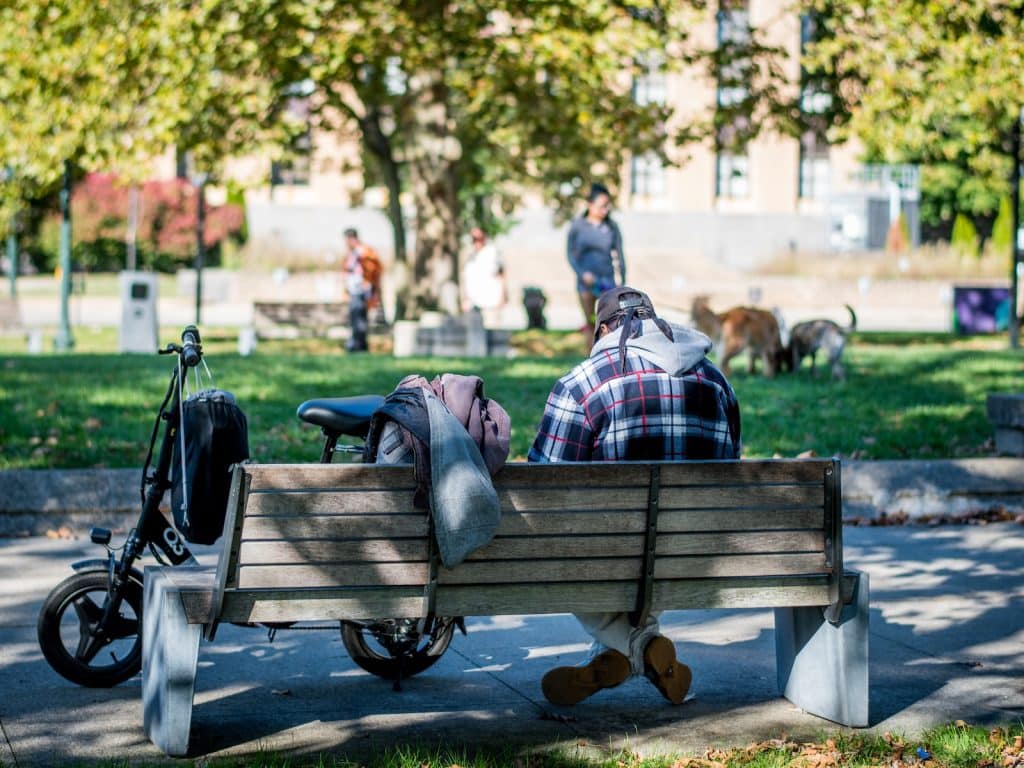
There were scattered groups of people in the park, enjoying the sun. Some looked like they were probably unhoused, some not so much.
“There’s at least 30,” Brown says, surveying the gatherings. He knows “quite a few of them. Like the guy that’s over there, he’s housed. He still comes down here and hangs out with his friends. But he is housed, him and his daughter.”
Brown had been chatting with a group at the other end of the park when we arrived. Some people react negatively when they encounter people living on the street, but Brown finds it easy to talk with them. “I’ve never had any trouble ever, whenever I’m downtown — day, night, weekends,” he says.
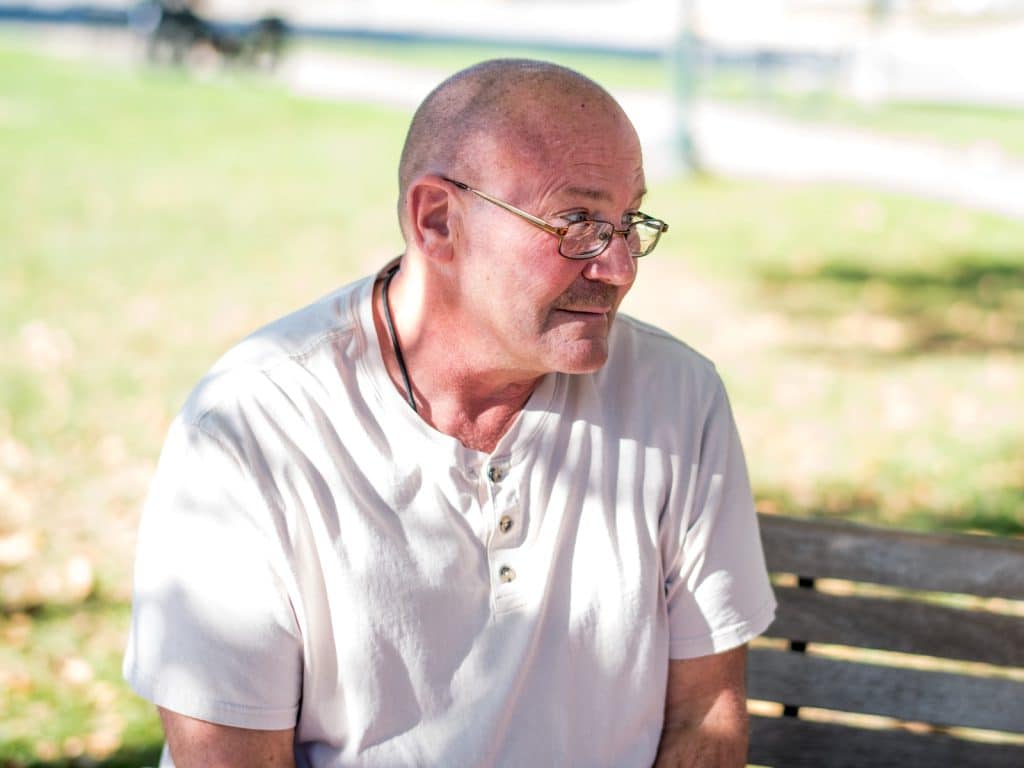
“I can relate to people’s story, because their story is kind of in my story.”
Brown, 58, was born in Battle Creek. He’s been homeless and was a heavy drug user. He ended up in prison through his efforts “to support my drug habit. I’ve stolen to support my drug habit…. Cocaine and heroin.”
He points out that he’s got a “prison GED…. Learned plumbing in prison, so that’s my backup trade,” he says with a laugh.
Now has a career and owns his home in the Edison neighborhood — in fact, he bought a second house in Galesburg, fixed it up, and sold it recently.
When he got out of prison at the end of 2015, he decided he didn’t want to go back and knew he had to change his ways.
“That’s what I tell people every day. Just because you’re here today doesn’t mean that’s where you’re going to be tomorrow. Every day when you wake up, you’ve got the ability to make better decisions and do different things every day.”
Earning trust
Brown didn’t exactly pull himself up by his bootstraps. He had help.
When he got out in 2015, he decided he couldn’t go back to Battle Creek again. He’d been on the outside before, and “I always went back to the same people, the same stuff.” And he always ended up incarcerated, again.
He went to Kalamazoo. He had no place to stay here, but after about a month of being free again, he landed at Open Doors.

Stephanie Hoffman was Open Doors’ Executive Director at the time. Now she’s Program Director at Kalamazoo Crisis Coalition and a Kalamazoo City commissioner.
She remembers meeting Brown. “He just came across as so real, authentic,” Hoffman says.
“He was at a place in his life, where he said, ‘Stephanie, I don’t have anything else to lose. I have spent more than half my life in prison, and I’m done. And I just need a chance,'” she says Brown told her. Brown remembers the meeting as more stressful than when he was in front of his parole board. Hoffman has a way of showing she’s a no-nonsense kind of person.
Open Doors provides housing and a pathway to developing a life that includes staying housed. But there are rules, he says.
“You’ve got to be held accountable for everything, or you’re out of here,” Brown says. One has to save money, learn to budget, “you’ve got to work, you’ve got to drop clean (pass drug tests).”
Hoffman doesn’t come across as a gullible person, nor a pushover. If someone is fresh out of prison, claiming they are done with drugs and crime, she isn’t about to just put them into one of their “safe and sober” houses.
“Billy, I hear you. I’m going to have to pray about it,” Hoffman says she told Brown.
She called him the next day, offering a place to stay.
“It’s just something that was so raw and authentic about him that I knew — like, God allows your path to cross with certain human beings, and you just know. They don’t need help; all they need is support. They’ve learned the life lessons, and Billy had learned the life lessons,” she says.
All she and Open Doors did was give him a place to stay, and the ability to “create his own path,” Hoffman says. That initial trust paid off in seeing that “here he is today giving back, in so many ways…. He always gave back, and he continues to do that, even if it’s to a detriment to himself.”
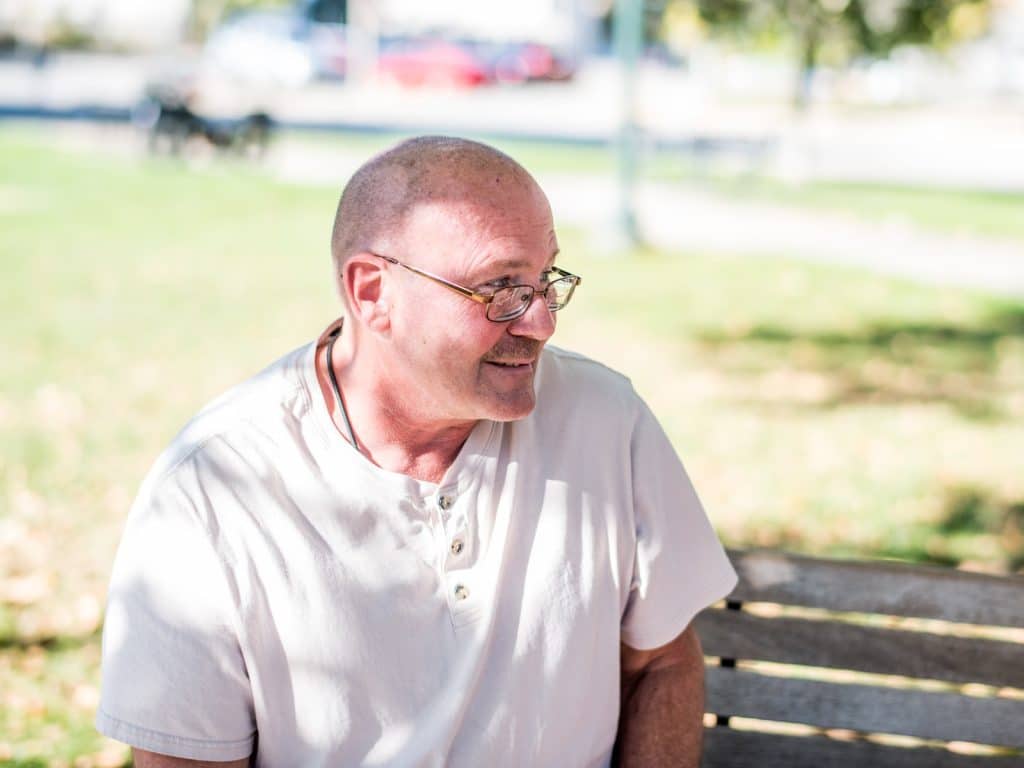
Brown says that Hoffman was and continues to be a mentor to him. But she tends to be blunt, he’s found. “She’s hurt my feelings a couple of times,” he says with a laugh.
He tells a story of his early days with Open Doors. His son also had drug problems, and Brown promised him he’d arrange a meeting with his son’s daughter, who hadn’t heard from him.
His son promised that the house he was staying at was clean, no drugs. He arrived to see his son, but the house was not clean.
Next door to it was an Open Doors house. “The maintenance guy took a picture of me going into a meth house.”
He met with Hoffman the next day. She gave him a sharp, accusatory, “What’s up?!?”
Brown replied with a friendly, “Hey, give me a hug!”
She said, “You ain’t getting no hug! What are you doing!?”
“What are you talking about?”
She told him he was caught going into a drug house.
“I’ll go drop (do a drug test) right now!” he told her.
“She was like, ‘Well, smart guy, I got one right here!'”
The test proved he was clean. She called him with a, “Billy, I’m sorry.”
He forgave her. “She’s been there for me.”
After getting help, he became a helper
Brown got a position as an Open Doors house manager, with free rent.
Brown also credits his church, Bethany Reformed, for helping him keep on track. They gave character referrals to help Brown get his first job, delivering food for Kalamazoo Loaves and Fishes.
He says he has Jennifer Johnson, Executive Director of Loaves and Fishes, on his long list of supporters to thank.
He started at their warehouse, then became a driver. “Then they knew my story, and they had a little plan for me, and they helped me up.” Brown worked his way up to being a delivery coordinator, getting food out to where the people were.
If it weren’t for the helpers, “I probably wouldn’t have this job (at ISK). Because I don’t have no education. All I got is a prison GED.”
Brown speaks plainly and doesn’t seem to be the kind of guy to hype himself. Hoffman, however, says that “he helped build Loaves and Fishes to what it is today…. That was his idea to start delivering meals…. to start visiting the encampments and serving. That was all Billy.”
Sometimes “we forget who we are when we come to this Earth,” she says. “Sometimes we have to get laid down, and sometimes we have to lay down in prison” for many years, to find a “purpose for this lifetime.”
Working with Brown, when he was fresh from a long incarceration, took trust on both sides, Hoffman says.
She told him, “I’m not perfect…. I don’t have the answers for you. I can’t tell you what to do, but you tell me what you want to do, I can support you and we can work it out and get a plan together.”
Brown doesn’t hype himself. He just makes it clear with his actions that helping unhoused people is his life’s work.
‘Now it’s time to work!’
Two years ago, he joined ISK’s street outreach team.
“I’ve housed, or helped house, like 25, 30 people so far,” Brown says.
Getting an unhoused person off the street or out of the tent is a long process. First, he has to earn the trust of someone in a situation where the world seems untrustworthy.
“They don’t trust a lot of people, because a lot of people will say anything. But when you show them that you’re for real, it makes a difference.”
He knows what it’s like “to be hungry and strung out on drugs.” He also knows one can climb out of the hole. “You just got to start making better decisions, you know,” he says with a laugh. “And my problem was, of course, drugs. That’s what all my bad decisions were based on.”
Then again, many on the street face a variety of issues, not always drugs or mental health problems.
Brown tells of a 70-year-old senior out of Battle Creek who recently lost her apartment due to a fire. She and her dog are living in her car.
“But, you know, if you see her, you just think she’s another unhoused person,” he says. “A lot of these people would probably not be out here if they had another choice.”
When we met in the park, it was sunny and 70 degrees. But Brown knows that another winter is coming.
“We’ve been out here telling people that for the last three, four months. ‘Well, it’s going to come quick. We can’t be able to jump and help you.'”
It’s not a fast or easy process to get someone into a shelter or recovery home. One of the major challenges in his work is getting ID for people on the street.
“We’ve got to prove who you are before we can start doing anything.” It can take months “to get your vital documents,” he says.
One of his first questions is, “Where are you from? ‘Oh, Backwater, Tennessee.’ Ok — how do you get a birth certificate from there?” Brown says he’s developed a complex process for getting ID verification from emergency rooms, where many unhoused people find health care.
It’s a struggle, but Brown has managed to get people housed. Then they can find some stability to take the next step.
He points to ISK’s Oakland House as an example. “They just need a place to take a shower and sleep, and then get on their feet. When you’re out here trying to stay warm, you got nowhere to park your car where you’re not going to get arrested, no place to get cleaned up before you go to work, that makes it hard to get on your feet.”
Brown understands the frustration coming from Kalamazooans, from housing advocates to people who’re uncomfortable at the sight of people on the street, that not enough is being done to solve homelessness.
Brown talks about seeing the political pressure aimed at his “boss,” David Anderson, ISK Director of Facilities and Kalamazoo’s mayor, who’s up for reelection.
Brown understands the demand that homelessness be fixed, now. “It might not be as fast as people want it to be done, but there’s definitely progress being made,” he says.
What Brown would like to see is more transitional housing, more rehab services, and more shelters that provide help with rules like Open Doors, where “you’ve got to be held accountable for everything, or you’re out of there.”
It’s how he became sober, saved money, got his own place, and a job. “I preach heavy on Open Doors because, like I said, I probably wouldn’t be here if it wasn’t for Open Doors.”
He’d also like people to know that “just because they’re out here doesn’t mean they’re all drug addicts and thieves. There’s a lot of good people out here. There is. I’d say don’t judge people until you know their story.”
He’s gotten to know a lot of people’s stories.
There are stresses in his line of work, which make Brown think, what if he had gone into plumbing? “Not that I don’t enjoy doing this, too, but it’s easier to go home and go to bed at night when you’re a plumber than when you’re carrying everybody’s stories home with you,” he says.
“Yeah, you see a lot out in encampments and stuff. Sometimes it’s kind of hard to shut that stuff off” after work.
It’s now almost ten years since he got his life back on track. What does Brown see for his next ten years?
He’s 58, he reminds us. “I’m feeling pretty old, but I wasted like 28 years in prison. I already did my retirement years, so now it’s time to work!” he says, laughing.
Author

Related Articles
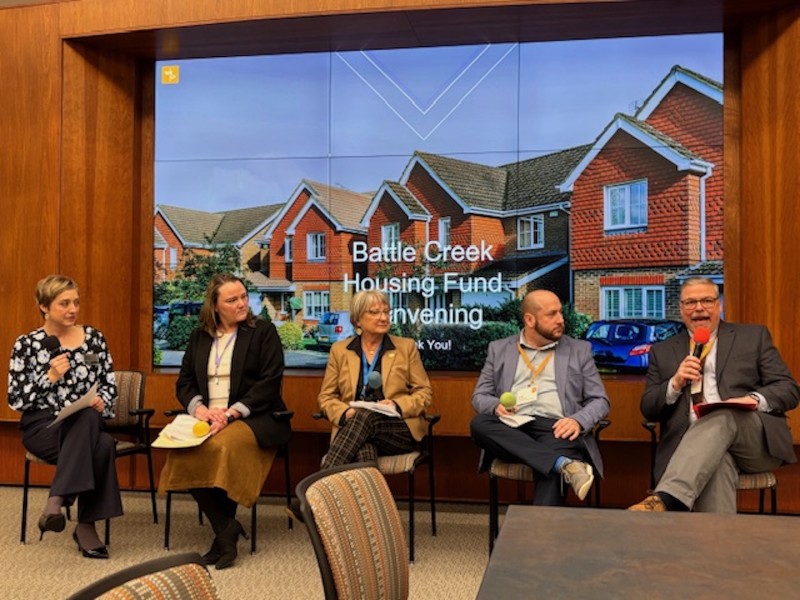
Battle Creek unites to build 1,000 homes and power economic growth
Battle Creek leaders launched a new Housing Fund to address a 3,000-unit shortage, aiming to build and rehabilitate 1,000 homes by 2035 to boost workforce growth and community stability.
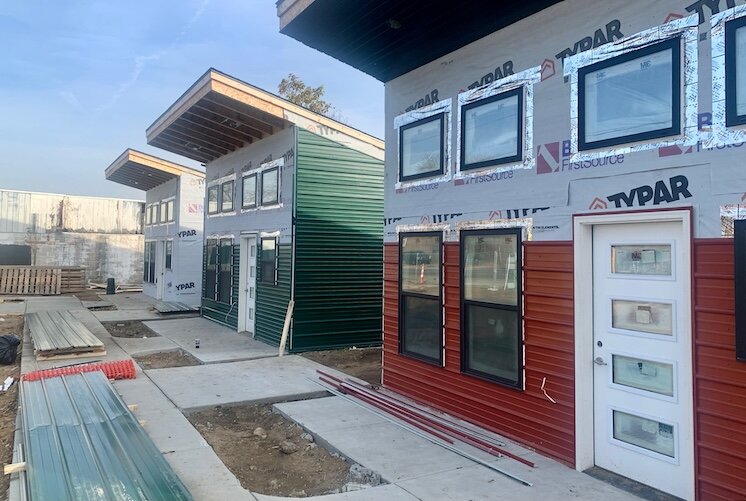
As federal funding for housing shifts, Kalamazoo pulls together to keep people off the street
Kalamazoo County finds ways to keep programs for the unhoused and those at risk of becoming homeless up and running as federal funding becomes uncertain.
Financial literacy efforts target homeownership disparities in Calhoun County
The Southwestern Michigan Urban League has launched a new financial literacy initiative in Battle Creek and Calhoun County aimed at equipping underserved families — particularly People of Color — with the knowledge and tools needed to build wealth and achieve homeownership.