
For some Kalamazoo residents, public transit means freedom beyond their front door
Public transit services like Metro Connect help Kalamazoo residents with disabilities and mobility limitations maintain independence, access essential services, and stay connected to their community.
Editor’s Note:This series focuses on the many impacts of Kalamazoo County public transportation. It was made possible by support from Kalamazoo Metro Transit. All photos are courtesy, unless otherwise noted.
KALAMAZOO, MI — Tim Sloan’s apartment is across the hallway from the unit shared by his mother and brother.
The 67-year-old Kalamazoo native is in regular contact with them and one of his sisters. And from his location near West Main Street on the city’s West Side, he’s not far from most things.
But none of that — or their proximity — helps when he needs a ride.
“My mother is 89 with dementia, and if it wasn’t for my younger brother, she’d be in a nursing home by now,” he explains. His brother, age 62, helps care for her. But he is limited by a neurological disorder. A sister who checks on them and manages their finances has to commute from her home in Battle Creek. And his only other remaining sibling, a sister, is estranged from all of them, he says.
So Sloan uses public transportation, saying, “If it wasn’t for Metro Transit, I’d be stuck in my apartment building.”
It gets him to stores, events, and to Thursday afternoon meetings of the local chapter of the Brain Injury Association of Michigan. He has been a member of the support group since 2011. For the last three years, he has been its president.
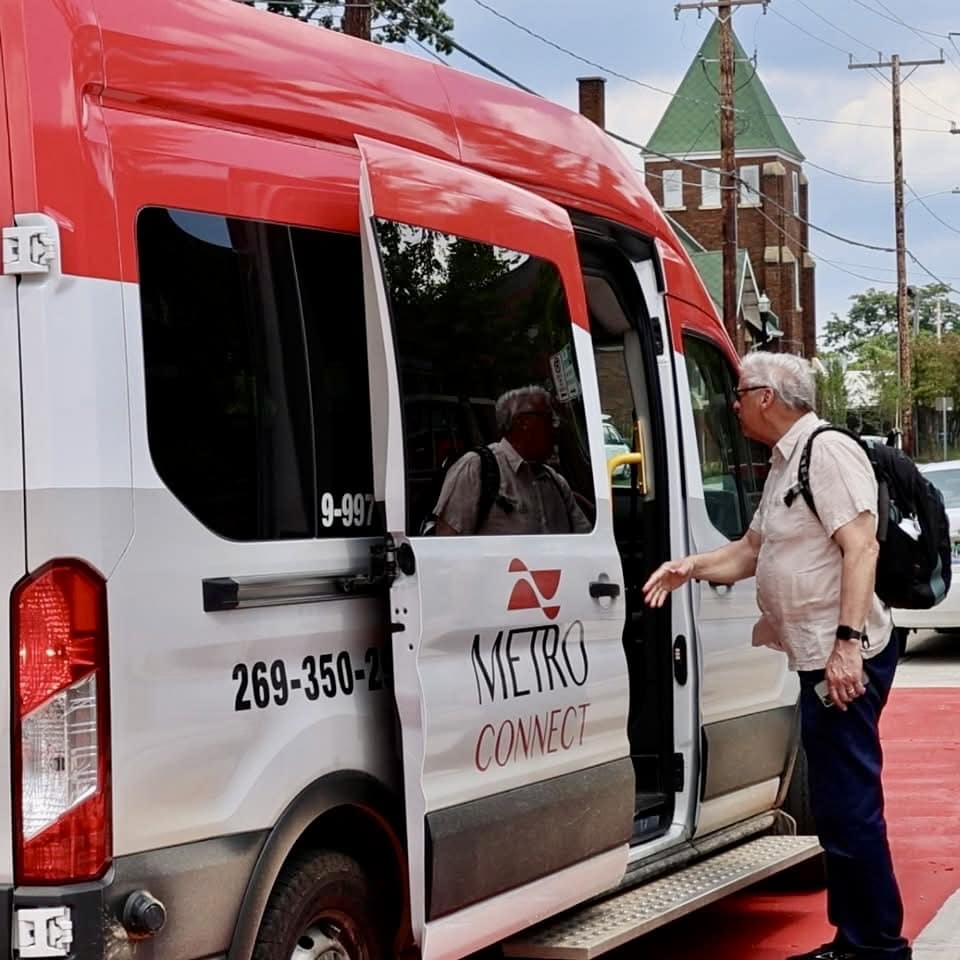
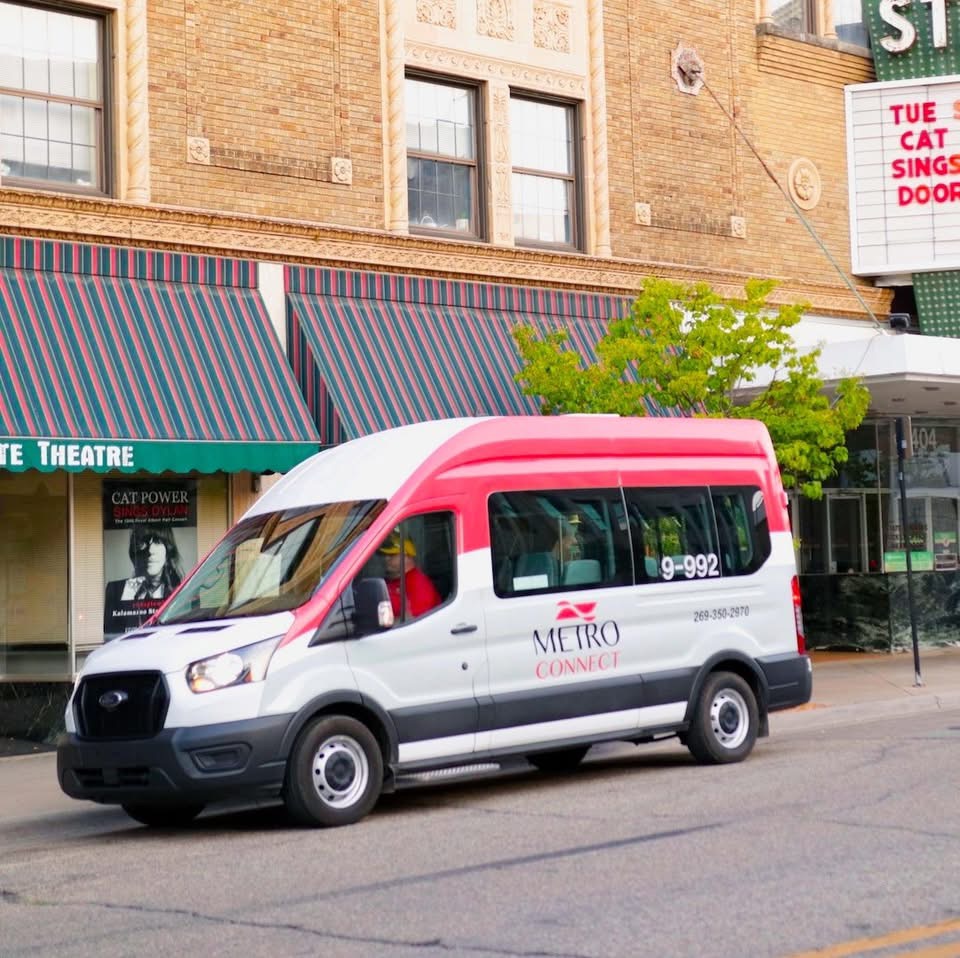
To make that connection, he has become a subscriber to Metro Connect, a countywide transit service that allows area residents to schedule a ride to any place in the county. Operated by Kalamazoo Metro Transit, it is a door-to-door service that picks up passengers at their homes and transports them to wherever they need to go in nine-passenger vans.
“For a lot of my group, if it wasn’t for Metro and their various services, they would never get to our meetings,” Sloan says. “Metro has been a very steady partner of the Brain Injury Association group for as long as I’ve been around.”
Sloan has had several incidents of head trauma, including an incident where he was struck by a brick, two TIAs, and concussions that occurred during two car accidents. He worked as a teacher’s aid for a preschool program in the 1970s and 1980s 1977 before he was officially declared disabled in 1993.
“Myself, I don’t drive,” says Sloan, who is also a board member of the Kalamazoo County Transportation Authority. “So, therefore, if it wasn’t for Metro Connect, I could not get to the meetings or the Disability Network.”
He is one of a few members of the Brain Injury Association support group who use Metro Connect and Metro Transit’s fixed-route bus system to maintain their independence. The group has about 30 members, half of whom regularly attend weekly meetings. The Association’s mission is to improve the lives of those affected by brain injury and reduce the incidence and impact of brain injury through advocacy, education, and support. It provides information about treatments as well as opportunities to be active and socialize. It has hosted bowling events and Christmas parties. It has supported Bronson Healthcare’s Traumatic Injury Day as well as efforts to promote the use of bicycle helmets.
Sharon DeHaan enjoys the organization and the Disability Network of Southwest Michigan, where the Brain Injury Association’s meetings are held (517 E. Crosstown Pkwy.). To get there, she has been using public transit and services that preceded Metro Connect for more than 30 years.
“I’m very thankful for it,” says DeHaan, who has trouble standing and who finds most cars too high or low to climb into. “Nothing’s perfect. But, you know …”
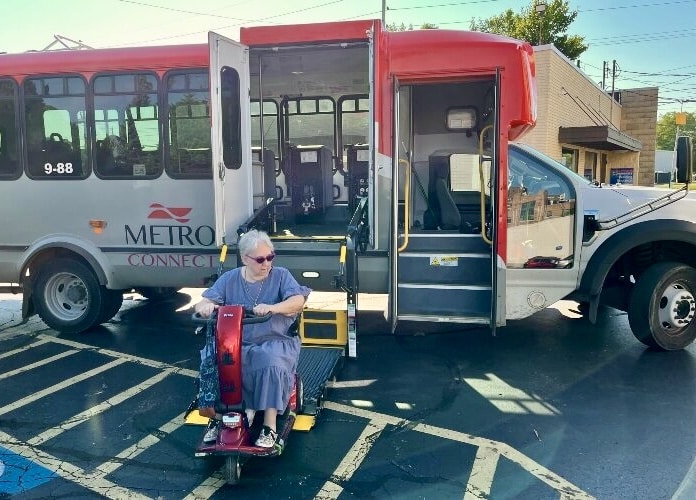
She is a 78-year-old Kalamazoo resident who has struggled with polio since she was very young and uses a scooter to get around. Nearly all Metro Transit’s vehicles are equipped with hydraulic lifts to bring scooters and wheelchairs aboard. Public transit has allowed her to attend church on Sundays, to make shopping trips to Walmart, to do volunteer work at the Disability Network, and to attend weekly meetings of the Brain Injury Association. Asked if driving a car would be an option for her, she says, “I can’t afford one, and I’m not really able to drive one anyway.”
Asked why she thinks more people don’t use Metro Connect, she says, some are probably not aware of it, and others may not recognize the value of the door-to-door service.
“Some of the people I know have disabilities, and it’s very difficult for them to take the bus,” DeHaan says. But they do, she says, preferring to pay the standard $1.50 fare on a bus route,” rather than pay more for Metro Connect.
The standard fare for Metro Connect is $12 each way. But that compares favorably with the cost of a taxicab or Uber, Metro Transit officials say. People who are over 62 or who have disabilities, such as the need for blood dialysis treatments, may qualify for reduced fares on Metro Connect, however, and pay as little as $3 or $4 each way.
“A lot of people just don’t want to spend the $3 or $4,” DeHaan says, versus the standard $1.50 bus fare. “But to me, it’s a whole lot more convenient. It comes to your house.”
Sean McBride, executive director of Kalamazoo Metro Transit, says, “Metro Connect provides the most flexible options for our riders. It’s available for anyone to go anywhere in Kalamazoo County. The benefit of the service is that it can be pre-scheduled. So it’s particularly helpful if you’re a senior citizen, an individual with mobility limitations, or an individual with a disability. It gives you door-to-door options for getting anywhere in the county.”
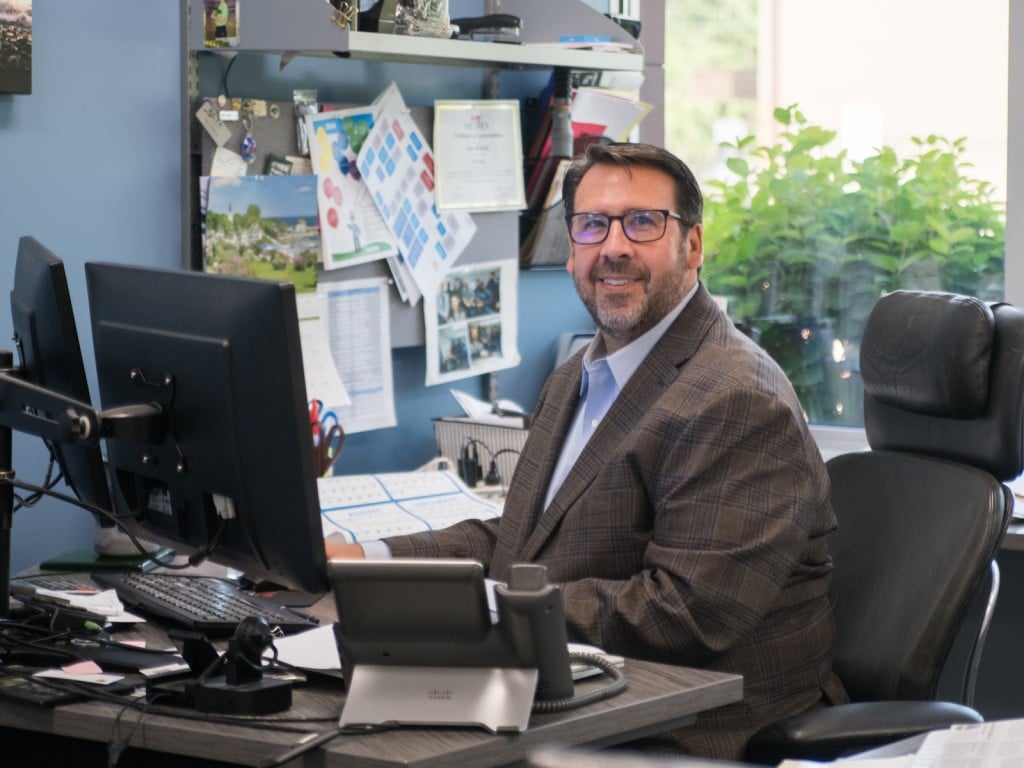
Referring to agencies that serve seniors and individuals with disabilities, Richard Congdon says, “We work with them a lot.” The manager of on-demand services at Metro Transit says he does not keep data on how many workers or patrons of any one organization are regular users of Metro services. But some users include workers of places like MRC Industries. They use it to travel from parts of Kalamazoo to MRC’s facility in Comstock Township.
McBride says about 791 people are signed up to regularly use Metro Connect. That does not include individuals who use it sporadically to get to and from a location, and people who use it for one specific reason — such as going to the airport or making a dental appointment.
He says the number of users is growing at about 3 percent annually and trending up. But he thinks more people don’t consider it and other forms of public transportation because they don’t see its benefits over driving.
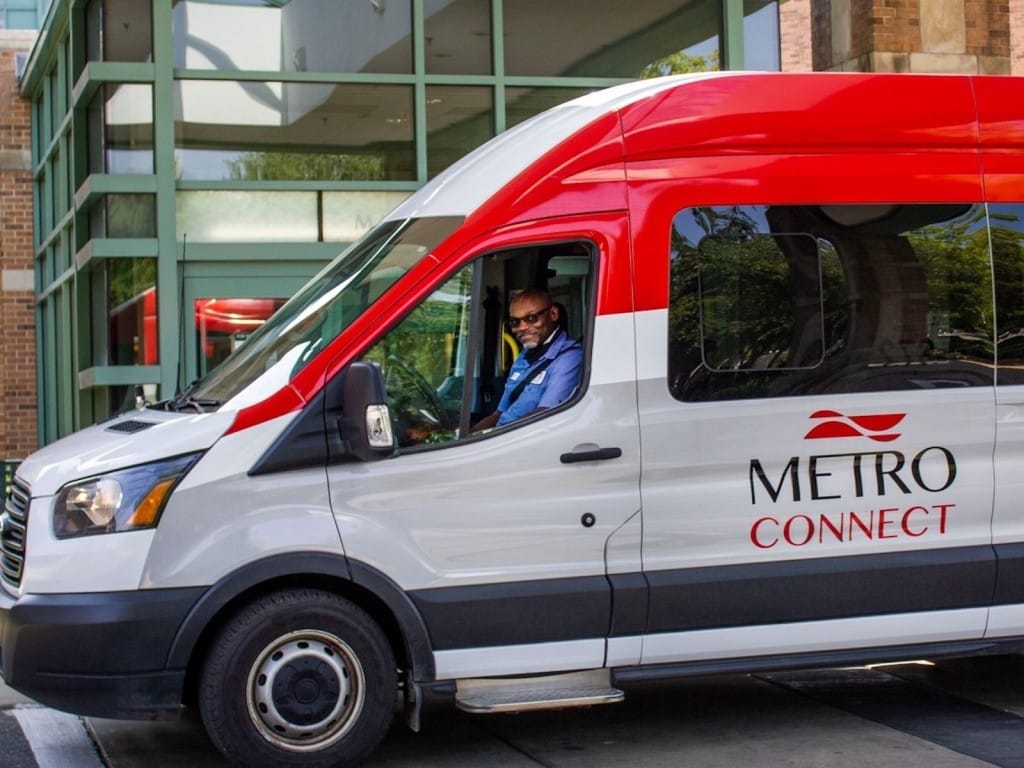
For people who wonder how to use the service, Congdon says Metro has a travel-training program that shows individuals and organizations how to use and take best advantage of various services. Along with fixed-route bus lines (which include 21 routes radiating from downtown Kalamazoo), they include:
- Metro Link is an on-demand, app-based service that can be used to have a six-seat passenger van come to a designated stop near their home and transport them to core locations or to other bus routes.
- Metro Shareis a service that provides nonprofit organizations with vans for specific uses to transport seniors or people with disabilities.
Sloan says he talks about the benefits of the services to people who have not tried them, especially those who do not drive.
“I tell them it will get you pretty much from Point A to Point B using Metro fixed-route buses, Metro Connect, and Metro Link,” he says. “They will get you pretty much anywhere in the county you have to go. It’s cheaper than driving a car with gas. You don’t have insurance. There’s no parking fees if you’re going downtown or what have you. I preach the gospel of Metro everywhere I go.”
DeHaan says, “As far as the groups that I go to, and church, it’s either sit at home or use it.”
Author

Related Articles
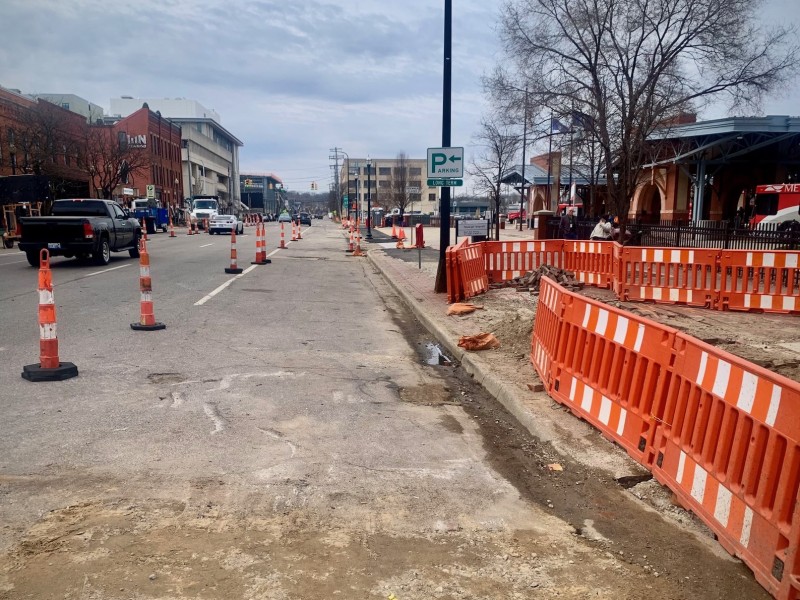
As traffic patterns change in downtown Kalamazoo, expect a few bumps in the road
Extensive roadwork, utility upgrades, and major development projects in downtown Kalamazoo this summer will cause short-term travel disruptions but aim to create a safer, more accessible, and community-friendly transportation environment long term.
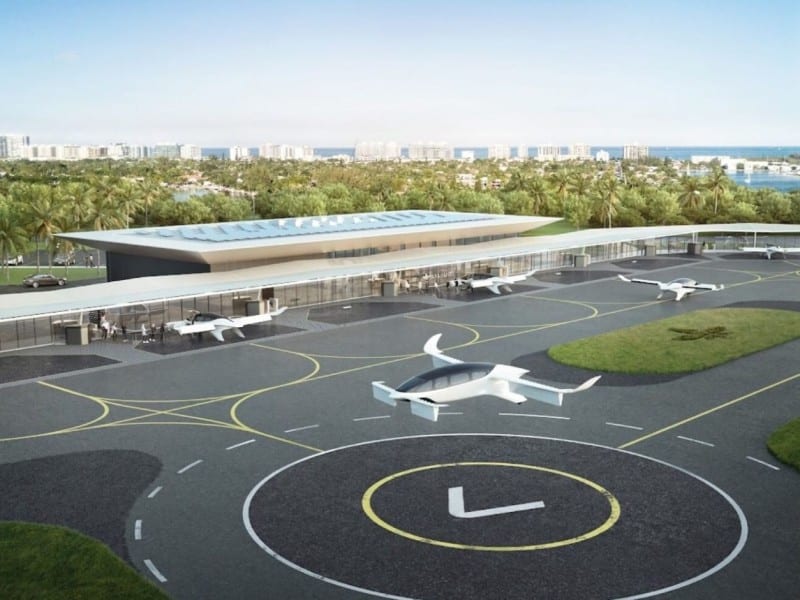
Battle Creek clears the runway for drones and autonomous flight
Battle Creek is becoming a national hub for drones and autonomous flight by building the digital infrastructure needed for safe, long-distance operations and future aviation jobs.
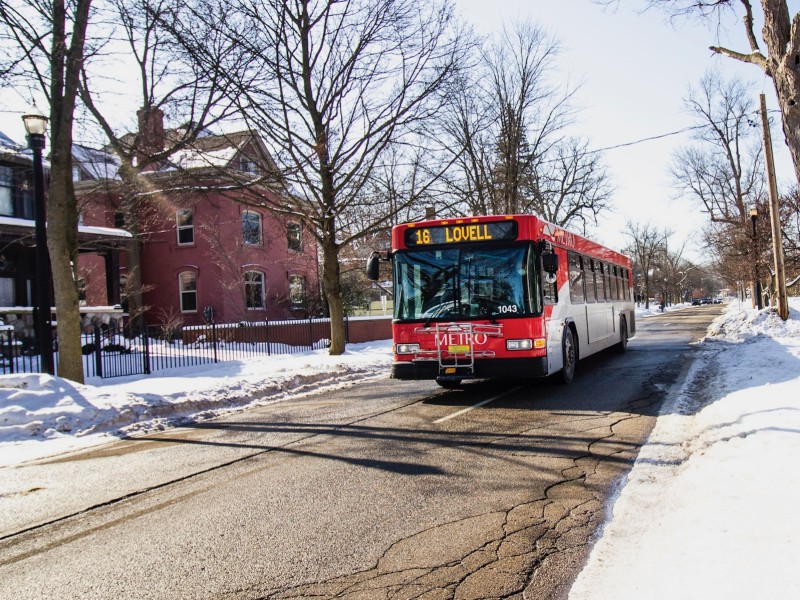
Metro Transit boosts service on busy routes during holiday shopping season
Metro Transit is adding extra weekday bus service on three high-ridership routes from Dec. 15 through 28 to improve reliability during icy conditions and meet increased holiday shopping demand in Kalamazoo.