FOCUS Forward program tackles the ‘Failure to Launch’ crisis among youth in Calhoun County
FOCUS Forward, a holistic, trauma-informed support program by Starr Commonwealth, is addressing the rising “Failure to Launch” crisis by helping vulnerable 16- to 24-year-olds overcome barriers like housing, transportation, and poverty to pursue education, stability, and employment.
Editor’s note: This story is part of Southwest Michigan Second Wave’s On the Ground Calhoun County series.
Education and employment aren’t always priorities for young people between the ages of 16 and 24 who experience a lack of transportation or stable housing and food insecurity, says Gregg Strand, Vice President of Advancement at Starr Commonwealth.
This age group, he says, is part of the Opportunity Youth population, which is a term used by Labor experts to describe at-risk youth who have disengaged or are disengaging with education and workforce systems. This particular population increased during COVID and has continued to grow. Current estimates are that close to 3,000 young people in Calhoun County are part of this population, which is estimated to be between 10% to15% nationally.
They are at risk for “falling between the cracks” and becoming statistics in systems of welfare and/or criminal justice.
“They’re all struggling. It’s not always an economic challenge. There may be social and emotional barriers, and they don’t know how to launch,” Strand says. “They’re anywhere and everywhere we look. Most are in underserved and impoverished communities. There’s no safety net or school resources supporting them.”
In 2024, Starr began a pilot program known as F.O.C.U.S. (Forging Opportunities for Career Upskilling and Success) Forward, which is designed to provide support and resources for this population.
“FOCUS Forward was our response to a need we already knew existed,” Strand says. “For this older age group, the needs are different and the challenges and exposure is different. This program is our effort to include some really fundamental resources that need to be addressed so that these kids are prepared for sustaining life beyond school.”
The program aims to remove significant barriers that too often block an individual’s progress: trauma, poverty, homelessness, food insecurity, lack of access to reliable transportation and/or mental health care…while also addressing practical” barriers like educational attainment and career readiness, according to information provided by Strand.
“Through trauma-informed and resilience-focused case management, coaching, and collaboration with schools and workforce systems, Starr helps youth stabilize, learn, and thrive.”
To date, approximately 40 youth have enrolled in FOCUS Forward, far exceeding the original first-year goal of 5 to 10 participants, says Strand.
The pilot program received $500,000 from the U.S. Department of Labor, $750,000 from the Michigan Department of Labor and Economic Opportunity, a $50,000 grant from the Binda Foundation Binda Foundation,and a $100,000 grant from the Marshall Community Foundation, the largest in its history.
Each participant in FOCUS Forward collaborates with a case manager and resilience coach to develop an Individual Development Plan (IDP) that includes education, job readiness, and emotional well-being goals.
Participants are also supported by clinicians and behavioral health specialists, Strand says.
Food insecurity, housing, transportation, and basic needs are integrated with meeting social and emotional needs. He says a Transition to Success model, which addresses poverty, is also incorporated into this holistic approach to ensure that all of the needs are met for each participant.
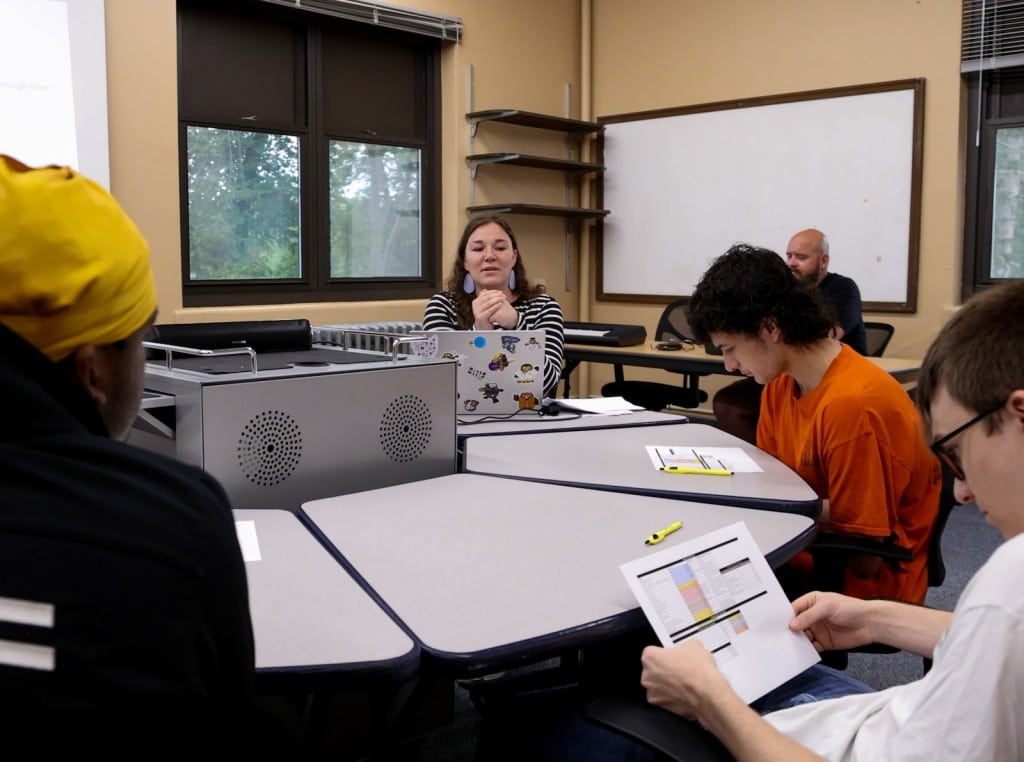
“We really start by asking young people what their dream is. We get to the heart of what drives and inspires them,” Strand says. “We meet them where they are and find out what’s holding them back and where they want to go. Then we map out the Individual Development Plan.”
They find their way into the program through referrals from schools, family or friends, and community organizations where they may go to seek assistance and resources.
Marshall Opportunity High School (MOHS) was one of the first schools to integrate FOCUS Forward principles into its culture, referring many students into the program.
“The collaboration shows what happens when education and behavioral health intersect. Teachers focus on academics while Starr’s team helps stabilize students’ lives outside the classroom through meeting needs like housing and transportation,” Strand says. In many ways, MOHS — and schools like it — are FOCUS Forward: the program is an extension of the care educators already provide, but with the added social-emotional and case management expertise needed for lasting change.”
At any given time, 15 MOHS students are participating in FOCUS Forward, says Ben Wallace, MOHS Principal and Director of Non-Traditional Programs for Marshall Public Schools. MOHS can have upwards of 120 students, about half of whom graduate every year from the high school.
Strand says FOCUS Forward receives the largest number of referrals from MOHS.
“One of the bigger challenges, especially if they’ve dropped out of school and are not participating in the job market, is that we have to rely on local people to identify these young people,” he says. “As soon as they graduate or complete their high school experience, they’re at risk of falling off the radar.”
“Unfortunately, once these kids get into our program at the high school, a lot of their parents are no longer involved in the academic process,” Wallace says. “We’re getting kids from different places who don’t have a place to live. Our staff refers as many kids as soon as I know they’re ready, and FOCUS Forward is something they want to participate with.”
Between 20-30% of them are couch surfing. Starr provides housing on its Albion campus and has entered into a partnership with Albion College to lease housing space.
“We could house almost all of them if they needed it,” Strand says. “We had six or seven on our campus, but we don’t want them to be isolated, so we’ve leased a building at Albion, which will allow them to get that social experience of living in a city.”
In addition to housing, Wallace says transportation is another huge barrier identified by participants, but “nobody funds it. It doesn’t do kids any good to get a job if they can’t get there.”
Becoming employable
The FOCUS Forward program is working with Kellogg Community College, Grand Valley State University, and Albion College to find different career pathways for its participants. Strand says there are many options in the skilled trades, and participants can earn micro-certifications, two-year or four-year certifications, or degrees.
Welding is one of the certifications that has been very successful, says Wallace.
“Our kids seem to stick with it,” he says.
When participants have completed school or training, they look for jobs in manufacturing. Because many of them come from low-income circumstances, they don’t own a car to get them to work and rely on the transportation provided through FOCUS Forward.
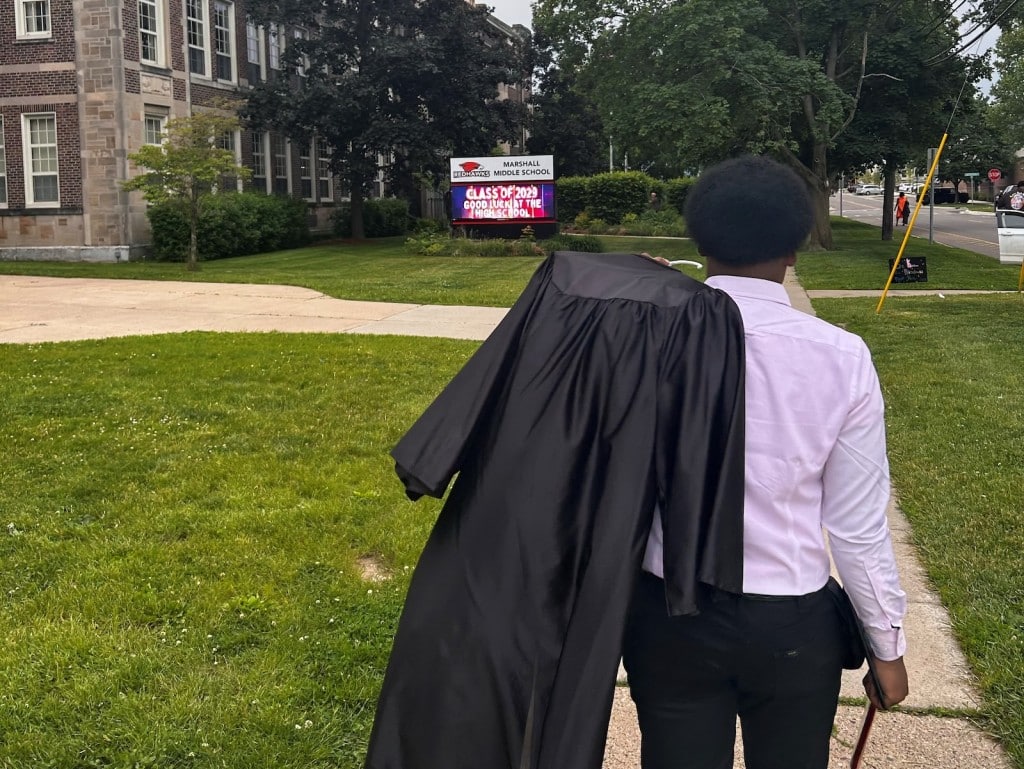
In addition to actual training and school, participants are taught soft skills for employment, like appropriate attire, how to apply for a job, and resume writing.
“Our staff knows all of our kids very well,” Wallace says. “We identify kids who have some struggles. We’re very active in finding out what they want to do. Our kids want to graduate from high school and work at a factory. They have. A very one-track mind.”
Staff at MOHS frequently suggest that students focus on skills that will make them more valuable to employers. As an example, Wallace says he may encourage them to explore a career as a maintenance technician.
“It’s one thing to attach a widget; it’s another to maintain the machine that makes that particular part.”
Through a partnership with KCC, students attend presentations about the various trades programs available to them. They can also earn college credits.
“Most of our kids would rather be in there learning with their hands,” Wallace says. “We do a good job of getting kids in different career pathways.”
Once they’re in a Starr program like FOCUS Forward, they’re eligible and prioritized for Starr support for the rest of their lives.
“We help support their social, emotional, and economic needs, and when they come back, they’re eligible for Starr scholarships and supports,” Strand says. “Some of these kids don’t have a social security card, driver’s license, or food and housing. We had one kid who went through most of high school homeless.”
“What makes our program different is that we bring a trauma-informed approach into the mix. We’re really looking at the whole person and trying to help them.”
Author

Related Articles

Objects of Affection: From a crochet hook to a bowling ball, love stories in Kalamazoo
In honor of Valentine’s Day, Western Michigan University multimedia journalism students explore how everyday objects become powerful symbols of love, identity and memory through photos and captions.
Sisters leading a revolution of love — for the earth, the elderly, and every ‘dear neighbor’
Once nearly a thousand strong, the Nazareth Sisters of St. Joseph helped shape Kalamazoo’s identity. Today, even as their congregation shrinks, their commitment to serving the “dear neighbor” is only growing deeper.
Lights, Camera, Great Lakes: Wolf Tree Film Festival returns bigger and bolder
The Wolf Tree Film Festival returns to Marshall for its 8th year this spring, highlighting Great Lakes filmmakers and fostering community through accessible, regional storytelling.