
Detroit vs. outstate: Do child care challenges differ for urban and rural families?
While geography shapes experience, families face similar struggles finding child care.

When it comes to child care and early education in Michigan, geography shapes experience — but the struggles families face are far more similar than different. Whether in Detroit’s majority-Black neighborhoods or in majority-white rural counties, parents describe the same reality: too few child care slots, too few qualified staff, and costs that far exceed what most families can afford. The question isn’t whether Detroit and outstate families face challenges. The question is whether Michigan will invest in solutions that meet all children’s needs, no matter their zip code.

A shortage of seats, no matter where
In Detroit, the crisis begins with capacity.
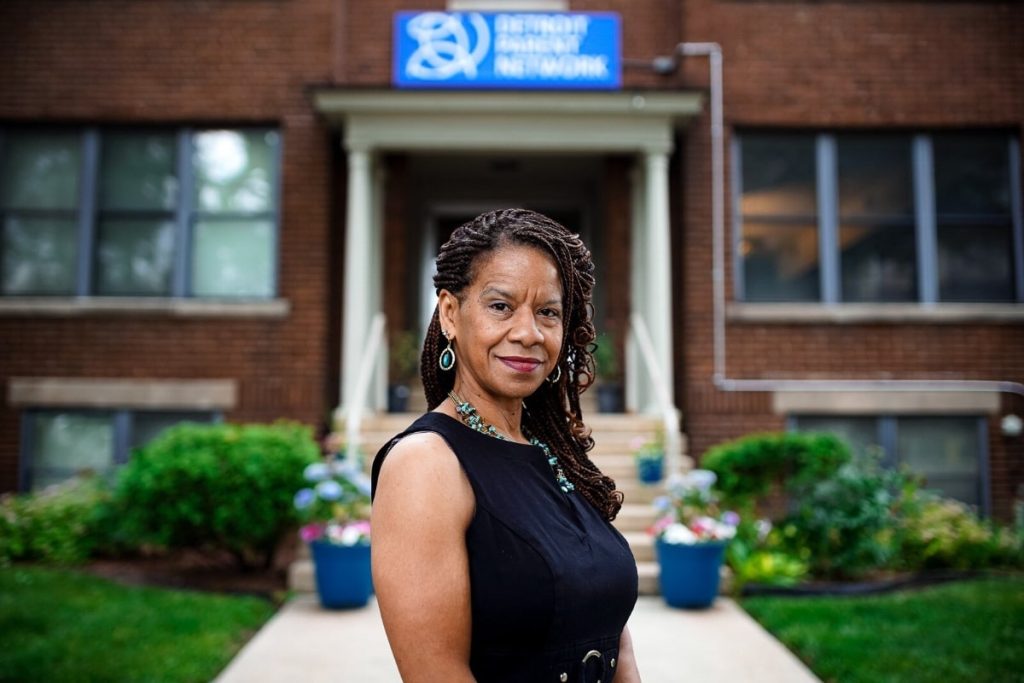
“The need for childcare, whether it’s infant, toddler, or for three- and four-year-olds, far surpasses the number of seats available in private or public settings,” says Jametta Lilly, president and CEO of the Detroit Parent Network.
Michigan’s universal pre-K rollout has expanded access for four-year-olds, but it has also reduced enrollment for smaller private providers, many of them Black and Brown women entrepreneurs who had relied on preschool-aged children to balance the higher cost of infant and toddler care. Without those enrollments, some centers have faced financial instability. According to Lilly, the cost difference is significant: an infant-toddler slot can cost providers up to $14,500 annually, compared to around $9,000 for preschool-aged children.
The challenge is now compounded by the state’s 2025–26 school budget, which eliminated the requirement that at least 30% of Great Start Readiness Program funds go to community-based organizations such as private nonprofits, Head Start programs, and other child care providers. These centers enroll nearly one in five of Michigan’s preschoolers and often make care more affordable and flexible for low-income families. If forced to raise tuition or close, those families stand to lose the most.

Federally funded programs are also now limited.
“Head Start has never served more than 30 to 35% of eligible families,” Lilly says. “And just recently, in Detroit, Focus: HOPE lost funding for nearly 450 children. Where are those parents going to go?”
He adds that staff turnover often forces programs like his to temporarily reduce capacity, which directly limits the number of available slots for families.For many households, affordability compounds the problem. Huntey describes how families often fall into what’s known as the ALICE population — Asset Limited, Income Constrained, Employed.
The reduction highlights the ongoing gap between eligibility and available funding.In rural Michigan, access is constrained for different reasons.
“In rural communities, we have a much smaller hiring pool,” says Tyler Huntey, founder and CEO of the Early Learning Company. “We hire and teach people, but turnover is high because they can go to a gas station or fast food restaurant and make the same wage, or more.”
“They’re just above the income threshold for subsidies,” he says. “We can’t charge enough tuition to pay teachers a livable wage, but families can’t afford to pay more either. The economics just don’t work.”
According to Huntey, families in this group may be earning slightly above eligibility limits for assistance, yet still struggle to cover tuition that can reach hundreds of dollars per week.
Shared barriers, different contexts
Data also tells the story of limited access for families.
“Seventy-seven percent of Michigan’s child care deserts are in rural areas,” says Maddie Elliott, policy and program associate at Michigan’s Children.
Heather Bomsta, vice president of policy and programs at Michigan’s Children, notes that while child care is expensive everywhere, geography influences how providers operate.
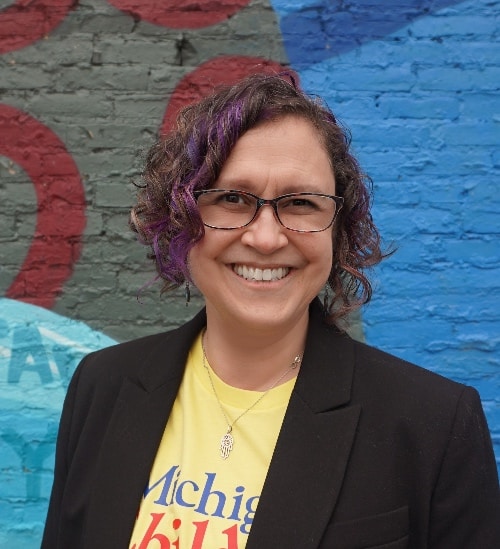
“Centers in Detroit are likely to have more potential customers, while rural centers might have to really think about their location and how easy it is for families to get to them,” says Bomsta.
Annette Sobocinski, executive director of the Child Care Network, describes similar challenges statewide.
“Families are struggling to afford care, but even with those high costs, programs are still struggling to operate. Providers are barely able to stay in business,” she says.
Sobocinski adds that the state’s current funding models can sometimes discourage upward mobility.
“We work with families who may qualify for subsidies, but if they get just a small raise at work, they’re suddenly cut off and face enormous child care bills,” she says. “Some parents even turn down promotions to avoid losing eligibility”
Differences also emerge in how poverty is understood. Lilly emphasizes that poverty is not limited to cities.
“It is total misinformation and delusion that poverty exists predominantly in urban areas, particularly among Black folk,” she says. “There are more poor white families than Black families combined, and many are in rural Michigan.”
Huntey echoes that affordability is a constant strain for childcare center operators.
“We’ve talked about sliding scales for pay or alternative funding models, but the reality is we can’t charge enough tuition to pay teachers a livable wage, and families can’t afford to pay more either,” he says.
This gap leaves many households in that ALICE population, earning too much to qualify for assistance, but not enough to cover market-rate child care costs.Family and community supports can also differ.
“In rural communities, you still often see more cohesion,” Lilly says. “In urban areas, people don’t have a sense of the village anymore.”
At the same time, rural families may have fewer advocacy networks when resources are reduced, while Detroit families are more likely to have connections to organizations that rally around funding and policy decisions.
Innovations and emerging solutions
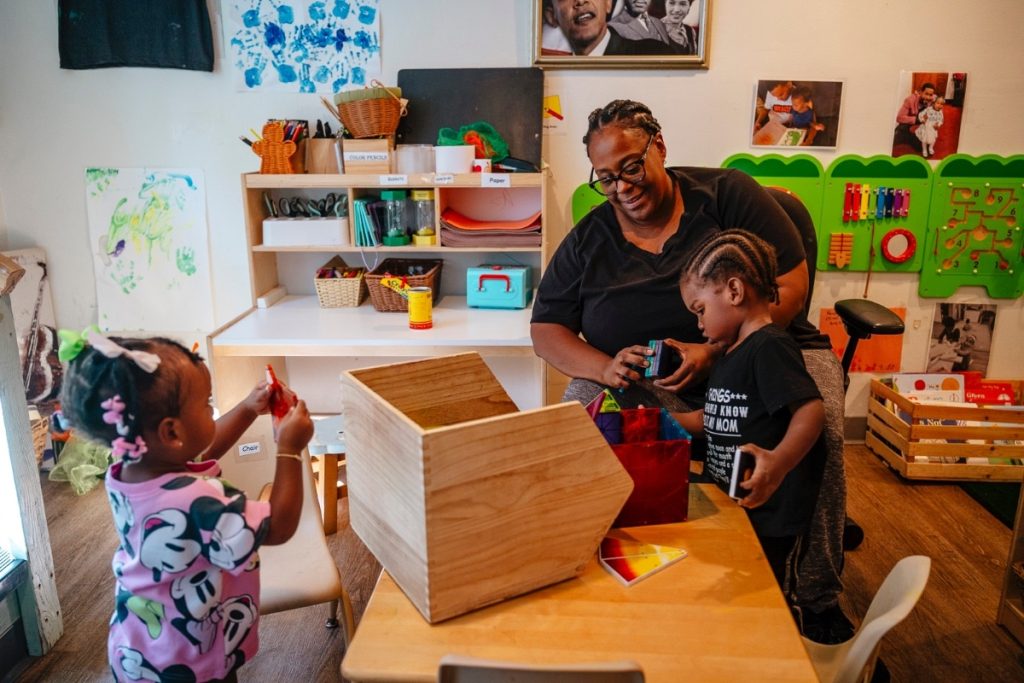
Several initiatives have been introduced to address these challenges. In Detroit, Hope Starts Here has promoted the expansion of home-based care and partnerships with faith-based groups and employers. The initiative also provides technical assistance to small entrepreneurs interested in opening licensed programs.

At the state level, planning and coalition efforts are underway. Sobocinski highlights regional child care coalitions that bring together businesses, economic developers, and local governments to reduce barriers to opening programs. She also points to new wage stipends for early educators, apprenticeship programs that support credentialing, and supplemental scholarship programs that serve families above traditional income limits. One such program, the Tri-Share Child Care Program, divides costs between employers, employees, and the state, though it is dependent on employer participation and therefore not available to all families.
Elliott says reforms such as the Michigan Economic Development Corporation’s “child care ready” framework help municipalities align zoning and redevelopment policies to expand child care access. Huntey also describes the TEACH scholarship, new benefits programs, and wage pilots as tools that provide tangible incentives for educators to remain in the field.
“The primary reason that people leave this space is because of pay,” Elliott says. “When we’ve been able to offer stipends, people are more likely to stay.”

United hope for the future
Across Detroit and outstate Michigan, the themes are consistent: affordability, workforce shortages, and a lack of available slots. Geography shapes how these issues are experienced, through long commutes in rural counties, higher costs in urban areas, or uneven access to subsidies, but the underlying pressures are similar.
As Lilly says, “It’s increasingly critical that parents understand that whatever their race or region of the state, all our children and families need and deserve health, education, and an economic system that helps them thrive.”
Sobocinski, speaking from her perspective at the Child Care Network, points to the financial side of that challenge, insisting increased public investment is necessary if Michigan wants consistent, stable care for families across regions.
The perspectives of providers and advocates show that child care challenges are present in every corner of Michigan, though they look different depending on the community. Efforts like regional coalitions, educator stipends, home-based expansion, and employer-supported cost-sharing are giving families and providers some relief. The question going forward is whether these kinds of efforts will continue to grow so that families across the state, from Detroit to the Upper Peninsula, can count on reliable, affordable early education.
Photos by Nick Hagen.
Photos of Maddie Elliott, Tyler Hunter, and Heather Bomsta courtesy subjects.
Early Education Matters shares how Michigan parents, child care providers, and early childhood educators are working together to create more early education opportunities for all little Michiganders. It is made possible with funding from the W.K. Kellogg Foundation.
Author

Related Articles

It’s scholarship season at the Battle Creek Community Foundation
Battle Creek Community Foundation scholarships help local students like Nylayiaha Smith afford college and inspire them to give back to their community.

Voices of Youth: A safe haven for children entering foster care comes to Battle Creek
Battle Creek’s Isaiah 117 House, set to open in March of 2026, seeks to reduce trauma for children entering foster care by providing a safe and supportive place during removal and placement.

Youth Reviewer Lab: Kalamazoo Academy of Rock musicians deliver high-voltage show at Bell’s
Check out our youth review of the Kalamazoo Academy of Rock’s showcase at Bell’s Backroom.