Chamber orchestra of horrors resurrects silent, scary movies in Kalamazoo — with a creepy twist
A quirky Kalamazoo chamber ensemble, Silent But Deadly, brings new life — and eerie original scores — to silent horror films in a spooky, immersive Halloween-season concert blending classical music, DIY sound effects, and vintage creepiness.
KALAMAZOO, MI — Witches will fly, monsters will rise from their cauldrons, dolls will kill and mutilate their tormentor, while Kalamazoo musicians will be Silent But Deadly.
A unique, new Kalamazoo chamber orchestra, Silent But Deadly, will perform original music to six silent horror films from 1896 to 1910 during “Silent Screams” at the Clover Room on Tuesday, Oct. 7
Can old silent films frighten a 21st-century audience?
Not gory, but creepy
Some of these films were made during the time of Queen Victoria. With movies this old, you’re looking at flickering, degraded film, like seeing dreams of people long dead. Since there’s no dialogue, no voice, that means actors must use exaggerated expressions, lending an unreal patina to the action. Costumes, hair, and makeup are also freakish, especially in fantastical films of that time.
There is something truly creepy about them.
Silent But Deadly founder Brandon Pacheco thinks of one of the first “Alice in Wonderland” films, from 1915, “People in bunny costumes and stuff like that… this is terrifying! I would totally write a creepy score for this movie.”
First true ‘horror’ film
Alas, there will be no “Alice” for their spooky season show. Instead, SBD chose films that were meant to be truly scary, going back to Georges Méliès’ “The Haunted Castle.” From 1896, it is considered the first true horror film.
In “Castle,” Mephistopheles messes around with a big floppy fake bat, a cauldron that looks like a flat stage prop, and film tricks that make him pop into and out of sight.
These movies may be creepy, but would anyone actually be frightened by the films of that era? We’re so jaded, so desensitized by jump scares and gore and special effects. Are any of these films actually scary?
“The Doll’s Revenge”
At that question, all the SBD musicians murmur, “doll’s revenge” as if haunted by sights they cannot unsee. “The Doll’s Revenge,” a 1907 British film, is about a bullying brother who dismembers his sister’s doll. (Spoiler: The doll reassembles herself, grows, splits in two, and dismembers and eats him.)
Pacheco says he was hanging flyers for the show in downtown Kalamazoo, and a mother told him she’d love to bring her kids to see it. These movies can’t be too scary for her children, right?
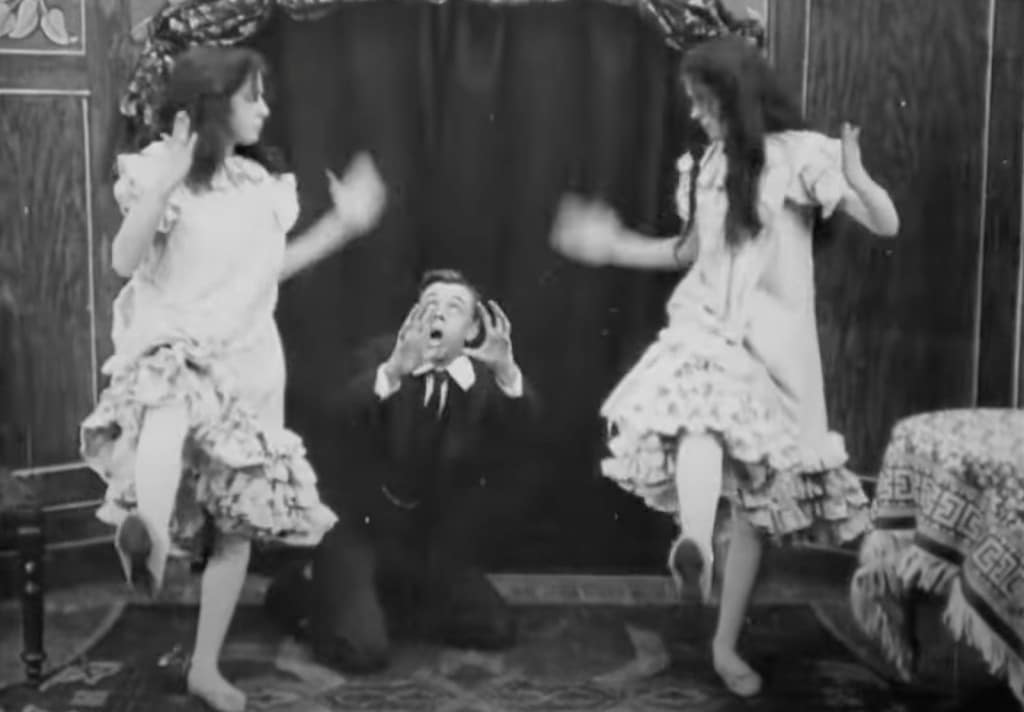
“Probably not, by modern standards, but this one movie is creepy. It’s just creepy,” he says he told the mother. It’s “the first killer doll movie,” so he says he had to include it in the program.
Most old silent films were not out to scare people, Pacheco says. They were “more ‘horror’ as a concept.” Not so much to scare the audience, but to speculate, “what if this happened? Wouldn’t that be bad…. What if you betrayed a witch and she came after you? What if you killed a doll and the doll killed you back?”
Or, what if a scientist tried to create life in the form of a perfect man, but the man turned out to be a monster?
“Frankenstein”
It was 2022, and Pacheco was thinking of a new release of Korngold’s opera and film scores, “Complete Incidental Music.” Maybe he could arrange “der Vampir,” music for the earliest, pre-“Dracula” vampire story?
Cellist Taylor Crow asked him what he wanted to do for his birthday.
He told her, actually, he really wanted to write a score for the 1910 Thomas Edison-produced “Frankenstein,” and get all his musician friends to play it to the film at his party.
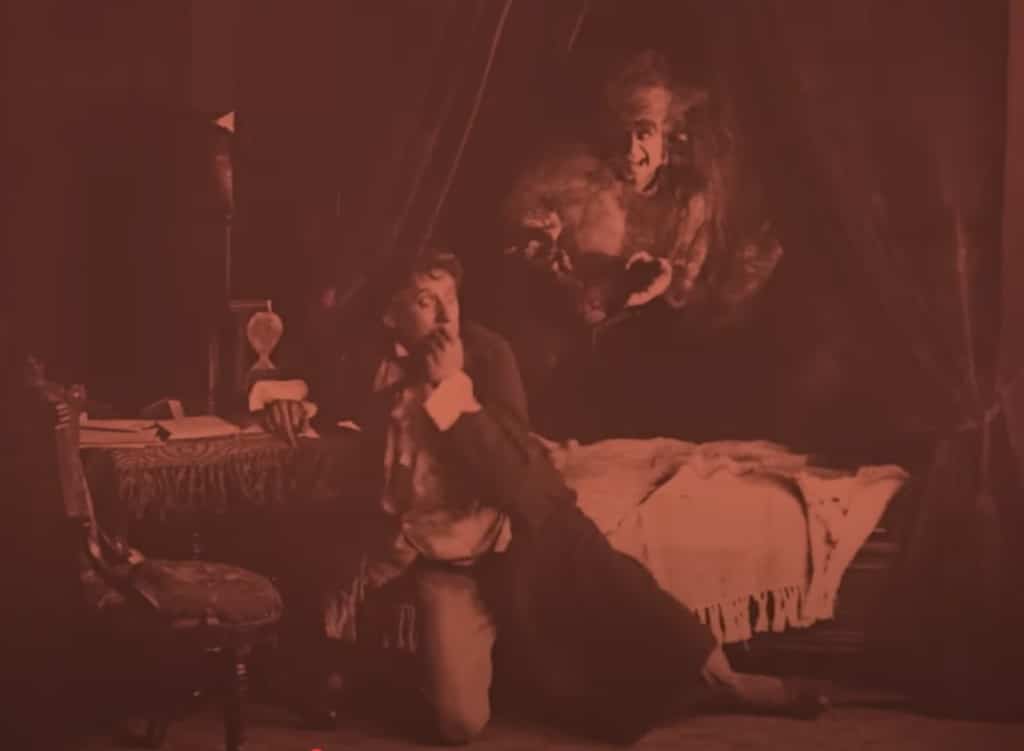
“And she was, like, ‘Yeah, that’s an idea,'” he says.
So they did, and a video of the private event leaked out onto social media. His “Frankenstein” broke out of containment, and suddenly, local venues wanted to hire them.
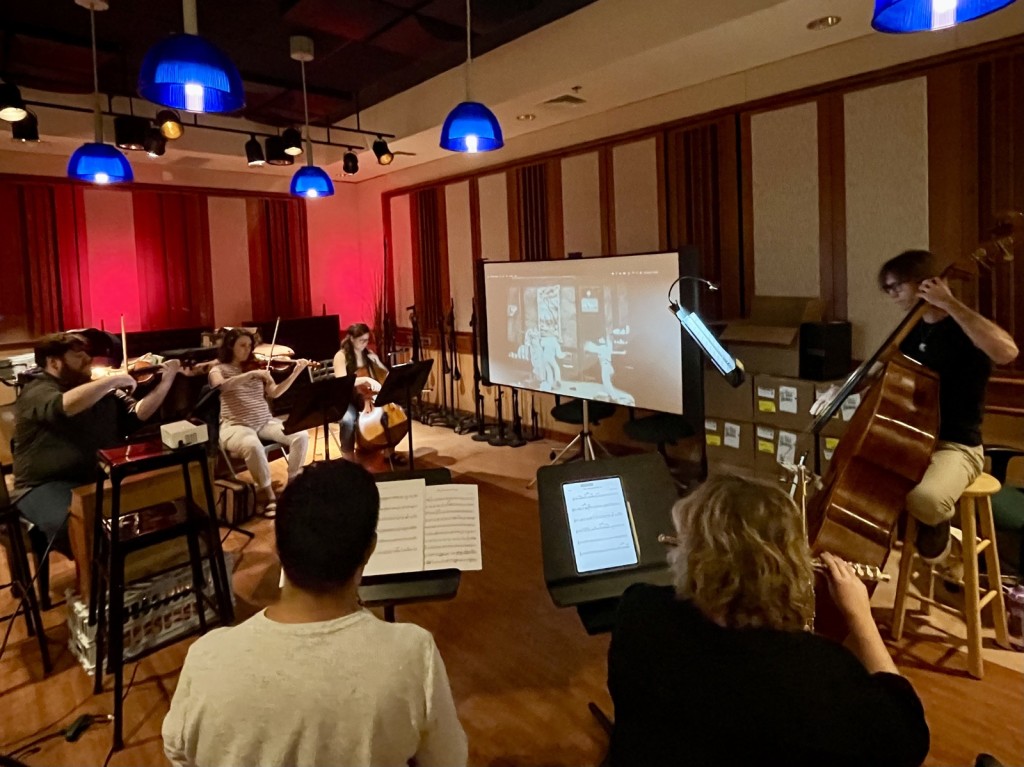
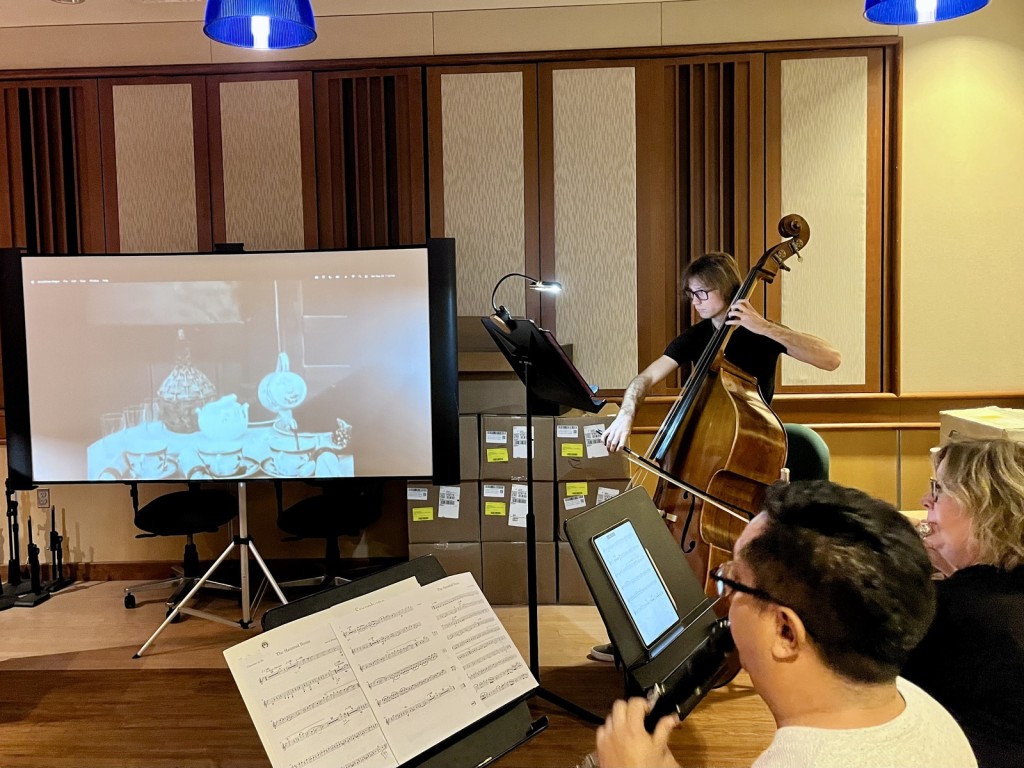
And Silent But Deadly formed, expanding to include Audrey Jansma (violin), Jesse Williams (clarinet, sax), Cara Lieurance (piccolo, flute, sax), and Neal Lensenmayer (double bass). They scored films and performed at the Connecting Chords Festival, the Kalamazoo Valley Museum, and the Air Zoo.
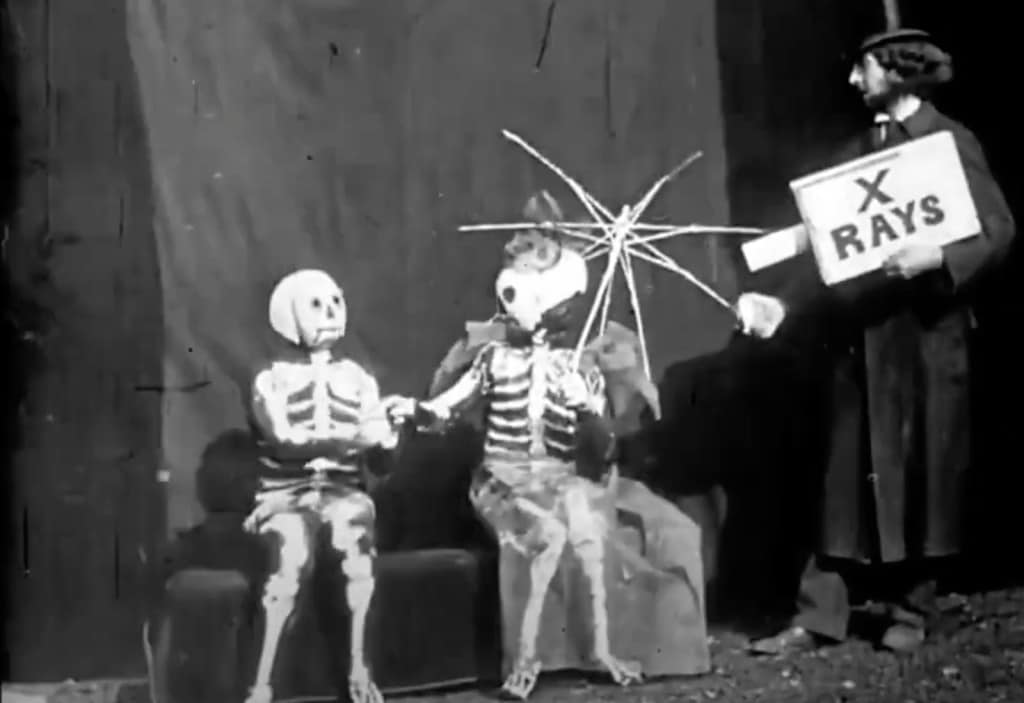
“Frankenstein” is a regular film at their events. SBD has also scored a comedy by Charlie Chaplin and Fatty Arbuckle, the flight scenes for the first Academy Award Winner “Wings,” and Georges Méliès’ 1902 “Trip to the Moon,” considered to be the first science fiction film.
For the fun and the novelty
Comprised of classical and theatre musicians, SBD arose from friendships that “go back to being in the theatre pit, going out for a beer afterwards and saying, ‘We should found the Kalamazoo Novelty Orchestra,” Lieurance says. “This, to me, is kind of scratching that itch.”
They are doing something different with the chamber music format. Like, redefining what could be a musical instrument.
Pacheco says he has “manic episodes at 2 A.M.” where he wakes his wife to declare, “I think we need an anvil.”
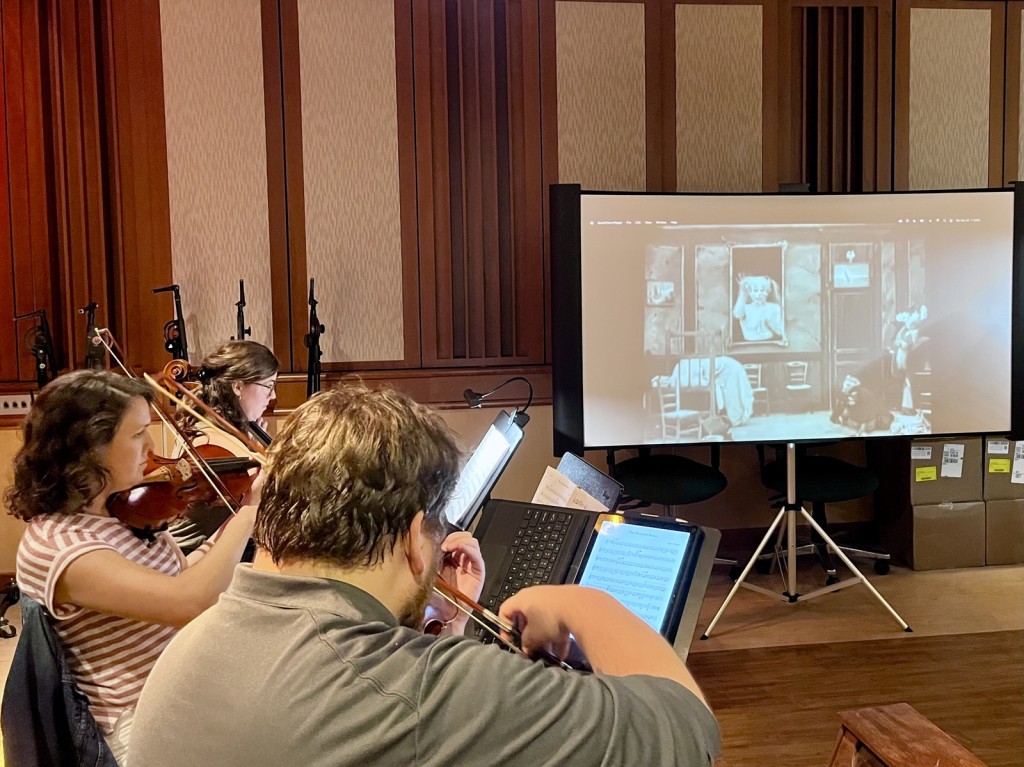
Among their instrument family, they now have six train whistles, for some unexplained reason. An anvil, lead pipes, and a ratchet have all added mechanical noise to the launch of the top-hatted astronauts in “A Trip to the Moon.” A section of sheet metal will provide thunder during the 1908 French film “A Haunted House” for “Silent Screams.”
Lowe’s usually “comes through” with these instruments, he says. But they’ve also had to invent new ones.
In “A Trip to the Moon,” there’s a fight scene with Moon Men, who pop into a puff of smoke when struck. SBD made the “balloon-o-phone,” balloons on a wood dowel, and played with a safety pin.
“We gave it to a girl in the audience who was, funny enough, amazing,” Pacheco says. They ask for audience participation for the sound effects. “Part of the fun is, they might get it wrong. An audience member doesn’t know the movies the way we do,” he says. “But this girl was on fire. Every time they pop an alien, she popped a balloon.”
For the horror show, “I was thinking about building a creak machine for some possible coffin noise,” he says.
Creepiest instrument?
But they have the ultimate creepy instrument on hand: A vintage toy piano.
It came out of the estate of C. Curtis Smith, composer and Western Michigan University music composition instructor. Lieurance says it may have been played by 20th-century composer John Cage, who did a project at WMU in the 1970s requiring 12 toy pianos.
When Pacheco found “Doll’s Revenge,” he realized, “I found the movie for the toy piano!”
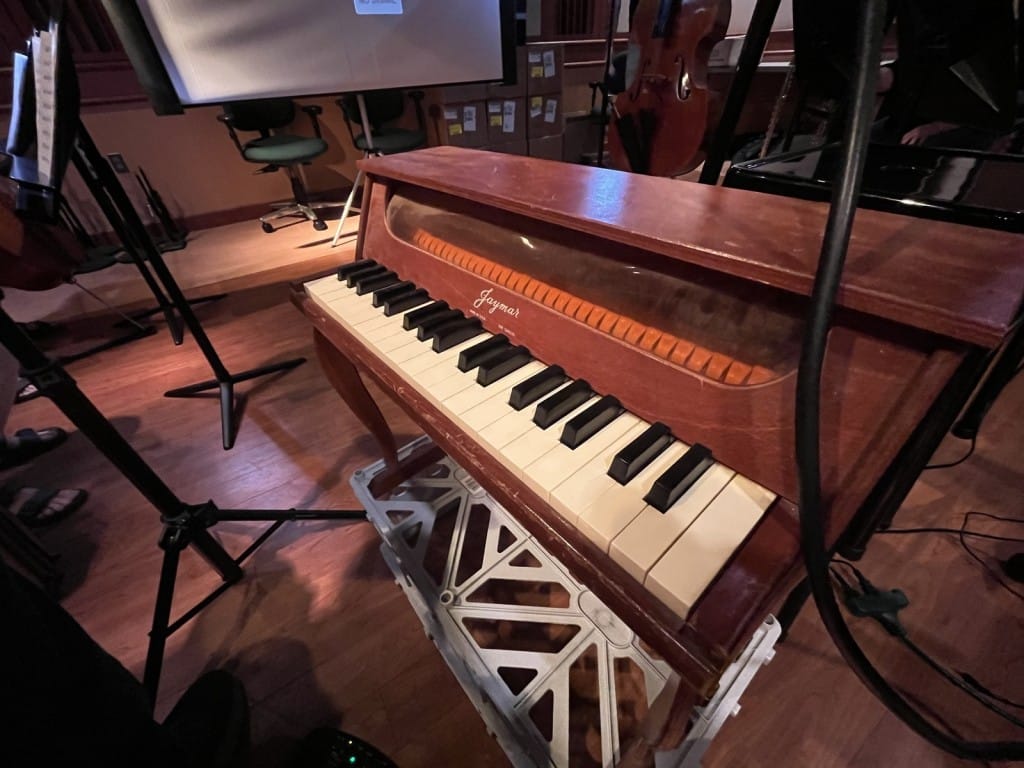
He plays a happy, childlike melody on the little piano for us.
“Then you flip it to a minor key when it’s not so childlike,” when the doll does its little dance, grows, turns on a naughty boy….
“Silent Screams” with Silent but Deadly will be at the Clover Room Tuesday, Oct. 7. Doors 6:30 p.m., show 7:30 p.m. $18 in advance, $20 day-of.
Here’s a TEASER.
Author

Related Articles

Dimes lead to big change for underserved youth in the Battle Creek area
A Battle Creek mother and son turn bottle deposits into life-changing sports opportunities for low-income youth.

From blue light to green light: Former Kmart site set for affordable housing and childcare
Eight years after plans began, redevelopment of the former Kmart site in Battle Creek is moving forward with an 80-unit affordable and workforce housing development with an on-site childcare center, backed by tax credits, philanthropic support, and local partners.
Plunge, sweat, connect: House of Plunge brings contrast therapy to Benton Harbor
House of Plunge in Benton Harbor’s Arts District combines cold plunges, saunas, and recovery therapies as a one-stop shop for “feeling darn good.”