Lakeview’s Minges Brook Elementary named one of America’s Healthiest Schools
Once considered an overlooked option by parents, Minges Brook Elementary has transformed into a nationally recognized leader in student health and trauma-informed education.
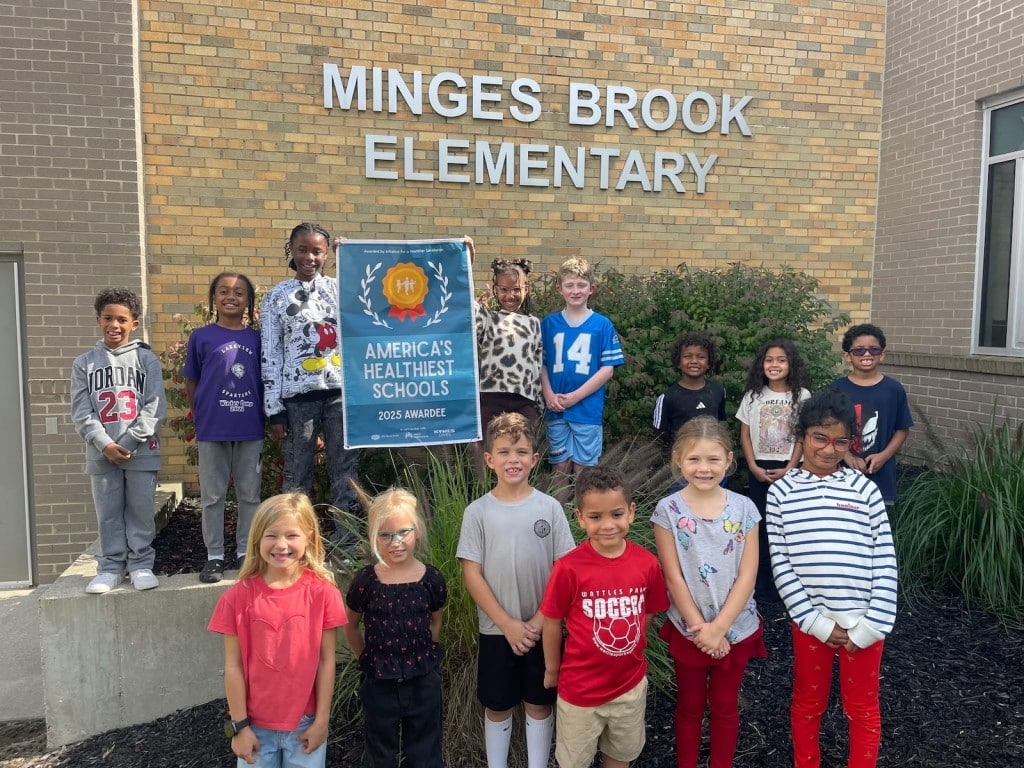
BATTLE CREEK, MI — Minges Brook Elementary School is one of two schools in Michigan to make the 2025 list of America’s Healthiest Schools.
Lansing Catholic High School also made the annual list, a recognition effort that began in 2007, “to honor schools for the key role they play in advancing the health and well-being of students, staff, and families, says information on the organization’s website. “Applicants submit proof of implementation of best practices that support physical, mental, and social-emotional health.”
“For us here, we know academics are important, but it’s also important for our students to know that they feel safe, loved, and that they belong here,” says Heather Fausey, Principal of Minges Brook Elementary.
This year, 1,120 schools from 34 states and Washington, DC, made the list, including 168 All-Stars. Supported by Del Monte Foods, Kaiser Permanente, and Kohl’s Cares, Healthier Generation’s annual award program honors schools for creating healthier learning environments by focusing on areas such as nutrition, physical activity, mental health, and family partnerships.
“We are proud to be recognized on a national level for our culture of health and wellness that we are building together,” says Heather Fausey, Principal of Minges Brook Elementary, in a press release. “This award reflects the commitment of our staff, families, and students to creating a supportive environment where every child can thrive.”
Leading up to this most recent recognition, the school was recognized in 2024 by STARR Commonwealth and became one of the only Trauma-Informed and Resilience-Focused elementary schools in the United States through STARR’s Trauma-Informed, Resilient Schools initiative, which was started in 2018.
Since that time, Hutchings says Starr has trained individuals employed in more than 190 Michigan early childhood centers, K-12 schools, Intermediate School Districts, Parochial Schools, and Colleges. He says some of those educators who have been trained have gone on to become trainers with STARR.
“Prior to the creation of the Trauma-Informed, Resilient Schools program, Starr worked with many schools on a program called ‘No Disposable Kids,’ which started in 2004,” he says.
Similar to the format at other schools, professional trainers with STARR worked with Minges Brook’s principal and staff and trained them in foundational trauma-informed content, which focuses on 10 steps to create a trauma-informed, resilient school, says Beau Hutchings, Professional Learning Advisor with STARR.
Trauma-informed care in schools is “a comprehensive framework that recognizes the widespread impact of trauma and adverse childhood experiences Adverse Childhood Experiences (ACEs) and integrates this knowledge into school-wide systems, policies, and practices to promote the physical, psychological, and emotional safety of students and staff,” according to the National Education Association (NEA). “Key components include fostering safe and trusting relationships, training staff to identify trauma’s effects on learning and behavior, and shifting disciplinary practices toward therapeutic and supportive techniques to prevent retraumatization.”
The content, developed by STARR to provide this type of care, is “really accessible and gives anybody who works in the school space an opportunity to learn the 10 steps,” Hutchings says.

Those 10 Steps are:
1. Focus on Resilience
2. Understand Trauma as an Experience
3. Foster Connections
4. Prioritize Social and Emotional Skill Development
5. Establish Safety
6. Promote Play and Breaks
7. Believe the Link Between Private Logic and Behavior
8. Partner with Families and Community
9. Support and Invest in Staff
10. Collect and Utilize Outcome Data
In working with students who are experiencing times of emotional challenges in school, Hutchings says STARR’s training offers creative and evidence-based practices to work with them to address the issue and present solutions. This type of training, he says, is crucial at a time when there is a shortage of mental health practitioners.
STARR’s training is present in all 50 states and some countries. Hutchings says one of their trainers recently worked with educators in Dubai.
“We give these schools the tools to create their own team of people who can do some of this work,” he says. “We have so many resources at our online store. If you’re noticing certain behaviors in a kid, we offer up an activity you could use to address that. Unless they’re being physically challenging, this is a way to keep a student in class instead of asking them to leave.”
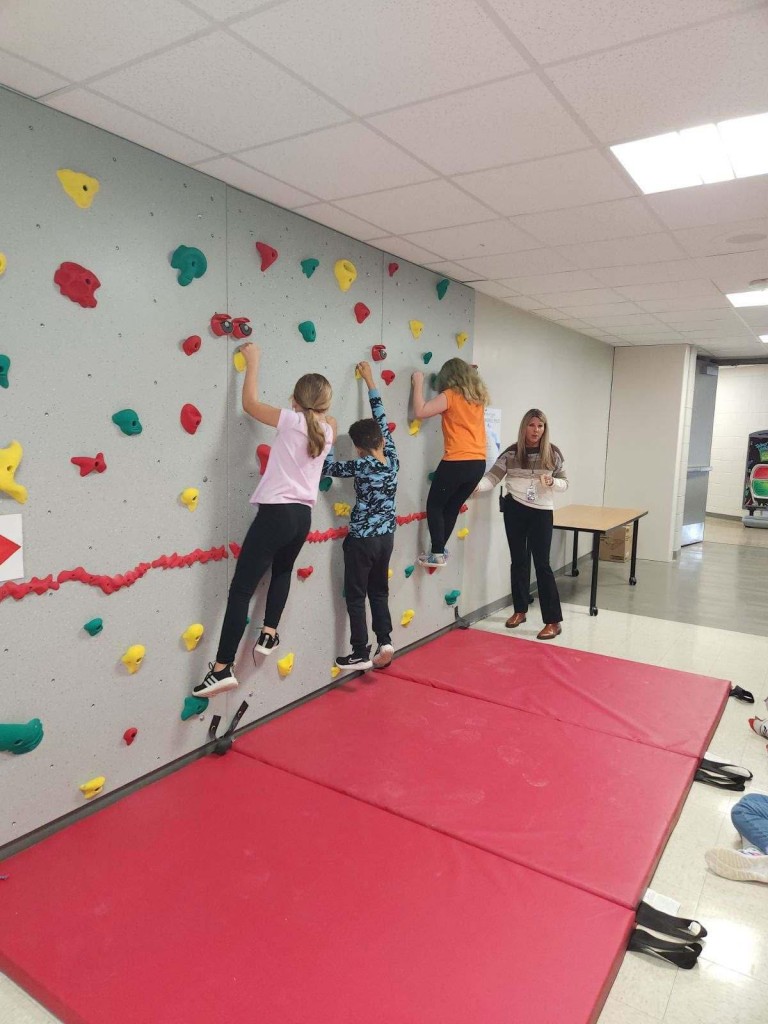
Fausey says Minges Brook focuses on resilience.
“We teach our kids to have the ability to achieve positive outcomes despite whatever outcomes they’ve had in their lives. We understand trauma as an experience and how to respond to behavior rooted in trauma and teach students to thrive,” she says. “We foster connections among our students through the Circle of Courage. We’ve created positive relationships for our kids so they feel safe. We prioritize social-emotional skill development.”
Becoming a school of choice
At one time, Minges Brook was not a school that many parents wanted their children to attend.
That has since changed. Fausey says, “Our total school population in 2019 was 250. Now we’re between 385 and 400.”
She became Principal in 2018. One year later, the school’s work with STARR began. She says this and other efforts led to an increased number of families choosing the school for their children.
Minges Brook now serves as an example of what can be achieved and frequently gets visitors from other schools who want to see trauma-informed work in action, Hutchings says.
Before getting into the real work of the 10 Steps learning process, Fausey and teachers filled out surveys and evaluations to get a baseline measurement of their thoughts on trauma-informed training, Hutchings says.
He gives a shout-out to Fausey and Renee Giddings, a Resilience Coach at the school, for creating a team of people “who really want to implement the work with fidelity. This is a key component of this work to create systems change in schools by breaking apart the Code of Conduct and Handbook and weave in trauma-informed practices.”
In addition to the trauma-informed focus, Minges Brook offers health services to students through a school nurse who also is able to offer resources and make referrals to Summit Pointe and Grace Health, says Jessica Day, a Kindergarten Teacher at Minges Brook who was instrumental in getting a grant for the STARR training. Fausey credits her with getting so many grants to get things.

“Everything we’ve gotten and built, we’ve done on our own done on our own,” Fausey says.
Initiatives like these is how the school became a two-time national winner of the American Heart Association’s NFL PLAY: 60 Day of Play competition in 2023 and 2024.
Students also participated in a Kids Heart Challenge through the American Heart Association.
“We taught the kids CPR (Cardio-Pulmonary Resuscitation) and we had a service-learning project where we did a whole lesson on heart safety and heart health,” says Day.
This included a presentation by the school’s lead cafeteria staff, who talked with teachers and students about healthy snacks, which students then tried their hand at making.
In a school where 67 percent of students qualify for free or reduced lunch, the focus on healthy eating goes beyond discussion and example.
At the end of each school week, bags of food are given to students to take home for the weekend.
“We don’t ask any questions,” she says. “We make sure whoever needs one gets one.”
There has never been a time when Fausey has witnessed students making fun of other students based on socio-economic status. She credits the safe and welcoming environment created at Minges Brook for both students and staff with ensuring a nurturing atmosphere where everyone feels loved and valued.
“Our staff go above and beyond their regular work hours,” she says.
“Our kids are ready to learn, smiling and happy,” says Day.
Author

Related Articles
Distance isn’t a barrier to supporting LGBTQ youth in Battle Creek, Vermontville, and beyond
Christine Terpening founded “I’ll Be Your Rock” in Vermontville to create supportive spaces for LGBTQ youth, and her organization is now expanding to rural communities across Michigan and beyond.

It’s scholarship season at the Battle Creek Community Foundation
Battle Creek Community Foundation scholarships help local students like Nylayiaha Smith afford college and inspire them to give back to their community.

Voices of Youth: A safe haven for children entering foster care comes to Battle Creek
Battle Creek’s Isaiah 117 House, set to open in March of 2026, seeks to reduce trauma for children entering foster care by providing a safe and supportive place during removal and placement.