Battle Creek’s SHARE Center faces uncertain future as mental health funding shrinks
“Realistically, there’s no amount of foundation funding that’s going to make up for what we have lost and will lose,” says Robert Elchert, Executive Director of the SHARE Center. However, partnerships and pivoting have helped with the gap.
Editor’s note: This story is part of Southwest Michigan Second Wave’s On the Ground Battle Creek series. All photos and videos were taken by John Grap, On the Ground Battle Creek Photographer, unless otherwise noted.
BATTLE CREEK, MI — Mental health services provided by Summit Pointe to clients of Battle Creek’s SHARE Center are in jeopardy because of a decision that will reduce the prepaid inpatient mental health plan providers in Michigan and reduce the number of regions for those plans.
“What MDHHS (Michigan Department of Health and Human Services) is looking at doing is privatizing community mental health,” says Robert Elchert, Executive Director of the SHARE Center.
Calhoun County is one of eight counties included in Southwest Michigan Behavioral Health (SWMBH), which is among 11 Prepared Inpatient Health Plans (PIHP) in Michigan. These are regional organizations that manage Medicaid services for behavioral health, substance use disorders, and intellectual/developmental disabilities for residents in specific counties. These plans, like the Mid-State Health Network or Region 10 PIHP, coordinate specialty mental health and substance use treatment benefits for eligible individuals in their service areas.
In mid-October, the Court of Claims gave the go-ahead to MDHHS to proceed with its plans.
“The 11 PIHPs will be consolidated down to three, and SWMBH will go away,” Elchert says. “This will take all of the decision-making about funding out of our local community. These changes are only going to make it more difficult for us to keep up with needs, which will increase as people lose SNAP (Supplemental Nutrition Assistance Program) and Medicaid.”
“Being designated an overnight emergency shelter complicates our financial situation, but it will also keep people from dying.” — Robert Elchert, Executive Director of the SHARE Center
Cuts to Medicaid will mean fewer people able to access services and less funding for Summit Pointe and the SHARE Center.
“We have one contract with Summit Pointe this year that will sustain drop-in opportunities for our clients through next September, but this is contingent on how many of our clients can get to go to Summit Pointe for mental health visits,” Elchert says.
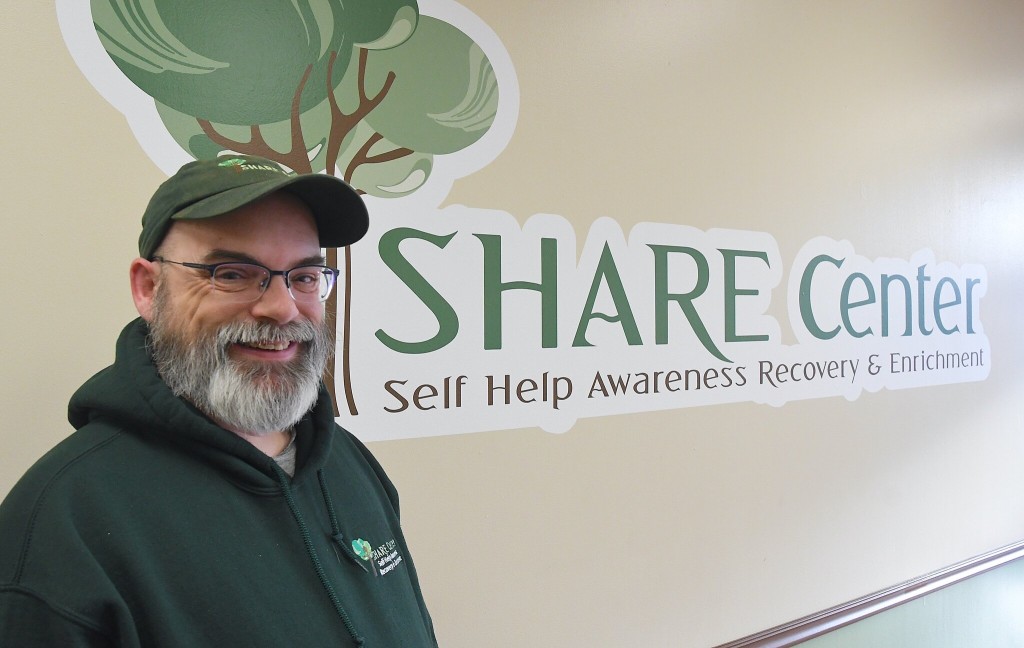
The SHARE Center has a partnership with Grace Health, which will triage “our clients having a mental health crisis. We don’t know what the impact of the new contract with Summit Pointe is going to be with Medicaid cuts. It all depends on what happens in the next month or so.”
Too much in play, too many unknowns
The cold reality of rules and regulations set in in January for the SHARE Center after it opened its doors to provide overnight shelter for Battle Creek’s most vulnerable residents.
In addition to having to replenish $9,000 in funds used to provide food, shelter, and adequate staffing, city officials reached out to let the SHARE Center’s Elchert know that the organization was not zoned to provide overnight shelter.
That all changed in October when the city officially approved the SHARE Center to be an overnight emergency shelter.
“Nonprofits like the SHARE Center in Battle Creek, a daytime shelter, are facing significant deficits due to federal funding reductions (primarily from Medicaid) and are at risk of closing operations.” — Michigan Coalition Against Homelessness.
“This takes effect when the temperature is 20 degrees or below and the Haven of Rest is full,” Elchert says in a Facebook post. “This will undoubtedly save lives this winter.”
But the designation comes at a cost, one that Elchert says is worth it.
“Being designated an overnight emergency shelter complicates our financial situation, but it will also keep people from dying,” he says.
On Thursday, from 6 to 8 p.m., a fundraiser will be held at Riverside Country Club to benefit the SHARE Center. The Cher for Share event will feature a Cher impersonator, a taco bar, music, and an array of raffle prizes.
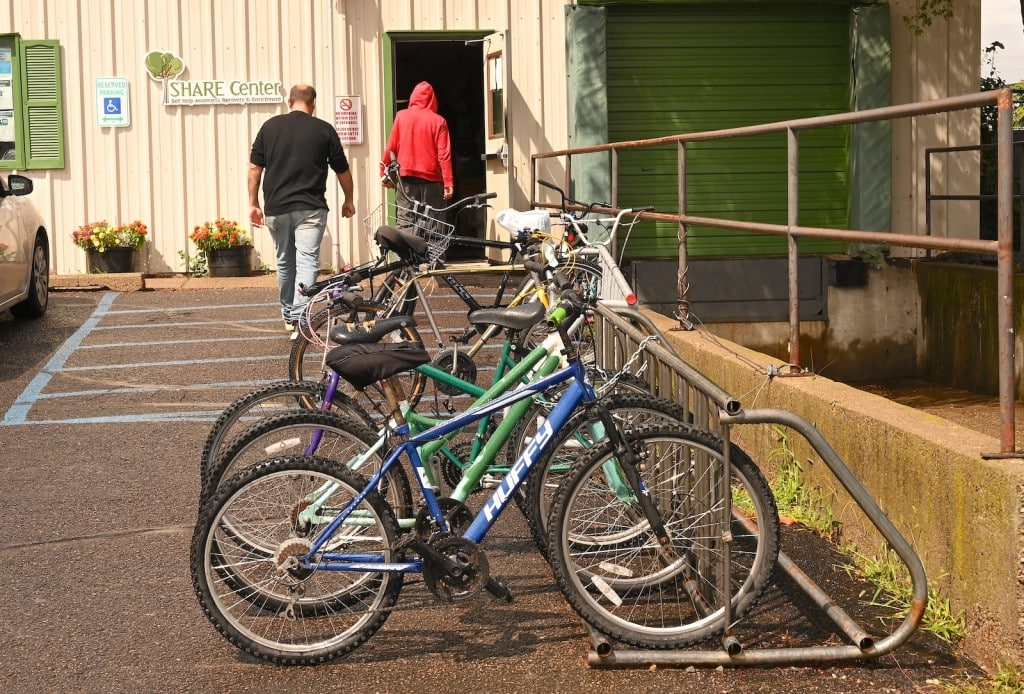
Elchert says he hopes that the fundraiser will be a success and provide funds to offset the cuts that he knows are coming.
The MDDHS Emergency Shelter Program (ESP) has historically used a per diem rate of approximately $18 per bed night to reimburse shelter providers for basic lodging services. This does not take into account the cost of food and staffing.
The continual rollout of cuts in federal funding to programs impacting almost every sector has been a focus for Elchert, who said in August that the organization he leads was facing a $160,000 deficit.
“Nonprofits like the SHARE Center in Battle Creek, a daytime shelter, are facing significant deficits due to federal funding reductions (primarily from Medicaid) and are at risk of closing operations,” according to the Michigan Coalition Against Homelessness.
“Among these funding cuts is close to $20,000 from the Federal Emergency Management Agency (FEMA) for community meals funding,” Elchert says.
When he took the helm at the SHARE Center seven years ago, Elchert says the organization was serving 20,000 meals per year. That number has since grown to 60,000.
“The needs keep growing, and inflation keeps going up. We have always been upside down in our meal program,” he says.
For the calendar year that ended in September, the SHARE Center served just over 1,557 people who made a total of more than 63,000 visits. This includes 687 new clients served, who made a total of more than 12,000 visits.
These numbers don’t reflect an anticipated increase in individuals seeking a safe place to land for the day where they have access to free meals and support services, Elchert says.
Although foundations, including the Battle Creek Community Foundation (BCCF) and the W.K. Kellogg Foundation (WKKF) have been “very supportive” and “very flexible” with their grants, Elchert says they are being inundated with requests.
BCCF provided funds to cover some of the costs incurred when the SHARE Center pivoted to an overnight shelter. This included repairs to a sprinkler system that had broken.
“Realistically, there’s no amount of foundation funding that’s going to make up for what we have lost and will lose,” Elchert says.
Author

Related Articles

March for Meals Month celebrates 63 Years of delivering more than food in Southwest Michigan
During March for Meals Month, Milestone Senior Services is hosting a baking-themed fundraiser while highlighting how its volunteer-driven Meals on Wheels program delivers nutritious meals and vital wellness checks to hundreds of senior residents each day.
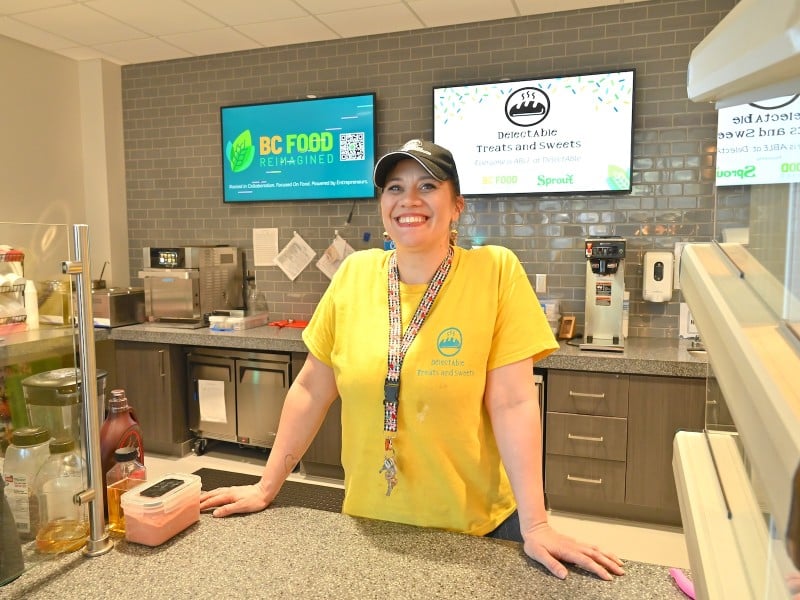
A sweet solution to a serious employment gap: DelectAble Treats and Sweets emphasizes Able
In Battle Creek, Felicia Jaramillo opened DelectAble Treats and Sweets to create jobs for people with disabilities, inspired by her sons and her own recovery journey.
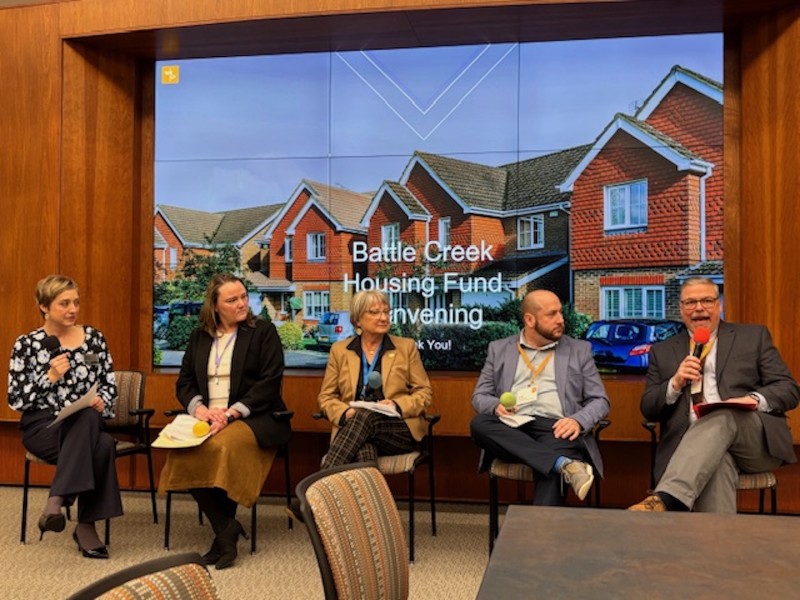
Battle Creek unites to build 1,000 homes and power economic growth
Battle Creek leaders launched a new Housing Fund to address a 3,000-unit shortage, aiming to build and rehabilitate 1,000 homes by 2035 to boost workforce growth and community stability.