As visa barriers tighten, a Battle Creek violist’s international career hangs in the balance
As national debates over visa access intensify, the career of Mexican-born violist Sarai Aboites-Nunez, Operations Manager of Battle Creek’s Music Center, highlights how U.S. immigration policy affects internationally trained artists who contribute to American cultural life.
Editor’s note: This story is part of Southwest Michigan Second Wave’s On the Ground Battle Creek series. All photos are courtesy.
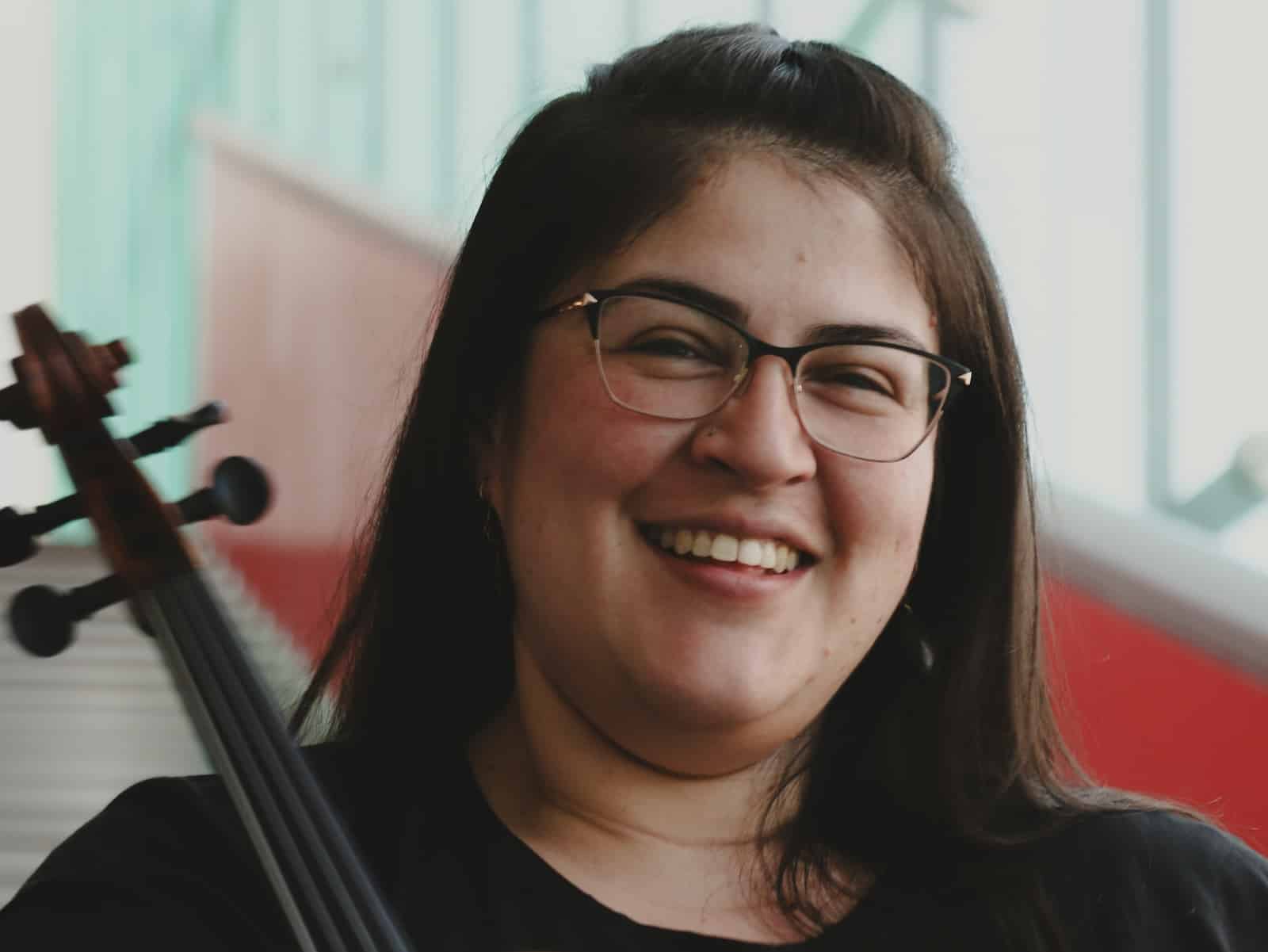
BATTLE CREEK, MI — Sarai Aboites-Nunez’s first performance as a professional musician after coming to the United States in 2017 was with the Battle Creek Symphony Orchestra.
Since that time, the Mexican-born violist has performed throughout the United States and worked in various roles, her most recent being the Operations and Personnel Manager with The Music Center of South Central Michigan.
However, that job and her career as a musician in the U.S. are in jeopardy unless she is able to secure a long-term visa.
“I am currently in the United States under a student visa with employment authorization. After multiple legal consultations, it became clear that the appropriate long-term visa category for my professional profile is the O-1 artist visa, which is reserved for individuals with sustained national and international recognition in the arts,” Aboites-Nunez says. “This process requires comprehensive documentation of my international performances, leadership roles, awards, and professional engagements. I am now preparing that petition in order to continue working legally in my field in the United States.”
Greater opportunities in the United States prompted her to give up a stable job and benefits with the Sonora Philharmonic to pursue a Doctorate of Musical Arts in Performance (DMA) at Michigan State University. She received a full merit-based scholarship to study there and served for three years as Head Librarian of the University Symphony at MSU while performing with regional orchestras and teaching at the Okemos Academy.
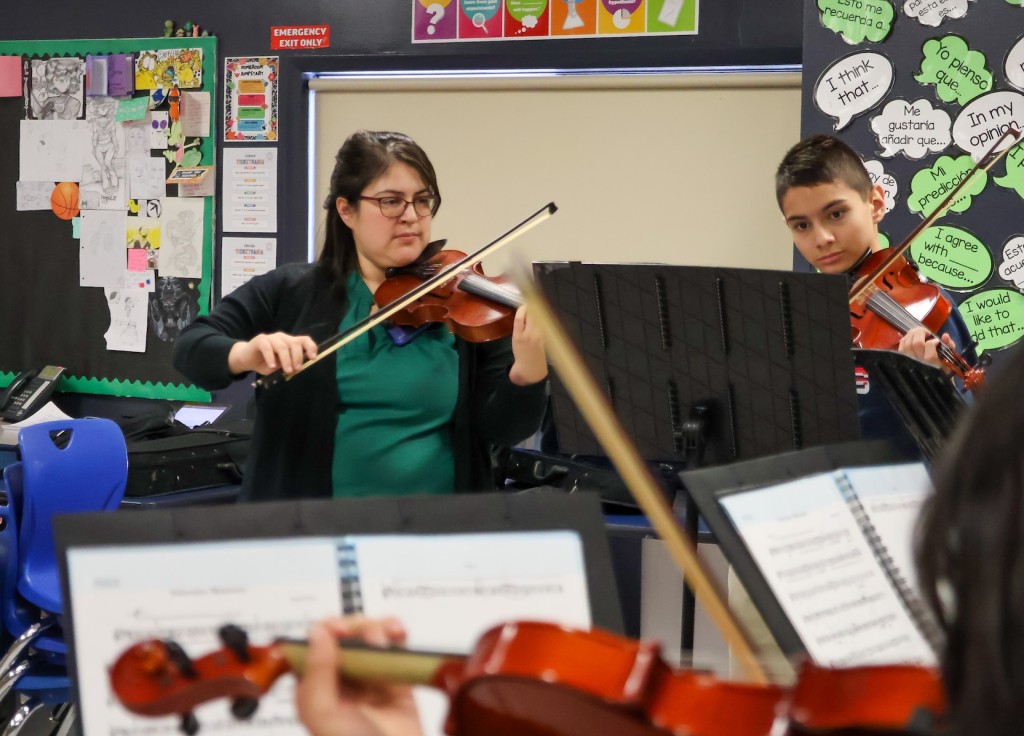
“After the pandemic ended, I transitioned into the role of Operations and Personnel Manager with the Music Center while continuing to perform whenever scheduling and concert production allowed,” Aboites-Nunez says.
Her duties with the Music Center include overseeing musician hiring, assisting in planning the concert season, running auditions, coordinating equipment rentals and purchases, managing scheduling, and handling communications between musicians, staff, and venues. She also processes payroll, arranges payments and lodging for guest artists and staff, and ensures that concert production logistics stay on track.
In between these responsibilities, she has performed throughout Michigan with ensembles such as the Jackson Symphony, Midland Symphony, Lansing Symphony, and Battle Creek Symphony Orchestra, as well as with the Billings Symphony Orchestra in Montana. The BCSO and BSOM share a connection through Maestra Anne Harrigan, who retired in 2025 as Music Director of the Billings Symphony and continues as Music Director of the BCSB.
In addition to her performances locally and nationally, Aboites-Nunez says she has a few favorite places internationally where she has performed.
“The Konzerthaus in Berlin stands out for its extraordinary acoustics,” she says. “I also deeply value performances at the Sala Nezahualcóyotl and Blas Galindo in Mexico City, as well as Orchestra Hall in Detroit.”
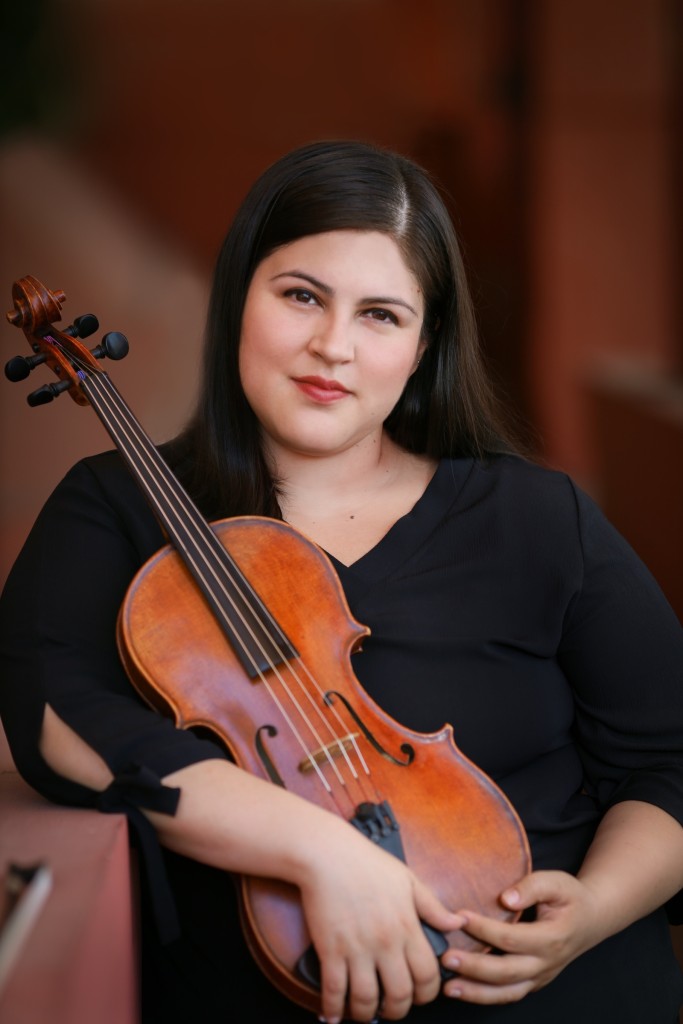
Her favorite composers are Tchaikovsky, Shostakovich, Prokofiev, and Silvestre Revueltas, and she particularly enjoys performing their music. She says she knows when she’s connected with the audience when “audience members approach me after concerts to ask questions about the music or express their amazement and emotional response to what they heard.”
For her, the most challenging aspect of being a professional musician is “finding balance and maintaining a schedule that often differs from other professions. As a freelancer, commuting long distances can be physically demanding, especially in difficult weather conditions. Beyond logistics, maintaining the discipline of practice while managing a complex schedule.”
Finding her rhythm
Aboites-Nunez’s journey as a musician began when she was 17-years-old. Her instrument of choice was the violin.
But, before the violin was the cello, which she became “fascinated” with after hearing the music of two rock bands — Rasputina and Apocalyptica — who prominently featured the cello.
”When I tried the cello in high school, I found it physically awkward to play despite having played guitar before. Then I asked a classmate to teach me violin, which she did for the modest price of a can of Coca Cola during recess,” Aboites-Nunez says.
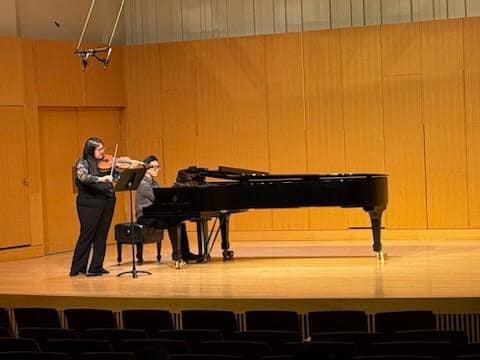
A few months later, she was taking private lessons at the after-school program with the Sonora Philharmonic with Ara Ghukasyan. That experience, she says, introduced her to a fast-paced classical training, first through the youth orchestra, and then playing as a soloist with the youth orchestra a year and a half later.
“That experience opened the door to a continuous classical training and eventually to my professional path,” she says.
Her music journey during high school, where she studied piano and the violin, and participated in choir and youth orchestra.
When she was growing up, she says there was no promotion of a classical music program. Her earliest musical exposure was through the Recorder and popular guitar lessons from elementary through secondary school. She says she did not see or hear a violin in person until the last years of middle school, when a classmate brought one to school and performed Czardas, which made a lasting impression on her.
“Because I started playing at age 17, I had to progress very quickly. Six months after beginning private lessons, my teacher encouraged me to join the youth symphony. That experience led to numerous youth orchestra engagements throughout the state.”
After completing her undergraduate studies in Mexico, she began her studies at the Music Conservatory of Chihuahua and later transferred to the Conservatory of Las Rosas in Morelia, where she earned a Bachelor of Music degree.
She moved back to Chihuahua, where she spent three years performing as a substitute viola with both the Symphony and Philharmonic. During her first year there, she transitioned from violin to viola.
”I had been considering the switch for some time, and it ultimately aligned better with my artistic voice, since the lower register always attracted me,” she says.
In her final year in Chihuahua, she attended her first Viola Festival in Mexico and was selected to perform in the festival’s closing concert. A few months later, she was invited to join an international orchestra competition in Brussels with the Zacatecas University Symphony Orchestra.
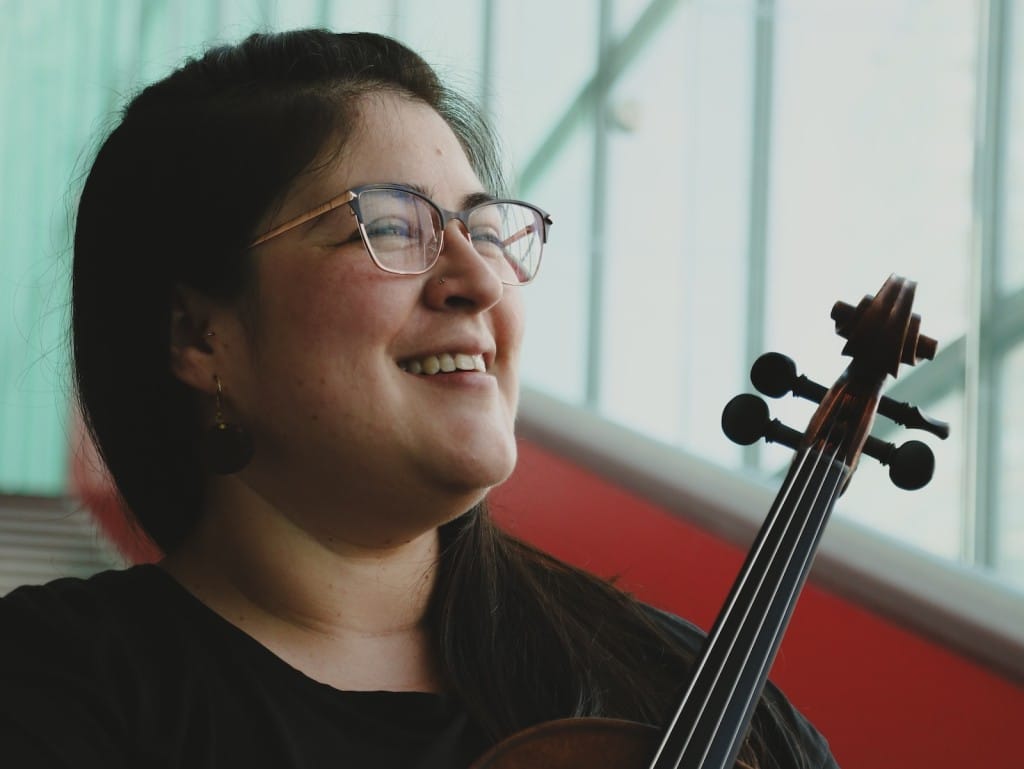
“We won first place and received the Summa Cum Laude Prize, the highest distinction. During our stay, we also performed at the European Parliament, something I will never forget.”
In the summer of 2011, she attended a music camp that led to her transfer to the Conservatory of Las Rosas. She then relocated to Morelia to complete her studies.
”Being in Morelia was transformative, as it is a major international center for the arts,” Aboites-Nunez says.
But, she always had her sights set on the United States because of its proximity to her home country and cultural familiarity as someone from a northern Mexican state, and the professional opportunities and wide variety available in the American classical music ecosystem.
“I often say I moved from one border to the other.”
While she never entertained the possibility of moving across that border again, this is what she faces if she is unable to secure the long-term visa.
”I would have to return to my home country and effectively rebuild my career from the ground up, facing a significantly reduced range of professional opportunities. Mexico’s classical music infrastructure is highly centralized, with most major cultural institutions and performance activity concentrated in Mexico City neighbor states or central states, besides the cosmopolitan cities.”
This would mean a substantial interruption to the international career she has spent years establishing through performances, leadership roles, and professional engagements in the United States.
“While I would be closer to my family, it would represent a major setback in terms of artistic continuity, visibility, and professional growth,” Aboites-Nunez says.
Author

Related Articles

Tribal Officers go undercover to combat human trafficking along I-94 corridor
The Nottawaseppi Band of the Huron Potawatomi received a $900,000 federal grant to combat human trafficking in Indian Country through undercover operations, victim-centered interventions, and collaborative efforts with local law enforcement along Michigan’s I-94 corridor.

Lifting the ‘barrier of downpayment funds’: Calhoun County unveils Home Ownership Assistance Program
Calhoun County is investing $3 million in foreclosure funds through a partnership with Independent Bank to generate down payment and closing cost assistance for eligible homebuyers, turning past foreclosures into new opportunities for homeownership.
New city manager aims to tackle Battle Creek’s challenges — and harness its assets
Three months into her role, Amanda Zimmerlin discusses how her Ohio background prepared her to tackle Battle Creek’s housing, homelessness, and childcare challenges while championing the city’s assets.