
Advocates work with Kalamazoo church to shelter the unhoused from sub-freezing temperatures
As extreme cold hit Kalamazoo, St. Luke’s Episcopal Church and local advocates opened an emergency warming shelter, underscoring both community compassion and gaps in services for the unhoused.
Editor’s Note: All photos were taken by Al Jones.
KALAMAZOO, MI — Megan Giambrone knew last Thursday that it was time to do more for the homeless.
Weather forecasts warned that sub-freezing temperatures were on the way this week, along with a possible winter storm and wind-chill factors below zero. She knew that the tents, sleeping bags, cardboard boxes, and pallets that unhoused people use outdoors would be severely tested by Mother Nature. And lots of people would need somewhere warm to go.
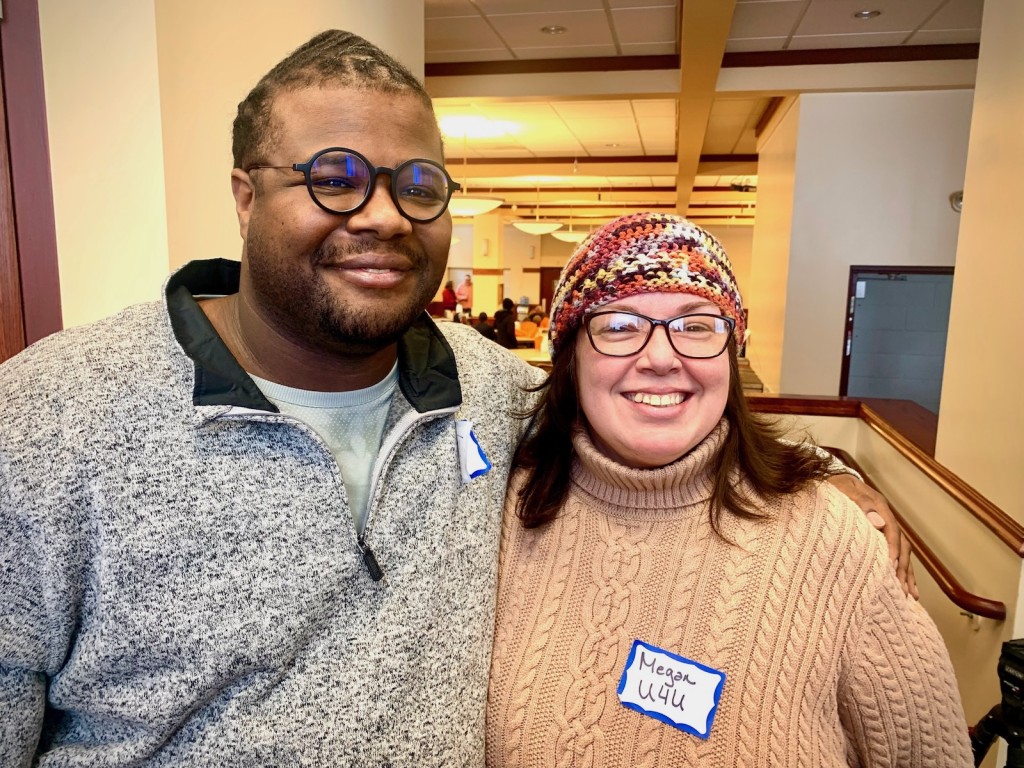
“We saw that the weather was coming,” says Giambrone, who is co-founder and president of U4U (United for the Unsheltered) of Kalamazoo. “And the fact that it was going to get colder, we were just saying we’ve got to do something. But we couldn’t find anyone who was willing to open their doors.”
She connected with several other nonprofit, grassroots organizations that advocate for the homeless, then asked St. Luke’s Episcopal Church in downtown Kalamazoo to open its cafeteria to serve as a warming shelter for those in need on Monday and Tuesday (Jan. 19 and 20).
Knocking on doors until someone answered
“And so when St. Luke’s took this amazing step to open their doors,” Giambrone says happily on Monday, “we just made sure to show up and show out and do them proud.”
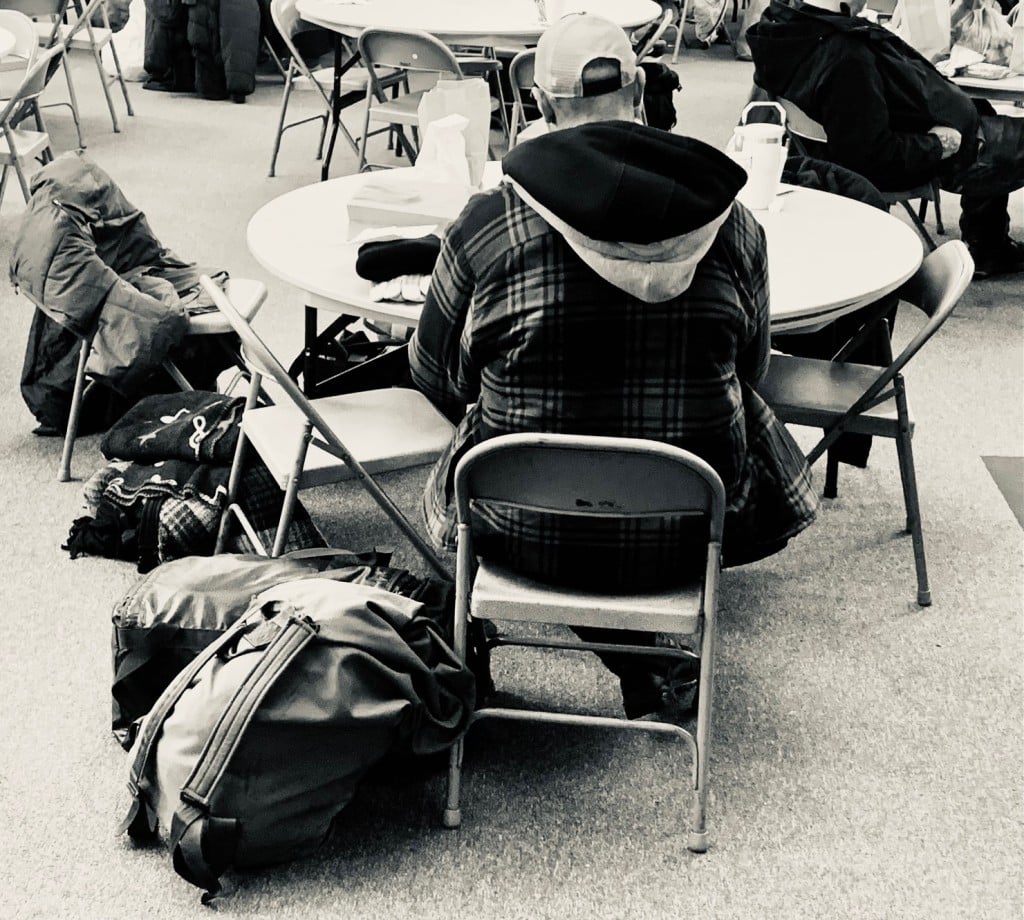
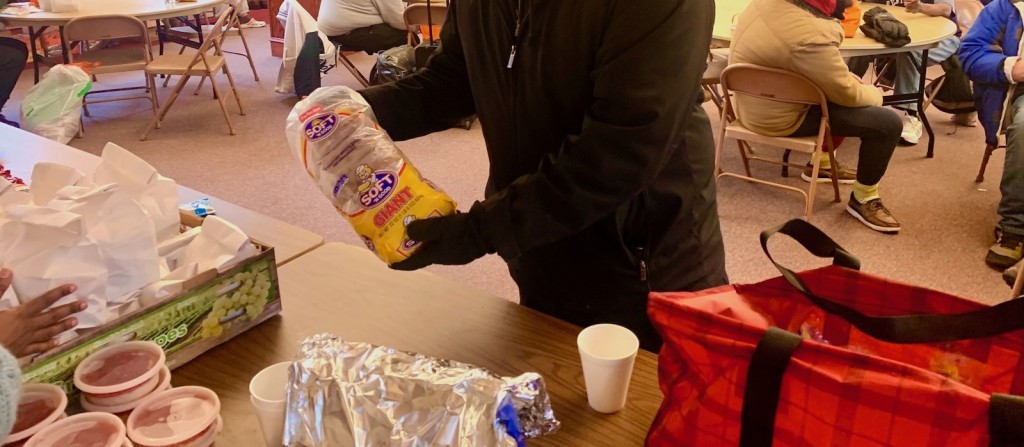
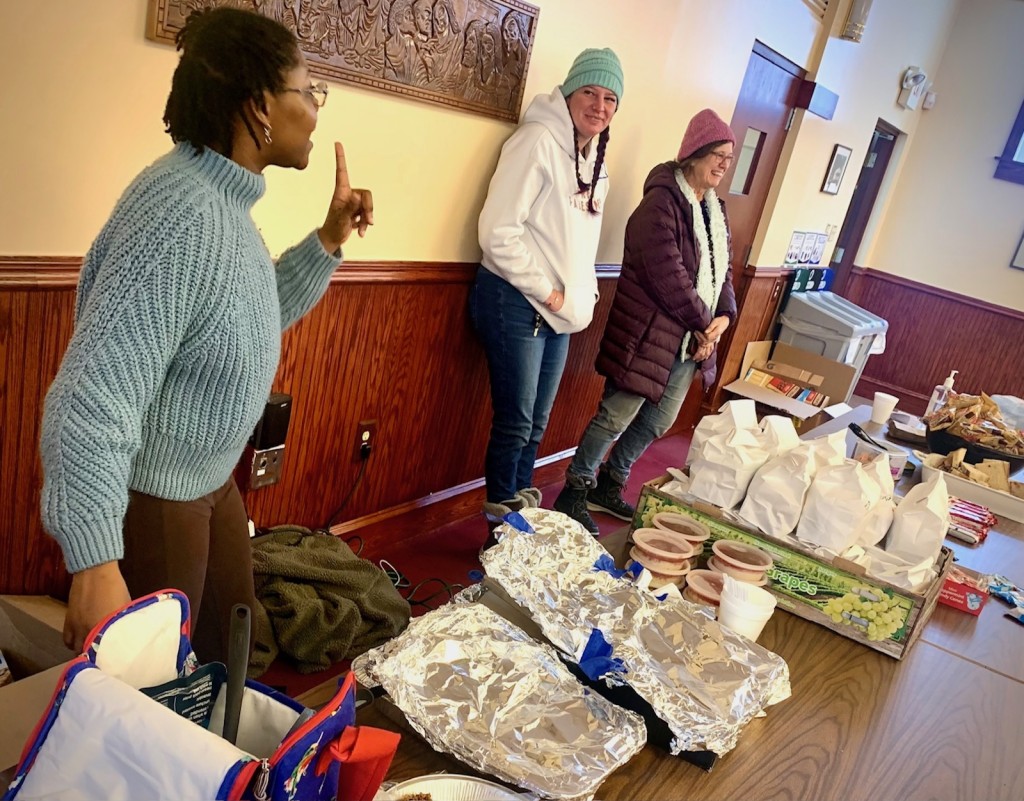
The response was impressive. Approximately 150 unhoused individuals were provided a place to stay warm, along with food, hand warmers, gloves, coats, hats, socks, and even dress shirts for those seeking to arrange job interviews. The efforts included sandwiches and treats from various sources, including WMed’s Street Medicine Kalamazoo.
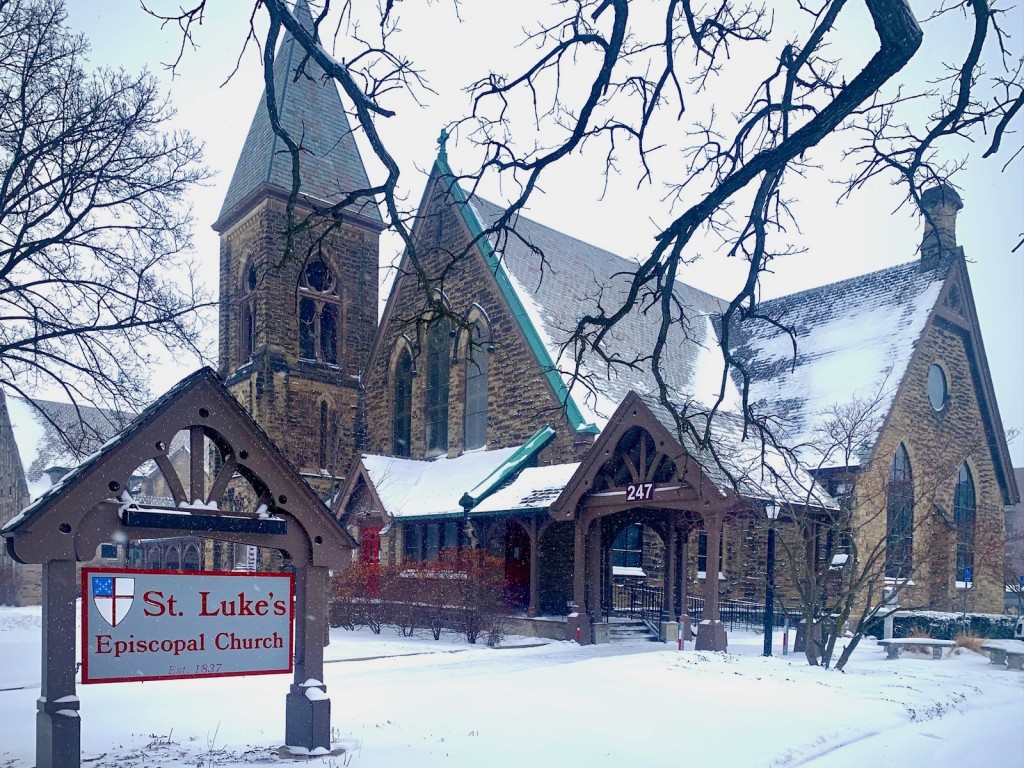
“There was a need,” says Rev. Michael Hueschen, a minister and the facilities manager for St. Luke’s. That was recognized quickly by the church’s vestry (board of directors), and they said yes to the idea. After the idea of opening a temporary shelter was announced at Sunday service, the church had more volunteers than it had room to accommodate, Hueschen said. The shelter was to be open from 10 a.m. to 2 p.m. on Monday and Tuesday.
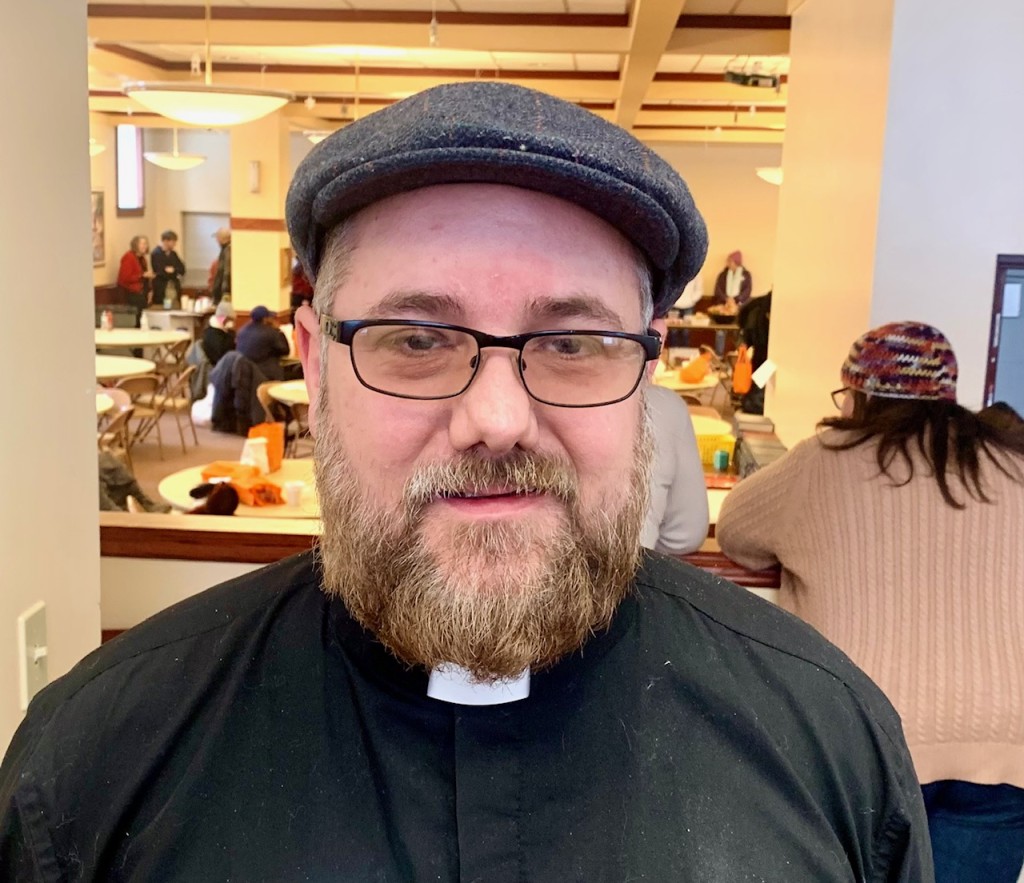
“We’ve always reached out to the community,” he says. “We have multiple ministries, from our Diaper Bank that provides thousands of diapers per week (to those in need), to hand-outs through our Children’s Clothing Closet and our Partners in Transition, which gives furniture, pots and pans, cutlery, and beds to women with children that are going from homelessness to homes.”
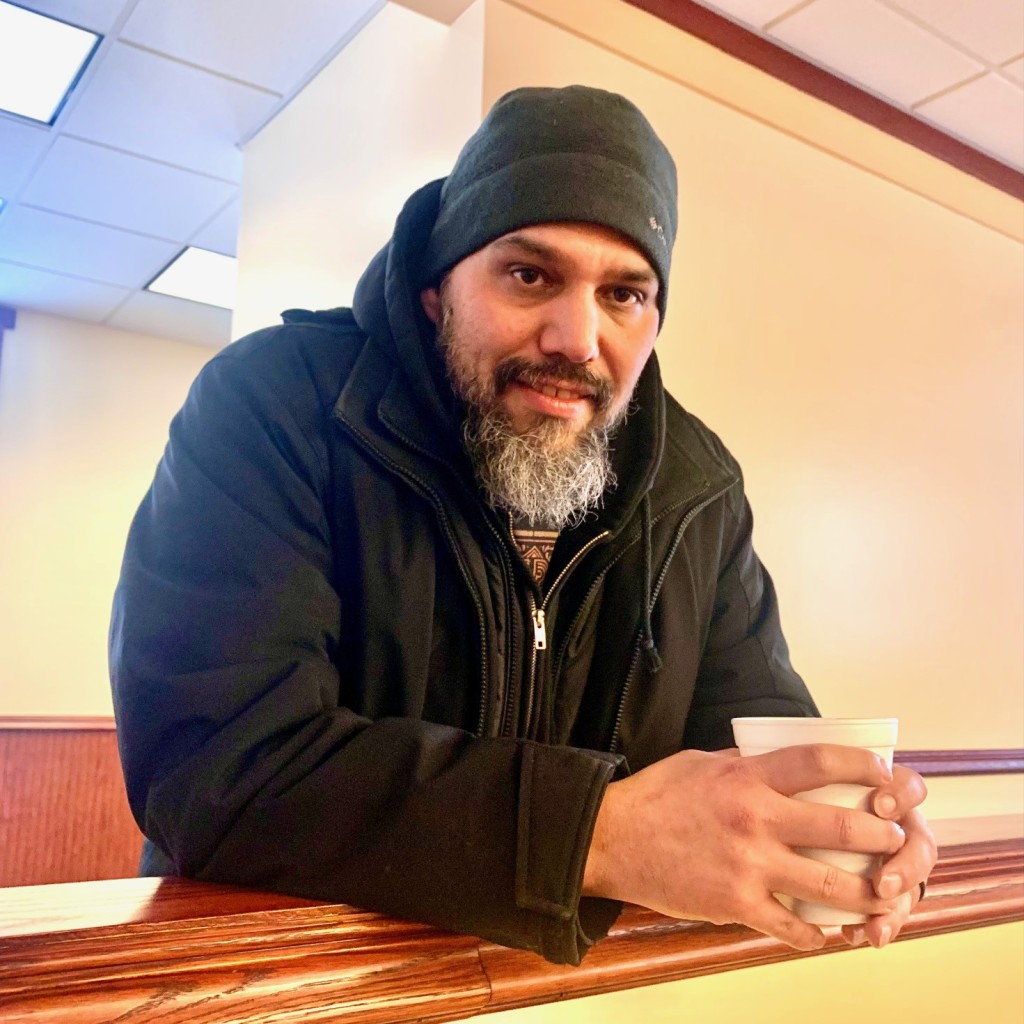
Silvano Vanegas, a community organizer and activist for the homeless, as well as a board member of the Southwest Michigan Coalition, says there are not enough daytime warming centers in greater Kalamazoo. And those that are available — he mentioned the Portage District Library at 300 Library Lane, and the Zhang Senior Center at 203 E. Centre Ave. in Portage — are miles away from downtown Kalamazoo, where many unhoused people congregate for services. So he was enthused by St. Luke’s effort and volunteers.
“What is happening today has not happened this winter,” Vanegas says of the warming shelter at St. Luke’s. “We’ve had somebody die on the street due to exposure to extreme cold. We have been advocating with the churches, the city, and the county to try to get warming shelters during the cold days.
He was referencing Christopher Nurrie Jr., 29, who was found unresponsive on Dec. 9, 2025, at Dr. Martin Luther King Memorial Park on North Rose Street. His father told authorities that young Nurrie was homeless but was supposed to be staying at someone’s house. He had undergone surgery and spent five days at a local hospital not long before he was found.
His death during a December cold snap added urgency to the need for not only more emergency housing but more housing of all types to help prevent homelessness.
“This is a pilot,” Vanegas says of the temporary warming shelter at St. Luke’s. “So far it’s going well. But we only have today and tomorrow. That’s all they’ve agreed to. So we need more churches to step up.”
“Everyone can do more,” Giambrone says.
Kalamazoo Vice Mayor Drew Duncan, who says that while the City of Kalamazoo has been working to help the unhoused, the temporary warming place serves notice that more is needed. He said Kalamazoo Metro Transit and Kalamazoo Public Safety give rides to unhoused people in need. He says, “Their whole directive during these cold days is if you see people in the road, to give them rides to warming shelters.”
He says the Kalamazoo Public Library and partners in Portage have also opened as warming shelters.
“We are trying to fill the gaps,” Duncan says. “But what this does for us today is it shows people who may not have had the appetite to invest in this type of work that if you don’t do it, the community is totally willing to do it. I think this gives me a lot to go back to my colleagues with on the Kalamazoo City Commission and at the county (the Kalamazoo County Board of Commissioners) and show them there’s a model that works.”
Giambrone says, “Today, honestly, is kind of a ground-breaking trust-building (event), showing that it can be done…A bunch of us from about 10 organizations decided we have to do something, we have to do something. I reached out to Father Michael at about 7 o’clock on Thursday and said, ‘I don’t suppose …”
And she says it took St. Luke’s less than an hour to give a positive response.
What more is needed?
“We desperately need more shelters that can open quickly in emergency situations and stay open through overnight hours,” Giambrone says. “We have a large network of volunteers to help and organizations to coordinate — if local governments, agencies, and churches provide the spaces.”
Vanegas says, “I think that right now we have so many silos (groups working separately). Everybody’s trying to do something, and I’m not faulting what they’re trying to do. But we need to have the city and the county and all these churches. And they need to be talking together.”
The Southwest Michigan Coalition, which was started in February of 2025, has recognized the need for more communication and collaboration.
Duncan says his wish would be for the city to find a sustainable shelter for all those in need, one that is accepted by its adjacent neighbors, that has enough beds to accommodate, and that provides wrap-around services. That may include help for those struggling to find a job, go back to school, or find help with child care. It could also connect individuals with treatment to overcome substance addiction and mental health issues.
“I would say that we need to be looking at a space that is close to transportation, resources, and wrap-around services,” Duncan says. “I think it’s important to have a place where people don’t freeze. But if we want to solve the root cause of homelessness, we’ve got to start activating wrap-around services.”
Author

Related Articles
Voices of Youth Q&A: Understanding immigration concerns in Kalamazoo
Amid rising nationwide immigration enforcement and fear, a Kalamazoo youth interviews El Concilio CEO Adrian Vazquez to explore how local organizations support immigrant families facing detention, uncertainty, and community-wide impacts.
Distance isn’t a barrier to supporting LGBTQ youth in Battle Creek, Vermontville, and beyond
Christine Terpening founded “I’ll Be Your Rock” in Vermontville to create supportive spaces for LGBTQ youth, and her organization is now expanding to rural communities across Michigan and beyond.
Tribal Officers go undercover to combat human trafficking along I-94 corridor
The Nottawaseppi Band of the Huron Potawatomi received a $900,000 federal grant to combat human trafficking in Indian Country through undercover operations, victim-centered interventions, and collaborative efforts with local law enforcement along Michigan’s I-94 corridor.