
A Way Home — Housing Solutions: This story is part of Southwest Michigan Second Wave’s series on solutions to homelessness and ways to increase affordable housing. It is made possible by a coalition of funders, including the City of Kalamazoo, Kalamazoo County, the ENNA Foundation, and Kalamazoo County Land Bank.
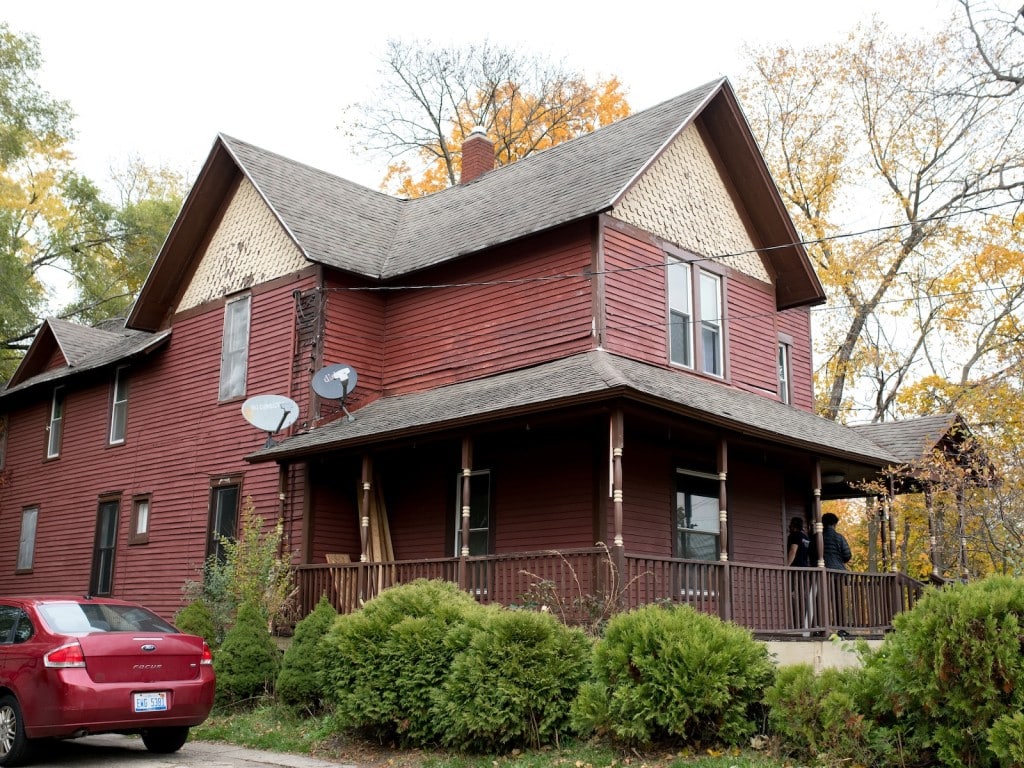
A big old boarding house on Bryant St. is being made ready for unhoused families.
They’d better make it quick, because a snowy winter is coming, and so are the babies.
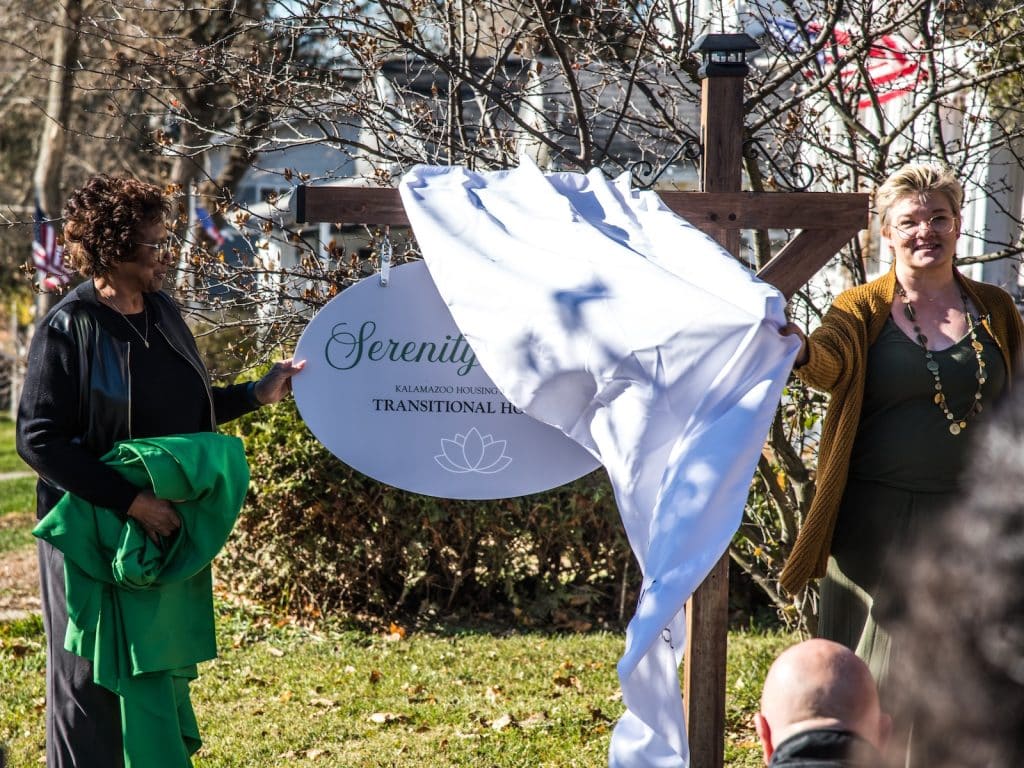
Kalamazoo Housing Advocates plans to open ten rooms of transitional housing at 531 Bryant Nov. 17. The requirements to move in are: tenants must be unhoused, be able to pay $525 to $575 per room, and be willing to participate in KHA’s programs.
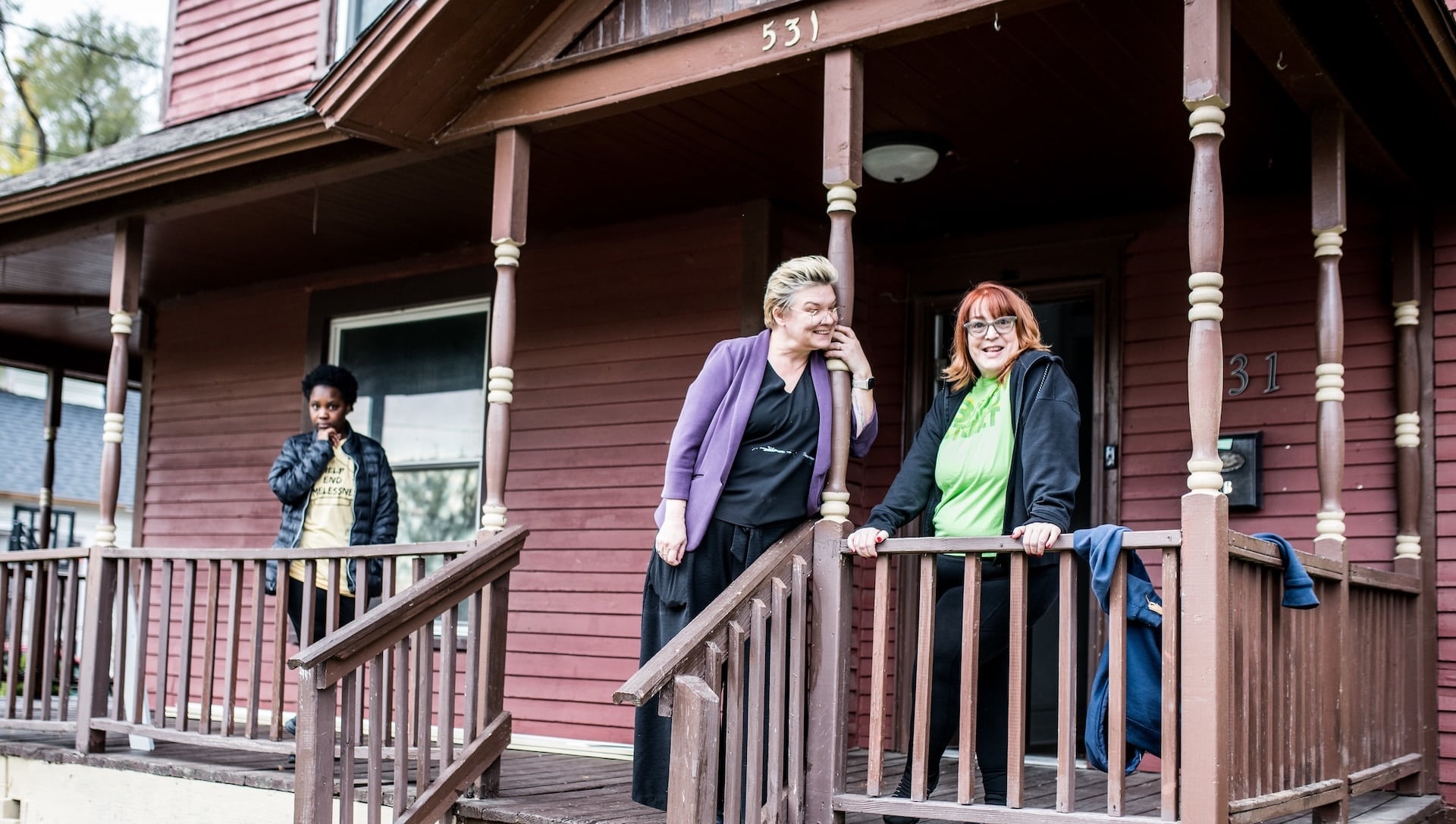
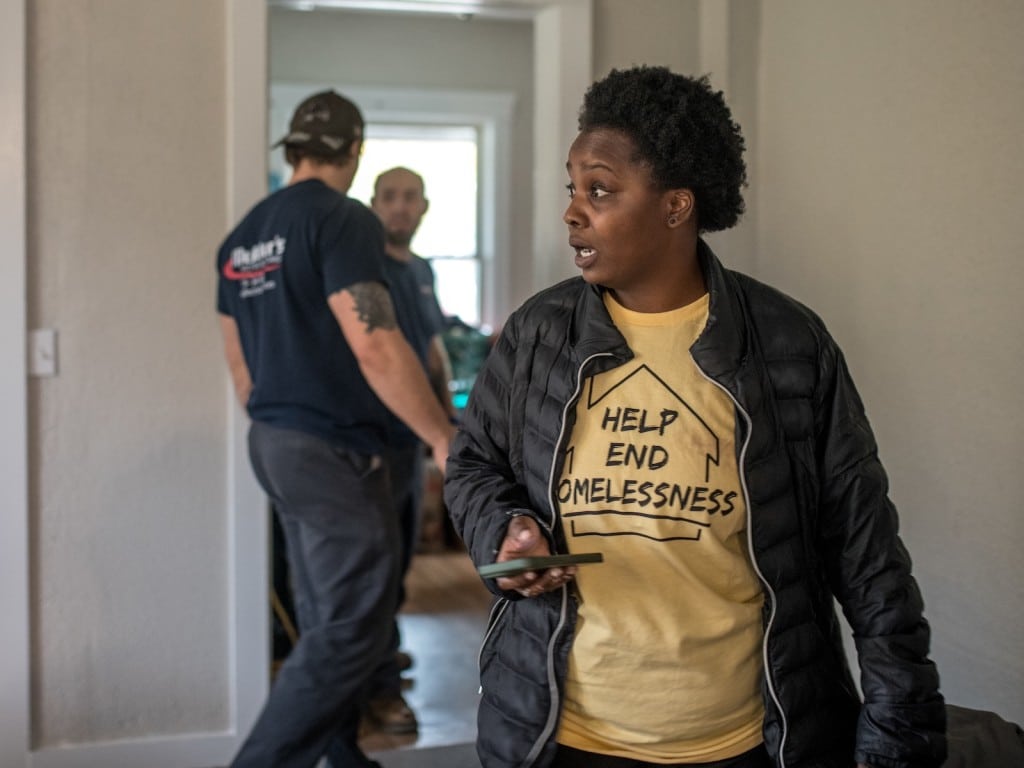
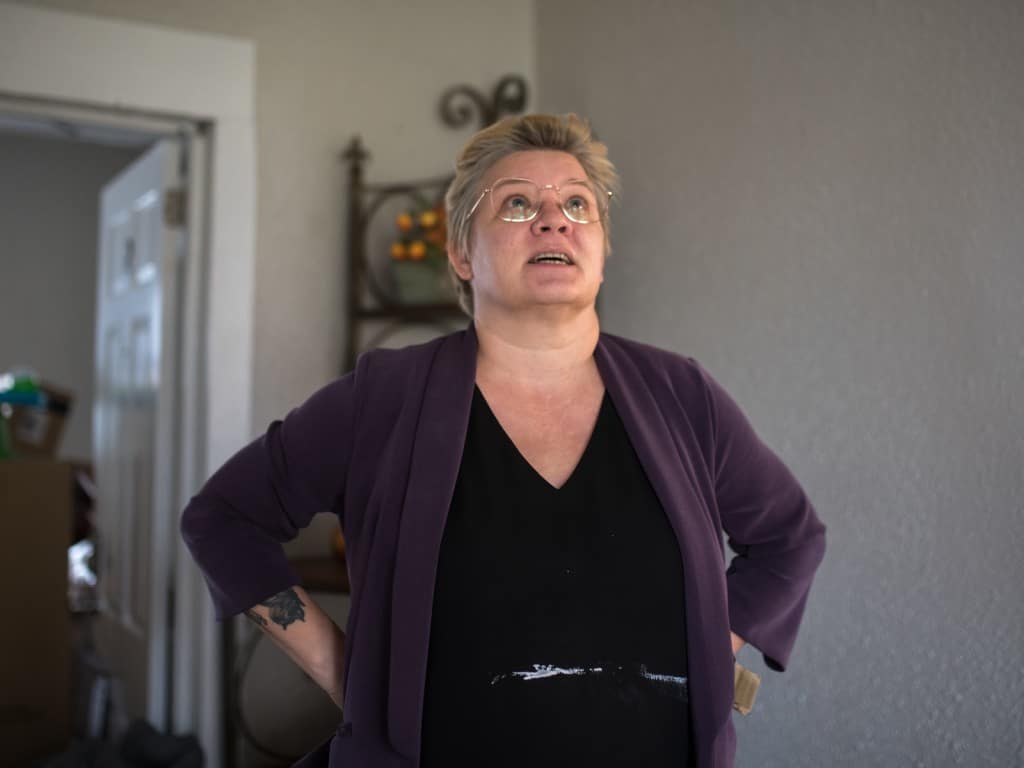
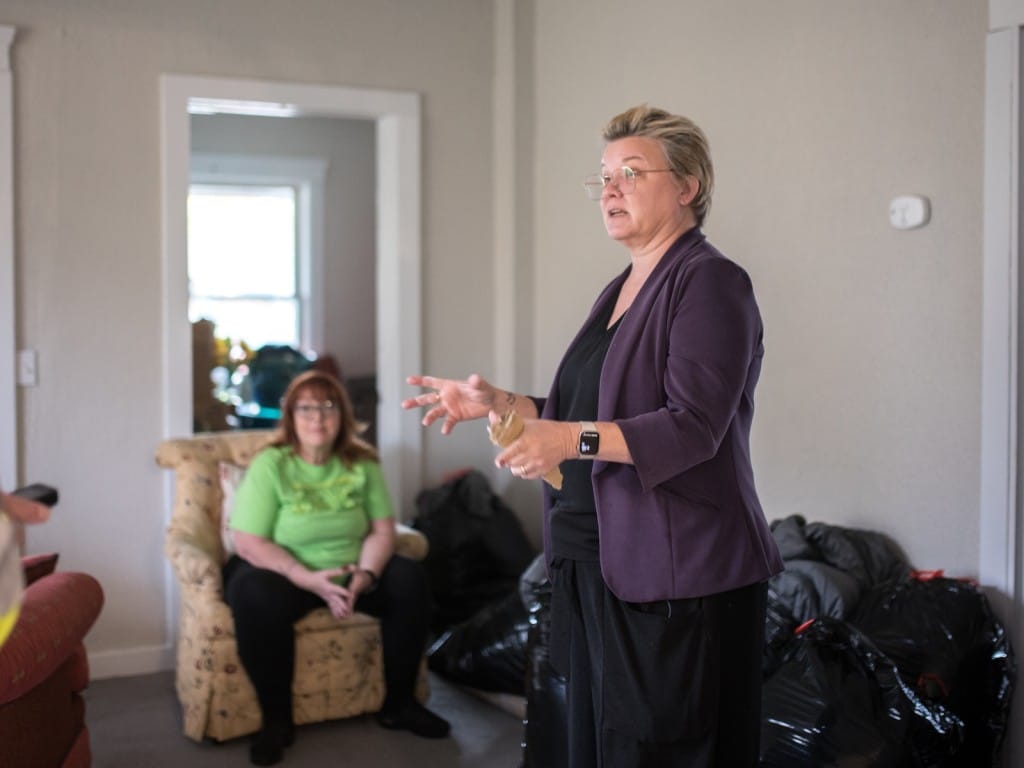
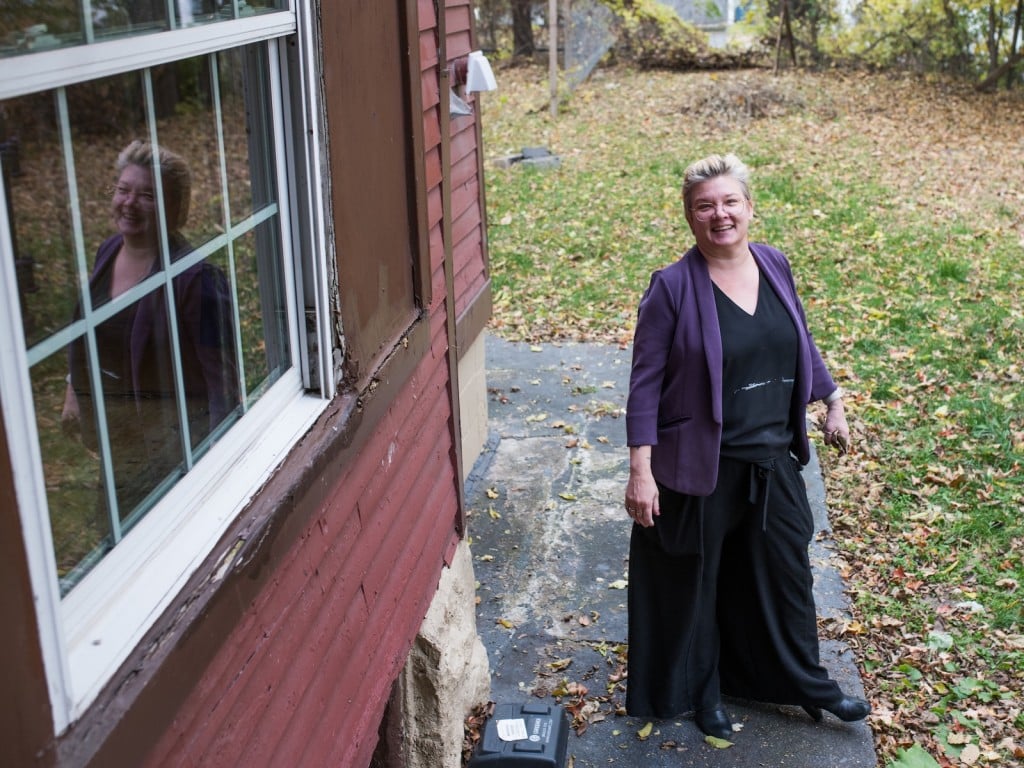
KHA Executive Director Sarah Cain was overseeing work done on 531 Bryant in early November. It was obvious she also had been doing some of the work, since her hands and snazzy black office attire were stained with paint.
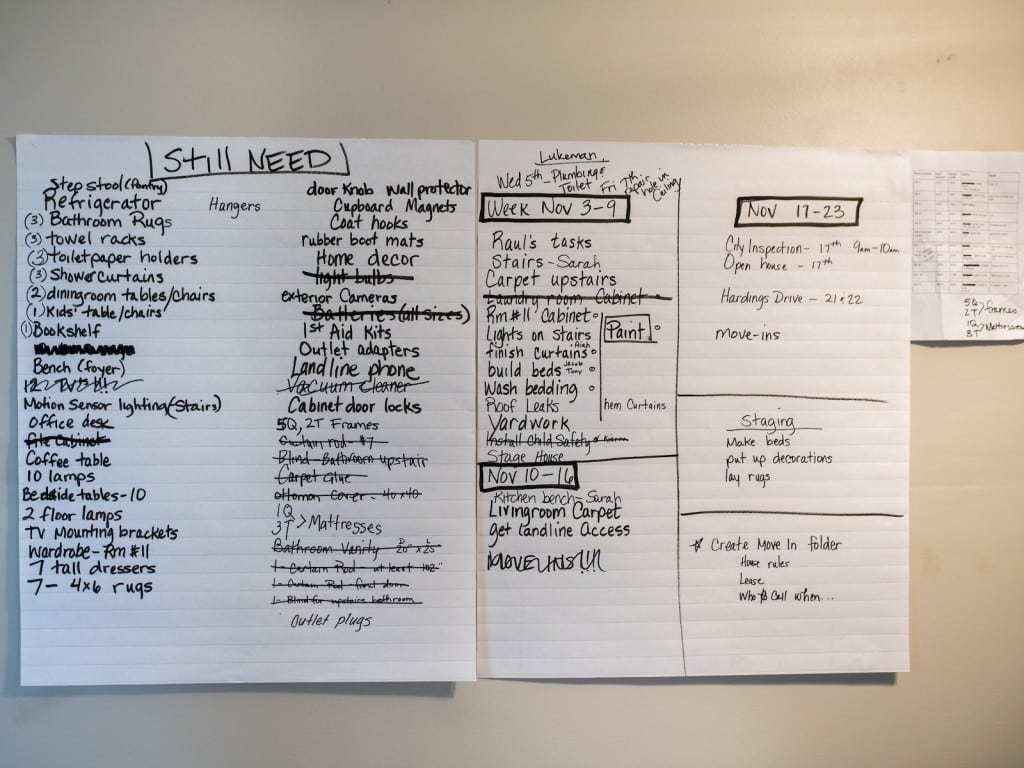
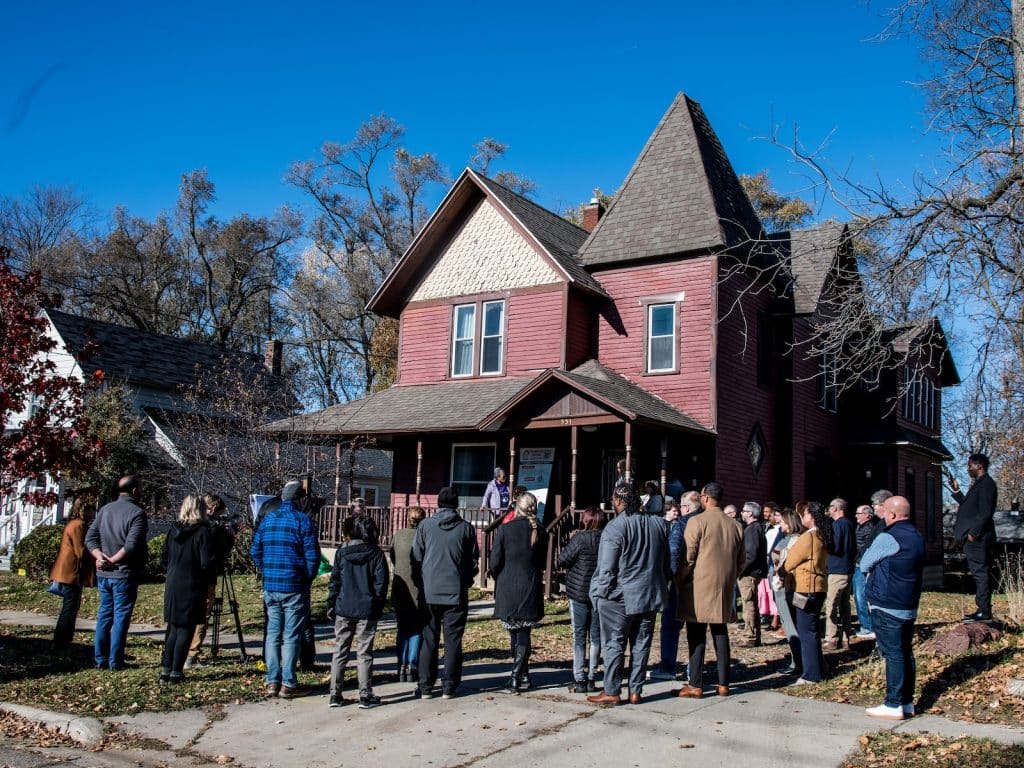
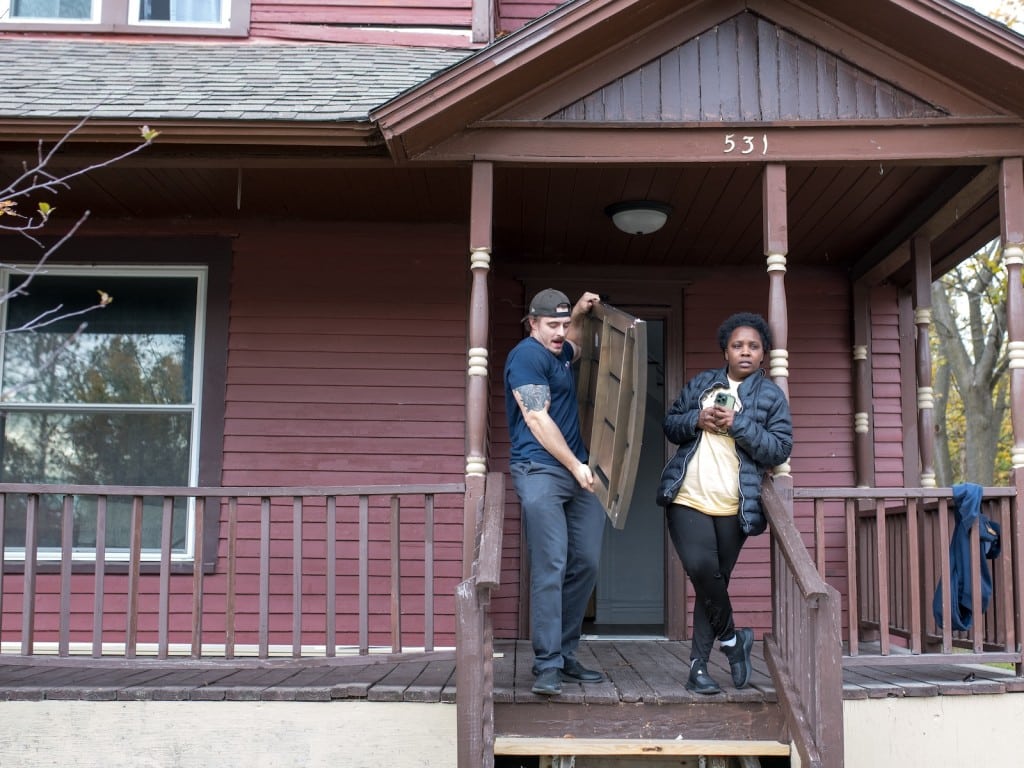
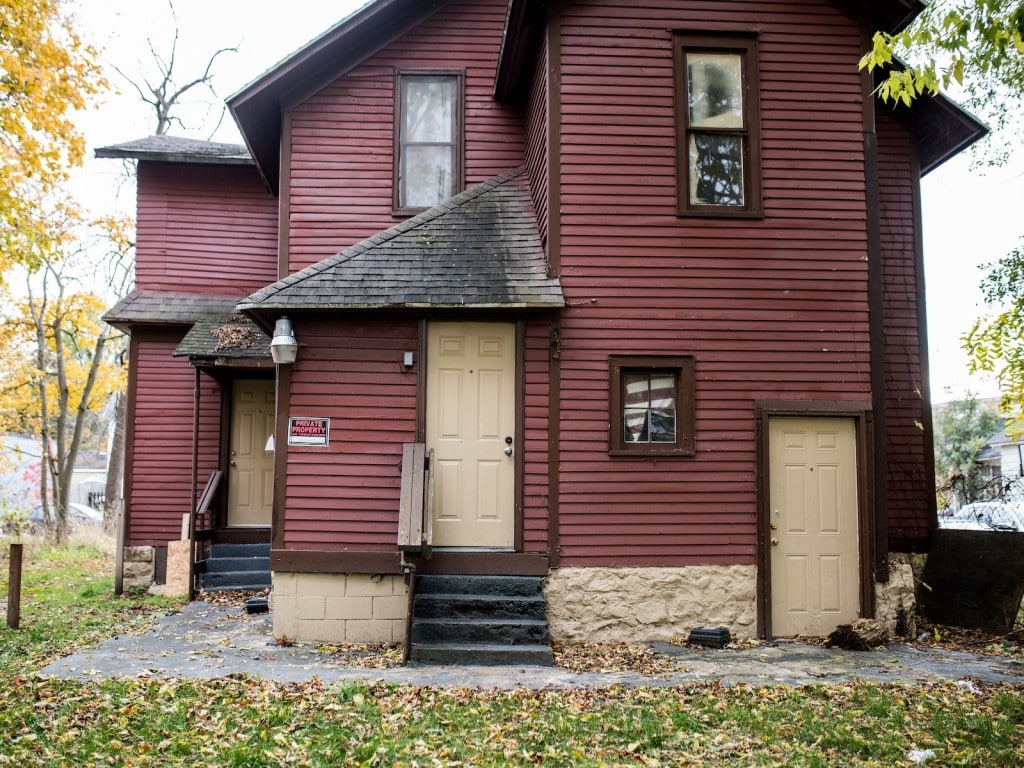
The house, in the Edison neighborhood, was built in 1898 and used as a boarding house. As far as Cain can tell, it’s been unoccupied for ten years. The roof is leaking, carpet needs to go, plumbing needs to be fixed — an extensive list of issues that need to be addressed to make it habitable.
Ten families, large to small, are already on the waiting list for rooms. Three of the families are five-person households. We’ve got two that are four, one that is a single who’s pregnant —”
Marla LeMae, KHA Director of Programs, interrupts, “Are you talking about family sizes?”
“Yeah,” Cain says.
“All the babies have been born.”
“Oh, they have?” Cain exclaims. “Wow. The babies are born!”
Together, they catalogue all the youngsters they expect. Two newborns now, an eight-month-old and a two-year-old.
The current status of many of the people set to move in is unclear. Some of the families are hard to reach — one woman and her child were recently moved out of a shelter in Kalamazoo to the nearest shelter with space, in South Bend, Ind.
Cain sounds happy, but stressed. “They’re coming in with their newborns. So, we’ve got to get this done so we can get them moved in!”
Old idea for a new housing solution
KHA is a nonprofit that supports people who are homeless or nearly homeless. The organization’s work is primarily in mediations between landlords and tenants, helping unhoused people go through the voucher process, and finding funds to help people overcome financial barriers to housing.
They’ve thought about also providing transitional housing, but that was “down the line,” in Cain’s mind.
But a couple of months ago, real estate agent Madison Lukeman, of the Lukeman Group reached out, she says. They were working with an unnamed owner of an empty house in Edison, and “We don’t know what to do with it, because you just can’t rent it out to a family. It’s got too many rooms,” Cain says Lukeman told her.
It has 11 bedrooms — one room will be used as a KHA office to provide tenant services — three shared bathrooms, a communal living room, dining room, kitchen, laundry, and a large backyard.
Numbers nailed to each door upstairs make it obvious — it was meant to be a boarding house.
Boarding houses, an old form of housing most often seen in black and white movies and TV shows, is an idea that’s been a missing option in affordable housing. Allowing unrelated people to rent long-term, cheap rooms, while sharing space in the rest of the house, could be a first step in housing for many entering the workforce.
Cain, after talking with neighbors, suspects that 531 Bryant was a boarding house up to ten years ago. But the boarding house option in Kalamazoo has been missing. Online searches for “Kalamazoo boarding house” only lead to a couple of student apartment buildings near WMU’s campus.
Rickman House is an example of housing that’s somewhat similar to what KHA hopes to do on Bryant, Cain says. But 531 Bryant is meant to be transitional.
“Requirements (to move in)are a family who is currently homeless,” she says. “And willing to work with us in our program.”
Families will sign a six-month lease, extended if needed or allowed to be terminated early if they find a better situation. Rooms will be $525 to $575, with utilities and Wi-Fi included. Rooms will be furnished with TVs, beds, and tables. Tenants’ rooms will have individual locks and security codes.

Lukeman Group is managing “the execution of the lease for the (unnamed) owner of the property,” Cain says. KHA is working on “aesthetic improvements of the house,” using donations from the community.
“They’ve been working with us for years. They’re very easygoing,” Cain says. “They understand our job, and they appreciate that we come in and do the supportive services and the advocacy and the education for the families, and so they take a chance on them.”
For 531 Bryant, Lukeman is “working on the compliance issues that have arisen that are related to City Certification, such as broken windows, the leak in the roof, and plumbing problems,” she says.
The transitional house is a pilot project; KHS has signed a one-year lease for their office space, and has an MOU (Memorandum of Understanding) with the Lukeman Group for KHS’s role in the program, to provide “supportive services, advocacy, and education,” Cain says.
It may be a pilot, but “our goal is to be there for years to come.”
KHS’s program will include classes on how to budget so one can pay rent. There will be recovery programs for those with substance use issues and tutoring for students. KHS staff will be on hand at the house weekdays and on-call for weekends. “We hope to receive a grant for a full-time housing manager next year,” Cain says.
Some food staples will be provided. Dinners are expected to be communal, with residents cooking together and eating together.
And what if disagreements arise, as those who’ve had housemates know they will? “You put that many people in one house — I mean, it happens in any relationship, right? Yeah, we’re just going to have to be mediators and understand where everybody’s coming from,” Cain says.
Corny love in the house
There might be some bickering, but Cain envisions a positive future.
“I’m picturing the life in the house as I’ve been working on things. I just keep picturing babies and toddlers and family dinners.”
There was some talk of ghosts, the presence of past boarders in the house. She hasn’t seen any.
But Cain can feel the presence of the people who will live there.
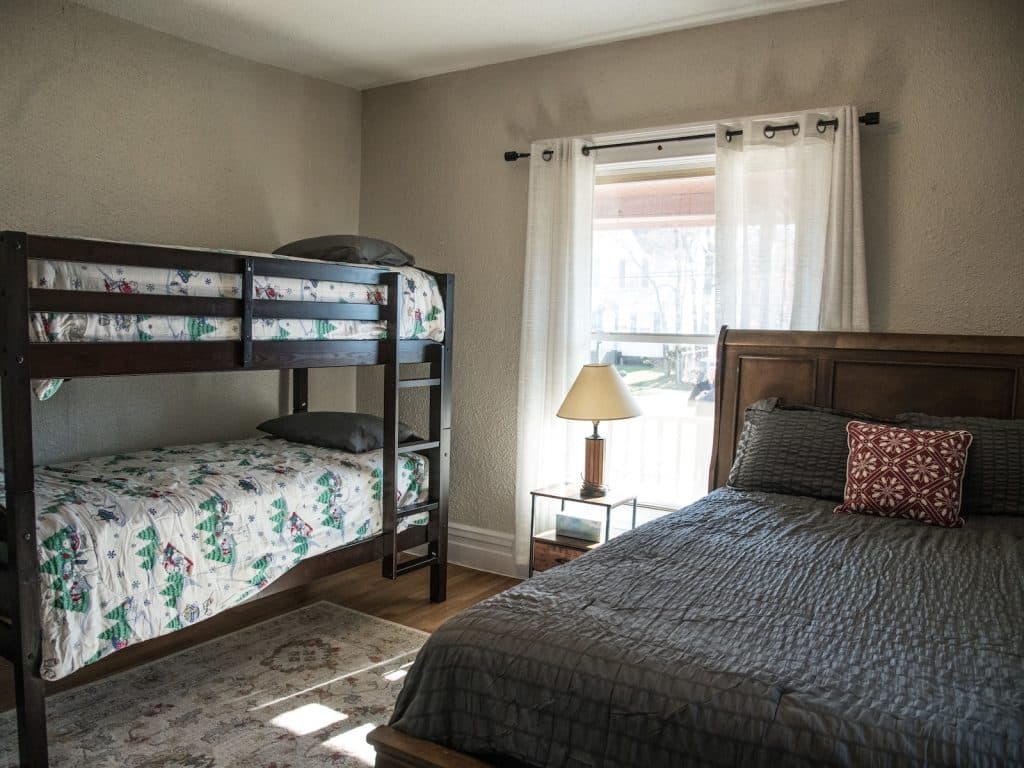
“Sitting on the couches that aren’t there right now. Watching TV, sitting at the dining room table, doing their homework, cooking dinner. I am going to have a kids’ corner for arts and crafts and all the fun stuff for kids to do,” she says.
“I picture it while I am painting or sanding the stairway,” she says. “We are going to fill this place with so much love!”
Cain brings up the “corny love thing” she talked about when Second Wave first wrote about KHA.
She’d been feeling the love from the Kalamazoo community. “We’ve been so blessed.” Sturgis Bank, First Presbyterian Church, and others have been donating goods, money, and hands-on work. There’s new vinyl flooring donated by Lowe’s, and new carpeting is coming from Home Depot.
“I am just in awe of the support we have gotten. From all of the local businesses that have been helping us, and just individuals contacting us and saying, ‘Hey, I have this expertise, so I can come in and help you with that.’ Or, ‘I have these items, I can donate them.’ It is just all pouring in with so much compassion and excitement for what we are doing,” she says.
Some of the items haven’t been a good fit for the house, like furniture that’s too old, or mismatched.
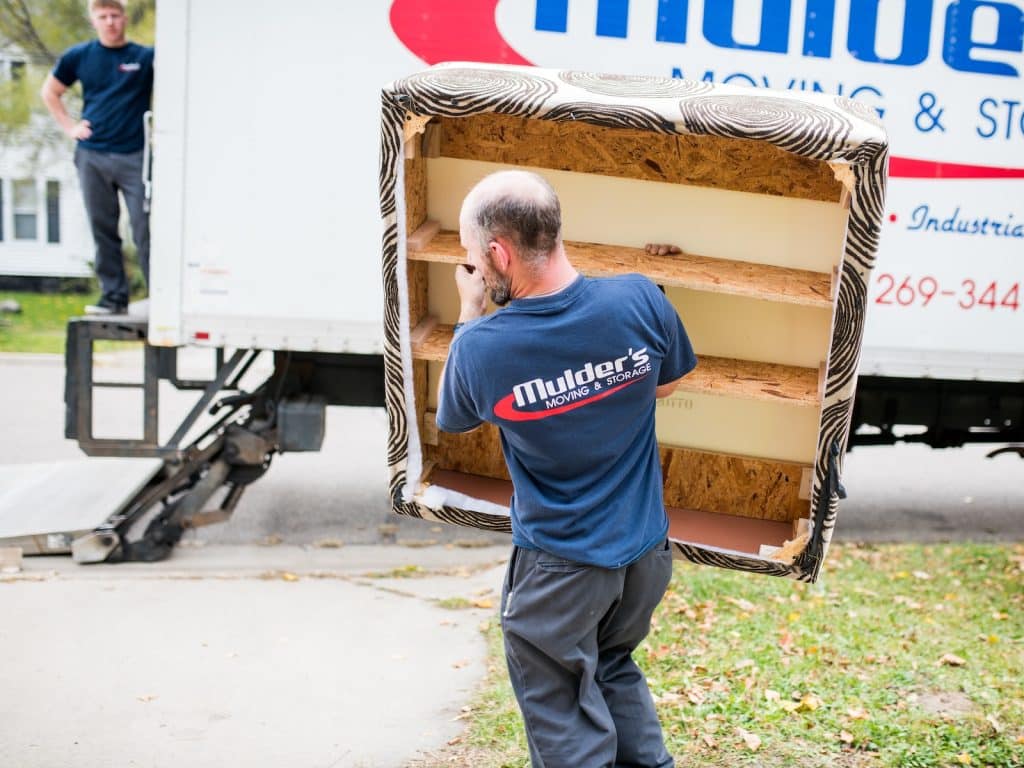
During the interview, Mulders Moving was taking out couches, old carpeting, moving the good stuff to storage, and the junk to disposal. Mulders was donating their service. “We make sure we tip them,” Cain says.
A mover went out the door with something under his arm.
Cain stops him. “I’m so sorry — that’s a crib that we need!” she tells him.
There will be babies in the house soon.
In a Nov. 12 update, Cain says they will be ready for a community open house on Nov. 17, with families able to move in that week.
Author

Related Articles
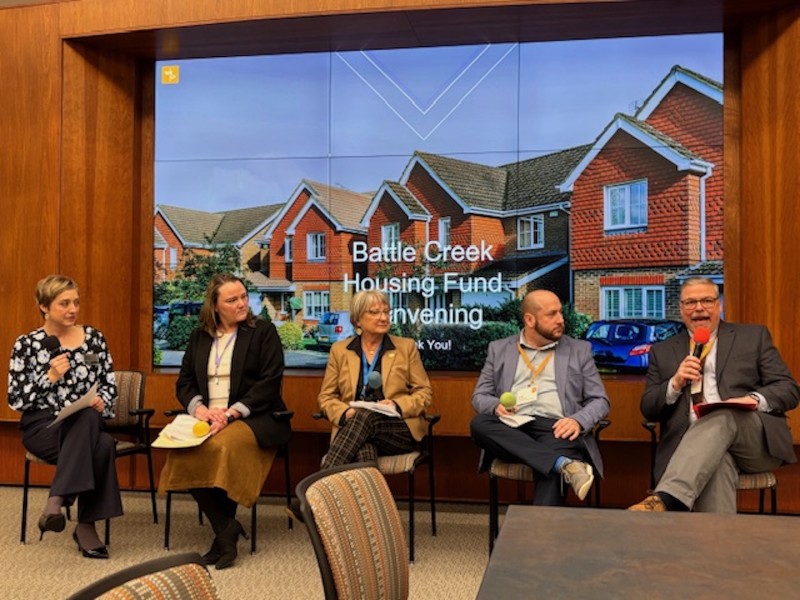
Battle Creek unites to build 1,000 homes and power economic growth
Battle Creek leaders launched a new Housing Fund to address a 3,000-unit shortage, aiming to build and rehabilitate 1,000 homes by 2035 to boost workforce growth and community stability.
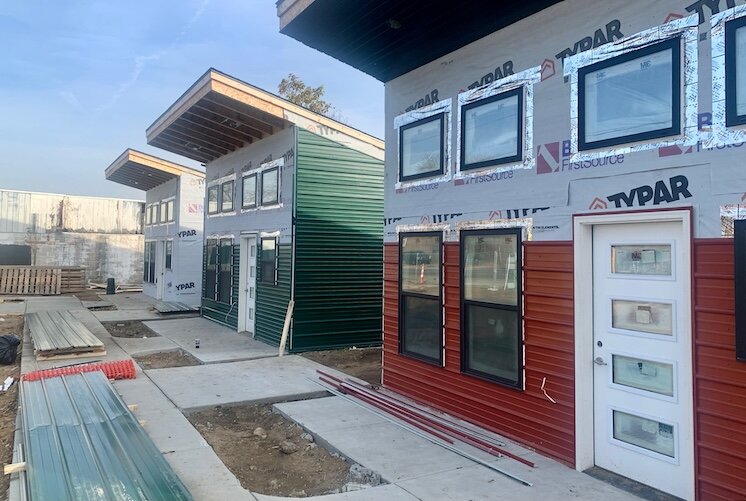
As federal funding for housing shifts, Kalamazoo pulls together to keep people off the street
Kalamazoo County finds ways to keep programs for the unhoused and those at risk of becoming homeless up and running as federal funding becomes uncertain.
Financial literacy efforts target homeownership disparities in Calhoun County
The Southwestern Michigan Urban League has launched a new financial literacy initiative in Battle Creek and Calhoun County aimed at equipping underserved families — particularly People of Color — with the knowledge and tools needed to build wealth and achieve homeownership.