Landscape Forms sees the light and it’s lit with LEDs
Landscape Forms started 40 years ago with seasonal employees by a man who found a way to keep his workers employed each winter. Now it’s keeping employees at work building transit shelters and LED lights that fit in anywhere in the world.
If you could build a 12-foot tall light that shines with the warmth of a full moon and is powered by the sun, you would, right?
Landscape Forms can and does.
It’s no wonder its competitors study what Landscape Forms does then try to create their own versions. The company is constantly on the look out for imitators who violate the company’s patents. Sometimes pieces within its pieces are patented to try and slow down the knock-offs, which in this case are not the most sincere form of flattery.
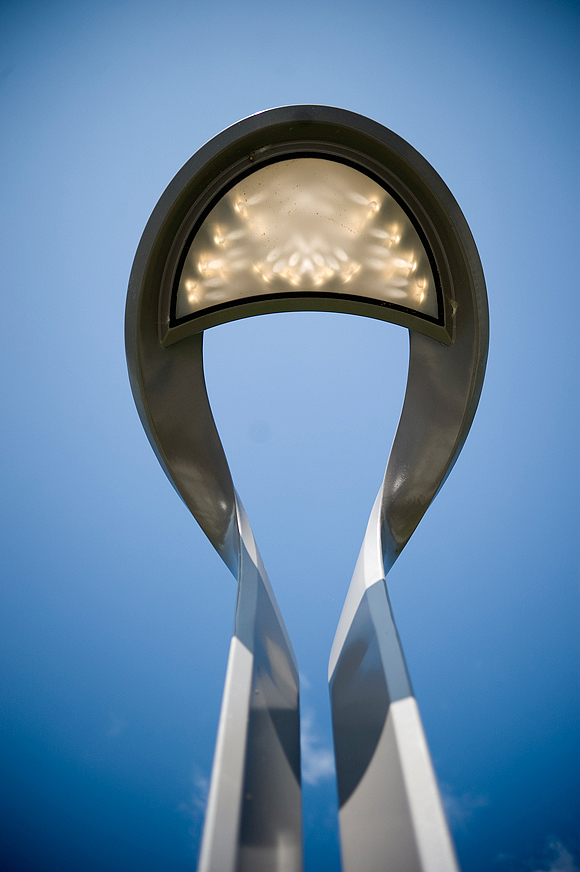
The lights, named Hi-Glo and Lo-Glo, stand 12-feet and 3-feet tall and use either solar power or conventional electrical wiring. The LED lighting in the Glo is designed to minimize light pollution. The mobius strip inspired frame rises from the light base, twists to form a shade and then flattens again on its way down.
Today, LED lighting is replacing more traditional lighting because it typically is more efficient, thereby reducing carbon footprints and can be more precisely directed.
Another advantage of LED lights is their long lives. They last six years and, instead of going out with a pop, the light gradually fades away. Replacements can be scheduled instead of being handled as an emergency.
LED technology is rapidly changing and by the time the lights burn out the whole cartridge can be replaced with the latest design, says Arno Yurk, vice president of design for Landscape Forms.
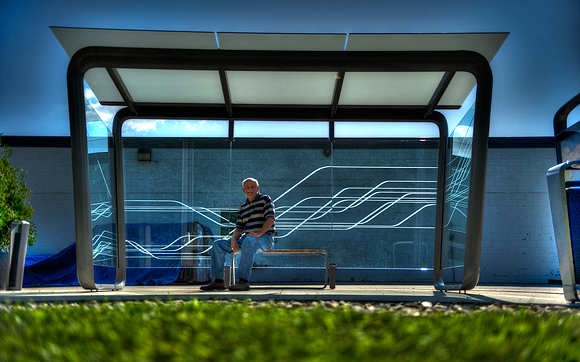
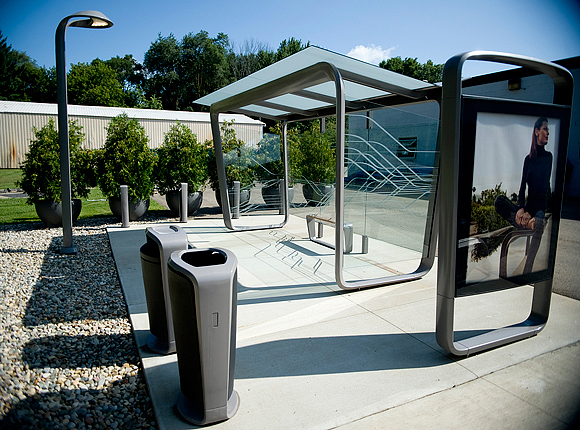
The lights are part of a grouping for public places — think bus stops, transit stations and rail stops.
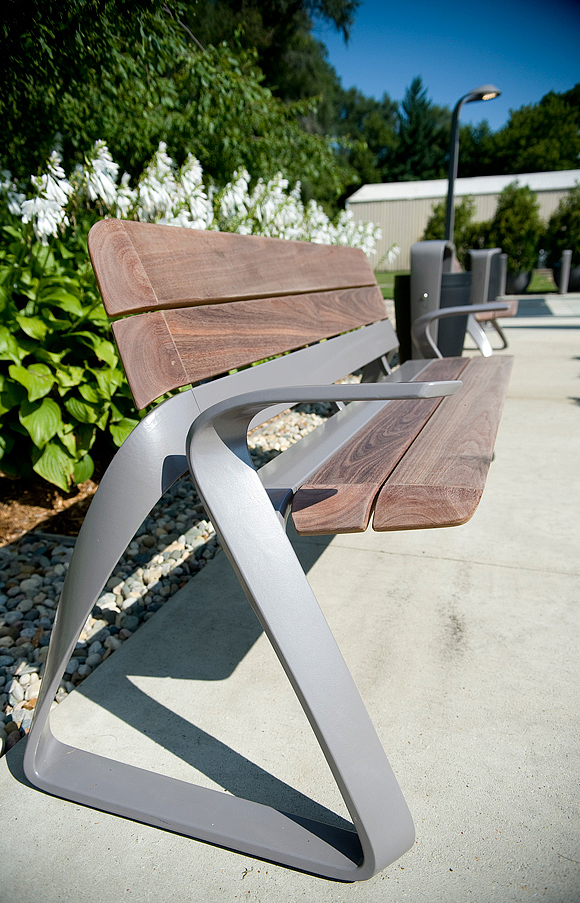
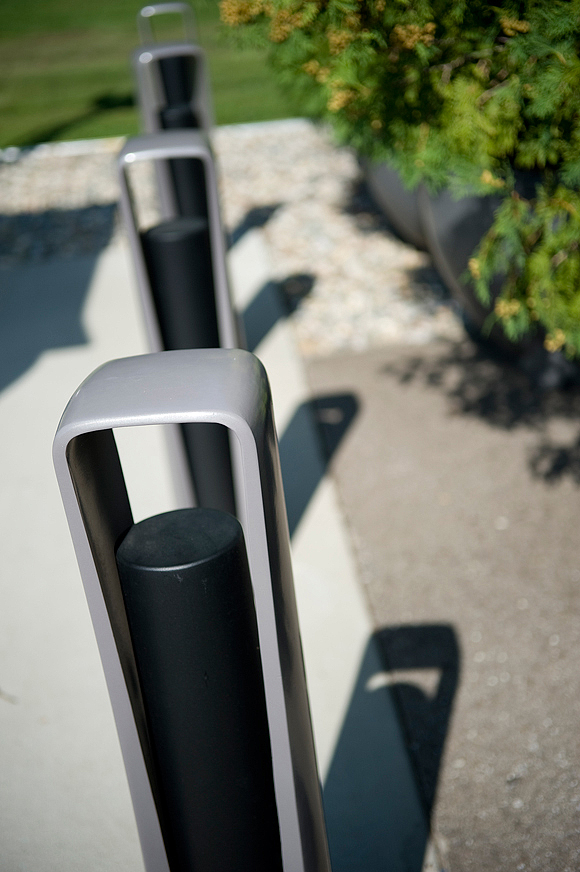
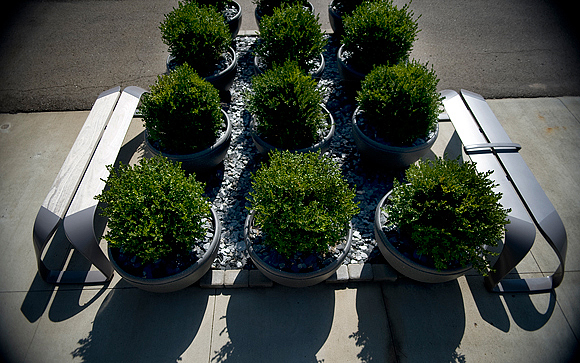
Benches, leaning rails, a lighted transit shelter, a display for maps and ads, trash receptacles, bike racks and bollards (gracefully designed posts that separate moving vehicles from pedestrians) make up the grouping. It’s the first coordinated collection of furniture for public places designed specifically for urban streetscapes and transit cores.
Landscape Forms builds what it calls site furniture in its 150,000-foot headquarters tucked away in Comstock Township. None of its furniture or outdoor groupings are taken from a warehouse shelf. Each is made to order.
Corporate clients like Disney, Microsoft and Nike, American Airlines, Sprint and Starbucks are just a few of the household name corporations that have chosen Landscape Forms to furnish their outdoor areas.
A good deal of what goes on at Landscape Forms is engineering and testing of new products. The company’s creation of cutting-edge products rather than those that follow the next trend are what appeals to landscape architects who recommend Landscape Forms to their customers, says Yurk.
Before the Metro40 collection came together company officials visited with those who buy their products around the country in a series of roundtable discussions to find out what needs the company could address. Company officials heard over and over that it was difficult to find coordinated pieces that would create aesthetically pleasing public areas. Designers wanted to replace the typical unrelated hodge-podge of lights, benches and trash receptacles with pieces that matched the setting and went together well.
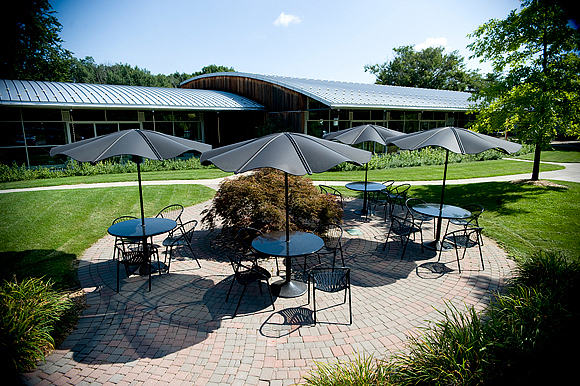
What emerged from those meetings was the company’s popular 35 Collection, outdoor chairs, round tables complete with umbrella seating, trash receptacles and more. The Chill lounge was a signature piece for the collection.
The Metro40 collection continued the theme of coordinated elements that work well together but also stand on their own. The collection was a strategic move into the growing transit market while at the same time developing elements that worked for other markets.
The two collections also have a designer in common. Sonja Schiefer consulted on the 35 Collection. When Landscape Forms wanted to create its new collection the company tracked down Schiefer at BMW Group Designworks USA.
For the lighting aspect of the project, they looked for a forward-thinking company and found Clanton and Associates out of Boulder, Colo., that had made a name for itself by specializing in sustainable design and for its work in improving lighting at a prison that cut down on light pollution, improved guards’ ability to see the grounds while hindering the ability of prisoners to see. Residents report you can drive right past the prison at night and not see any light from it.
For the Landscape Forms project Clanton and Associates worked to create lights that not only met required standards but solved problems of glare, provided horizontal light for the ground and vertical light for pedestrians, says Dane Sanders of Clanton and Associates.
Many LED lights are so harsh they cause people to squint and pupils in the eyes to close up, making them function poorly in public settings, Sanders says. The Metro40 lights are designed taking into consideration the ways the eye works. “With the Metro40 we wanted a softer effect LED compared with other leading light fixtures,” he says.
Sanders describes the collaboration between his company, BMW Designs and Landscape Forms as a great experience. “We all learned from each other.”
The innovation and collaboration that went into creating the Metro40 collection is characteristic of the company that has as a goal to double its sales every six years.
The United States and Canada currently are the biggest markets for Landscape Forms, but the Metro40 was in part designed with an international market in mind. The company was poised to broaden its reach internationally when the global economy slowed.
Now it is expanding its sales efforts abroad in anticipation of expanding as the market recovers. The company has 30 representatives in major cities worldwide.
After record sales in 2008, Landscape Forms experienced the same kind of declines seen nationwide. Although its corporate sales are down public sector projects are up as communities use stimulus money to improve public spaces.
During the worst of times, the company is proud that it did not have to lay off employees. It’s a value that dates back to the company’s founding.
Landscaper John Chipman Sr. couldn’t bear to layoff his employees every winter. So he started making planters that he could sell year round and over the next 40 years the company established itself as a leader in developing furniture for public places.
Chipman also was an early proponent of the Scanlon Principles for best business practices that promote open book management so employees understand the company’s financial position, employee involvement, profit sharing and servant leadership. Ideals that company officials say are behind its being named by the Wall Street Jounal in 2008 one of the top 15 workplaces in the United States.
Whether it’s the engineer who leaves early to coach soccer or employees serving lunch at Ministry with Community every month it’s the kind of place where employees are encouraged to take an active part in the community, just as Chipman wanted.
Kathy Jennings edits Southwest Michigan Second Wave and is a freelance writer and editor.
Photos by Erik Holladay
Arno Yurk, Vice President of Design for Landscape Forms.
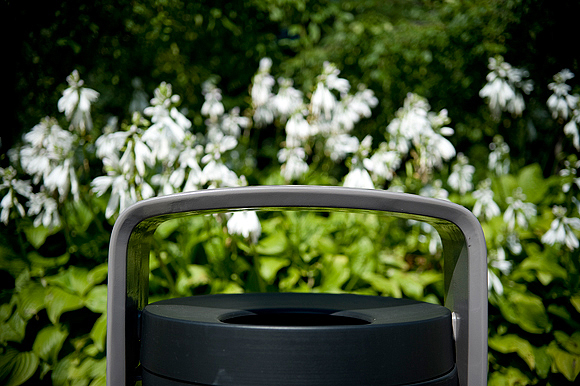
Landscape Forms new project is called Metro40. It includes products such as transit stops, benches, bollards,lLighting, and Litter/Trash/Recycling Bins.
Landscape Forms scenic headquarters located in Comstock Township, east of Kalamazoo, Mich.
Related Articles
Think small, go far: Save gas with this one fun trick!
As gas prices climb, Kalamazoo residents are exploring e-bikes and other micromobility options to save money, improve transportation efficiency, and rethink how they get around safely.
Nature beneath the power lines: Transforming utility corridors into public trails
In Portage, trails through Consumers Energy Co. utility corridors offer a place to encounter nature close to home, as well as a look at what sharing a landscape entails.
Connecting Chords offers a passport to global music in Kalamazoo
Connecting Chords brings an eclectic mix of global music, dance, film, and cultural traditions to Kalamazoo, continuing a 25-year mission of connecting audiences through the shared power of art.