Second opinion: The story behind the story about Jean Klock Park
There may be legitimate concerns with Michigan’s law that allows the take over of local governments when fiscal disaster is at hand. The future of Jean Klock Park isn’t one of them.

When MSNBC commentator Rachel Maddow told America that poor, blighted Benton Harbor’s sole remaining civic gem — Jean Klock Park — had been stripped away by people who wanted a high-priced golf course in its place the outrage was predictable.
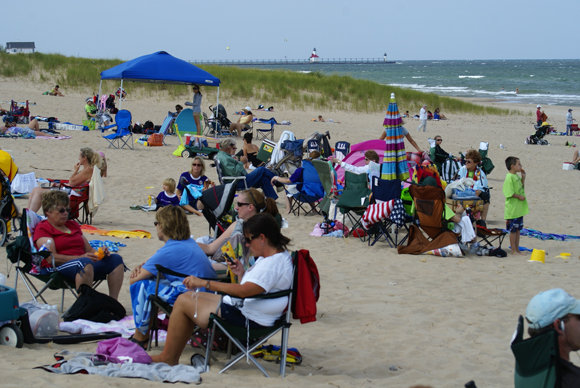
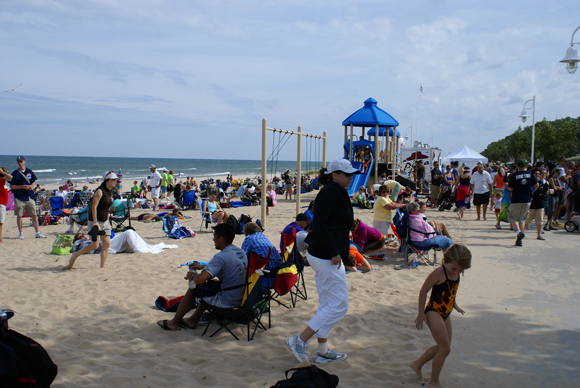
And misdirected. Those watching that broadcast might be surprised to know Jean Klock Park still sits on bank of Lake Michigan, remains open to the public, and now draws 10 times more visitors than it had before it was cleaned up by Harbor Shores — the development accused of supplanting it.
What’s more, Harbor Shores spent more than $2.7 million to upgrade the public beach bath house, build walking trails and improve parking for the park. It continues to spend more than $120,000 a year on park upkeep compared to $25,000 the City of Benton Harbor previously was able to budget for such work.
Benton Harbor residents now have free access to the park. And Harbor Shores funded 4,645 free bus rides on the Jean Klock Park Express so residents could get to the park last summer.
Yes, three holes of Harbor Shores is on land leased from Jean Klock Park — about 23 acres — so the golf course could offer several majestic views of Lake Michigan and in return 40 acres of land were added to the park. And the courts have repeatedly upheld that this is an allowable use of the park.
Last year, Benton Harbor collected almost $40,000 in entrance fees from non-residents visiting the beach front park.
Those watching the broadcast might be surprised to know that no one from the key economic development agency for St. Joseph and Benton Harbor that helped bring about Harbor Shores was interviewed other than to confirm Rep. Al Pscholka previously worked for the Cornerstone Alliance Board and no longer does so.
Pscholka’s the man who introduced the law that is now in affect allowing governments to be taken over by the state in specific cases. He says appointing an emergency manager is a temporary solution, and will always be a last resort to prevent a total financial collapse.
Collapse like that being experienced in Benton Harbor where since 2005 expenditures have exceeded its revenues by $8 million, and it has accumulated $5 million in liabilities.
It’s also a law that is seen by some as the epitome of Republican over reaching, a law that shows the party’s disdain for local government. It has some calling for the recall of Gov. Rick Snyder, who signed it.
What’s lost in both the misdirected outrage over Jean Klock Park and what may yet prove to be properly directed wariness over the implementation of the emergency financial manager act across the state is the reality of what Harbor Shores means for the Southwest corner of Michigan.
In the mid-80s manufacturers departed and took 5,000 jobs with them. They left behind a polluted mess. Now there is a 530-acre beach and golf resort development with a Jack Nicklaus designed golf course at its center building on one of the the greater strengths of St. Joseph and Benton Harbor, their location on Lake Michigan.
The development came about through cooperation between the three nonprofits that now manage it — Cornerstone Alliance, the Consortium for Community Development and Whirlpool Foundation — government officials in Benton Harbor, St. Joseph, Benton Charter Township and businesses in all those communities.
It’s too early to know the affect of reports like Maddow’s. So far those who are engaged in the community and know the full story have rallied, says Wendy Dant-Chesser, the head of Cornerstone Alliance. She fears the fragile reputation for stability the community has been trying to bolster has taken a blow, however.
As an economic development organization, the job of Cornerstone Alliance is to attract voluntary private investment into the communities it serves. Jobs are created and retained, tax base grows, consumer spending goes up — those are the ways its success is measured. Dant-Chesser says private investors also look for communities that provide collaboration, cooperation and stability — especially fiscal stability.
“While we have been engaged in collaboration and cooperation with many local projects we have worked on, we are still building a reputation for stability,” Dant-Chesser says. “These events do not help our efforts in that regard.”
Kathy Jennings edits Southwest Michigan Second Wave. She is a freelance writer and editor.
Photos by Pat Moody
Beach lovers enjoy the sun and sand in 2009.
A day on the beach at Jean Klock Park in 2009.
Related Articles

Kalamazoo Cookie Exchange to celebrate Women’s History Month and support Black women-owned businesses
Community members will gather March 28 at Urban Exposure Garden for the Kalamazoo Cookie Exchange, a Women’s History Month event celebrating baking, neighborhood connection and three Black women-owned local businesses.

Battle Creek turns housing into a benefit for early childhood educators
A new initiative in Battle Creek will provide rent-free housing and a pathway to homeownership for early childhood educators, aiming to boost compensation, stabilize the workforce, and address the financial challenges facing one of the lowest-paid professions.

Objects of Affection: From a crochet hook to a bowling ball, love stories in Kalamazoo
In honor of Valentine’s Day, Western Michigan University multimedia journalism students explore how everyday objects become powerful symbols of love, identity and memory through photos and captions.