
Small Business Social Hours foster success through face-to-face connection
Why face-to-face networking opportunities are even more important for small businesses and entrepreneurs.
For the past 14 years, Ashu Ahluwalia and her husband Parbhat Ahluwalia have owned and operated Dhaba Indian Kitchen, offering traditional North Indian/Punjabi cuisine, currently at Livonia’s Laurel Park Place Mall Food Court among other venues.
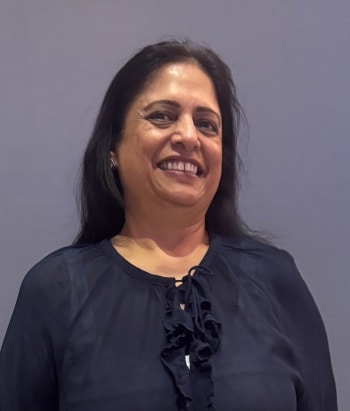
“My husband’s a chef. We started with fine dining when we were both young, and then as soon as our kids graduated from high school and went to universities, we decided to do carry-out, deliveries, and catering.”
After the pandemic, Ahluwalia says a big shift happened in the restaurant industry. Pop-up restaurants became more popular in the Detroit area. Dhaba Indian Kitchen joined the trend.
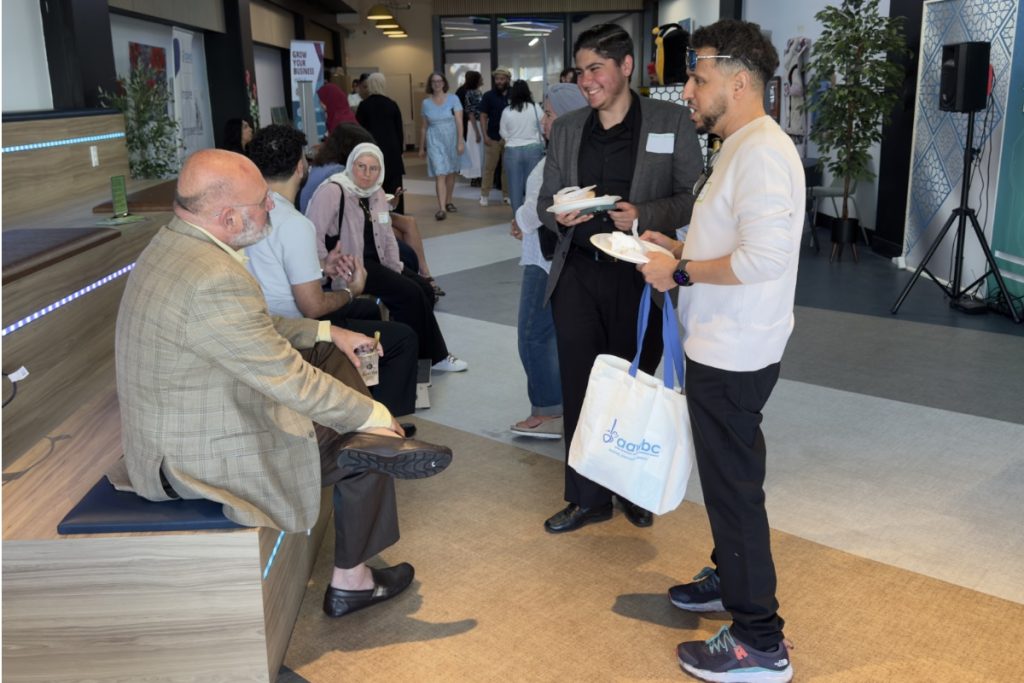
Another mainstay of Dhaba Kitchen has been catering to local businesses. However, when today’s economy slowed that option down, Ahluwalia began looking for new opportunities. Last May, that search brought her to a Small Business Social Hour Series monthly event hosted by the New Economy Initiative (NEI) and City Institute at the Hamtramck Bazaar.
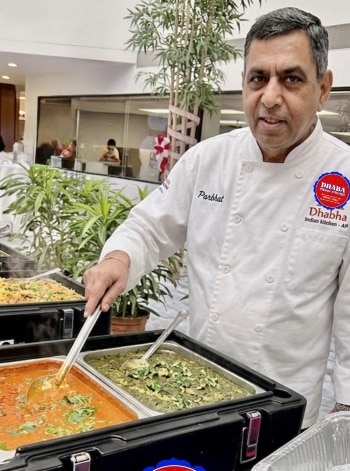
“The Social Hour leads to creative partnerships and builds instant trust,” Ahluwalia says. “So many times since we started this catering and pop-ups, if I email 10 people, I get one or two responses. With this face-to-face networking, oh my gosh, it’s a tremendous blessing. I get to make unforgettable, supportive relationships with so many individuals. And it provides immediate feedback. You get to pitch your business effectively in person.”
The next Social Hour Ahluwalia attended was at the Detroit Peoples Food Co-op, where she connected with the Co-op’s commissary kitchen chef. Now, shoppers can pick up delicious, ready-to-eat Dhaba Kitchen entrees at the Co-op.
“It’s perfect. You get to meet new people every time you go to different venues,” Ahluwalia says. “Each time, I get to know a few new faces and a few new business partners, more places where we can share our cuisine.”
At the last Social Hour Ahluwalia attended, she connected with Season’s Market in Midtown Detroit and a birth doula.
“I’m very good with postpartum special treats. She was like, ‘Would you like to come for a little class at the YMCA in Ferndale?’ And I’m like, ‘Sure,’” Ahluwalia says. “I’m getting some sort of reference every time. That truly gives me positive energy.”
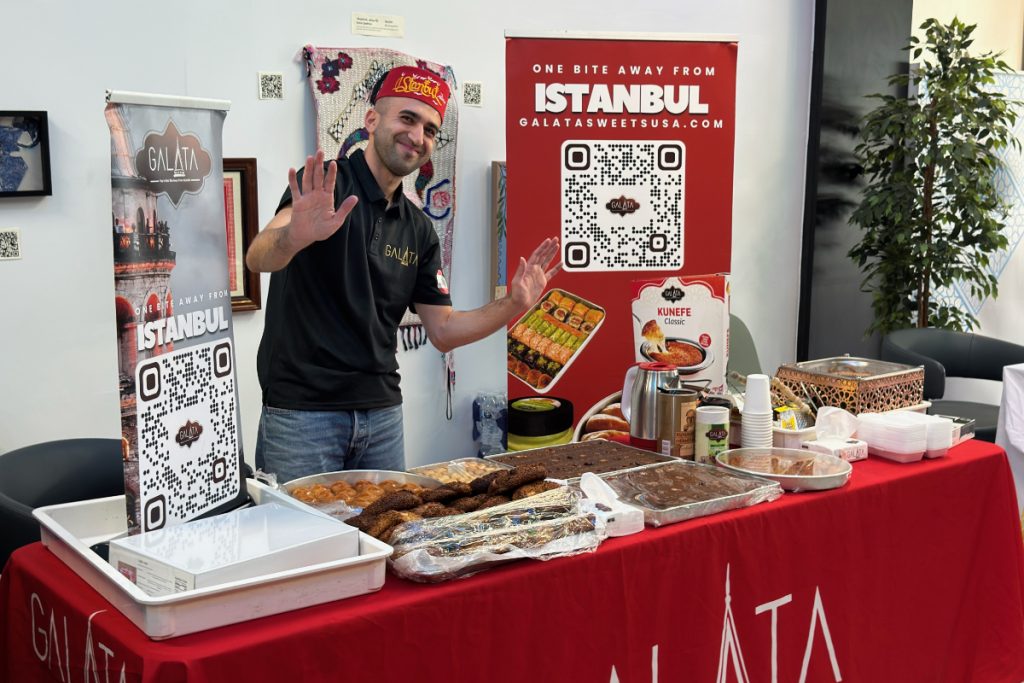
Because tech’s not enough
The Small Business Social Hours demonstrate that in this age of tech, face-to-face networking opportunities are even more important for small businesses and entrepreneurs.
“I have to do so much homework. DoorDash, GrubHub, we know for fact that they are fine,” Ahluwalia says. “But who’s popular in Detroit? How is this other one working? The Social Hour gives you more ideas to grow and sustain in business.”
Wafa Dinaro, NEI executive director agrees. A Community Foundation for Southeast Michigan project, NEI supports southeast Michigan entrepreneurs and small businesses.
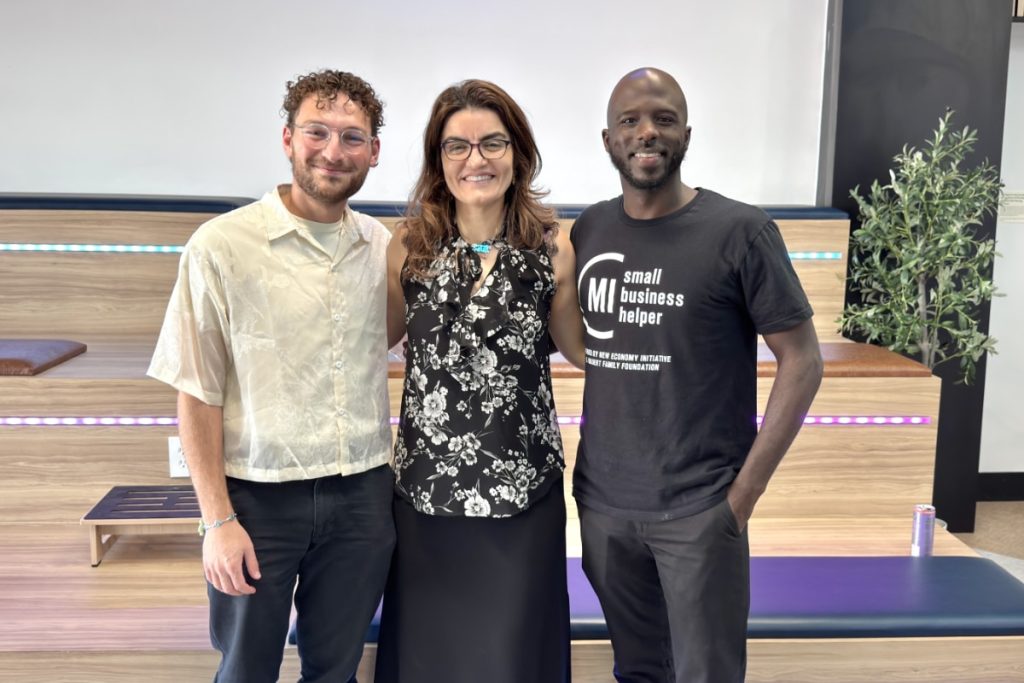
“Many of NEI’s networked small business owners work solo or run online businesses,” Dinaro says. “These Social Hours give them an opportunity to connect with their peers, find folks that are experiencing the same issues, and connect one on one to solve problems, talk through their businesses, and connect with folks that are doing the same kind of work.”
Exploring the expansive entrepreneurial ecosystem
In addition to creating networking opportunities, the Social Hours also connect small businesses and entrepreneurs with a variety of resources. According to Jeanette Pierce, president of City Institute, the Social Hours immerse small businesses in Metro Detroit’s expansive entrepreneurial ecosystem — and the face-to-face setting makes exploring that ecosystem easier.
“We have so many organizations, so many programs, and a lot of resources. Other cities are actually jealous of what we have to offer,” Pierce says. “But it can be hard to navigate all of those resources, to know which ones offer which thing and how your business can take advantage of it.”
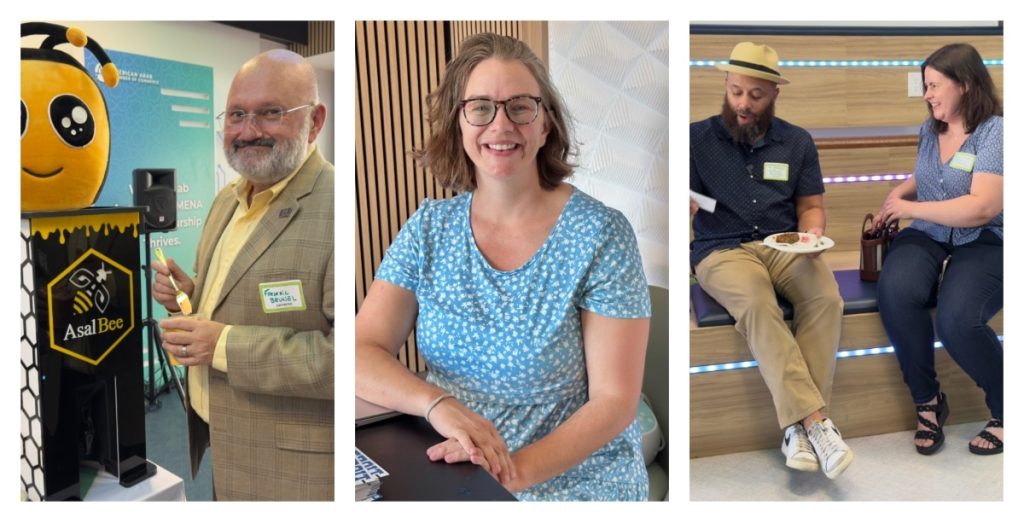
Dinaro shares how Robin Wilson, owner of Vesey Lane Goods, built a stronger connection with Jefferson East, an organization he knew of but hadn’t engaged with. That connection helped him grow his small business.
She also relates how one resource partner, Russell Lynn of ProsperUs Detroit, told her that the Social Hours served “as a funnel for business support organizations to come together, making it easier for small businesses to access the resources, expertise, and relationships in one cool place.”
“Our series rotates through different neighborhoods, and we do that very intentionally,” Dinaro says. “We want to expose entrepreneurs and the business support organizations to the different neighborhoods and the different businesses in those neighborhoods. We want to make it easy for business owners to connect with other entrepreneurs.”
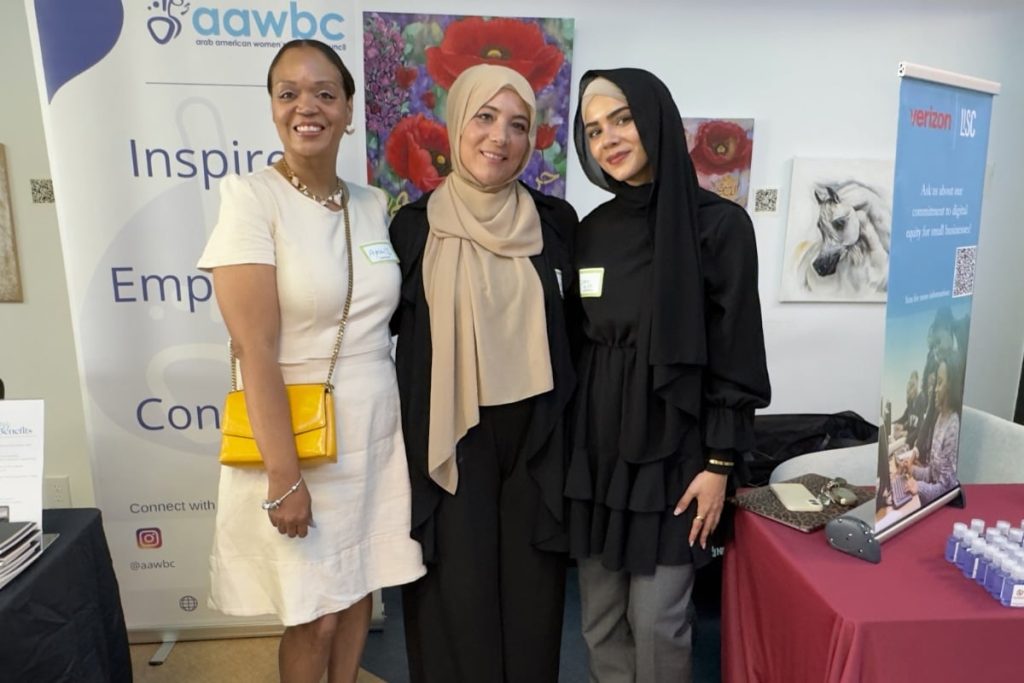
Over the past year, Social Hours have been held at a dozen different locations, from Southwest Detroit and the East Warren Corridor to the Hamtramck Bazaar and Detroit’s Avenue of Fashion.
“Small business owners and service providers are able to experience neighborhoods and businesses that are new to them,” Pierce says. “They are all pleasantly surprised. ‘Wow, I’ve never been here before — I can’t wait to come back’ is something we hear over and over.”
The tech to build more connection
Small Business Social Hours also set entrepreneurs up for success by providing them tips on navigating NEI’s MI Small Business Helper. The platform features a business resource navigator and library, step-by-step business guides, recommendations per business industry and stage, a communication forum, and a centralized event calendar.
“It’s great to have the digital resource and be able to tell everybody about it,” Pierce says. ”And then you have people at the Social Hour that can verbally tell you how it works, get you signed up, and point out the exact things that you’re looking for.”
According to Michigan Future Inc., Michigan lost nearly 244,000 manufacturing jobs from 1990 to 2025. Since 1990, Michigan’s largest job gains have been in sectors that pay below the state average, for example educational and health services, which both pay 11% below, and leisure and hospitality, which pay 59% below.
A recent Small Business Association of Michigan report concurs, stating, “Nearly all employer establishments in the state are small, with 99.8 percent employing fewer than 500 workers. Stage 1 businesses alone account for over 80% of all employer establishments.” A Michigan Municipal League report echoes those numbers in Thriving Michigan: Economic Security, which reports that Michigan’s small businesses make up 99.6 percent of allbusinesses in the state and employ 47.9 percent of Michigan’s workforce.
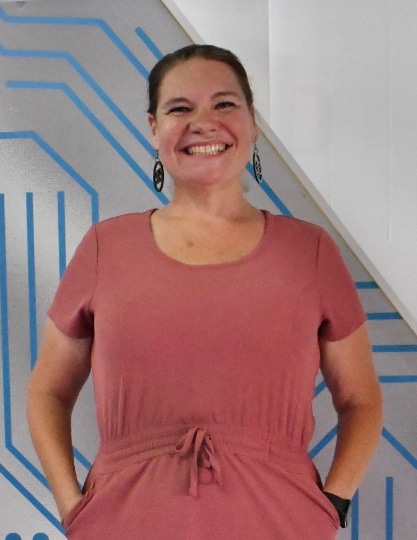
That’s where Michigan’s entrepreneurs and small businesses come in. They can help fill those gaps while keeping more dollars within local communities.
“The vast majority of our jobs are actually small businesses,” Pierce says. “And the most important part about small businesses is people living their passion and having an impact on their community.”
Small businesses can fill empty retail spaces, hire people from the neighborhood, and reduce transit needs.
“The domino effect of walkability to safety to community impact to quality of life — the box is checked on all of those when you have a small business in a neighborhood,” Pierce says.
Dinaro says small businesses are and have always been a key pivotal point of Michigan’s economy “whether it’s been manufacturing or as we transition away from manufacturing.” She uses the examples of Ford Motor Company, Domino’s Pizza, and Little Caesars, which all started as small Southeast Michigan businesses.
“Because they had the resources, they were able to grow and scale into what they are today,” Dinaro says. “As of the first quarter of this year, small and medium businesses employed 65.1% of the state’s private sector workforce — the vast majority of employees in our state. It’s so incredibly important to resource these small businesses and make sure they reach their full potential, whether it’s their first brick-and-mortar shop or 15th. They reinvest locally. They hire within the neighborhoods. They spend on other local small businesses and vendors. That’s how we ensure a more resilient economy across our entire region.”
Photos by Leslie Cieplechowicz.
Ashu and Parbhat Ahluwalia photos courtesy subjects.
This story is made possible with funding from the Michigan Municipal League Foundation, a nonprofit association dedicated to making Michigan’s communities better by thoughtfully innovating programs, energetically connecting ideas and people, actively serving members with resources and services, and passionately inspiring positive change for Michigan’s greatest centers of potential: its communities.