
Local Realtors urged to explore how they can help when it comes to answering the housing crisis
Can Realtors be part of the solution when it comes to solving the housing crisis? One local Realtor urges her collegues to find a way.
When it comes to the nation’s housing crisis, there is a long list of what could solve it. Revised zoning regulations, a halt to developers and investors buying up property and houses, the building of more houses and apartments, and innovative construction alternatives are all ideas for tackling the shortage.
In Kalamazoo County, where the most recent estimates indicate nearly 5,500 housing units will be needed by 2030 to meet demand, local real estate professionals were challenged to be part of the solution in whatever way they can.
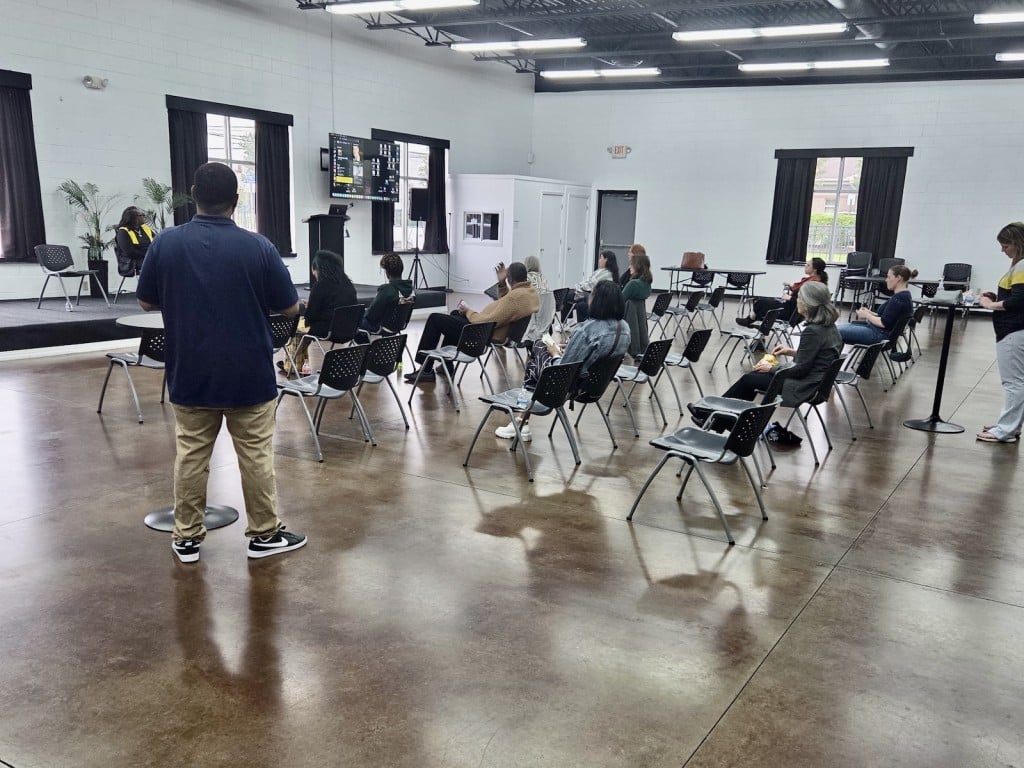
Realtor Marissa Harrington issued that challenge as part of the April 30 session “Mapping the Past, Shaping the Future: A Kalamazoo Conversation on Housing and Equity,” which drew about 25 Realtors, bankers, and community members to the Northside Association for Community Development.
Together, they took a hard look at past housing practices and how these patterns continue to influence housing opportunities today. Real-world barriers to housing access, from credit and rental challenges to systemic gaps, were part of the discussion. As were current developments across Kalamazoo County that are addressing barriers to becoming housed.
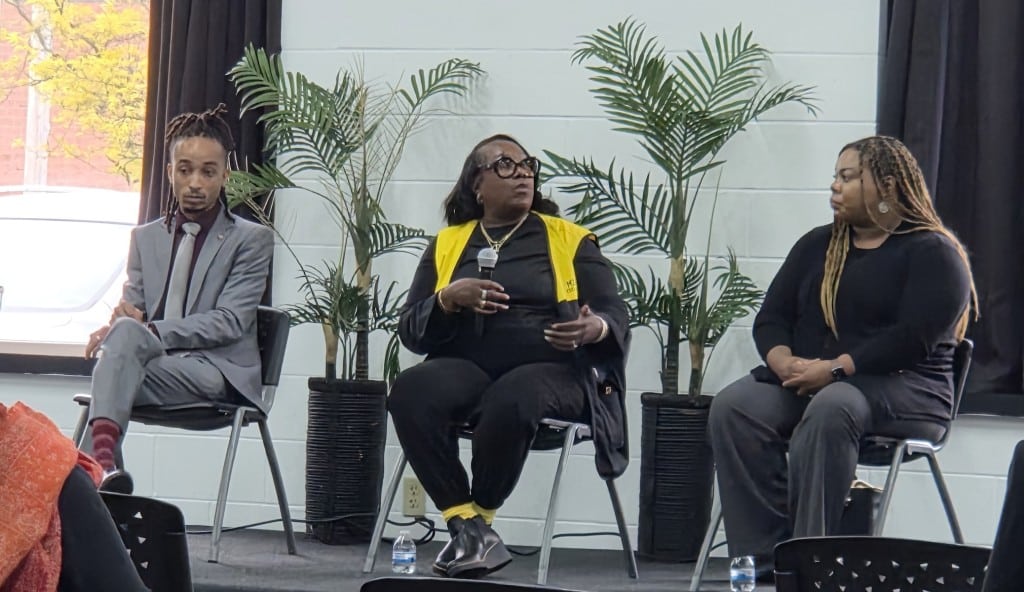
Harrington, the owner of Blue Horizon Realty Group, invited a panel of community leaders to address the topic and moderated the session. Panelists were Gwendolyn Hooker, founder of HOPE through Navigation and leader of the Tiny Houses of Hope Initiative; 8th District Court Judge Alisa L. Parker-LaGrone; and City Commissioner Alonzo Wilson.
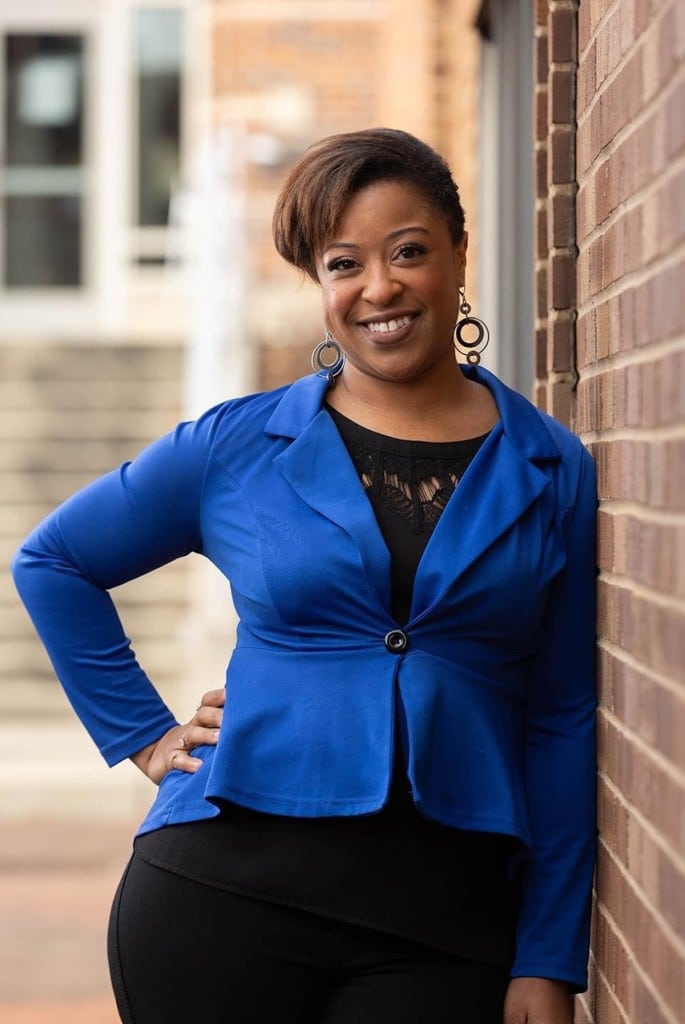
Harrington told the group that housing is an issue she is passionate about because of her experience with housing insecurity growing up. Raised by a single mother in Los Angeles, one of the most expensive cities in the United States, “from a very young age, every one to two years, we had to move, we were evicted.” She says she never experienced safety or calm when it came to housing.
Now 43, she is in her own home for the first time, which she says would have taken longer to accomplish had she not gotten married. Today, she struggles with the question, “Who decides who has stability in housing? There are so many people who never see it. When you look at the statistics, 70 percent of white people own their homes, and 35 percent of black people do. How did we get here?”
“And why are we still here?” a member of the audience adds.
“After 11 years of helping people achieve what I never experienced in my family until I was an adult, and after seeing disparities happening in real time, I asked myself, ‘What could we do?’ We are not helpless.”
Harrington explains she initiated the community conversation to address what she has come to see as the siloed nature of discussions regarding housing, and when those conversations are shared by the community and the real estate industry, the investment in the community can be powerful.
“School and health outcomes, wealth building, safety, and resources are all tied to how many people own their own homes,” she says. “Homeownership is the strongest predictor of generational wealth.”
As background for the conversation, Harrington went on to present information about policies that have led to systemic barriers for equitable housing.
Redlining, the U.S. government policy from the 1930s through the 1960s that denied mortgages and financial services to residents based on their race and the neighborhood in which they lived, remains central to the problem. There was little or no investment in neighborhoods surrounded by red lines on the map, creating lower homeownership rates, severe wealth disparities, and lasting segregation that can be seen today.
City planning also contributed to such systematic inequities as highways were built through thriving black communities, and neighborhoods were segregated by design.
When the Fair Housing Act was enacted in 1968, it prohibited discrimination in the sale, rental, and financing of housing based on race, religion, national origin, or sex. Yet, it did not stop Realtors from steering prospective home buyers from certain neighborhoods with language such as, “You wouldn’t be comfortable in that neighborhood.”
Real estate professionals need to show all options to all people, use data, not assumptions, and be aware of language that can negatively influence a home buyer when it comes to specific neighborhoods, Harrington urges.
“Educate your clients about fair housing rights. Have the courage to talk to your clients about it. Do something when you see something” that shouldn’t be happening, she says.
For community members, she encourages them to become informed about housing rights and “engage in conversations like this one.” Advocacy for lending reforms, investment in historically disinvested neighborhoods, and appraisal reform and accountability are some ways to become engaged.
Harrington asked the audience to consider: “What do you do? Where do you have influence?”
From the panel
As part of the work on the civil docket that 8th District Court Judge Alisa L. Parker-LaGrone handles, she hears landlord and tenant cases. Her background includes work in Battle Creek, where she worked on eviction diversion, a legal process that settles landlord-tenant disputes using mediation, legal aid, and financial assistance to prevent formal eviction judgments.
Gwendolyn Hooker of HOPE through Navigation said her work helps people succeed in navigating their lives after incarceration. The nonprofit she leads provides services and supports for people returning to the community after being incarcerated or in residential treatment. It also provides housing for men and young adults, and is developing housing for women. All of their housing includes individualized wrap-around services, such as substance abuse and mental health supports, and other services residents need as they integrate into the community. She also serves as vice president of Kalamazoo County’s Public Housing Commission.
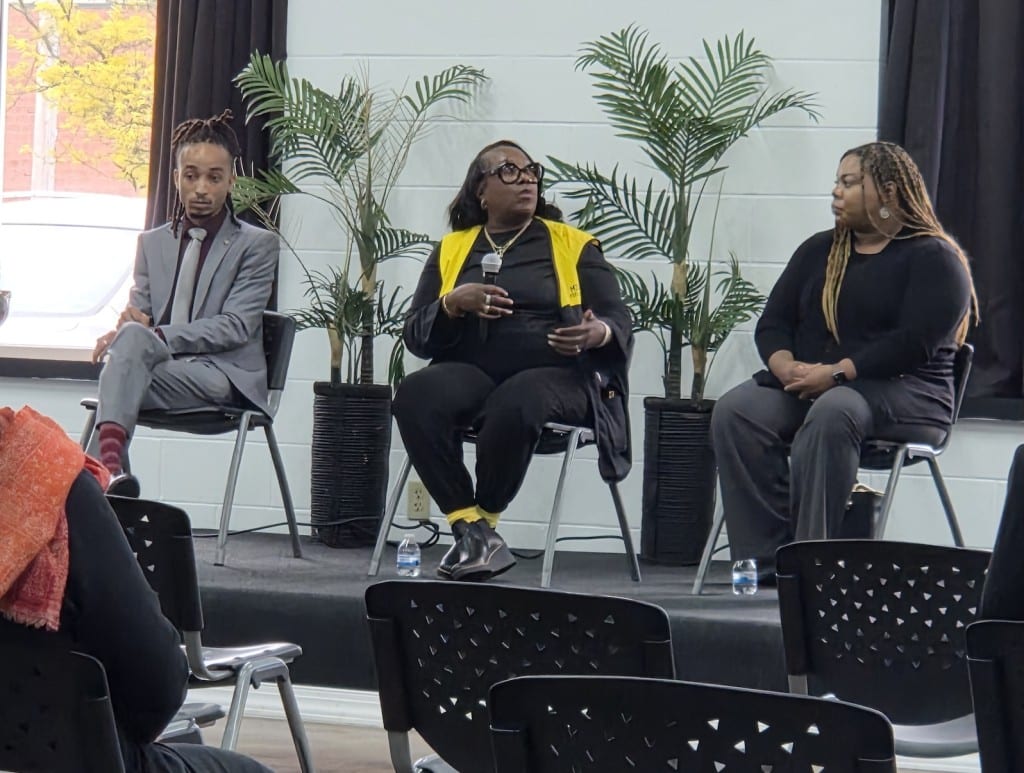
City Commissioner Alonzo Wilson has identified access to quality, affordable housing as a primary mission and priority for him, with the aim of supporting working families and addressing housing needs.
Judge Parker-LaGrone offered insights into the challenges posed by a lack of access to the credit and financial systems. When people don’t have access to mainstream financial vehicles, they can become the target of predatory lending. She called for the implementation of civil expungement, just as there is criminal expungement — the clearing of one’s record. Without expungement, debt collection records can become a barrier that can keep people out of housing, she says.
She went on to question a system that does not give people credit for paying their rent. “Why are rental payments not counted when calculating a credit score the same way as other bills?”
And many people are not aware that credit scores are relatively new, the judge says. (Credit scores came into use in 1989 and moved into widespread use with the growth of computerization of billing. According to CNBC, 26 million Americans are considered to be credit ‘invisible’ due to having a lack of credit history, with the issue affecting more Black, Hispanic, and low-income individuals.)
The room applauded Parker-LaGrone when she said, “Once people have shown they can do better, they should not have their mistakes follow them for the rest of their lives.”
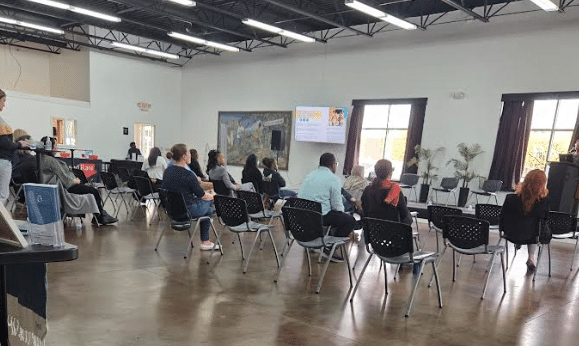
Harrington asked the panel to address, “When it comes to housing equity, what do you wish people better understood?”
City Commissioner Wilson said he has heard many people say, “‘I did it. Why can’t you?’ They expect people to pull themselves up by their bootstraps. We’ve created this huge wealth gap. Now, we have to be intentional about evening the playing field. We have to be as intentional about solving the problem as we are in creating it.”
Nonprofit leader Hooker said the people served by HOPE through Navigation “already have been through the worst of the worst.” The tiny homes, at 410 square feet, are sized so that people don’t have to allocate their entire paycheck to paying rent and electric bills. Often, the people she serves don’t have a way to make an income, which is why the wrap-around services provided include ways to get job training.
She went on to say that many people don’t understand that to develop affordable housing, they will have to sacrifice making a profit.
“What we have is a crisis in humanity, not in housing. If everyone treated people as humans, we would not have to scramble over housing. Everyone wants to get rich, even if that means taking advantage of people who are already poor. Everyone wants to make money off people who already don’t have money. If they had money, they would be housed.
“Being kind costs nothing. If you can say, ‘I try to do my part,’ then we would be a lot better off. Do what you can do. Do something, get activated. Just jump in and do what you can do.”
City Commissioner Wilson agreed that the demands of capitalism contribute to the housing shortage. “There is a belief that as a developer, you can’t make any money off of affordable housing because it is too expensive to build and you can’t recoup your costs. We have to get rid of that mindset.”
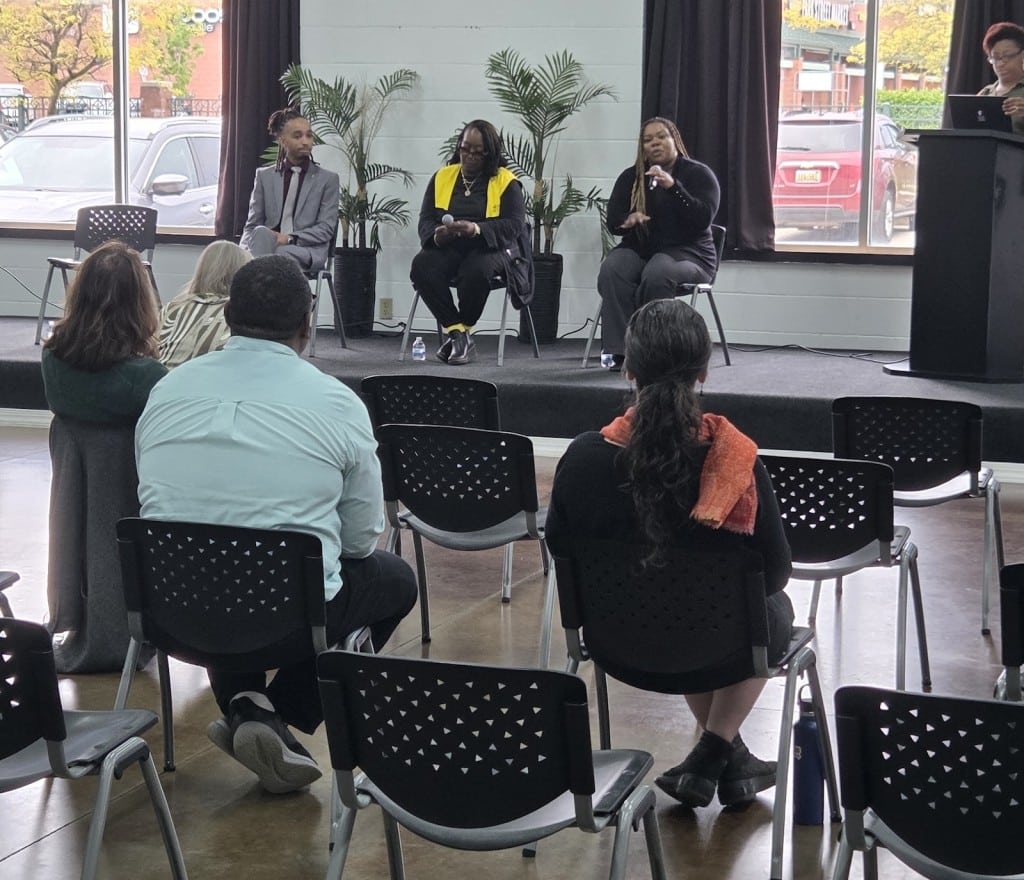
Following the panel discussion portion of the session, the conversation turned to other aspects of the housing crisis. Hooker detailed some of the projects in Kalamazoo County that should help ease the housing shortage, such as the Sugarloaf Mobile Home Park, the county has acquired, and the workforce housing known as Stanwood Crossings. The need for services to help people stay housed once they obtain housing was emphasized, as some people have been unhoused for so long that they no longer have the skills to live comfortably indoors.
The lack of trust between those offering financial services and people who want to buy houses emerged as an issue to be addressed. A banker in the audience said their efforts to reach out with seminars and workshops to those who have historically been shut out of traditional lending have not always met with success. The panelists had some ideas as to why that happens.
“If I am in survival mode, when it comes to owning a home, I can’t see how to get there. I don’t see it as a possibility,” Hooker says. There may be a few ways to learn about a seminar and questions on whether the presenter can be trusted. “There needs to be trust-building on both sides. We have to do relationship building.”
Harrington urged the Realtors in the room to consider if there was information they were gatekeeping. “You don’t have to be a housing justice warrior, but there is something that you are really good at. Go to schools, do workshops, volunteer. How can we as an industry have an impact on this issue? Can we get people with boots on the ground every single day?” She urged them to take the knowledge they have been gatekeeping, open the gate, and make a difference in the community.
This story is part of Southwest Michigan Journalism Collaborative’s coverage of equitable community development. SWMJC is a group of 12 regional organizations dedicated to strengthening local journalism. Visit swmichjournalism.com to learn more.
Related Articles
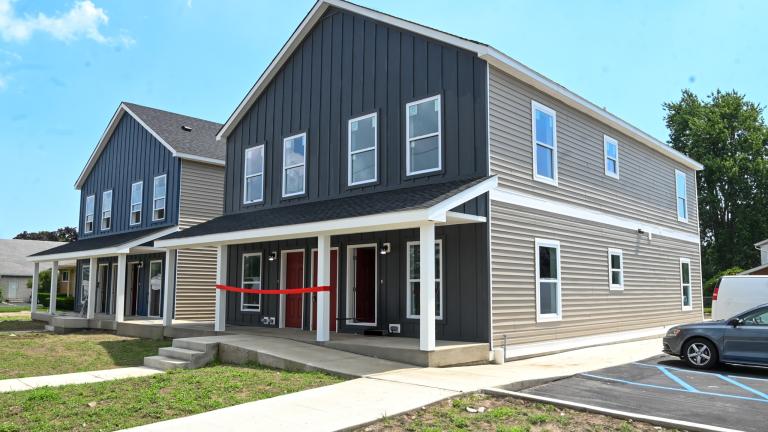
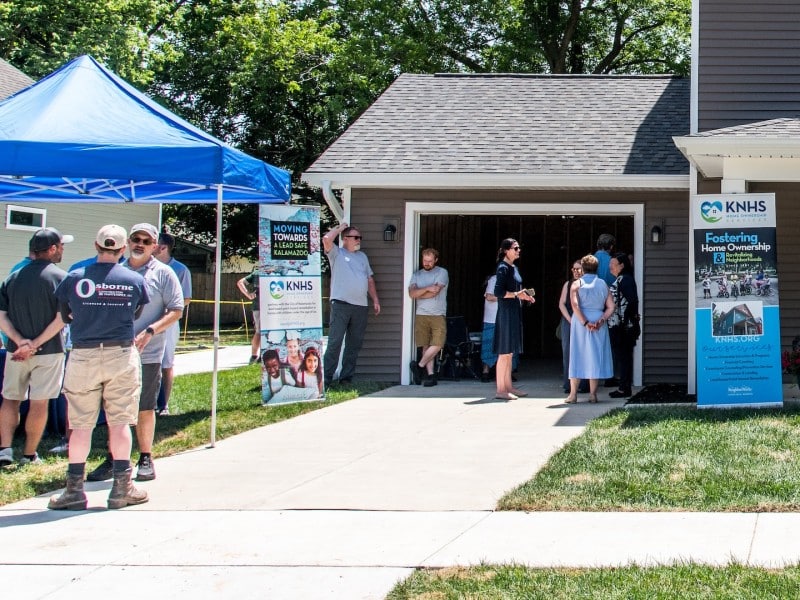
At Ada and Simpson Streets, new and rehabbed homes are making a difference
Many generations could be living in these homes. Thanks to a new program, the homes will be kept affordable for 99 years.
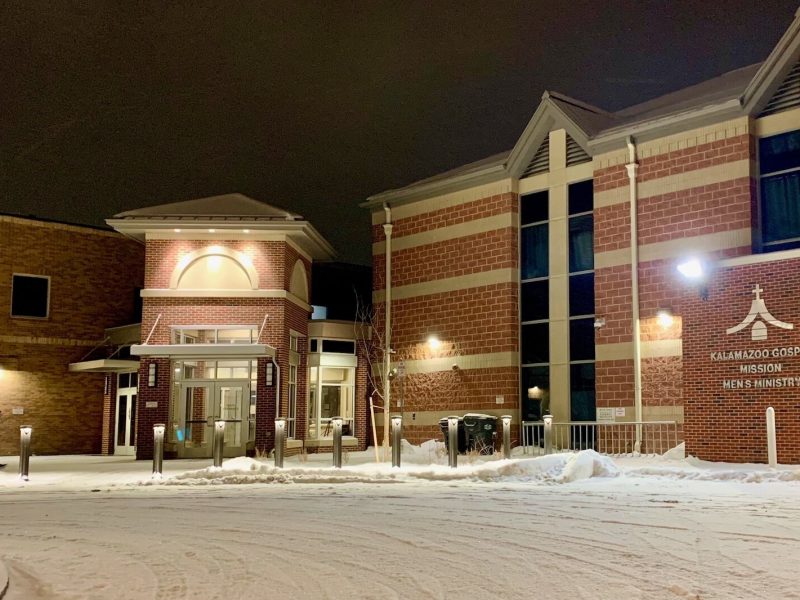
‘This is where people belong’ — amid rumors, change, Kalamazoo Gospel Ministries commits to downtown
As rumors swirled about the future of Kalamazoo Gospel Ministries amid downtown redevelopment, CEO Pastor John Simpson reaffirms the organization’s commitment to remaining downtown while championing a faith-based model of dignified sheltering and long-term transformation for people experiencing homelessness.