Keys to the future: Young jazz phenom Esteban Castro hits the Gilmore stage in Battle Creek
Jazz prodigy Esteban Castro returns to the Gilmore International Piano Festival in Battle Creek as a 2026 Young Artist Award winner, bringing a career that began on a toy piano to the Kool Community Center.
Editor’s note: This story is part of Southwest Michigan Second Wave’s On the Ground Battle Creek series.
A toy piano his parents gave him when he was three years old marked the beginning of a career in music for Esteban Castro. The renowned jazz pianist and composer is among the numerous artists who will be performing in this year’s Irving S. Gilmore International Piano Festival. The Piano Festival takes place at various venues throughout Southwest Michigan, including Battle Creek, where Castro will perform at 4 p.m. on May 6 at the Kool Family Community Center.
This will be their second appearance with The Gilmore and their first as one of two recipients of the 2026 Larry J. Bell Young Artists Award, which is presented every four years to single out the most promising of the new generation of pianists, aged 24 and younger. Each Bell Young Artist receives $25,000 to further their musical career and educational development.
The Young Artist award is the latest for Castro, who is also the composer of more than 50 original works. In 2016, at age 13, they were the First Prize Winner in the Montreux Jazz Piano Solo Competition, making them the youngest ever to receive this prestigious award. At 14, they were the youngest First Prize recipient at the 2017 Jacksonville Jazz Piano Competition. They also won three ASCAP Foundation Young Jazz Composer Awards and have won fifteen Downbeat Student Music Awards. They currently live in Brooklyn, NY.
Castro recently took time out for a Q & A with On the Ground Battle Creek.
Q. How did you decide which instrument you would play?
A. I didn’t really decide to be honest! My parents got me a toy piano when I was 3, and I really liked to play with it — so they got me piano lessons when I was 4, and I continued to play since then.
Q. What did your musical training look like?
A. I started with playing classical music, and I started playing jazz when I was 6. I did both up until college, then I did jazz full time from then — but I still practice classical music during my free time.
Q. Where and with whom did you train?
A. I started at the Houston Music Institute for a year when I was 5. Then I moved to Paris for a year, where I studied both classical and jazz privately. Then I moved to New Jersey, where I spent the rest of my childhood and adolescence and did various music programs. I started at the New York Jazz Academy, then I did the Jazz House Kids program for 5 years. From when I was 9-18, I also did both jazz and classical at the Manhattan School of Music pre-college program, where I studied privately with Phillip Kawin and Jeremy Manasia. When I was 13, I started to study with Fred Hersch, who I still study with now. Then, for college, I went to (The) Juilliard, where I studied with Ted Rosenthal, Marc Cary, and Billy Drummond and earned a Bachelor’s of Music Degree.
Q. Where did you make your professional debut?
A. To be honest, I don’t remember what my first paid gig was!
Q. What are some of your favorite performance venues?
A. I love to hear music at the Village Vanguard Jazz Club in New York. Some of my favorite venues to play at are The Jazz Gallery and Close Up, also in New York.
Q. Describe what your life is like as a professional musician.
A. It’s a blessing. It’s very unpredictable, though. The hardest thing to adjust to after graduating school has been the lack of any sort of consistency. There are some places that I play at pretty regularly, but for the most part, every day I’m going to have to be somewhere different, at a different time, whether it’s where I live in New York or out of town. Keeping myself grounded throughout all of the changes of my everyday life has been a real learning process. But I am really, truly fortunate to be able to do the thing that I love for a living.
Q. What were the sacrifices you made to pursue your career?
A. I would say that I have a lot less financial security doing music than I would if I had chosen a different career path. As of now, performance is pretty much my only source of income, and that can lead to some uncertainty. Some months I make more money than others, and you can’t really control it — especially working as a sideperson for other bandleaders, which is what most of my work entails.
Q. What are the biggest challenges for you?
A. Right now, more than ever, I’ve really been thinking about honing in on my voice and how I want to express myself authentically. Your own playing can really be a mysterious process, and in a lot of ways, you can’t really even control the specifics of your own sound. So it’s been a lot of self-questioning and observing, musically and otherwise. I always find that the musical and non-musical elements of my life mirror each other, and that my music always tends to reflect who I am as a person at any given time.
Q. Who is your favorite composer, and what is your favorite piece of music?
A. It would be extremely hard for me to just name one. I consider all the great improvisers to be great composers, whether they are improvising on a structure that they wrote themselves or an existing piece of music. People like Art Tatum, James P. Johnson, Bud Powell, and Thelonious Monk come to mind when I think about improvisation like that — and also pianists like Masabumi Kikuchi, Keith Jarrett, and Lowell Davidson. There are so many to name — non-pianists like Charlie Parker and Ornette Coleman come to mind as well. In terms of jazz composers, I love Wayne Shorter, Thelonious Monk, Henry Threadgill, Stanley Cowell, and Duke Ellington, among many others.
In terms of classical music, I would say some of my favorite composers are Bach, Ravel, and Prokofiev. One of my all-time favorite pieces of music ever written is Prokofiev’s second piano concerto, but also Prokofiev’s third piano concerto, Ravel’s piano concerto in G major — as well as the larger-scale piano pieces (Gaspard, Miroirs, Tombeau, Sonatine), and the entirety of the Bach Well-Tempered Clavier. I also love more contemporary classical music and composers like Gubaidulina, Berio, and Ligeti.
Q. Who were/are your mentors and why?
A. I’ve had so many mentors and people that I draw inspiration from. I mentioned Fred Hersch previously — he’s been someone that’s always known what to say, and he’s watched me grow up from being a 13-year-old kid to the person that I am today. I am extremely lucky to have had his guidance since I was so young — he is both very honest and also very encouraging. My old classical teacher, Phillip Kawin, was also very important to me. He always put his students before himself, and he taught me how to make a good sound out of a piano. Both of them contained a deep reverence and respect for the piano and for music as a whole, and that was very important for me to be around as a young kid during my formative years.
Q. What does it mean to you to perform at the Gilmore? Is this your first time appearing with the Festival?
A. It’s such an honor to be a part of such a rich lineage of pianists. It’s going to be my second time performing at the festival — I played as a part of the Rising Star series two or three years ago. My music has really changed since then, and I’m really looking forward to presenting what I’ve been working on during that time.
Q. How do you know you’ve connected with your audience?A. I always feel that the best way to connect with the audience is to be very attuned to how your sound falls acoustically in the room. And I find that the more I play from the heart, the more it moves people.
Author
Related Articles
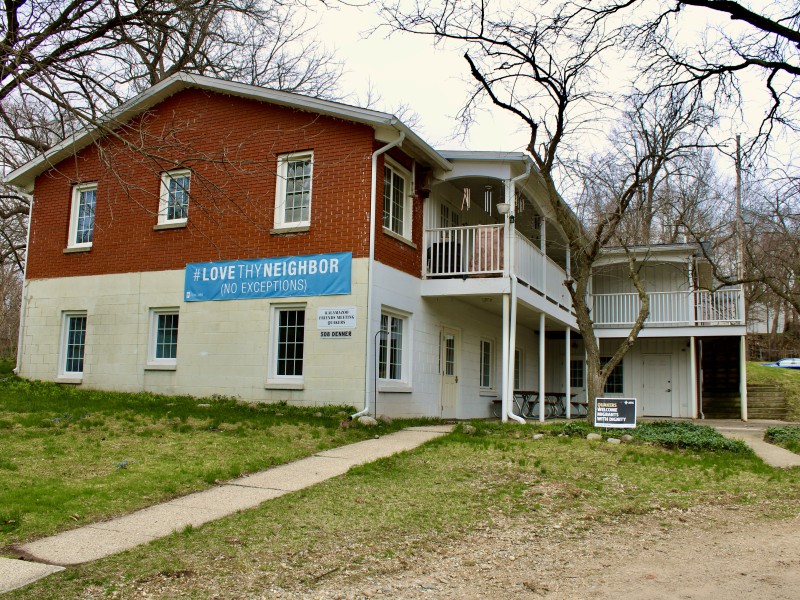
How a small Quaker Meeting has helped shape Kalamazoo for nearly 80 years
In Kalamazoo’s Douglas neighborhood, the Kalamazoo Friends Meeting blends silent Quaker worship with decades of local activism, from peace advocacy to community care at Adda Dilts Peace Park.

Maid in Battle Creek expands into (Maid in) Kalamazoo
Maid in Battle Creek has expanded into Kalamazoo, growing from a local startup into a two-city cleaning company with a team of employees, commercial and residential clients, and a continued focus on personalized service.

Great Lakes, local consequences: Indigenous voices on why Line 5 matters in Kalamazoo
In Kalamazoo, Indigenous students and leaders are mobilizing against Line 5, perceiving its threat to regional watersheds and a clash with values of long-term environmental stewardship.