
Voices of Youth Commentary: More teens reverting to vinyl and CDs to protest large streaming services
‘The 2026 Music Media Reset’ means teens and others are ditching digital music and opting instead for LPs and CDs.
Editor’s Note:This story is part of our Voices of Youth program, sponsored by the Stryker Johnston Foundation. This series features stories created by Kalamazoo County youth in partnership with professional mentors, as well as features by adult writers that examine issues of importance to local youth.
KALAMAZOO, MI — Good news for local record shops: more music listeners are ditching Spotify and opting for physical music listening in 2026, according to Global News.
After recent developments in music generated by artificial intelligence, platforms funding political affairs, and artists being paid minimally for their music, many teens and adults are boycotting large streaming services like Apple Music, YouTube, and Spotify.
“Buying physical media pays the artists more, and I’d like to do that rather than paying big music monopolies money,” says Edward Aguilar, a Columbia College Chicago freshman. “It also worries me with the rise of AI that a lot of music platforms are using AI. I do not like AI in the slightest because it destroys the environment.”
Last year saw a massive AI evolution in music. While most music artists are not using the tool in their productions, according to the BBC, some producers have created online personas that create 100% AI generated music. Some of these AI songs have even charted on music ranking lists, which concerns many artists like Billie Eilish, Stevie Wonder, and more, according to CNBC.
From a basic standpoint, the AI banks don’t generate unique songs; they scavenge the internet for songs with interesting drums or guitar riffs and use those clips, essentially stealing from music artists, according to Vox.
On top of the unethical AI generating, large streaming services have stirred up drama by funding violent political regimes. Most infamously, Spotify listeners started to notice recruitment ads for U.S. Immigration and Customs Enforcement (ICE), which angered many ICE abolitionists. Spotify has since removed the ads to satisfy its listeners.
“That’s a huge no for me, since I hate ICE and what they’re doing to people,” says Aguilar.
Spotify isn’t the end of the debacle, though. Google, which owns YouTube Music, has openly funded the Israeli army in the midst of its attacks on Palestine, according to the Action Network. In an article by The Intercept, employees of Apple Music similarly accused the company of funneling money to Israel, although it is not confirmed.
The lack of moral direction on these streaming service platforms is only amplified by their pay to artists. Spotify, Apple Music, and YouTube pay their artists as little as just $0.01 per stream, and as little as $0.003 per stream. The unfair pay rate for artists has led to more outrage amongst both creators and their listeners.
Facing the morally ambiguous actions of so many music streaming services, some fans have chosen to log off of online streaming entirely and switch to physical music listening like vinyl records and compact disks in a protest called ‘The 2026 Music Media Reset,’ started by groups of teenagers on TikTok.
In addition to the ethical benefits of physical listening, many participants have enjoyed the switch.
“I didn’t even know I was participating in it at first. I’ve always just loved physical media,” says Aguilar. “It was actually pretty fun getting into physical streaming because it let me get more into the music and the artists themselves.”
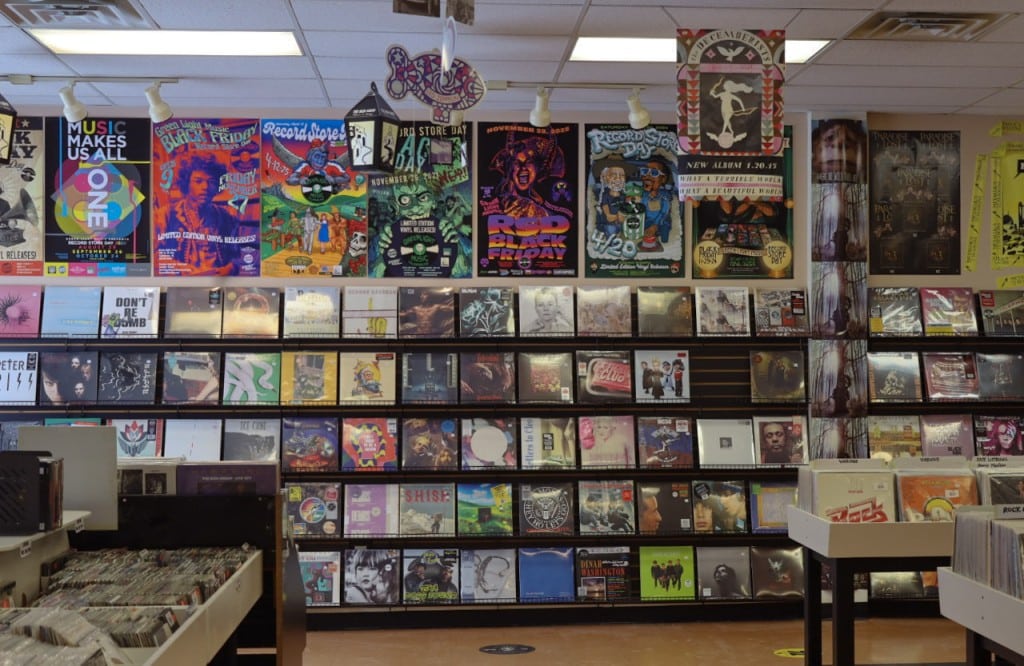
When back home in Kalamazoo, Aguilar says he enjoys browsing local music shops for new records and CDs.
“I always love going shopping for music. I go to Satellite Records a lot,” Aguilar said. “I’ve visited Green Light Records before, to,o and it was a really cool place.”
Aguilar isn’t the only person who enjoys physical streaming, though. Mickey McIntosh, an employee at the Green Light Music store, loves playing vinyl records.
“Nothing beats putting a record on a turntable, watching it play, listening to it, and looking at the cover art while it’s playing,” says McIntosh.
As a result of the music reset, McIntosh has noticed an increase in physical music listeners at Green Light Music.
“More people stop by, more people are buying records and CDs,” says McIntosh. “Word has gotten around, so people are coming in and checking us out.”
McIntosh’s coworker, Chris Haner, isn’t surprised by the increase in customers, however.
“Vinyl will last the test of time,” says Haner. “I think people have been coming back to physical media for a while. I don’t think it’s a new thing.”
As time has progressed, though, Haner has been caught off guard by the number of younger teens who are interested in physical media.
“I’m amazed at some of these younger kids getting into records, because their parents didn’t do records,” says Haner. “It’s really interesting to see what gets people into music now.”
As Haner says, the fascination with physical media didn’t start with the 2026 Media Reset. According to Unplugged, Gen Z has led a resurgence of vinyl and CD sales since 2024. The digital versions of everything have made tangible media more meaningful to teens.
Despite the growing significance of physical media, it is not accessible to all. Records and CDs are, while fun to collect and play, quite expensive and not always available. For people who want to remove themselves from large streaming services but don’t have the resources needed to log off completely, there are cheaper alternatives.
Smaller streaming services like Bandcamp and Qobuz pay music artists better than other streaming services, and their ethics appear clearer compared to larger companies.
Along with the smaller streaming services, many libraries offer free options for music streaming. Kalamazoo Public Library, for instance, partners with Hoopla, an online catalog that includes music. Anyone with a library card can access Hoopla and rent free-of-charge music for seven-day periods.
Logging off of online streaming services isn’t easy, but it has a payoff. Taking the extra step to remove money from unethical corporations and instead investing in local businesses and libraries is worth the extra energy to many because of its implications for those large corporations. Redirecting money away from unethical companies can send a powerful message.
Author

Related Articles

Short-term pain, long-term gain: Kalamazoo begins biggest Downtown street transformation in 60 Years
Construction is underway on Kalamazoo’s long-planned Streets for All project, with city leaders and downtown businesses acknowledging years of disruption while promoting the $100 million overhaul will create a safer, more accessible, and more vibrant downtown.

Vicksburg’s revitalized downtown drives growth, community spirit, and local spending — with incentives
Vicksburg has revitalized its historic downtown and introduced a bonus-incentivized community spending card to boost local business amid changing retail trends.

Historic Clark Building reopens as Buchanan’s largest event venue
The Loading Dock, a newly restored event venue inside Buchanan’s historic former Clark Equipment headquarters, will celebrate its grand opening July 25, bringing concerts, weddings, community events, and new energy to downtown.