A Way Home — Housing Solutions: This story is part of Southwest Michigan Second Wave’s series on solutions to homelessness and ways to increase affordable housing. It is made possible by a coalition of funders including the City of Kalamazoo, Kalamazoo County, the ENNA Foundation, and Kalamazoo County Land Bank.
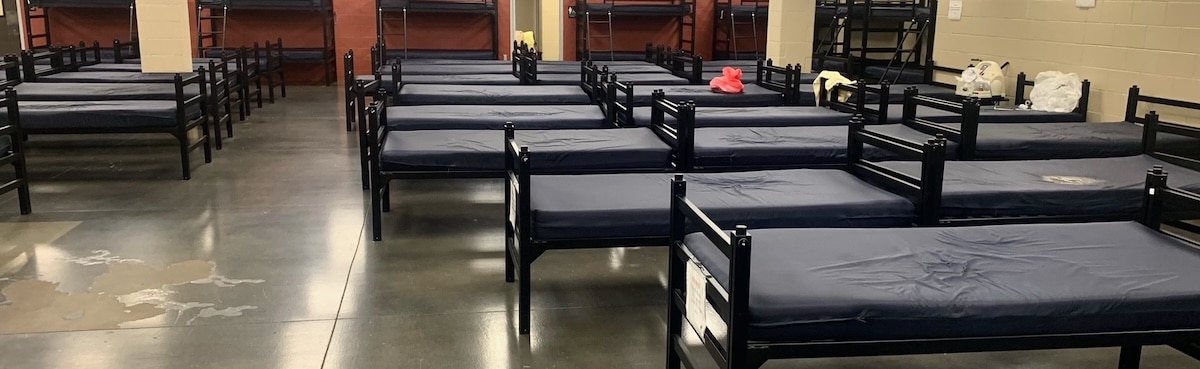
KALAMAZOO, MI – Picture a cluster of less-than-hotel-quality mattresses on a hard tile floor, with people hunkering down on each pad to escape the cold outdoors.
Each has just been separated from a bundle of clothes, a suitcase, a backpack, or a trash bag full of their belongings. Each is inside for the night, but a long way from being alright.
“We have these open areas where we literally would just put people on mattresses on the floor,” John Simpson says of nights when the Kalamazoo Gospel Mission has had more people seeking emergency shelter than it had real beds available for them.
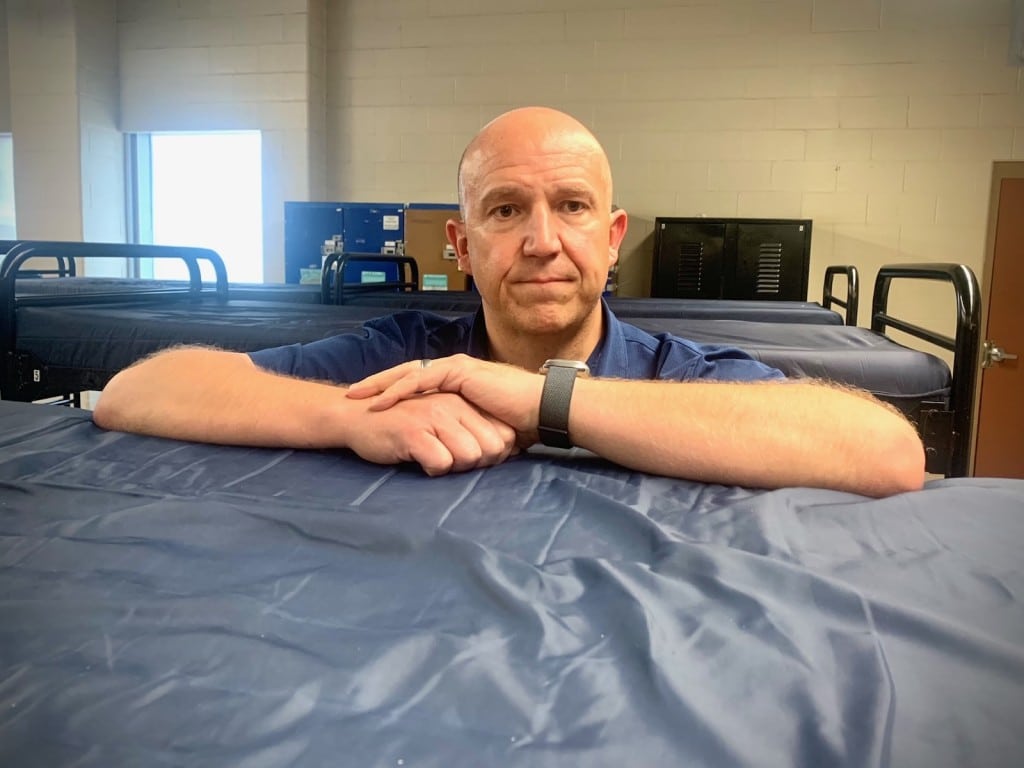
At times, it has had way more emergency guests than it has had staff to adequately monitor and help them, says Simpson, President and Chief Executive Officer of Kalamazoo Gospel Ministries.
So those concerns – along with the desire to advance people into programs that promote stability and independence – have led to a decision by the Mission to hold the maximum number of Emergency Services beds to 80 for men and 60 for women, and limit the maximum amount of time anyone can use emergency services to 120 days.
The change takes effect on Oct. 6, 2025.
“To ensure transparency and meaningful support, we will meet with each guest at 30-, 60-, and 90-day intervals,” Simpson says. Staff members will check their progress and discuss options for qualifying them to use beds that the Mission has dedicated to individuals using its ongoing program services.
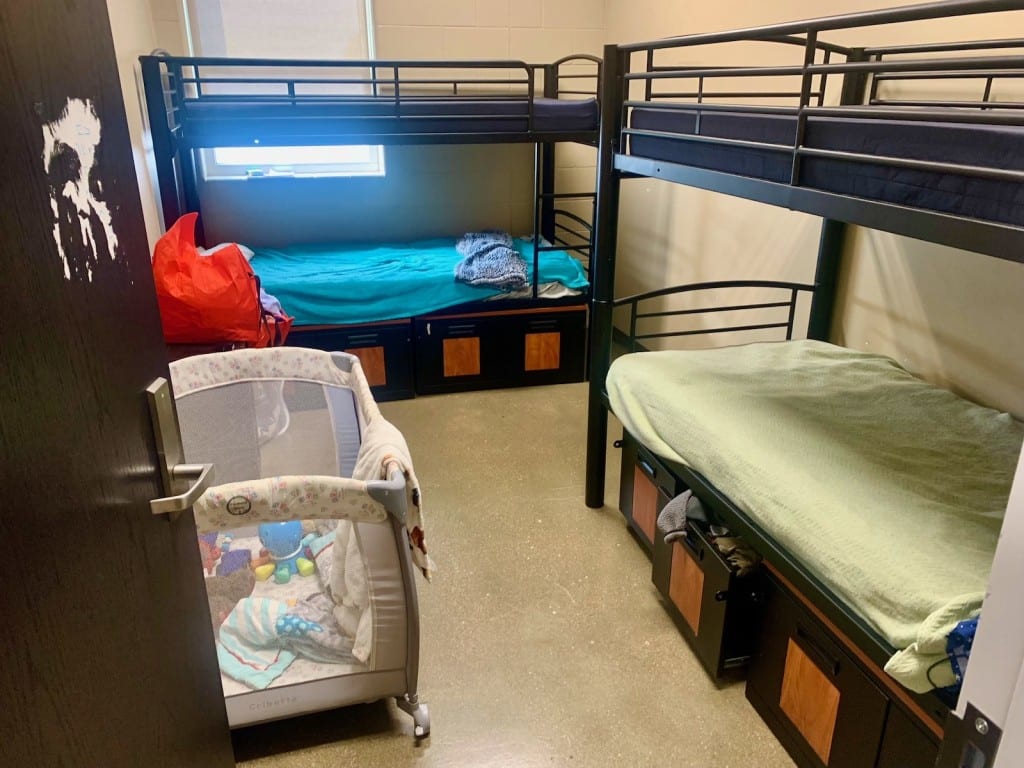
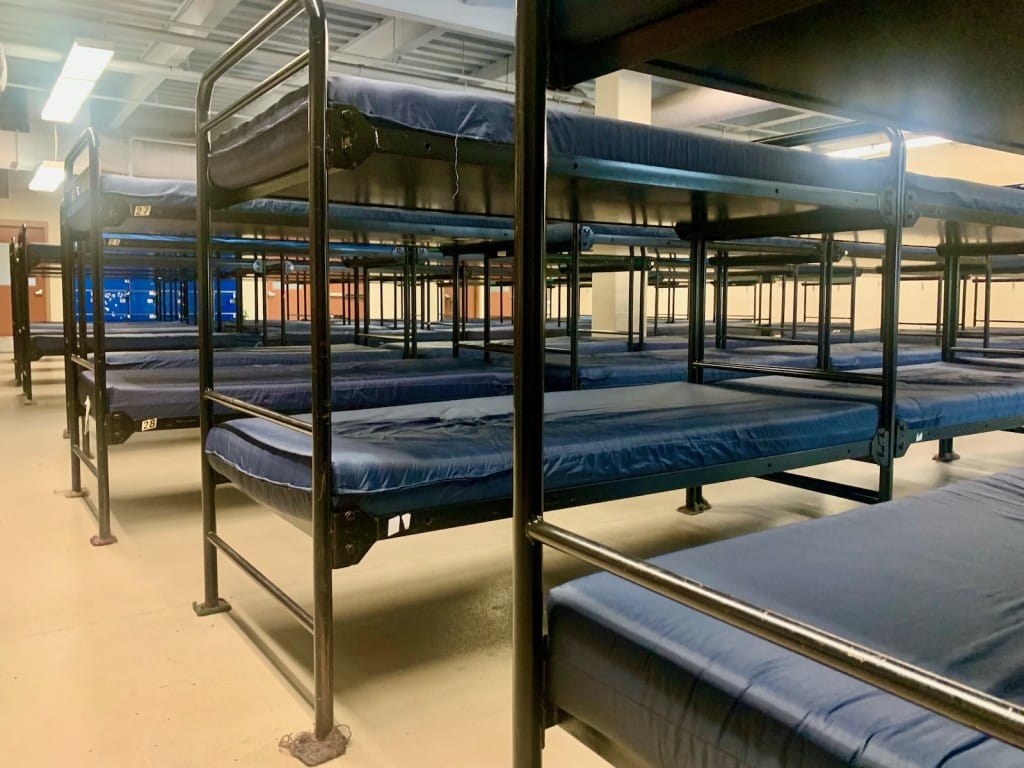
While 140 of the Gospel Mission’s 410 beds are earmarked for emergency shelter (in dormitory bunks and in separate four-bed rooms), and while the 448 N. Burdick St. facility has never turned anyone away, it has seen a 68 percent increase in the number of single men seeking overnight shelter during the last three years and a 51 percent increase in single women during the period.
As the Fall and Winter seasons arrive, and as safe spaces for unhoused people continue to be scarce, the need for emergency shelter can only be expected to rise, Simpson says. And that is not sustainable.
“Staff-to-guest ratios in our emergency shelter began to get out of control,” Simpson says of the past year. “Because we had so many people in Emergency Services on mattresses on the floor – beyond the 80 in men and the 60 in women (capacity) – it was unsafe for staff. It was unsafe for guests.”
Thirty of the Mission’s 84-member staff are dedicated to emergency services, with 10 to 12 workers on any of three shifts. But, at times, there have been fewer than a handful of workers to manage up to 100 men in the overnight shelter.
The Mission’s cafeteria provides supper to anyone in need, as well as supper and breakfast to those seeking overnight shelter. Breakfast, lunch, and dinner are available to those involved in its ongoing program services. The organization is on track to serve 200,000 meals this year, Simpson says, already surpassing the about 180,000 it served in 2024.
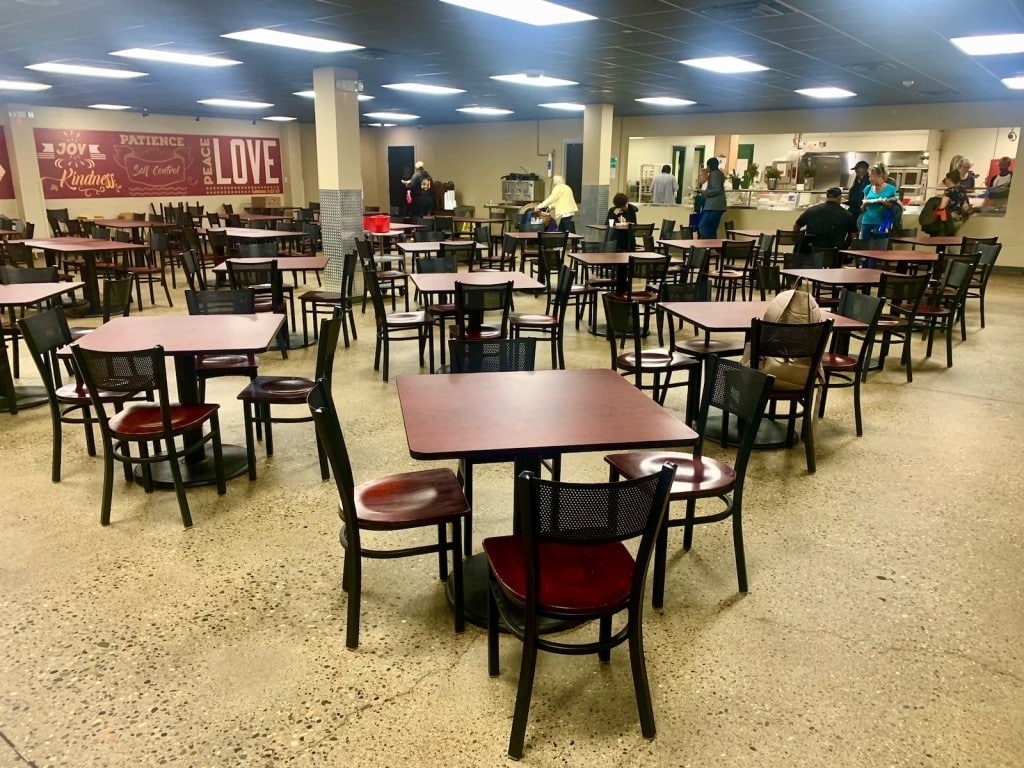
“It was crowded and it wasn’t dignified,” Simpson says, referring to people sleeping on mattresses on the floor. “It wasn’t quality care. It didn’t have the support and the service needed for people to thrive like they should and (like they) need to.”
In a congregate shelter with people next to one another, things can escalate quickly, Simpson says.
“You have people who are working through addiction issues, and who have mental health problems,” he says. “And they are now interacting with one another as they work through trauma and life’s difficulties. Things escalate quickly.”
The Gospel Mission has always been an emergency shelter and a Christian faith-based ministry. Over many years, it has added programs to help people address problems with substance abuse and mental health issues, and to help them find pathways to employment, medical treatment, permanent housing, independence, and stability. And as the number of people coming for emergency shelter rises, the nonprofit organization wants more people to shift into programming that will transition them into more stable lives.
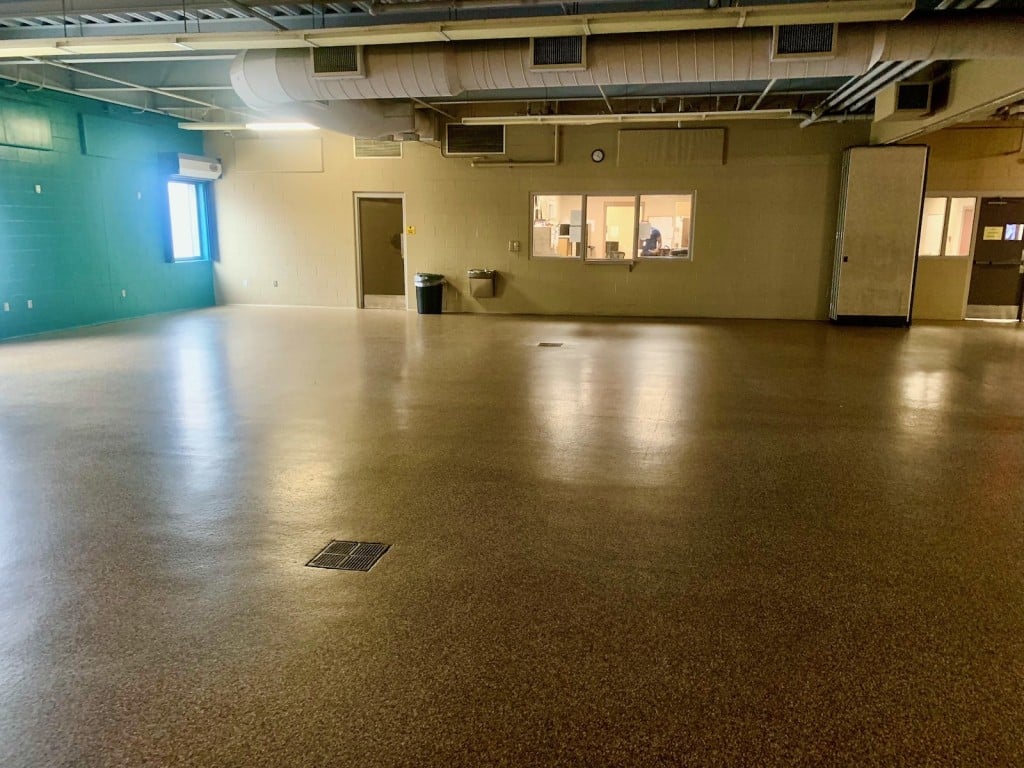
“Emergency Services is the actual shelter – the low-barrier, come-as-you-are shelter,” says Simpson. “And that is for our folks who really don’t want any other services from us other than a warm place to sleep, a safe place to sleep, a meal to eat, their immediate needs met. Those folks can come in whatever state (they’re in). So they don’t have to meet any expectations.
“With our Programming beds, you’ve got to be working toward sobriety. You’ve got to be meeting with a case manager or working on a case-management plan or working on a program. You’ve got to be moving forward in your journey, whatever that looks like for you. But you have to have a goal. And be moving toward that goal. And that’s what really differentiates between an Emergency Services bed and a Programming bed.”
Helping the unhoused and those in need is a community-wide issue, Simpson says, and he looks forward to seeing other shelters become available. That includes The Landing Place, a project to convert the former Country Inn & Suites hotel in Portage into an 80-unit shelter for displaced families in need of housing. It is expected to open in phases starting in December. He also looks forward to the efforts by Kalamazoo County, the City of Kalamazoo and others — working through the Kalamazoo County Continuum of Care — to develop another day and night shelter. Working with a total of about $700,000, the county has broadcast a request for proposals to develop daytime and nighttime shelter services for unhoused families and individuals.
“Every day our network of providers sees what it means to not have a safe place to sleep,” Continuum of Care Director Patrese Griffin says in a press release. Jen Strebs, chairperson of the Kalamazoo County Board of Commissioners, says, “We have a responsibility to make sure no one is left without shelter when winter hits. And we can’t wait until the first snow to act.”
Emergency Services is the first level of service provided at the Gospel Mission. The second level is a case management-focused program called the Next Steps Program. It supports sober living and helping people progress toward healthy lifestyles. A case manager helps individuals identify their goals, set up a plan to achieve those goals, remove barriers that stand in the way, and connect them with partner organizations in the community (such as Integrated Services of Kalamazoo and Housing Resources Inc.) to provide help with housing, job training, mental health counseling, and other resources.
Level three is the New Life-New Hope Program – it’s a one-year residential program “for our folks that have the most significant barriers, the most significant needs.” Simpsons says. The Mission’s only faith-based program, it provides half a day of classes and half a day of work training for nine months. Counseling is provided in such things as addiction recovery and life skills. “Then there is a three-month transitioning period.”
While he says he does not look forward to turning anyone away from emergency shelter, Simpson says making the rule changes “was not an easy decision for us to make. But we have to prioritize for safety, for care, and for dignity. We have to prioritize for what is best for the people that we have been called to serve.”
Simpson says he thinks capping the number of people in Emergency Services will allow his staff to be more focused on each person’s individual needs.
“I think this allows us to bring more dignity to the people that we’re serving because they’re in a bed rather than on a mattress on a floor,” he says. “This brings more safety to the people that we are serving. It brings more safety to our staff, which creates less stress. … And I think there is a huge upside to all of that — allowing us to be more sensitive to the guests we are going to be able to serve and helping us to be able to move them forward in their journey much more effectively. And I see a lot of joy in that, I see a lot of upside in that. I see a lot of good in that.”
Author

Related Articles
Blue Horizon Real Estate works to be part of the solution to the affordable housing shortage
Marissa Harrington, founder of Blue Horizon Real Estate, advocates for breaking down communication silos among Kalamazoo’s housing stakeholders to address systemic barriers to affordable homeownership.
Community Land Trusts in Portage and elsewhere help residents become homeowners affordably
As the statewide housing crisis continues, communities of all sizes are looking at how to increase affordable housing options for current and future residents. In Kalamazoo County, the Portage Community Land Trust is helping residents become homeowners affordably with their new workforce housing development, Stanwood Crossings.

$10.6 million expansion of Northside housing project will add 38 more apartments
A ceremonial groundbreaking took place recently on North Pitcher Street for the expansion of the Zone 32 residential and commercial complex.