
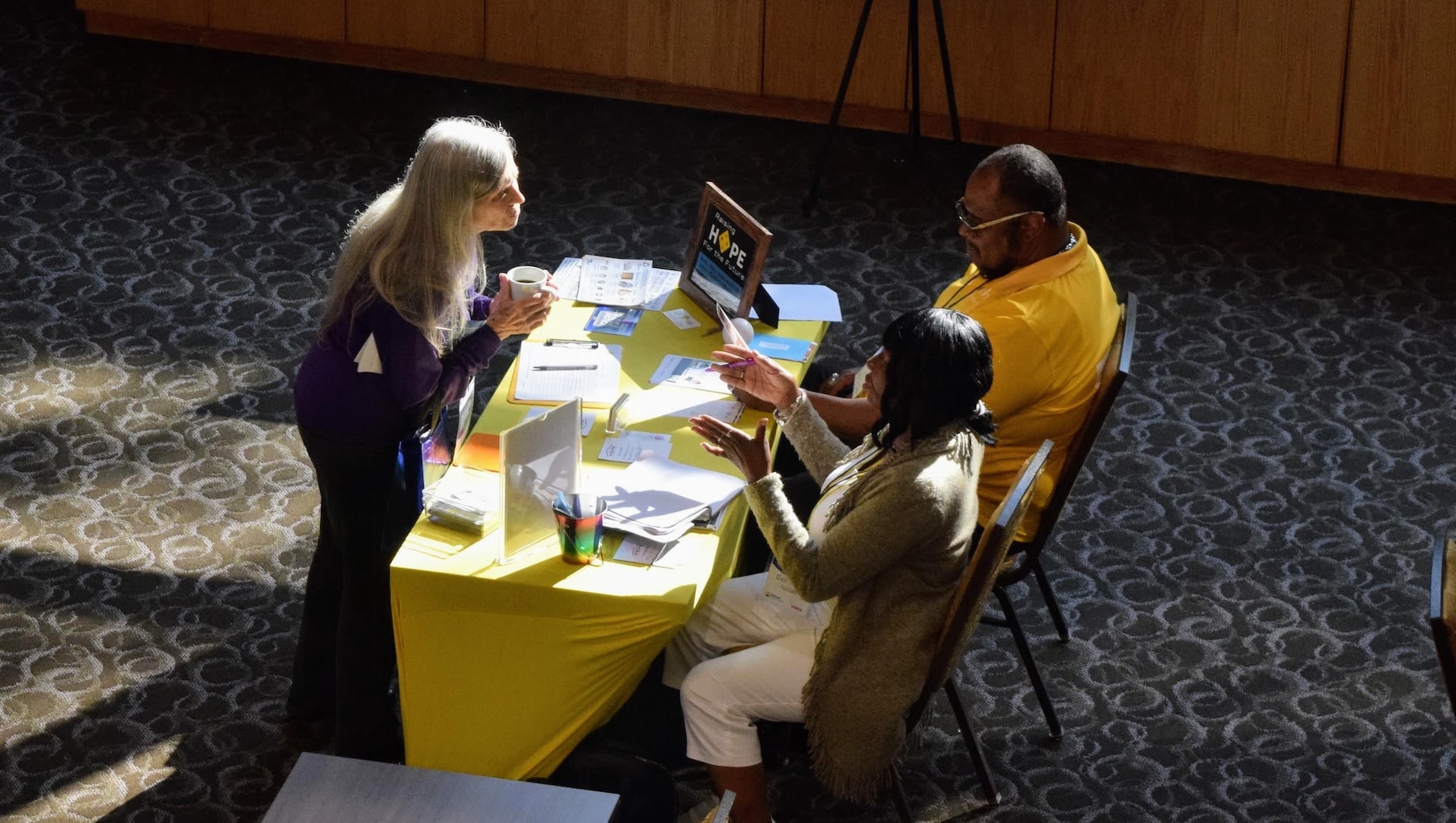
A Way Home — Housing Solutions: This story is part of Southwest Michigan Second Wave’s series on solutions to homelessness and ways to increase affordable housing. It is made possible by a coalition of funders, including the City of Kalamazoo, Kalamazoo County, the ENNA Foundation, and Kalamazoo County Land Bank. This is the first in a series of stories based on sessions at Collaboration for Housing Equity.
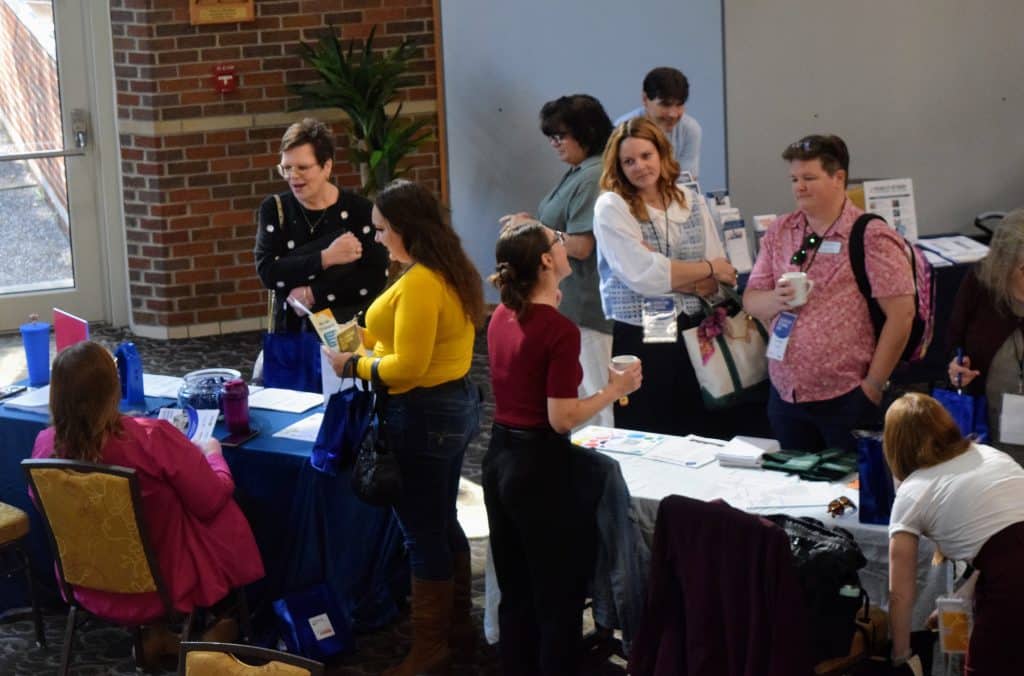
The belief that it’s possible to solve the related issues of homelessness and a lack of affordable housing was in every room of Kalamazoo’s first Collaboration for Housing Equity, an all-day forum dedicated to “imagining what our community could look like if everyone had equitable access to safe, affordable, and dignified housing,” in the words of Patrese Griffin.
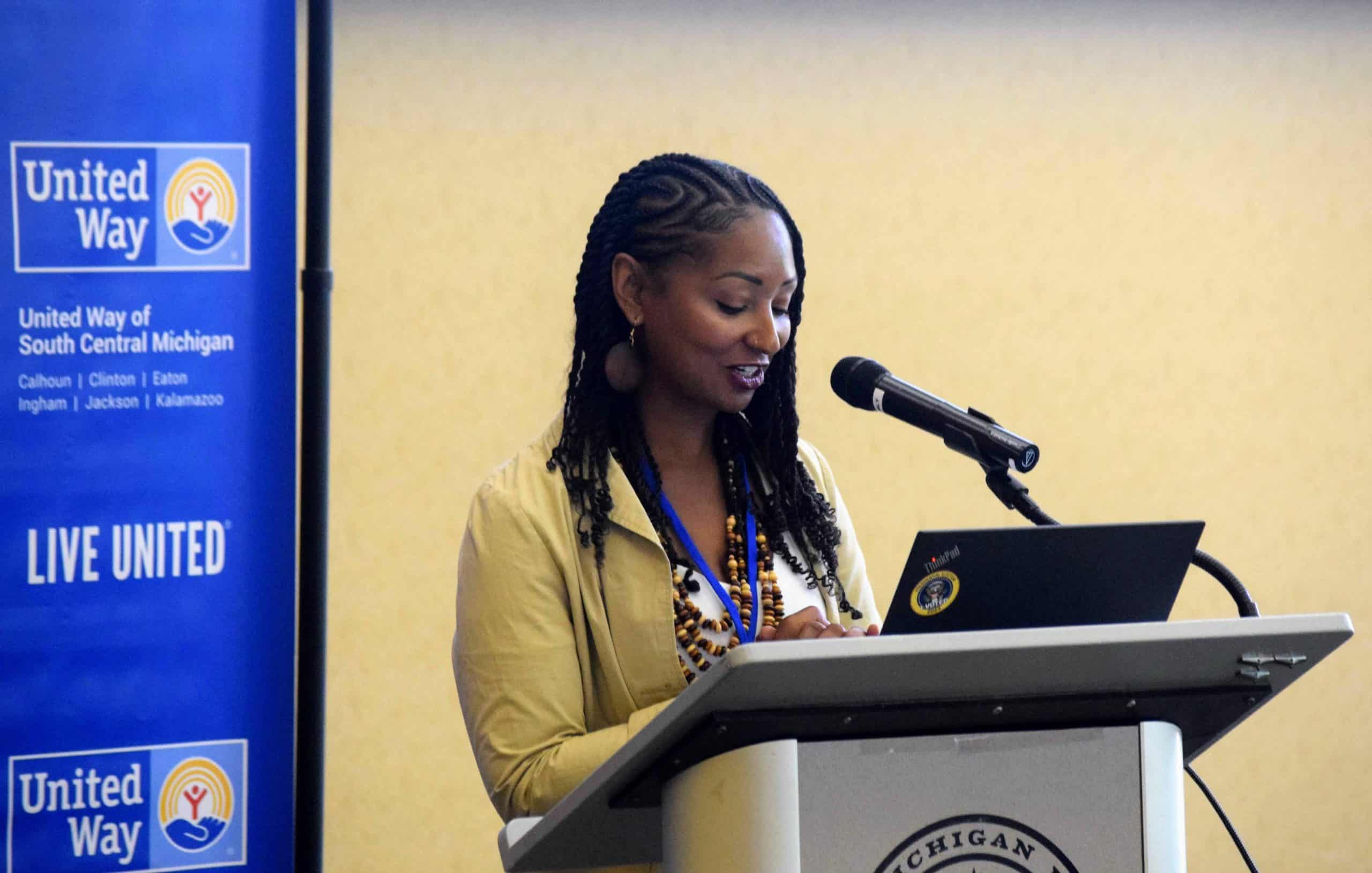
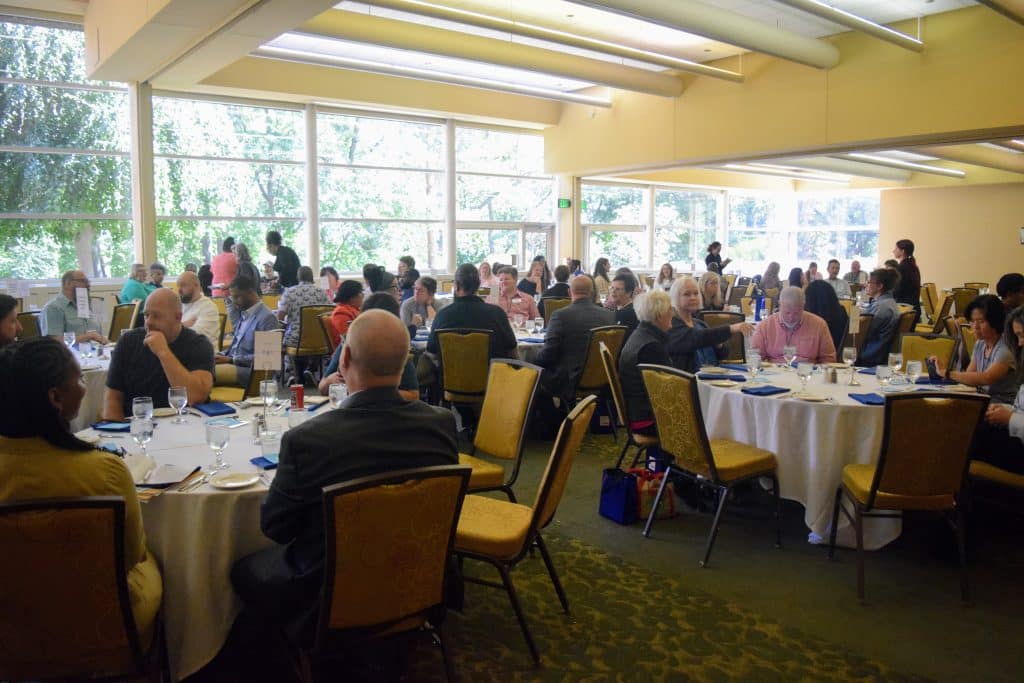
Griffin leads the Continuum of Care, an organization whose name gives few clues that it is responsible for coordinating housing and services funding for homeless families and individuals in the area, and one of four local organizations that came together to plan the event that drew nearly 160 people to the Fetzer Center on the Western Michigan University campus.
Willa DiTaranto from Kalamazoo County, Cheng Kidd Sun from Western Michigan University, and Jacquis Roberson from KYD Network helped pull together 12 sessions looking at housing from all angles.
In the morning session alone, there were Multi-sector Approaches to the Housing Crisis; Hope and Healing for Homeless Youth; and Street Medicine: Intersection of Housing and Health. In the afternoon session, panelists and presenters explored data-driven analysis of homelessness in Kalamazoo County, the support for the transition from homelessness to housed, trauma-informed pathways, and an interactive session through the lens of a grassroots-run organization, among four others — all of which were intended to spark conversation, as Griffin put it.
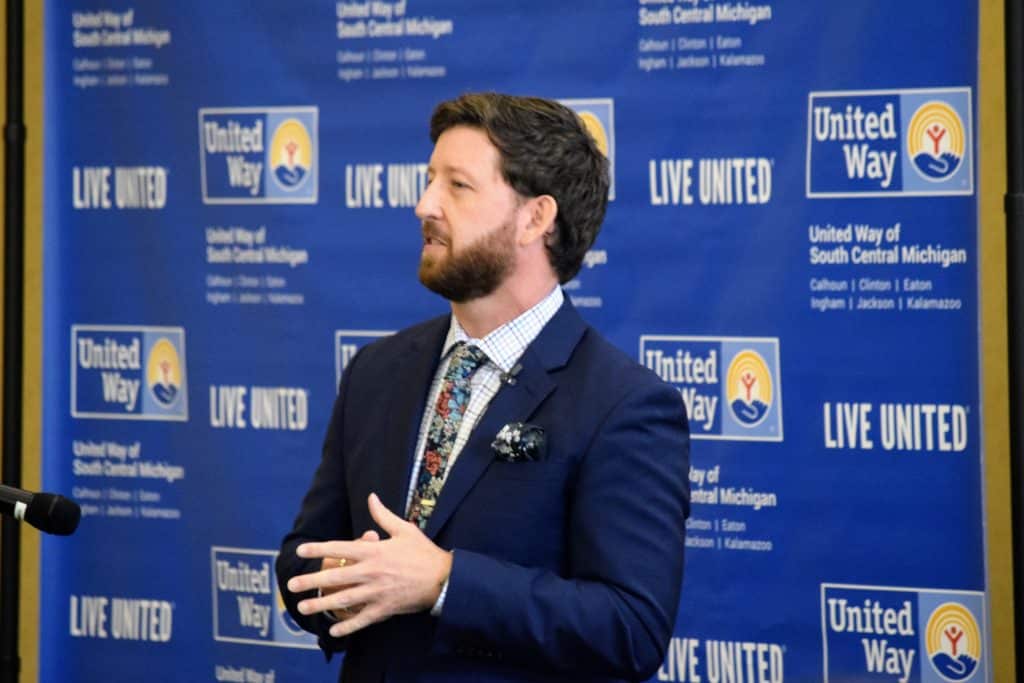
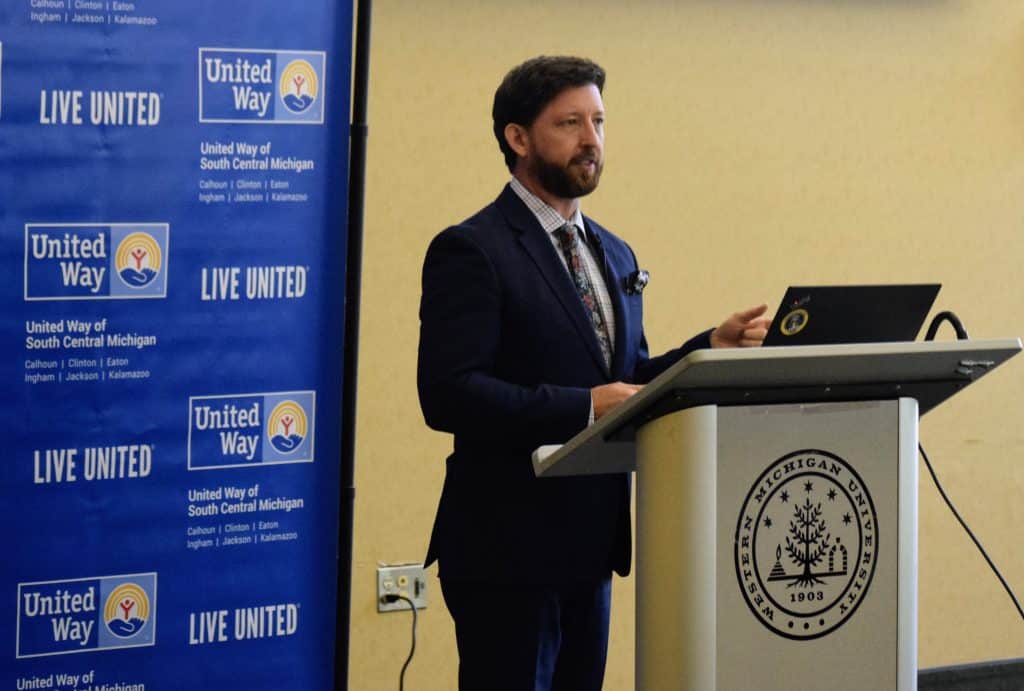
The plenary portion of the day, for all those in attendance, featured Eddy Conroy, Senior Policy Manager for New America. He presented the results of collaborative work between his organization’s Parenting Students initiative and Princeton Eviction Lab, a topic with direct application for a community with three secondary education institutions.
Conroy explained that his group focused on students raising children because, “If we can get it right for students who are parents, we can get it right for most others.” He reported that one out of every five undergraduate students is caring for one or more children while enrolled in college — just over 3 million undergraduate students, and nearly a million graduate students with children. There are 2.7 million eviction filings every year and families with young children in them are at the highest risk of eviction.
The average minimum wage for parents in Kalamazoo County with a high school diploma is $18,800, and their rent for a two-bedroom apartment is likely to be $1,058. “The math ain’t mathin,'” Conroy said. On top of that, the average childcare costs run $12,000 per year. And the United States spends $500 per child on early education and childcare subsidies.
Many students, especially those with children, grapple with housing insecurity and homelessness, Conroy says. For parenting students, the stakes are higher, as losing their housing may jeopardize the safety of their children as much as their own.
He also shot down a theory that might be put forward as a reason parents are struggling financially. Most of them have not borrowed the maximum in student loans.
He went on to talk about the realization that brought him to tears as he examined the data — students raising children who were threatened with eviction were more than twice as likely to die over the 10 years immediately following enrollment than parenting students who were not threatened. Threatened parenting students’ mortality rates were even significantly higher than those of nonparenting students who were threatened with eviction.
“Enough already,” Conroy said. “We know that the best way to financial stability is to have a degree. They are trying to get a degree against all odds. Without good, stable housing, they are going to drop out.”
The results of the study also showed that if parents received support early in their financial struggles, they were likely to pull out of a downward spiral. “If we can get them help early enough, they may not need help again.”
Ways to help these parents include legal support when they must fight an eviction in court, higher education and housing advocates working together to support students raising children, emergency aid, increased investment in financial aid, connecting parents to benefits that can help them, and advocacy for improved public housing.
“We need a whole range of supports to be increased,” Conroy said.
Such solutions were an ongoing theme throughout the day-long event.
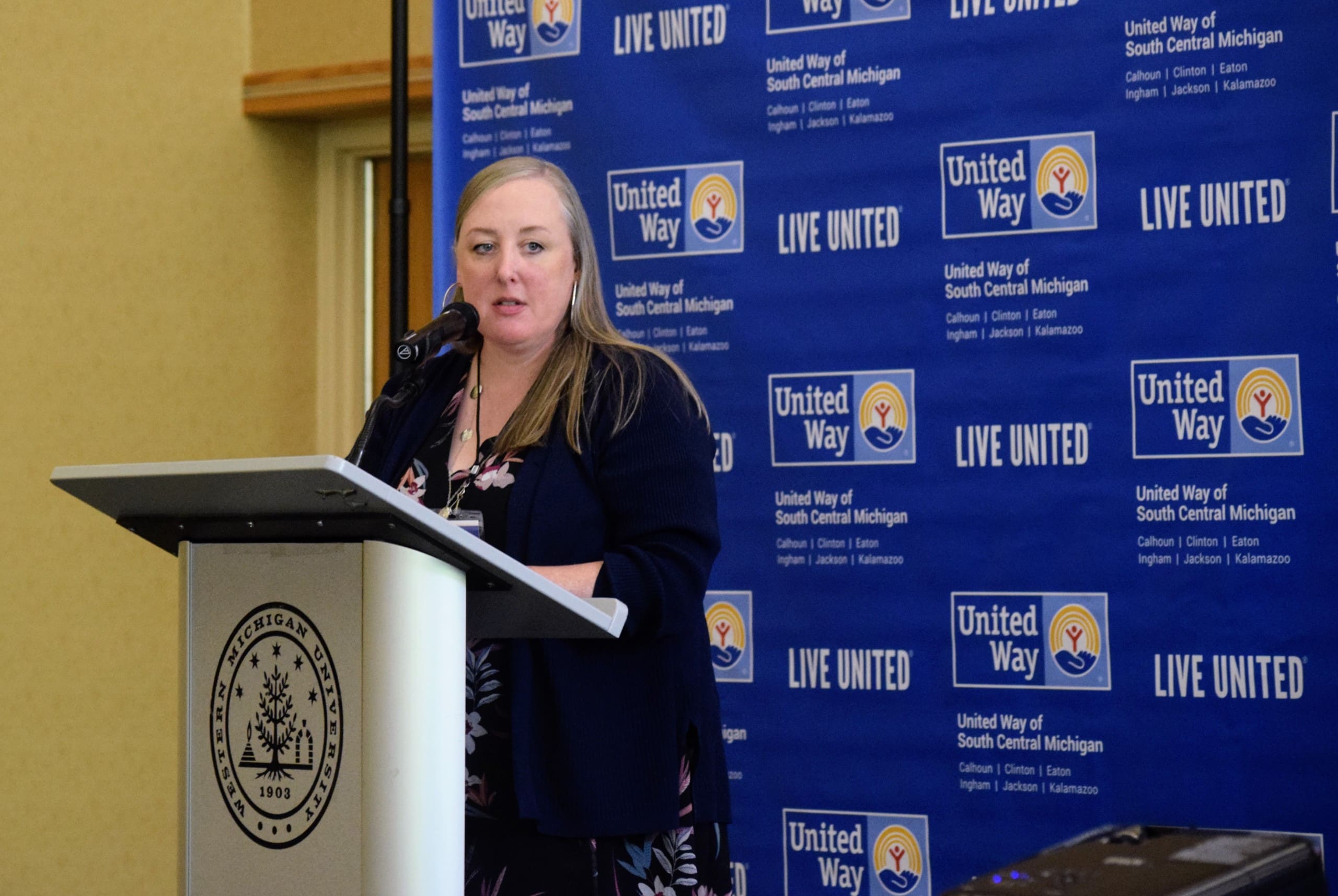
“This forum is more than a professional event. It’s a space for connection, for learning, for unlearning if needed — and for imagining what our community could look like if everyone had equitable access to safe, affordable, and dignified housing,” Griffin said in her prepared remarks to the group gathered for lunch.
“As we move through today, I want to take a moment to name what many of us already know: This work is hard. For those working within housing systems — you’re navigating: Tight deadlines, Ever-changing requirements, Scarce resources, and the emotional toll of saying ‘no’ to people you know deserve a ‘yes’.
“And for those with lived experience of homelessness — who are navigating systems not built with you in mind, the barriers can be even greater. Too often, you are treated as an afterthought — excluded from decision-making, spoken about but not with, expected to fit into systems that were never designed for your reality.
“We want to say clearly today: That must change. We cannot claim to be working toward housing justice if the people most impacted are not at the center of the solutions. So, let today be a reminder: This isn’t just about systems change. It’s about power-sharing, accountability, and restoring dignity where it has been denied.”
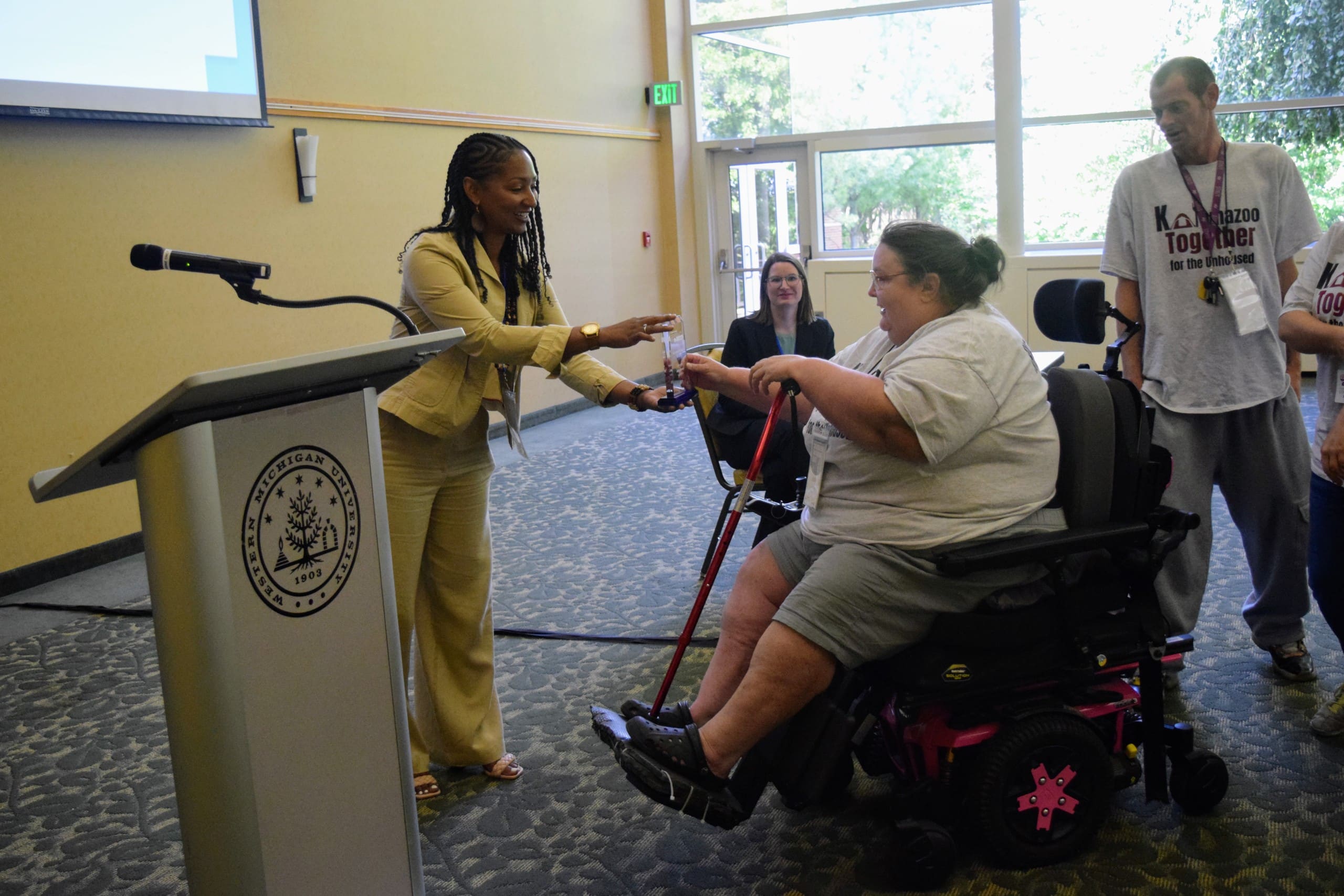
Griffin went on tto recognize those “who carry this work on their shoulders every day,” eliciting a round of applause for those who “work directly with individuals or families experiencing homelessness or housing instability — whether in outreach, shelters, drop-ins, case management, street medicine, or housing navigation — who were gathered.
“To each of you: thank you. In a time when wages aren’t keeping up, capacity is stretched, and the “yeses” are too few, you still show up. You carry stories, pain, hope, and the impossible task of doing more with less. Often, you’re administering systems you don’t control, while offering care and compassion to people who’ve been failed by those very systems. We see you. And we thank you.”
She asked those in the dining room to use the forum “to recommit.”
“Let’s connect with someone new, especially across silos. Let’s listen more deeply, especially to those with lived experience. Let’s move beyond competition and into shared purpose. And let’s dream together about what becomes possible when we design a community that leaves no one behind.”

Related Articles
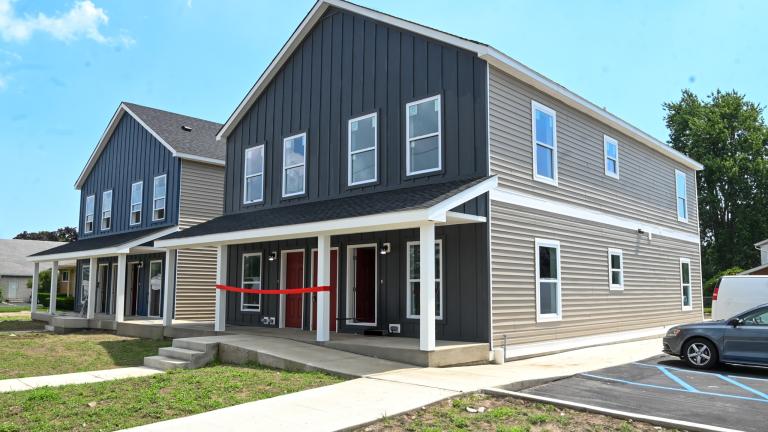
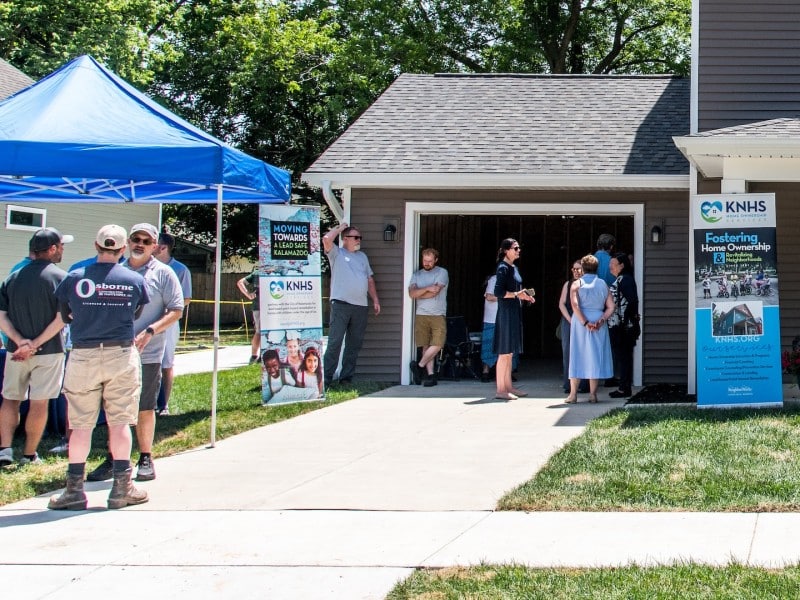
At Ada and Simpson Streets, new and rehabbed homes are making a difference
Many generations could be living in these homes. Thanks to a new program, the homes will be kept affordable for 99 years.
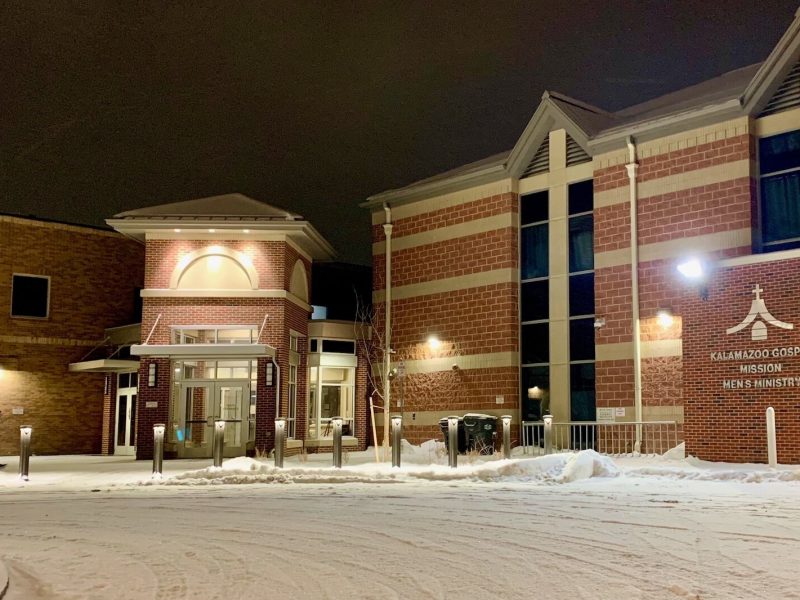
‘This is where people belong’ — amid rumors, change, Kalamazoo Gospel Ministries commits to downtown
As rumors swirled about the future of Kalamazoo Gospel Ministries amid downtown redevelopment, CEO Pastor John Simpson reaffirms the organization’s commitment to remaining downtown while championing a faith-based model of dignified sheltering and long-term transformation for people experiencing homelessness.